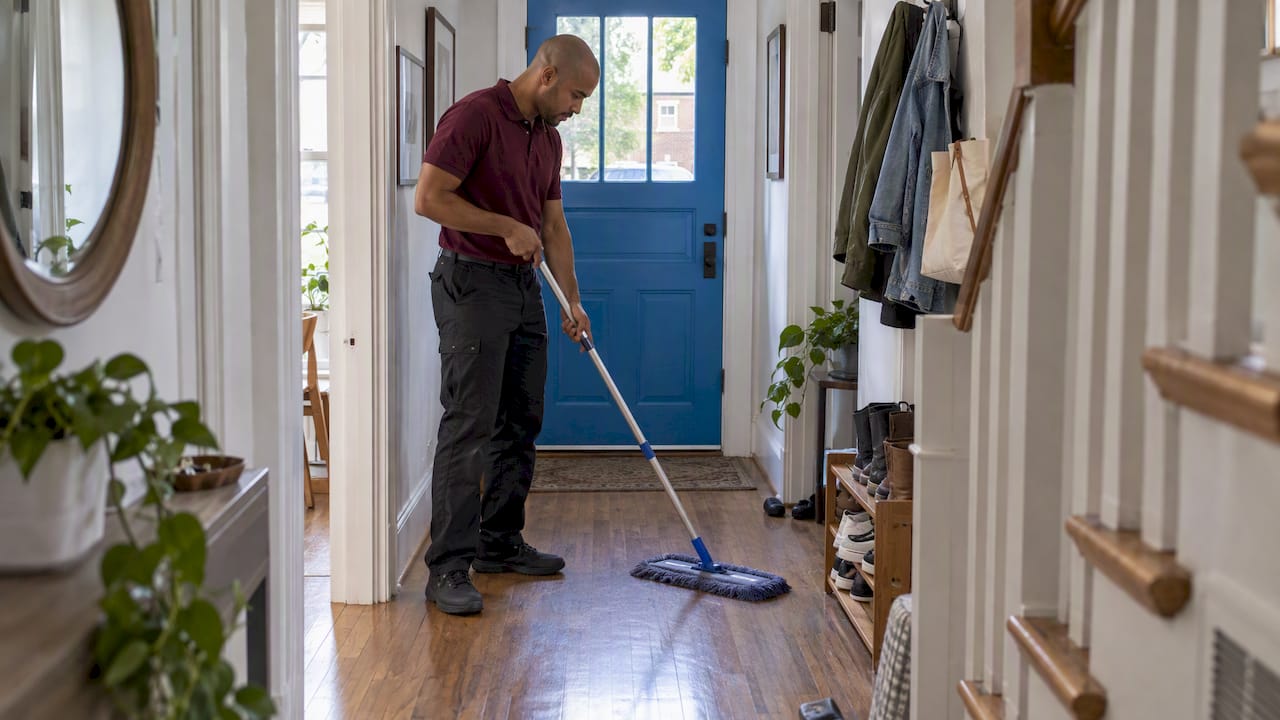
To set up recurring cleaning, pick a frequency that fits your household (bi-weekly is the usual starting point), decide what each visit covers, put the terms in writing, and review the result after the first few visits. Start with a deep clean if the home has not been professionally cleaned in a long time. The rest of this guide walks through each step, with the questions to ask before the first visit.
TL;DR
- Choose a frequency based on how many people, kids and pets live in the home, not on a universal rule. Bi-weekly suits most households; weekly suits busy, high-traffic ones.
- Write down what every visit includes and what rotates in monthly or seasonally, so you are not paying for the same tasks twice.
- Get frequency, price per visit, cancellation notice, skip policy and access details in writing before the first clean.
- Tell the cleaners about pets, allergies and product preferences up front.
- Treat the first two or three visits as a trial, then adjust frequency or scope.
Table of Contents
- What recurring cleaning actually is
- Step 1: Decide whether you need a deep clean first
- Step 2: Choose a frequency that matches your household
- Step 3: Define what each visit covers
- Step 4: Agree the terms in writing
- Step 5: Sort out access, pets and supplies
- Step 6: Review after the first three visits
- Recurring cleaning around a move
- Our approach to recurring cleaning
- Book recurring cleaning with Pure Homes Cleaning
- A simple week to support your recurring service
- Common mistakes when setting up recurring cleaning
- FAQ
- Sources
What recurring cleaning actually is
A recurring cleaning is a professional visit that repeats on a fixed schedule, usually weekly, every two weeks or monthly, instead of one-off bookings you have to remember. The point is predictability: the same day, the same arrival window, and a team that learns your home. A fixed same-day, same-crew pattern can speed up the work because the team already knows the layout, according to one scheduling software company’s 2026 guidance, which cites an 18 to 24 percent gain.
For a homeowner or renter in the DC area, that predictability matters more than any single feature. When a clean is on the calendar every second Thursday, you plan your week around a home that is already reset. If you want the full case for why households switch, see our look at the benefits of recurring cleaning.
Step 1: Decide whether you need a deep clean first
Recurring visits are built to maintain a home, not to rescue one. A standard visit covers the surfaces and rooms you use every week. It will not usually tackle built-up grease inside the oven, grime along baseboards or buildup in grout that has been there for years.
If the home is behind, book one deep clean first, then move to recurring visits. That gives the maintenance visits a clean baseline, and the monthly or seasonal items are not stacking up. We explain the logic in why a deep clean before recurring visits pays off, and the difference between the two services in standard vs deep cleaning.
A quick test: if you would be embarrassed to let a stranger see the inside of the refrigerator, the stovetop hood and the shower, start with a deep clean. If the home is mostly tidy and you just run out of hours, go straight to standard recurring visits.
Step 2: Choose a frequency that matches your household
There is no single correct schedule. Realtor.com’s guidance on home cleaning schedules makes the point that the right routine depends on household capacity: your time, home size and whether you have help, not one universal template.
The usual menu looks like this, per the recurring-customer setup guidance from Simple Scheduler: weekly, bi-weekly, every three weeks, monthly, every six weeks, or a custom pattern, with bi-weekly as the common residential default.
| Frequency | Best fit | What to expect |
|---|---|---|
| Weekly | Families with several kids, pet-heavy homes, high-traffic households | Home stays close to reset; each visit is lighter |
| Bi-weekly | Most couples and families with a moderate mess level | Good balance of cost and upkeep; you handle light tidying between visits |
| Every 3 to 4 weeks | Low-traffic homes, single residents, people who clean between visits | Each visit works harder; buildup returns faster |
| Custom | Seasonal needs, guests, hybrid work schedules | Needs clear written terms |
The same company’s guidance, along with another cleaning provider’s, recommends weekly cleaning for high-traffic, pet-heavy and multi-child households and reserves monthly service for low-traffic, single-resident homes. Treat that as a starting hypothesis rather than a rule.
Trial before you commit
The best way to pick is to test. Run two or three cycles at one frequency, then ask whether the home felt clean for the whole gap or only for two days. If the last few days before each visit feel rough, move up a step. If you barely notice the difference between visits, move down. We lay out this approach in our guide to weekly versus biweekly cleaning and in the broader daily, weekly and monthly plan for DC-area homes.
Step 3: Define what each visit covers
The most common source of disappointment with recurring cleaning is a mismatch between what you assumed was included and what was scheduled. Fix that on paper.
Every visit
The American Cleaning Institute lists the weekly basics as vacuuming and mopping floors, dusting surfaces, cleaning bathroom fixtures and changing bed linens. In a professional visit, expect the kitchen and bathrooms, floors, dusting and trash to be the core. Our printable standard cleaning checklist shows the typical scope room by room, so you can mark what you want added or skipped.
Rotating tasks
The same ACI page puts items like kitchen appliances and cabinet fronts, blankets and comforters, light fixtures, blinds, windows and mirrors on a monthly cycle. Rather than asking for everything every time, rotate these in. Think by task and frequency, not by room: one visit gets baseboards and blinds, the next gets the inside of the microwave and cabinet fronts.
Things you may want to handle yourself, since they are quick and personal: laundry, making beds, and putting items away. University of Florida IFAS Extension suggests dividing work into daily, weekly and monthly categories and involving household members with age-appropriate tasks. A cleaner can only clean surfaces that are clear, so a ten-minute tidy before arrival makes the visit count for more.
Make it customizable
If your home has a room you never use or a task you care about more than usual (a home office, a basement, inside the fridge), say so. You can build the scope around that; see how we approach it in customizing your cleaning service.
Step 4: Agree the terms in writing
This is the step people skip, and it is the one that prevents most disputes. Before the first visit, confirm these items. They draw on recurring-customer setup guidance and on a service agreement guide covering schedules and liability.
- Service type and scope. Standard, deep, or a mix, and what is in or out.
- Frequency and day. The regular day and the arrival window.
- Price per visit. And how much notice you get before it changes.
- Cancellation and rescheduling notice. How late you can move a visit without a fee.
- Skip policy. Whether a skipped visit is credited, rescheduled or forfeited.
- Holidays and vacations. How the schedule pauses and restarts.
- Estimated duration and team size. So you know how long someone will be in your home.
- Exit terms. How to pause or stop the service.
We do not publish a fixed price list, because the cost depends on the size of the home, its condition and the frequency. Ask for a quote based on those details and have it written down.
Step 5: Sort out access, pets and supplies
Record the practical details once so you never repeat them. A good recurring template holds access instructions, parking notes, pet information, product preferences and room-specific requests, as the scheduling guidance above recommends.
In the DC area, parking and building access deserve special attention. Apartment buildings may need a front-desk note or a lockbox code, and street parking rules can affect arrival windows. Put those in the template, not in a text the night before.
If you have pets
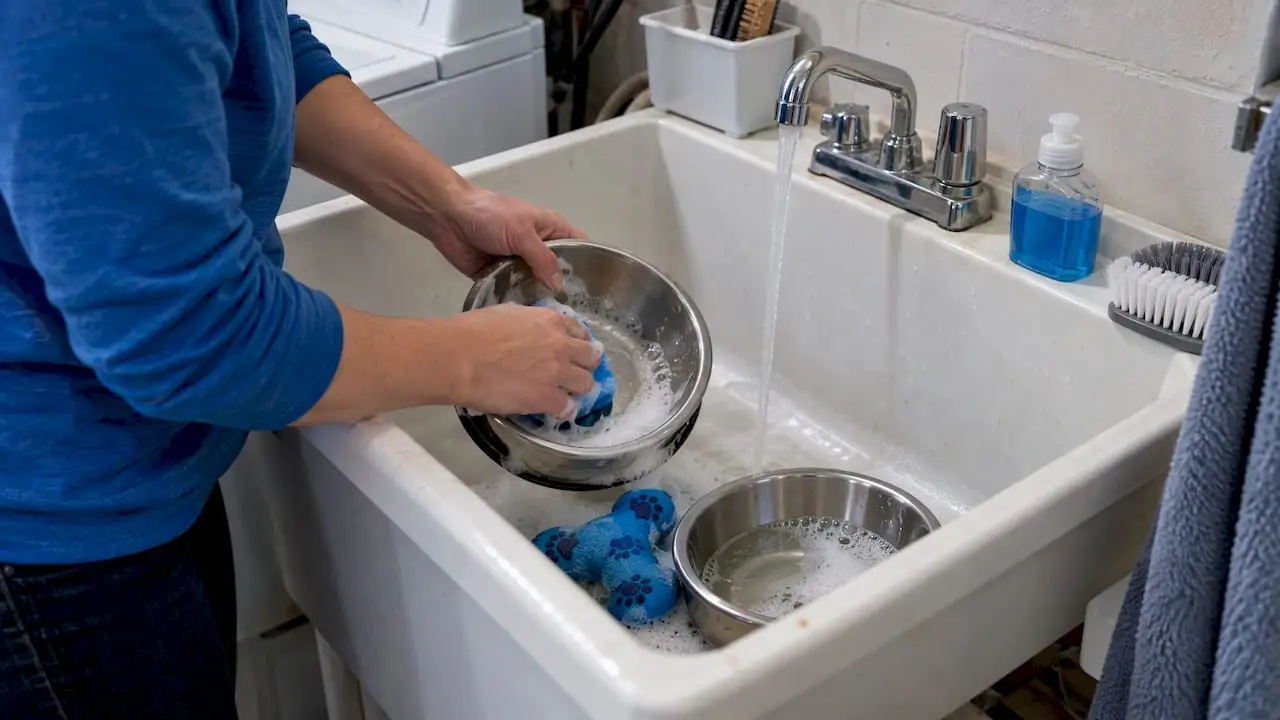
Pets change both the frequency and the products. The CDC advises keeping animals away from areas being cleaned or disinfected until disinfectants are dry, and cat owners should avoid disinfectants containing phenols. It also notes that soap or detergent removes dirt from pet items, and disinfection is an extra step for situations like illness or contact with bodily waste. For bowls and toys, the CDC says the kitchen sink can be used for dog and cat items; other pet items belong in a pet-only tub, laundry sink or bathtub.
When you look for products, the U.S. EPA’s Safer Choice program identifies cleaning products verified to contain safer ingredients for families, pets and the environment. Tell your cleaning company which products you want used, or ask what they bring. Our guides to pet-safe cleaning and cleaning with pets day to day cover what to use and what to avoid.
If someone has asthma or allergies
The American Cleaning Institute advises warm water and soap for surfaces, periodic disinfectant use on frequently touched surfaces, and following its specialized guidance when someone has asthma or allergies. If a household member has a medical condition, ask their doctor which products to avoid and pass that list to your cleaners. For frequently touched points like handles and switches, see our high touch surface cleaning protocol.
Step 6: Review after the first three visits
Do not judge a recurring service on visit one. The first clean is the cleaners learning your home; the third is when the pattern settles. A setup guide from a scheduling company suggests a quality check at visit three, and that timing works for homeowners too.
At that point, ask yourself:
- Did anything get missed twice? Add it to the written scope.
- Does the home still feel clean on day ten? If not, shorten the gap.
- Are you paying for tasks you no longer need? Rotate them out.
- Is the arrival window working with your schedule?
Send feedback early and specifically. “The tops of the door frames were dusty” gives a cleaner something to act on; “it wasn’t great” does not.
Recurring cleaning around a move
A move changes the picture. Recurring visits do not replace a move-out or move-in clean, which are one-time, empty-home jobs with different scope: inside cabinets, appliances, closets and the deposit-related details. If you are leaving a rental, our move out cleaning checklist is written around getting your deposit back, and the moving cleaning timeline shows what to clean and when. If you are arriving, the move-in cleaning checklist and the apartment move-in guide help you start fresh. Not sure which service applies? Read deep cleaning vs move out cleaning.
A sensible sequence for a new home: book a move-in clean before the furniture arrives, then start recurring visits once you are settled, usually after the first couple of weeks when you know how you actually use each room. Update the address and access details in your template, since the old ones no longer apply.
Our approach to recurring cleaning
We see the same pattern in busy households across DC, Virginia and Maryland: people do not struggle with cleaning itself, they struggle with deciding, remembering and rebooking. A recurring schedule removes all three. Our advice is to start slightly more often than you think you need, trial it for two or three cycles, and then step down if the home holds up. It is easier to relax a schedule than to dig out of a buildup.
We also think the first visit should be treated as a conversation. Tell us about the pets, the products you prefer, the rooms that matter most and the ones that do not. A scope that fits your life is worth more than a long checklist that does not. Our staff are trained and insured, and we use eco-friendly products that are safe for families and pets.
— Local
Book recurring cleaning with Pure Homes Cleaning
We offer standard cleaning for ongoing upkeep, deep cleaning for a first reset, and move-in and move-out cleans, with flexible scheduling for recurring or one-time visits across Washington, DC, Virginia and Maryland. You can see what each service includes on our services page and choose a time online.
Ready to start? Book your clean online and tell us the frequency you want to trial. For a different kind of help between visits, our guide to between-cleanings maintenance keeps the home fresher for longer.
A simple week to support your recurring service
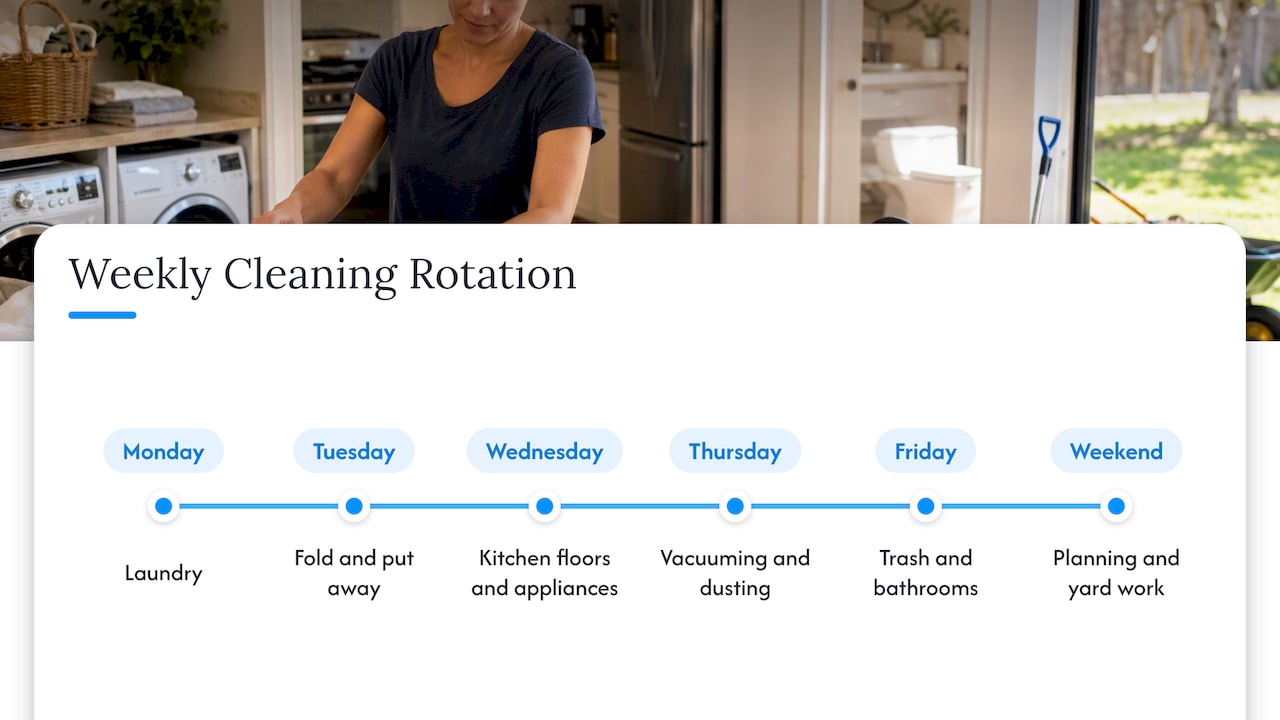
Professional visits work best when your own routine is light. The American Cleaning Institute offers a sample weekly rotation: laundry on Monday, folding and putting away on Tuesday, kitchen floors and appliances on Wednesday, vacuuming and dusting on Thursday, trash and bathrooms on Friday, with the weekend for planning and yard work. Once you have a cleaner, many of those slots are covered, and you keep the pieces only you can do: laundry, tidying and clearing surfaces.
If evenings are the bottleneck, our cleaning schedule for busy families shows how to split the work between sharing and outsourcing in 10 to 20 minutes a day. Renters can use the apartment cleaning checklist, and our house cleaning checklist gives a six-item reset for the days before a visit.
A caution on time estimates: published task-time tables are a planning baseline, not a promise. Furniture, clutter, stairs and working pace all change how long a visit takes, so ask your provider for an estimate based on your actual home.
Common mistakes when setting up recurring cleaning
- Starting too light. Booking monthly for a busy house means every visit is a catch-up. Start more frequent, then step down.
- Skipping the deep clean. Maintenance visits assume a maintainable baseline.
- Verbal agreements only. Cancellation, skip and price-change terms belong in writing.
- Leaving surfaces covered. Clear counters and floors so the time goes into cleaning, not moving things.
- Not mentioning pets or sensitivities. It takes a minute and changes the products and the plan.
- Judging on visit one. Give it three visits before you decide.
FAQ
How often should I schedule recurring cleaning?
For most households, every two weeks is a good starting point. Weekly makes sense for large families, pet-heavy homes and high-traffic houses, while monthly fits low-traffic, single-resident homes. Trial your choice for two or three cycles and adjust.
Do I need a deep clean before recurring visits start?
If the home has not had a thorough clean in a long time, yes. A deep clean clears the buildup so standard visits can maintain the result. If the home is already in good shape, you can start with standard visits directly.
What should be in a recurring cleaning agreement?
Get the service scope, frequency, regular day and arrival window, price per visit, cancellation and rescheduling notice, skip policy, holiday handling and notice of price changes in writing. Also record access and pet details so every visit starts with the right information.
Can I skip or change a visit?
Usually, yes, with notice. How much notice you need, and whether a skipped visit is credited, rescheduled or lost, should be in your agreement, so ask before the first clean.
Is recurring cleaning safe for homes with pets?
It can be, with the right products and habits. Keep pets away from freshly cleaned areas until they are dry, avoid phenol-containing disinfectants around cats, and tell your cleaners which products you prefer.
Sources
- Home Cleaning Routine, American Cleaning Institute
- Levels of Cleaning for Better Health, American Cleaning Institute
- About Cleaning and Disinfecting Pet Supplies, CDC
- Cleaning pet supplies, CDC
- Safer Choice product labeling, U.S. EPA
- Home Cleaning Schedules, Realtor.com
- How to set up recurring cleaning customers, Simple Scheduler
- House Cleaning Service Agreement: Schedules and Liability, Contractable