
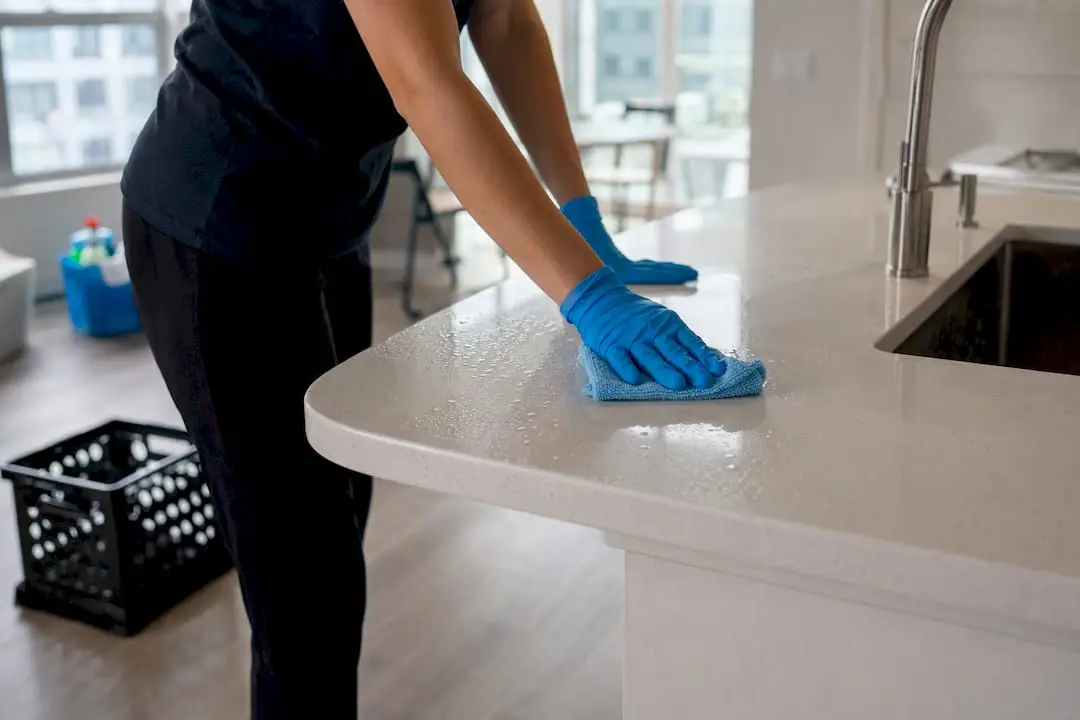
Perform a top-to-bottom deep clean before you unpack a single box, starting with the kitchen and bathrooms, then working through vents, floors, and hidden corners. A solo DIY clean in a one-bedroom takes roughly 3 to 4 hours of concentrated labor because empty rooms expose grime that furniture normally hides. Do these first, before movers arrive:
- Wipe down and disinfect all high-touch surfaces (doorknobs, light switches, cabinet handles)
- Run a quick dust pass on shelves, sills, and vents
- Line drawers and shelves before you fill them
- Set down floor protection near the entry for incoming furniture
Hiring a professional crew usually finishes the same job in half the time, since two or three people work simultaneously across rooms.
Key Takeaways
A successful apartment move-in cleaning follows a top-to-bottom, kitchen-and-bathroom-first order and covers hidden zones like vents and grout that standard cleanings skip.
| Point | Details |
|---|---|
| Clean before you unpack | Empty rooms give full access to grout, vents, and appliance interiors that furniture later blocks. |
| Follow top-to-bottom order | Start at ceiling height in each room and finish at the floor, working toward the door last. |
| Budget real time | Plan 3 to 4 hours DIY for a one-bedroom, longer for two-bedroom units with heavy grime. |
| Document before you finish | Photograph vents, appliances, and grout condition for your move-in inspection record. |
| Hire pros for guaranteed coverage | Purehomescleaning’s move-in service includes appliance interiors, vents, grout, and HEPA vacuuming as standard. |
Table of Contents
- What Counts as Apartment Move-In Cleaning?
- Two-Minute Move-In Checklist Before You Unpack
- Supplies and Prep Before You Start Cleaning
- Room-by-Room Deep Clean: Order and Time Estimates
- The Hidden Tasks Pros Never Skip
- How Long the Whole Job Takes and How to Sequence It
- DIY or Hire a Pro? A Quick Decision Guide
- If You Prefer a Pro: What a Move-In Clean With Purehomescleaning Covers
- Sources
- FAQ
What Counts as Apartment Move-In Cleaning?
Apartment move-in cleaning is a full reset of a unit’s sanitary baseline, not a quick tidy. It targets the buildup a previous tenant, or months of vacancy, leave behind: grease inside the oven, soap film in grout lines, dust packed into return vents. Care recommends prioritizing kitchens and bathrooms first, since those rooms carry the highest bacteria and allergen loads, then working outward to bedrooms and common areas.
This differs from routine cleaning in one key way: access. Nobody’s furniture blocks the baseboards yet, nothing sits behind the fridge, and every drawer is empty. That access disappears the moment boxes start piling up, so the cleaning you skip now often waits months before it gets done at all.
Two-Minute Move-In Checklist Before You Unpack
Before you carry in a single box, run this fast pass. It won’t replace a deep clean, but it makes the apartment livable and buys you time to schedule the real work.
- Open every window for five minutes to clear stale air and any lingering paint or cleaning fumes.
- Check the HVAC or AC filter if it’s accessible, and swap it if it looks gray or clogged.
- Wipe down doorknobs, light switches, and cabinet pulls with a disinfecting wipe.
- Peel off old shelf liner, stickers, or adhesive residue in cabinets and closets.
- Do a walk-through with your phone camera, documenting any pre-existing damage or grime for your move-in inspection form.
Steps 1 through 3 matter most today. Deep grout work, closets, and vents can wait until your dedicated cleaning session.
Pro Tip: If you know your move-in date more than a week out, reserve a professional crew or a HEPA vacuum rental now. Move-out season (late June through early July) books up fast, and last-minute slots are hard to find.
Supplies and Prep Before You Start Cleaning
Running out of degreaser halfway through the oven is how a two-hour job turns into a four-hour one. Stock up before you start:
- HEPA-filter vacuum (rent one if you don’t own it)
- Microfiber cloths, at least a dozen
- Non-abrasive scrubbers and a stiff grout brush
- Oven degreaser and an all-purpose cleaner
- Mop, bucket, and disposable mop heads
- Rubber gloves and an N95 or KN95 mask for degreasing and dust work
Carpet extractors and steam cleaners are usually worth renting rather than buying for a single move, unless you clean multiple units a year. Ask your moving crew or a neighbor if they have one to lend before you pay for a rental.
Pro Tip: Never mix bleach and ammonia-based cleaners. The combination produces toxic fumes in an enclosed space. Crack a window any time you use a strong degreaser or grout cleaner. Check your building’s rules on outside contractors too. Some require proof of insurance before letting a cleaning crew past the front desk.
Room-by-Room Deep Clean: Order and Time Estimates
Work top to bottom and far to near: ceiling before floor, the farthest corner of each room before the door. The Spruce’s account of deep-cleaning a new apartment backs this order for a reason. Debris you knock loose from a ceiling fan lands on the floor, so cleaning the floor first just means doing it twice.
Kitchen (60 to 90 minutes)
- Inside the fridge and freezer, wiping shelves and drawers with a mild cleaner
- Oven interior with degreaser, then the range hood and filter
- Behind and under the stove and fridge if you can pull them out
- Cabinet interiors and drawers, top shelf to bottom
- Backsplash, sink, and garbage disposal
- Dishwasher filter, often overlooked and coated in food residue
- Countertops, then floors last
Bathroom (45 to 60 minutes)
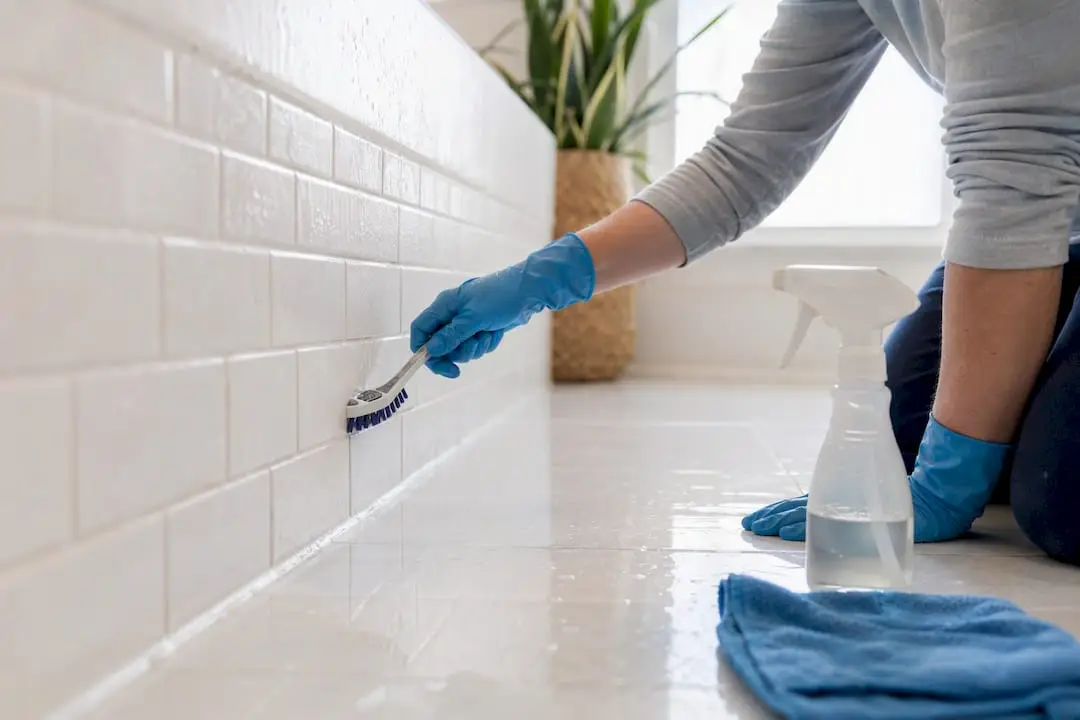
Inspect the toilet seat and replace it if it shows scratches or discoloration, a step Trulia’s move-in checklist specifically calls out. Deep-clean grout and caulk lines around the tub, scrub the shower or tub basin, wipe the exhaust fan cover, clean the mirror and fixtures, empty and wipe cabinet interiors, then mop and let the floor dry fully before setting down a bath mat.
Bedrooms and living areas (30 to 45 minutes per room)
Wipe vents and ceiling fan blades first, then baseboards, blinds or curtain rods, and closet shelving. Spot-clean any marks on walls. Vacuum carpet last, and if you’re running a carpet extractor or steam cleaner, plan for several hours of drying time before furniture goes back down.
Everywhere else
Wipe down interior window glass and tracks, which trap dust and dead insects even in a freshly cleaned unit. Disinfect every door handle and lock, since previous tenants and building staff touch these constantly. Wipe light switch plates. Finally, check the trash and recycling area, both inside the unit and in any shared bins, and sanitize the can itself before your first bag goes in.
The Hidden Tasks Pros Never Skip
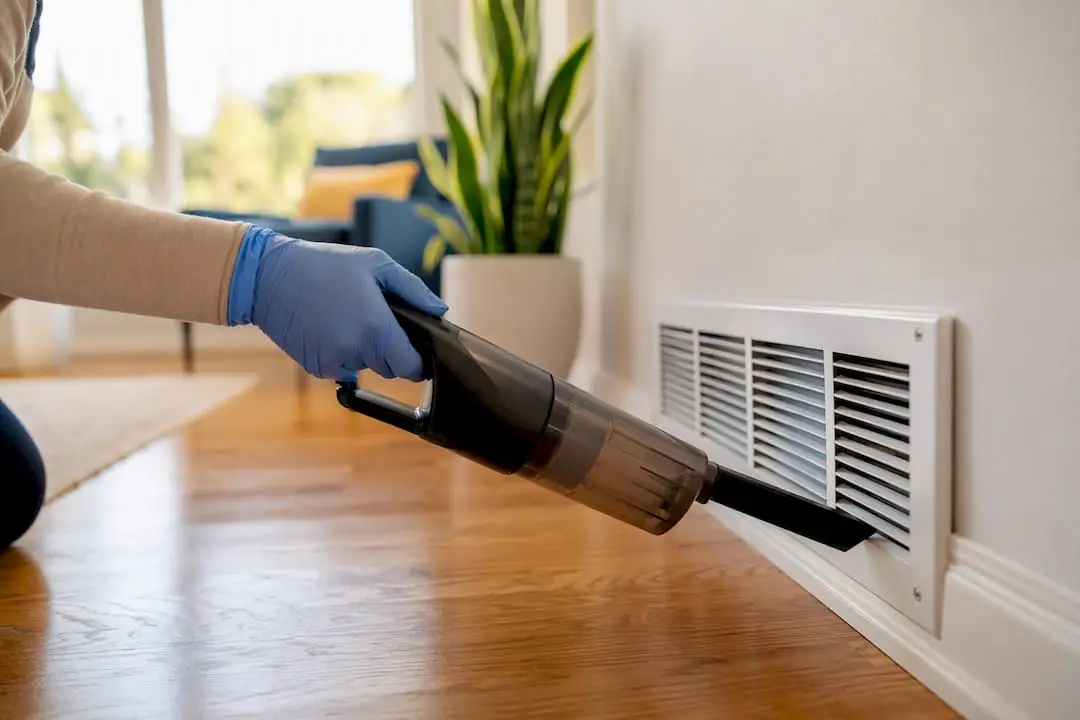
A quick wipe-down misses the spots that actually affect air quality and safety. Vents and return grilles collect dust and allergens that recirculate every time the HVAC kicks on; vacuum the grille, then wipe it with a damp cloth. Ceiling fan blades hold the same buildup and drop it directly onto whatever’s below.
Range hood filters and the wall behind the stove often carry months of grease film. Left alone, that residue turns into a fire hazard around electric coils or gas burners, so this isn’t a cosmetic step. Soap scum in grout and caulk needs a dedicated brush and, in bad cases, replacement caulk rather than just scrubbing. Professional cleaners note that appliance seals, cabinet interiors, and grout lines require multi-step treatment, not a single pass with an all-purpose spray.
- Photograph vents, appliance interiors, and grout condition before you finish, in case your landlord disputes the unit’s move-in condition later.
- Note any filter you replace (HVAC, range hood) with a date, useful for your own maintenance records.
- Check the dryer vent if your unit has an in-unit washer/dryer. Lint buildup here is a documented fire risk, not just a nuisance.
Pro Tip: EPA-registered disinfectants paired with a HEPA-filter vacuum give you better allergen control than standard products, especially useful if the previous tenant had pets.
How Long the Whole Job Takes and How to Sequence It
A studio typically runs 2 to 3 hours DIY, a one-bedroom 3 to 4 hours, and a two-bedroom 5 to 6 hours. Professional crews of two or three often cut that time by more than half by working multiple rooms at once.
- Book your cleaning appointment (DIY or pro) before your moving truck is scheduled, not after.
- Clean top to bottom, kitchen and bathrooms first, floors last in every room.
- Build in a 30 to 60 minute drying buffer after mopping or carpet cleaning before movers start carrying furniture in, a gap industry scheduling guidance consistently recommends to avoid trapped moisture and mold.
- Ask your moving crew to lay floor protection at the entry and hallways once cleaning is done.
Check with your building management about contractor insurance requirements before booking outside help. Some buildings in Washington, DC and the surrounding area require proof of insurance for any cleaning crew entering common hallways or freight elevators.
DIY or Hire a Pro? A Quick Decision Guide
Cleaning it yourself saves money but costs hours you might not have during a move, especially if the unit shows heavy grime, pet residue, or smoking history. Hiring a crew guarantees a consistent result and frees up your moving day, but it costs more and requires scheduling ahead.
Lean toward hiring if you’re short on time, have asthma or allergies that make dust and mold exposure risky, or if your lease ties your security deposit to a documented clean start. Lean toward DIY if the unit is already in decent shape and you have a free weekend.
If you do hire, ask providers these questions before booking:
- Are you insured, and can you provide proof if my building requires it?
- Do you clean inside appliances, cabinet interiors, and vents as standard, or as an add-on?
- Do you use a HEPA-filter vacuum and EPA-registered disinfectants?
- Can you share references or recent reviews?
An efficient move-in clean beats a rushed one every time
A move-in clean feels like extra work on a day already full of boxes and logistics, but doing it before you unpack is the only time you get full, unobstructed access to every surface. If your schedule is tight, book a professional crew early rather than squeezing a rushed clean in between moving trucks.
If You Prefer a Pro: What a Move-In Clean With Purehomescleaning Covers
Skipping the DIY route saves you the weekend and the supply run, and it guarantees every hidden spot actually gets done instead of getting skipped when the boxes show up early. Purehomescleaning’s move-in and move-out cleaning covers the full surgical list: inside appliances, range hood degreasing, grout attention, cabinet interiors, baseboards, window tracks, and HEPA vacuuming throughout.

Book your date as early as you can, especially during peak lease turnover windows in late spring and summer, when crews across the DC, Virginia, and Maryland area fill up fast. Confirm your building’s insurance or access requirements ahead of time, and let us know if movers are coming the same day so we can coordinate floor protection and finish with enough drying buffer before furniture arrives. Ready to lock in a slot? Book your move-in cleaning and check available dates for your neighborhood.
Sources
- Care
- I Spent 5 Hours Deep Cleaning My New Place | The Spruce
- Apartment Cleaning Checklist for Before You Unpack | Trulia
FAQ
Should an apartment be clean when you move in?
Yes, but “clean” from a landlord or previous tenant rarely means deep-cleaned. Run your own top-to-bottom pass before unpacking, even if the unit looks tidy on the surface.
What does a move-in clean actually include?
It includes inside appliances, cabinet interiors, vents, grout and caulk, baseboards, window tracks, and door hardware, on top of the standard dusting and floor cleaning a regular tidy-up covers.
What is the 80/20 rule for cleaning?
It’s a general productivity idea, not a fixed cleaning standard: roughly 80% of visible improvement comes from the top 20% of tasks, like kitchens, bathrooms, and floors. Prioritize those first if your time is limited.
How do I clean an apartment before moving in?
Work top to bottom and far to near in every room, starting with the kitchen and bathroom, then bedrooms and living areas, finishing with floors once everything else is done. If the timeline is tight, Purehomescleaning’s move-in service covers the full list in a single scheduled visit.