
Biweekly cleaning is the practical default for most households, since it balances cost against cleanliness without demanding a bigger budget or more scheduling hassle. Weekly service makes more sense for homes with pets, young children, allergy concerns, or frequent entertaining, where buildup happens faster than a two-week gap can handle. The rest of this guide walks through how to judge your own home, what each schedule actually includes, and how to trial a cadence before committing to it.
TL;DR:
- Homes with pets, young children, or frequent guests should opt for weekly cleaning to prevent allergen and dirt buildup.
- Biweekly cleaning tends to be more cost-effective for most households, provided some light maintenance occurs between visits.
- For allergy-sensitive households, ventilating during cleaning and choosing milder products significantly reduce respiratory risks.
- Most homes can start with biweekly cleaning and switch to weekly if surfaces appear tired near the end of two-week cycles.
- Consistency in cleaning schedule is more crucial than the specific frequency for long-term cleanliness and surface preservation.
Table of Contents
- Assessing your home’s cleaning needs
- Benefits of weekly cleaning
- Advantages of biweekly cleaning
- Cost comparison and what pricing looks like
- How to choose: criteria, questions to ask, and red flags
- Practical tips to make weekly or biweekly cleaning work
- Impact on home maintenance and cleanliness over time
- Publisher perspective: why Pure Homes Cleaning recommends flexible recurring plans
- How Pure Homes Cleaning can help
- FAQ
- Sources
Assessing your home’s cleaning needs
Before picking a schedule, look at what actually drives mess in your home. A few factors matter more than personal preference:
- Household size and activity: more people in the home means more surfaces touched, more laundry, and faster buildup.
- Pets and shedding: dogs and cats add hair, dander, and tracked-in dirt that accumulates quickly between visits.
- Ages of residents: toddlers and young kids generate spills, crumbs, and general chaos faster than adults living alone.
- Allergy or respiratory conditions: sensitive household members benefit from shorter gaps between dust and allergen removal.
- Floor types: carpet traps dust and hair longer than hardwood or tile, which show dirt sooner but clean up faster.
- Entertaining frequency: regular guests mean bathrooms and common areas need attention more often.
As a rough rule: two or more pets, young children, or frequent guests point toward weekly service. A single adult or couple who tidies daily often does fine with biweekly or even monthly. A standard recurring clean typically covers kitchens, bathrooms, floors, dusting, and general tidying, while deep cleaning tackles baseboards, inside appliances, and buildup that routine visits do not reach.
Benefits of weekly cleaning
Weekly service keeps buildup from ever becoming a problem. Hair, dander, and dust get removed before they accumulate, which also tends to shorten each visit since there is less ground to cover.
- Prevents buildup: shorter gaps mean dirt and allergens never have time to settle in.
- Best fit for active households: multi-pet homes, families with young children, and frequent entertainers see the most benefit.
- Reduces homeowner upkeep: less pressure to deep-clean yourself between professional visits.
- Supports peace of mind: knowing the home gets regular attention reduces the mental load of tracking what needs doing.
Surveys find Americans spend several hours per week cleaning, and many worry they are not cleaning enough. A recurring service addresses that worry directly rather than just the dirt itself.
Weekly visits do mean more frequent exposure to cleaning products in the home. Mitigate this by ventilating rooms during and after cleaning and asking your provider about milder, labeled low-irritant products, especially if anyone in the household has asthma or allergies.
Advantages of biweekly cleaning
For most households, biweekly cleaning offers the best ratio of cost to cleanliness. It keeps homes looking consistently good without the expense of weekly visits, especially when residents handle light tidying between appointments.
- Balanced cost and upkeep: fewer visits per month than weekly, with minimal loss of overall cleanliness.
- Good fit for couples and small families: works well for busy professionals who can wipe counters and manage clutter between cleans.
- Still prevents major buildup: as long as some light maintenance happens at home, two weeks rarely lets dirt get out of hand.
- Common default choice: many providers see biweekly as the standard recommendation for typical households.
The trade-off worth watching is that bathrooms and floors can start to look a little tired near the end of the two week cycle, particularly in homes with pets or kids. If that happens consistently, it is often a sign to shift toward weekly rather than a flaw in the biweekly model itself.
Cost comparison and what pricing looks like
Cleaning companies typically quote prices one of three ways: a flat per-visit rate, an hourly rate, or a tiered flat fee based on home size. Many providers also apply time caps, meaning a visit covers a set number of hours of reasonable effort rather than unlimited scrubbing regardless of condition.
Recurring plans usually lower the per-visit cost compared to one-off appointments, since routine maintenance keeps each visit shorter and more predictable. For a typical 2 to 3 bedroom, 1 to 2 bathroom home, weekly service multiplies a smaller per-visit charge across four or more visits a month, while biweekly service runs about half as many visits at a similar or slightly higher per-visit rate. The monthly total for weekly service is usually higher overall, even though each individual visit may cost less.
A few things commonly push costs up regardless of schedule:
- Extra rooms or square footage beyond the base quote.
- Heavy pet hair or shedding that requires extra vacuuming time.
- Add-on deep tasks like inside-oven cleaning or baseboard detailing.
How to choose: criteria, questions to ask, and red flags
Combine your household assessment with your budget and any health considerations before committing to a cadence. Then vet any provider with the same questions regardless of which schedule you pick.
- Confirm what is included in a standard visit versus what counts as an add-on.
- Ask about products used and whether milder or fragrance-free options are available for allergy-sensitive homes.
- Verify staff vetting and insurance, since this protects your home and belongings.
- Ask about time caps and what happens if your home needs more time than quoted.
- Review the cancellation and reschedule policy before signing up for recurring service.
- Clarify how pricing changes if your home turns out to be heavier maintenance than expected.
Watch for red flags like vague scope of work, no mention of insurance, or evasive answers about pricing. These usually signal inconsistent service down the line.
Pro Tip: Trial biweekly cleaning for two to three cycles before deciding to switch to weekly. Most homes reveal their real maintenance needs within that window.
Practical tips to make weekly or biweekly cleaning work
A little prep before each visit goes a long way. Clearing counters, corralling toys, and picking up loose items lets your cleaner focus on actual cleaning rather than organizing clutter first.
- Prep before visits: declutter surfaces and floors so cleaners can work efficiently.
- Maintain high-touch areas between visits: quick wipe-downs of doorknobs and light switches keep germs in check.
- Spot-vacuum and manage laundry on your own schedule to stretch the benefit of each professional visit.
- Use HEPA vacuums and ventilate during cleaning, especially in allergy-sensitive households.
Research links heavy, frequent use of multiple cleaning products to higher respiratory risk, with one cohort analysis finding an odds ratio of 3.24 for current asthma among heavy users. Simple precautions like ventilation and avoiding mixed chemicals reduce that exposure without sacrificing results. Increase frequency temporarily during allergy season or after illness in the household, then scale back once things settle.
Impact on home maintenance and cleanliness over time
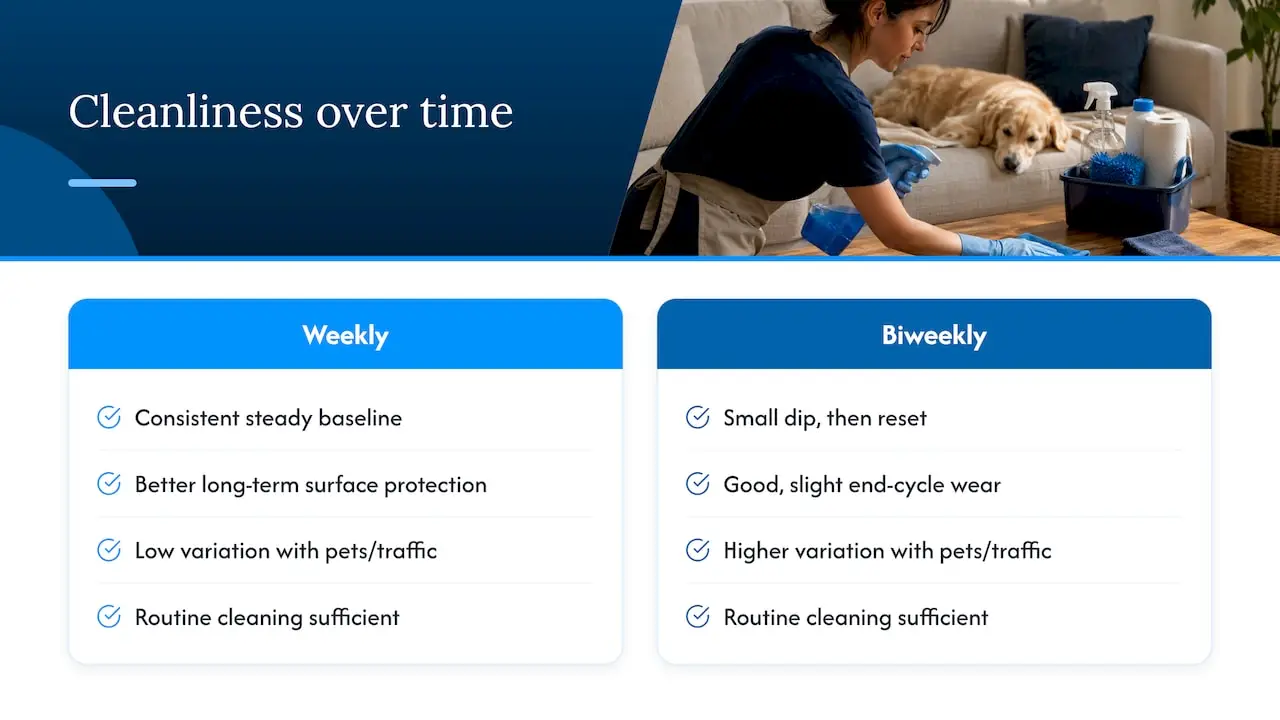
The real difference between weekly and biweekly cleaning shows up over months, not after a single visit. Homes on a weekly schedule tend to stay at a consistent baseline of cleanliness, since dirt and allergens never get the chance to build past a manageable point. This steady maintenance also tends to protect surfaces longer: grout stays lighter, carpets wear more evenly, and hard floors keep their finish because grit and debris get removed before they cause scratching.
Biweekly schedules still deliver strong long-term results, but the cleanliness curve looks a little different. Homes dip slightly in appearance toward the end of each two week cycle, then reset with the next visit. For most households this pattern is unnoticeable day to day, though it becomes more visible in homes with pets, kids, or heavy foot traffic.
Routine cleaning with soap and standard products is enough for everyday hygiene in most homes. CDC guidance notes that disinfecting beyond routine cleaning is typically necessary only when someone in the household is sick, which means neither weekly nor biweekly service needs to rely on heavy disinfectant use to keep a home genuinely clean. Over time, the schedule that matters most is the one you actually stick with consistently, since inconsistent cleaning, regardless of the interval chosen, is what allows buildup and allergens to accumulate.
Publisher perspective: why Pure Homes Cleaning recommends flexible recurring plans
We recommend starting biweekly, trialing it for two to three cycles, and moving to weekly only if the home visibly needs it. We offer recurring plans with eco-friendly products, flexible online booking, and continuously improve based on customer feedback. Changing cadence is a scheduling conversation, not a new contract. If you want a clearer sense of what a visit covers before deciding, our service pages walk through what is included at each level.
— Local
How Pure Homes Cleaning can help
Once you know which cadence fits your home, acting on it should be simple. We offer Standard Cleaning and Deep Cleaning, along with Move In Clean and Move Out Clean for transitions between homes.

Switching between weekly and biweekly is a quick adjustment through our online scheduling, so you are never locked into a cadence that stops fitting your household. If you are ready to test a schedule, you can book a cleaning and request an estimate based on your home’s size and condition. For allergy-sensitive households, pairing your cleaning plan with washable, low-allergen rugs can further cut down on dust and dander between visits.
FAQ
Is weekly or biweekly cleaning better for pets?
Weekly cleaning generally works better for multi-pet households, since shedding and tracked-in dirt build up faster than a two week gap allows. A pet-friendly cleaning routine between professional visits can help stretch a biweekly schedule if weekly is not in the budget.
How much does biweekly cleaning cost compared to weekly?
Biweekly service usually costs less per month overall, even though weekly visits often carry a lower per-visit rate. Recurring plans typically reduce per-visit pricing compared to one-time cleanings, since routine upkeep shortens each visit.
Are frequent cleaning products bad for air quality at home?
Heavy, frequent use of multiple cleaning products has been linked to higher respiratory risk in cohort studies, including increased odds of asthma among heavy users. Ventilating rooms and using milder products during and after cleaning reduces that exposure.
How do I know if I should switch from biweekly to weekly?
Most professional guidance suggests trialing biweekly for two to three cycles first and upgrading to weekly only if the home consistently looks tired by the end of the cycle. Practitioner guidance treats this as a simple scheduling change rather than a permanent commitment.
What is typically included in a standard recurring cleaning visit?
A standard visit usually covers kitchens, bathrooms, floors, dusting, and general tidying, while tasks like inside-oven cleaning or baseboard detailing fall under deep cleaning. Reviewing what each service level includes helps you match the right plan to your home’s needs.
Sources
- Cleaning products and classes associated with poor respiratory health (PMC)
- CDC cleaning and disinfecting guidance (via OSHA copy)
- American Cleaning Institute national cleaning survey results (2024)