The single most important rule for pet safe cleaning is this: ventilate the room, keep pets out of it, and don’t let them back on any surface until it’s completely dry. That one habit prevents more accidental poisonings than any product swap ever will.
For quick, low-risk choices, reach for baking soda on odors, an enzyme cleaner on anything organic (urine, vomit, drool), and a mild diluted dish soap for general wipe-downs. Skip anything with bleach, ammonia, phenols, or concentrated essential oils. those ingredient classes cause the most calls to poison control.
- Baking soda: safe, cheap, absorbs odor without fumes
- Enzyme cleaner: breaks down biological stains at the source
- Diluted mild detergent: fine for most hard surfaces once rinsed
Save these two numbers in your phone right now: ASPCA Animal Poison Control at 888-426-4435 and Pet Poison Helpline at 855-764-7661. The ASPCA APCC’s cleaning safety guide notes that calls involving household cleaning products have increased substantially in recent years, which is exactly why the dry-time rule matters more than which brand sits under your sink.
Key Takeaways
Pet safe cleaning comes down to three habits: choosing lower-risk ingredients, following label directions exactly, and keeping pets away from any surface until it’s fully dry.
| Point | Details |
|---|---|
| Follow the dry-time rule | Ventilate the room and keep pets out until surfaces are visibly and tangibly dry. |
| Choose safer ingredients | Baking soda, enzyme cleaners, and diluted mild soap cover most everyday messes. |
| Avoid high-risk chemicals | Bleach, ammonia, phenols, and concentrated essential oils cause the most pet poisonings. |
| Read labels, not marketing | “Natural” isn’t a safety guarantee; check for enzyme-based or fragrance-free formulas. |
| Save emergency numbers | ASPCA APCC (888-426-4435) and Pet Poison Helpline (855-764-7661) should be in your phone. |
| Hire pet-aware pros when needed | Purehomescleaning applies eco-friendly, pet-safe product protocols on every routine, deep, and move-out cleaning. |
Table of Contents
- Which Cleaning Ingredients Are Dangerous to Pets?
- What Are Some Pet-Safe DIY Cleaner Recipes?
- How Do You Choose a Safe Commercial Cleaning Product?
- How Do You Clean Common Pet Messes Safely?
- When Does a Pet-Friendly Home Need Real Disinfecting?
- What’s the Right Way to Store Products and Handle Exposure?
- Why a Pet-Aware Cleaning Team Changes the Equation
- Book a Pet-Aware Cleaning With Purehomescleaning
- Sources
- FAQ
Which Cleaning Ingredients Are Dangerous to Pets?
Bleach (sodium hypochlorite) irritates mucous membranes and can ulcerate a pet’s mouth or paws on contact. Ammonia fumes irritate the respiratory tract, especially in cats and small dogs who breathe closer to the floor where fumes settle. Phenols, found in some pine-based cleaners, are particularly harsh on cats because their livers process these compounds poorly. Cationic surfactants, common in fabric softeners and some disinfectants, pose a real risk to cats even at low exposure levels, according to the Pet Poison Helpline.
Safer alternatives exist for nearly every task. Baking soda handles odor without fumes. Mild nonionic surfactants (the base in most gentle dish soaps) clean without the aggressive chemistry. Enzyme cleaners target organic matter directly. Accelerated hydrogen peroxide (AHP) disinfects effectively at lower toxicity than bleach when used per label.
- Bleach: mucosal irritation, corrosive at full strength
- Ammonia: respiratory irritation, worse in small animals
- Phenols: liver stress in cats specifically
- Cationic surfactants: elevated risk for cats
- Baking soda, mild soap, enzyme cleaners: generally safer choices
Diluted bleach still has a place for specific disinfection tasks, but only when rinsed thoroughly and aired out afterward, per ASPCA guidance.
What Are Some Pet-Safe DIY Cleaner Recipes?
You don’t need a cabinet full of specialty products. A few reliable mixes cover most household jobs:
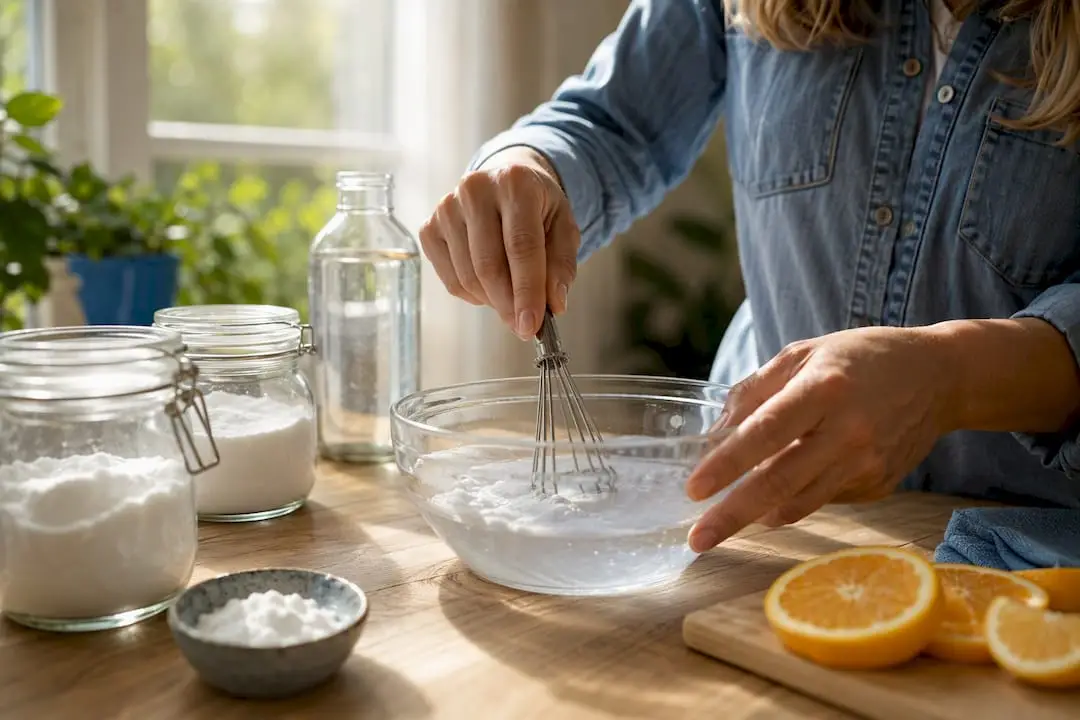
- All-purpose spray: 2 cups water, 1 tablespoon mild castile or dish soap, in a spray bottle. Good for counters, floors, and pet gear.
- Odor paste: baking soda mixed with a small amount of water into a paste. Apply to carpet stains, let dry, vacuum.
- Mineral and grease cutter: 1 part white vinegar to 3 parts water, used on tile or glass. Rinse well since undiluted vinegar is acidic enough to irritate paws and noses.
- Enzyme pre-treater: apply straight from the bottle to biological messes, following the label’s contact time. Don’t dilute enzyme products. it weakens them.
Never mix vinegar with bleach. The combination releases chlorine gas that’s dangerous for you and lethal in enclosed spaces for pets. Skip concentrated essential oils in any DIY blend; they’re a common natural cleaning ingredient that veterinarians flag as toxic to both cats and dogs.
Pro Tip: For deep-set pet urine odor in carpet padding, a store-bought enzyme cleaner almost always outperforms a homemade fix. some jobs are worth the extra $10.
How Do You Choose a Safe Commercial Cleaning Product?
Read the label before the marketing claims. “Natural” and “plant-based” are not regulated safety terms, and a product boasting them can still contain concentrated essential oils that harm pets, according to Zoetis Petcare. Look instead for actual ingredient transparency.
- Favor products labeled “enzyme-based” or “fragrance-free”
- Check for EPA registration on disinfectants, which signals tested efficacy, not automatic pet safety
- Avoid anything listing phenols, cationic surfactants, or “essential oil blend” without specifics
- When unsure, look up the product’s safety data sheet (SDS) online
Accelerated hydrogen peroxide formulas have become popular among pet-aware households because they disinfect without the harsh fumes of bleach or the liver-stressing phenols found in older pine cleaners. If a label can’t tell you what’s inside beyond “proprietary blend,” that’s a reason to skip it, not a reason to trust it.
How Do You Clean Common Pet Messes Safely?
Urine, vomit, and fur each need a slightly different approach, but the core logic stays the same: remove the solid material first, then treat, then dry.
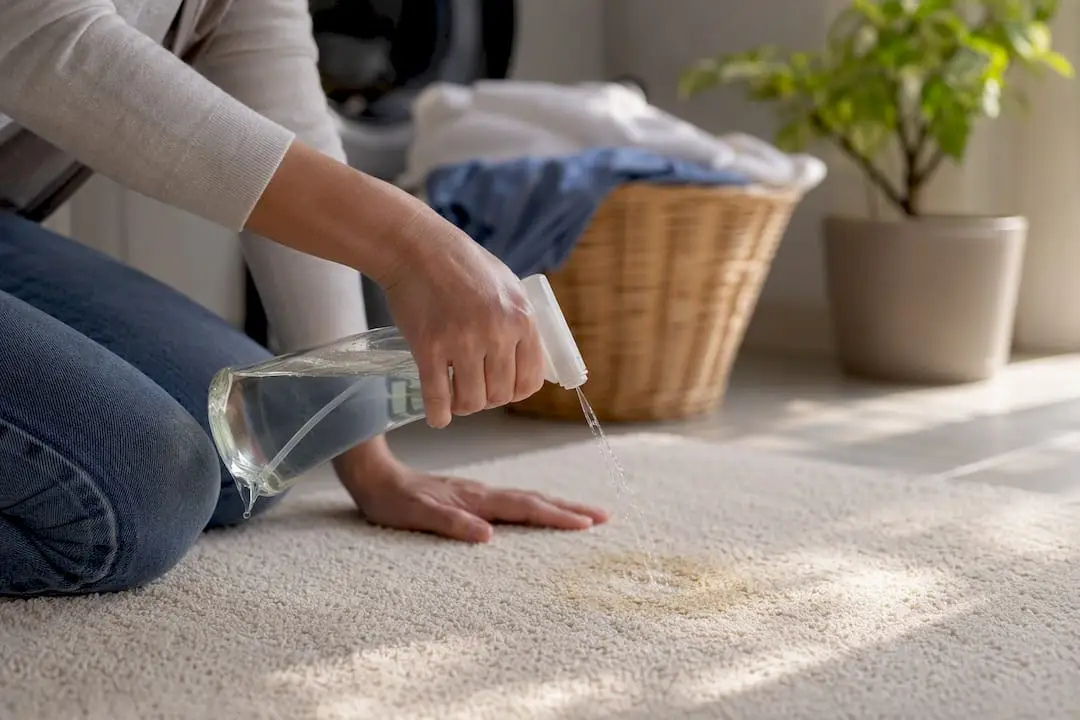
- Urine: blot up excess liquid, saturate the spot with enzyme cleaner, let it sit for the label’s full contact time (often 10 to 15 minutes), then blot dry. Repeat for older stains.
- Vomit: put on gloves, scoop solids, apply enzyme cleaner to the residue, then rinse and dry. Carpet needs longer soak time than hard flooring.
- Fur and odor: vacuum thoroughly first, sprinkle baking soda over the area, let sit 15 minutes, vacuum again, then wipe with your mild soap solution.
Enzyme cleaners work by breaking down the specific compounds that cause the smell, not just masking it, which is why they’re the professional standard for these jobs.
Pro Tip: Keep pets out of the room during the full enzyme contact time. rinsing or letting a curious dog walk through too early interrupts the reaction and the odor comes right back.
When Does a Pet-Friendly Home Need Real Disinfecting?
Most everyday messes don’t need disinfectant. save it for a sick pet, a bite or wound cleanup, or contamination from raw pet food or litter. That’s when you’re managing actual pathogens, not just dirt.
- Isolate pets in another room, ideally with a door closed
- Ventilate with an open window or fan running
- Follow the label’s exact contact time. Wiping it up early defeats the purpose
- Rinse and air the surface thoroughly before pets return
- Birds especially should move to a distant, ventilated space during any aerosol or fume-heavy cleaning, since their respiratory systems are far more sensitive than a dog’s or cat’s
For raw sewage, mold, or anything involving pest control chemicals, call a professional rather than handling it yourself.
What’s the Right Way to Store Products and Handle Exposure?
Store all cleaners in a latched cabinet or a caddy with a secured lid, never left open on a counter or floor. Dispose of used wipes and empty containers in a lidded trash can pets can’t access.
- Ventilate every room you clean and don’t let pets back in until the surface looks and feels fully dry
- If a pet walks through wet cleaner, wipe their paws or bathe them promptly
- Don’t induce vomiting unless a vet or poison control tells you to
- Call ASPCA APCC (888-426-4435) or Pet Poison Helpline (855-764-7661) immediately if you suspect exposure, and have the product label in hand when you call
That last detail matters: the ASPCA APCC guide notes emergency calls tied to household cleaning supplies have climbed, and having the label ready cuts down the time a vet needs to identify the active ingredient.
Why a Pet-Aware Cleaning Team Changes the Equation
Getting the dilution, contact time, and dry-time rule right every single week is a lot to manage alongside actual pet ownership. That’s the gap a pet-aware professional closes: consistent product choices and consistent protocol, without you having to double-check a label every visit.
— Local
Book a Pet-Aware Cleaning With Purehomescleaning
Purehomescleaning is the alternative to guessing whether your cleaner remembered the dilution ratio this week. every visit follows the same eco-friendly product standards and pet-safe protocol, whether it’s a routine clean, a deep clean, or a full move-in/move-out job.

You can request pet-friendly product preferences directly when you book, and our team ventilates and confirms dry surfaces before pets are let back into a room. Browse the full range of cleaning services to see what’s included in routine versus deep cleaning, and know upfront: this covers home cleaning, not veterinary care, so any exposure concern still goes to your vet or a poison control hotline first. When you’re ready, book your cleaning online and specify pet-safe products in the notes.
Sources
FAQ
What Cleaners Are Safe Around Pets?
Baking soda, mild unscented dish soap diluted in water, and enzyme-based cleaners are generally safe when used as directed. Avoid bleach, ammonia, phenols, and any product with concentrated essential oils.
How Can I Tell if a Cleaner Is Truly Pet Safe?
Check the ingredient list rather than the front label. products marketed as “natural” can still contain essential oils or phenols that are toxic to pets, so look for enzyme-based or fragrance-free formulas instead.
How Can I Make My House Smell Good Without Harming My Pets?
Baking soda absorbs odors without any fumes, and enzyme cleaners eliminate the source of pet-related smells rather than masking them. Skip scented plug-ins and essential oil diffusers, which can affect pets’ sensitive respiratory systems.
What Is the Best Pet-Safe Disinfectant?
Accelerated hydrogen peroxide formulas disinfect effectively with lower toxicity than bleach or phenol-based cleaners, provided you still ventilate, follow the label’s contact time, and let surfaces dry before pets return. For routine cleanings, Purehomescleaning applies these same safer disinfecting practices as part of its standard protocol.