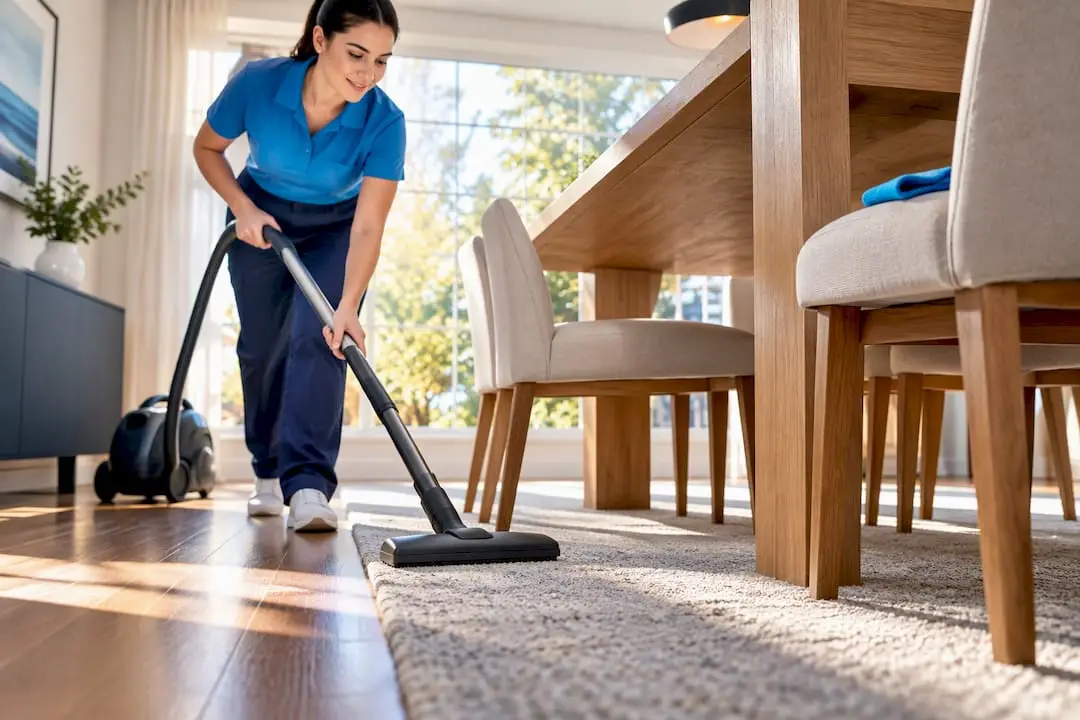
For most busy homeowners, recurring cleaning beats a one-off deep clean because it prevents the mess from ever piling up in the first place. It works best for families with kids, pets, allergy sufferers, or anyone who entertains often and can’t afford a chaotic house on short notice. The rest of this guide breaks down the time, health, and cost reasons recurring service wins, how it stacks up against a single deep clean, and what to look for when you book one.
TL;DR:
- Recurring cleaning prevents dirt buildup and extends the lifespan of floors and furniture, saving costs on repairs and replacements over time.
- Weekly or biweekly schedules are best for households with pets, children, or high foot traffic, while monthly plans suit smaller or less active homes.
- A professional service includes customizable checklists, eco-friendly products, and vetted staff, which enhances consistency and safety in cleaning routines.
- Deep cleaning is preferable after moving, renovations, or periods of neglect, but regular maintenance keeps homes cleaner and healthier.
- Selecting a provider with insurance, clear policies, and transparent booking minimizes the risk of issues and ensures a reliable recurring service.
Table of Contents
- What Recurring Cleaning Means and How Often to Book It
- Why Recurring Cleaning Actually Pays Off
- Recurring Cleaning vs. One-Time Deep Cleaning: Which Do You Need?
- How Often to Schedule and What’s Typically Included
- What to Look for Before You Book a Recurring Plan
- How Professional Recurring Service Delivers on These Benefits
- Why Recurring Cleaning Is an Investment, Not a Luxury
- Book a Recurring Plan With Pure Homes Cleaning
- Sources
- FAQ
What Recurring Cleaning Means and How Often to Book It
Recurring cleaning is a scheduled, repeat service, weekly, biweekly, or monthly, that maintains your home at a consistent baseline instead of restoring it after things get out of hand. A one-off deep clean is remediation: it tackles buildup, grime, and neglect. Recurring service is maintenance: it keeps that buildup from happening again.
Each cadence fits a different household:
- Weekly works well for larger families, homes with pets, or anyone who wants a consistently “guest ready” house.
- Biweekly is the most common choice for two-income households, covering kitchens, bathrooms, floors, and dusting without breaking the budget.
- Monthly suits smaller households or single occupants who keep up with light cleaning between visits but want a periodic reset.
A typical recurring visit covers kitchens, bathrooms, living areas, floors, and dusting, with add-ons like inside-oven cleaning, interior windows, or laundry available on request. Providers like Pure Homes Cleaning’s standard cleaning service usually let you customize the task list at booking, so the plan matches your home rather than a generic checklist.
Why Recurring Cleaning Actually Pays Off
The biggest benefit of recurring cleaning isn’t the clean floor. It’s what never happens: the Saturday morning lost to scrubbing a bathroom that got away from you, or the scramble before guests arrive because the house needed two hours of work you didn’t have.
Time savings are the most immediate payoff. A family juggling school pickups, work calls, and everything in between typically loses several hours a week to cleaning tasks when they’re handled reactively. Recurring service converts that scattered time into a fixed block someone else handles, which usually frees up an entire evening or weekend morning that would otherwise disappear into chores.
Consistent cleanliness prevents the “rescue deep clean” cycle. When a home is cleaned on a regular schedule, dirt and clutter never reach the point where you need a marathon session to fix it. Skipping cleaning for a month doesn’t just create more mess. It creates compounding mess: grease bonds to stovetops, soap scum hardens on tile, and dust turns into a texture instead of a light film. Regular visits interrupt that cycle before it starts.
Health and indoor air quality improve with routine upkeep. The EPA identifies frequent vacuuming, damp-dusting, and weekly bedding washes as effective ways to reduce indoor dust and particulate matter. That matters because dust doesn’t just sit on surfaces. It carries pet dander, pollen, and skin cells that get kicked back into the air during normal household activity. Recurring cleaning keeps that load low instead of letting it accumulate for weeks between cleanings.
Homes with infants and young children see outsized benefits from this consistency. Interventions that included professional cleaning have been shown to rapidly reduce dust exposures tied to household pollutants, which matters most in households where kids spend a lot of time on floors and carpets.
Cleaning isn’t a standalone fix for air quality, though. The EPA is clear that filtration, ventilation, and source control do the heavy lifting for indoor air, with cleaning acting as one layer in a broader strategy rather than a replacement for good airflow or air filtration. A HEPA vacuum paired with recurring service tends to compound that benefit, since it captures fine particles instead of redistributing them.
Pro Tip: If anyone in your household has allergies or asthma, ask your cleaning provider whether they use HEPA filtration vacuums. Standard vacuums can stir up more allergens than they remove, undoing some of the benefit of the visit itself.
There’s a mental-load benefit that’s easy to underestimate, too. Households running on two incomes and a school calendar carry a constant low-grade awareness of what needs cleaning and when. Shifting that task off your plate on a fixed schedule removes a recurring decision point, not just a chore.
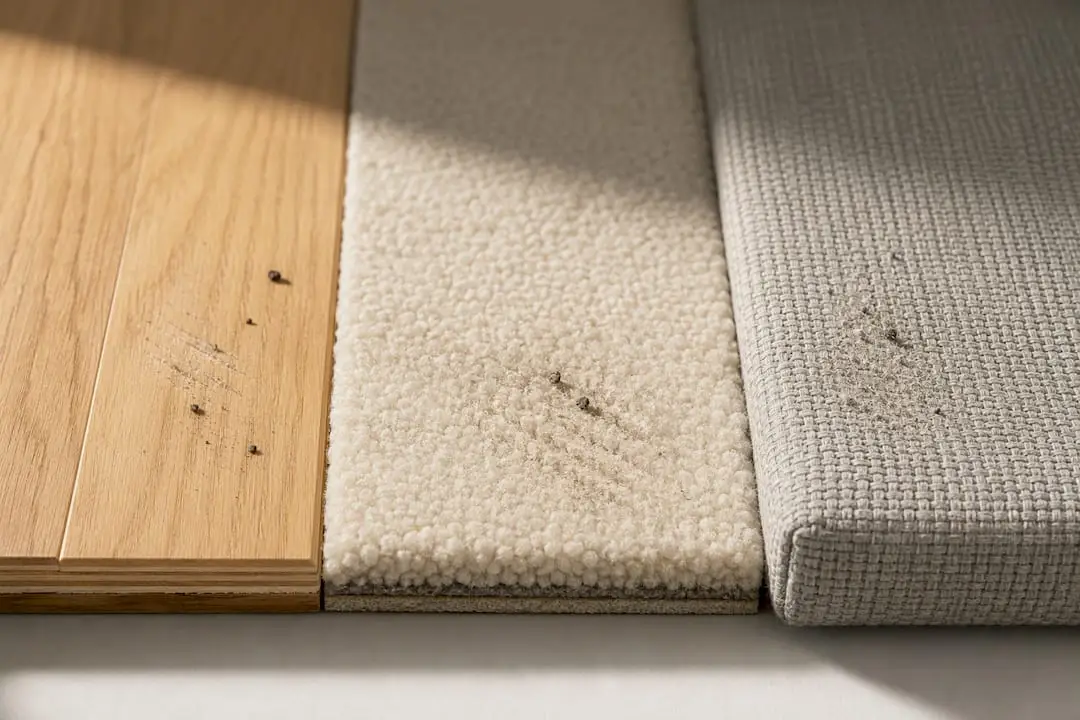
Long-term maintenance savings show up in your furniture and floors. Grime and grit act like sandpaper on hardwood, carpet fibers, and upholstery over time. Homes cleaned on a schedule tend to show less wear because dirt gets removed before it can do damage, which can push back the timeline on refinishing floors or replacing carpet.
Recurring Cleaning vs. One-Time Deep Cleaning: Which Do You Need?
Recurring cleaning and deep cleaning solve different problems, and confusing them is the most common mistake homeowners make when booking a service.
Recurring cleaning maintains a baseline: it keeps a home that’s already reasonably clean from sliding backward. Deep cleaning remediates: it resets a space that has fallen behind, whether from months of light upkeep, a big life event, or a home that’s simply never had a real deep clean. If you’re comparing the two directly, standard versus deep cleaning comes down to scope, not just price.
A deep clean still makes sense in specific situations:
- Moving into or out of a home, when you need a full reset regardless of the home’s condition (see deep cleaning vs. move-out cleaning for the distinction).
- After renovation or construction, when dust has settled into every surface.
- When allergy symptoms are severe and carpets haven’t been treated in a long time. A controlled study found that steam cleaning combined with vacuuming reduced dust mite allergen levels more effectively, and for longer, than vacuuming alone.
- After a stretch of neglect, illness, or a busy season that pushed cleaning aside entirely.
Here’s the simplest way to decide: if your home is generally in good shape and you want to keep it that way, book recurring. If it’s already behind, book a deep clean first, then start recurring service to keep it from backsliding again. Most homeowners who start with a deep clean and move into a recurring plan spend less over a year than those who book sporadic one-off cleans, since fewer visits require the extra time a deep clean demands.
How Often to Schedule and What’s Typically Included
Frequency isn’t one-size-fits-all. A few factors should drive your decision:
- Household size and activity level. More people generally means more mess, faster.
- Pets. Shedding breeds push many households toward weekly service. Managing pet hair between visits is easier with a realistic daily routine that covers the basics.
- Allergies or respiratory sensitivities. More frequent visits reduce the dust and dander load between cleanings.
- Flooring type. Carpet traps more allergens and dirt than hardwood or tile, which can justify a shorter interval.
- Foot traffic. Home offices, frequent guests, or kids constantly in and out of the house wear down cleanliness faster.
Standard visits typically cover kitchens, bathrooms, floors, dusting, and common living spaces. Add-ons like inside the oven, interior windows, and laundry usually cost extra and should be requested at booking rather than assumed.
Pricing for recurring plans is usually framed as a per-visit rate that drops as frequency increases, since providers can plan routes and staffing more efficiently around a set schedule. Thinking in terms of cost per week rather than cost per visit tends to give a clearer sense of value, especially when comparing recurring service against the cost of an occasional deep clean. Ask your provider about skip weeks, holiday holds, and cancellation policies before locking in a schedule, since flexibility matters more once life gets unpredictable.
What to Look for Before You Book a Recurring Plan
Not all recurring cleaning services are built the same, and the difference usually shows up after the first visit, not during it.
Prioritize providers that can confirm:
- Insurance and background-checked staff, so you’re covered if something goes wrong and confident about who’s in your home.
- Eco-friendly product options, especially if you have kids, pets, or anyone with sensitivities in the house.
- A written or app-based task list for each visit, so nothing gets skipped or left to memory.
- A satisfaction guarantee that spells out what happens if a visit falls short.
- Transparent online booking and clear cancellation terms, which cut down on scheduling friction.
At booking, ask directly: who supplies the cleaning products, how are staff vetted, what happens if you need to skip or reschedule a visit, and how is a missed task handled? Vague answers to any of those are a red flag. So is a provider with no visible reviews or no proof of insurance.
Pro Tip: Ask to see a sample task checklist before your first visit. A provider that can’t produce one probably isn’t tracking consistency between cleanings, which defeats the purpose of going recurring in the first place.
Providers focused on service quality over volume, the kind that also invest in how they communicate scope and policy to customers, tend to be the ones with clearer booking processes and fewer surprises down the line.
How Professional Recurring Service Delivers on These Benefits
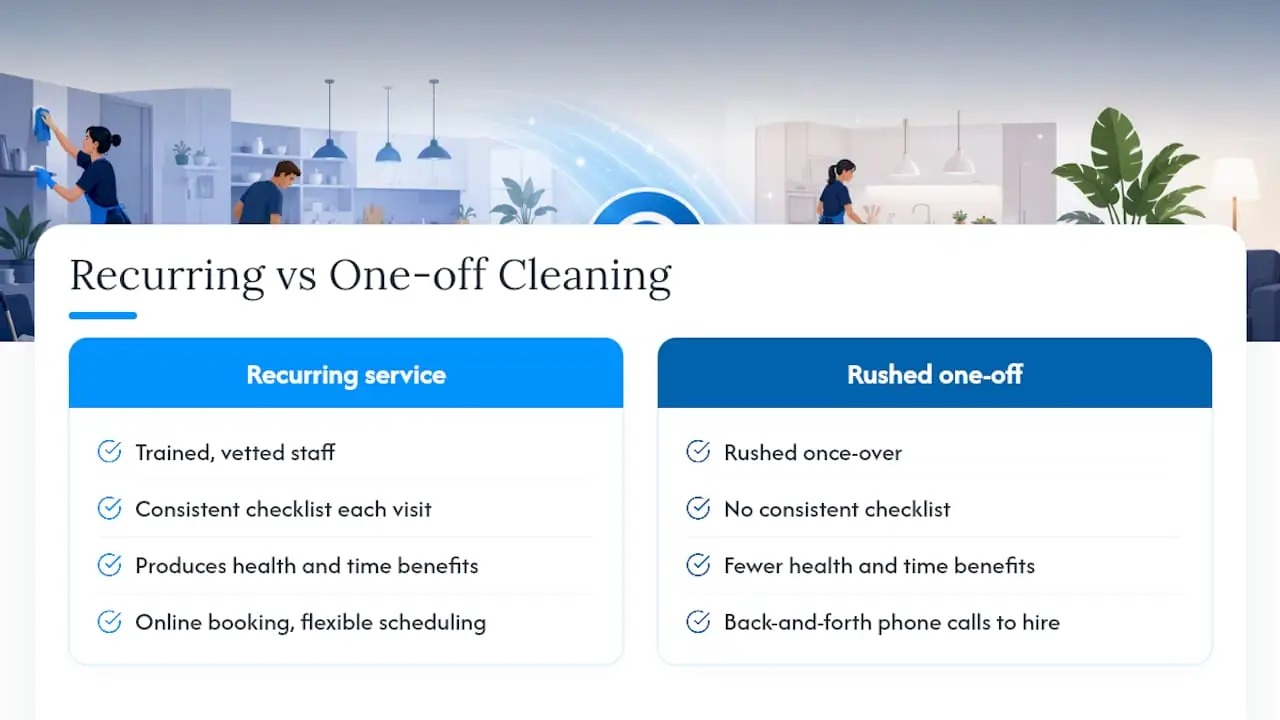
Some local cleaning companies run standard cleaning, deep cleaning, and move-in or move-out cleaning across the Washington, DC area and surrounding regions, often offering online booking with customizable task lists. Recurring plans work because trained, vetted staff follow a consistent checklist every visit instead of a rushed once-over, which is what actually produces the health and time benefits described above. Eco-friendly products keep the process safer for kids and pets without sacrificing results. Flexible scheduling, online booking, and periodic promotions make it easier for busy households to start a recurring plan without the back-and-forth phone calls that used to define hiring a cleaning service.
Why Recurring Cleaning Is an Investment, Not a Luxury
Recurring cleaning gets dismissed as a convenience purchase, something you treat yourself to rather than something you budget for. That framing misses the point. The evidence on dust, allergens, and household mental load makes a stronger case: this is a maintenance decision, closer to changing your furnace filter than to a spa day. Families that treat it that way tend to stop thinking of it as optional the first time they skip a month and feel the difference.
— Local
Book a Recurring Plan With Pure Homes Cleaning
Some cleaning services provide a fixed, trained team on a set schedule instead of the patchwork of one-off bookings or DIY weekends most households default to. That means no re-explaining your home’s quirks to a new cleaner every time, no guessing whether this visit will actually cover what the last one missed.
Booking takes a few minutes through Pure Homes Cleaning’s online booking system, where you can set your cadence, add specific tasks, and lock in a schedule that fits your household. First-time customers can also ask about current promotional discounts when booking. If you’re still deciding between a maintenance plan and a one-time reset, the services page breaks down standard cleaning, deep cleaning, and move-in or move-out options so you can pick the right starting point.
Sources
Claims about dust, allergens, and cleaning frequency in this guide draw on the EPA’s guidance on indoor particulate sources, the EPA’s air cleaner guide, CDC cleaning and disinfecting guidance, and a peer-reviewed study on dust mite allergen reduction.
- Sources of indoor particulate matter (PM) | US EPA
- Effectiveness of physical interventions to reduce house dust mite allergens (PMC)
FAQ
What Is the 5-5-5 Rule for Cleaning?
The 5-5-5 rule is a decluttering method where you spend 5 minutes each on 5 items in 5 different areas of your home, tackling small pockets of clutter without committing to a full cleaning session. It pairs well with recurring cleaning, since it keeps surfaces clear enough for your scheduled cleaner to focus on deep tasks like floors and bathrooms instead of clutter.
What Are the Benefits of Cleaning Regularly?
Regular cleaning prevents dirt and grime from building up, which reduces the time and effort needed for each visit and helps limit dust and allergen accumulation. The EPA links frequent vacuuming and damp-dusting to lower indoor particulate levels, which supports both cleaner air and less visible mess.
Is It Healthy to Clean the House Every Day?
Light daily upkeep, wiping counters, doing dishes, tidying high-traffic areas, is healthy and helps maintain a baseline that makes deeper cleanings easier. Full disinfecting isn’t necessary daily; the CDC recommends disinfecting mainly when someone is sick, since regular soap-and-water cleaning already removes most germs.
What Is the 80/20 Rule for House Cleaning?
Recurring cleaning plans typically prioritize these high-impact areas at every visit, saving deeper add-on tasks for less frequent scheduling.
How Much Does Recurring Cleaning With Pure Homes Cleaning Cost?
Pricing for standard and deep cleaning plans through Pure Homes Cleaning is available on the services page, where you can get a quote based on your home’s size and chosen frequency. Costs vary by cadence and add-ons, so a direct quote gives the most accurate picture for your household.