A complete deep cleaning checklist walks through every room, every major appliance, and every spot regular cleaning skips, and following it from start to finish typically takes a full weekend for an average home. Work through the kitchen, bathrooms, bedrooms, living spaces, laundry area, and garage in order, hit the appliances and overlooked corners along the way, and you’ll end with a home that’s genuinely clean, not just tidied up.
TL;DR:
- Deep cleaning frequency depends on household size, pets, and humidity, with bedrooms, living spaces, and garages typically cleaned once or twice a year.
- Appliances such as refrigerators, ovens, and dishwashers require regular attention beyond surface cleaning to maintain efficiency and prevent odors.
- Proper preparation, including decluttering and gathering supplies, is crucial to completing the full checklist efficiently within a limited timeframe.
- Homeowners often overlook high-touch surfaces, vents, window tracks, and appliance interiors, which significantly impact hygiene and appliance lifespan.
- Hiring professional cleaners is recommended for comprehensive, time-saving deep cleans, especially before moves, illnesses, or when time is limited.
Table of Contents
- What Counts as a Deep Cleaning Checklist (And How It Differs From Regular Cleaning)
- Before You Start: Prep, Supplies, and Safety
- Kitchen Deep Cleaning Checklist
- Bathroom Deep Cleaning Checklist
- Bedroom Deep Cleaning Checklist
- Living Room, Dining Room, and Home Office Deep Cleaning Checklist
- Laundry Room and Utility Area Deep Cleaning Checklist
- Garage and Outdoor Area Deep Cleaning Checklist
- Appliance Care and the Spots Everyone Forgets
- How Often to Deep Clean and How Long It Actually Takes
- Supplies, Cleaners, and Safety Basics
- What Professional Cleaners Prioritize That Homeowners Often Skip
- A Cleaning Team Lead’s Take on What Actually Slows People Down
- Ready to Skip the Weekend? Book a Professional Deep Clean
- Sources
- FAQ
What Counts as a Deep Cleaning Checklist (And How It Differs From Regular Cleaning)
Regular cleaning keeps a home presentable. Deep cleaning resets it. A deep clean checklist targets what weekly wiping and vacuuming leave behind: grease baked onto oven walls, mildew tucked into grout lines, dust colonies behind the refrigerator, and grime in window tracks nobody looks at until moving day.
Standard cleaning hits visible surfaces, countertops, floors, sinks, on a weekly or biweekly loop. Deep cleaning goes underneath, behind, and inside. It moves furniture, pulls appliances from the wall, and gets into gaskets and vents that never see a sponge otherwise. Experts organize the work room-by-room and recommend starting when the home is already reasonably tidy, since decluttering first makes the actual deep work faster and less chaotic to manage, according to Martha Stewart’s deep cleaning guide.
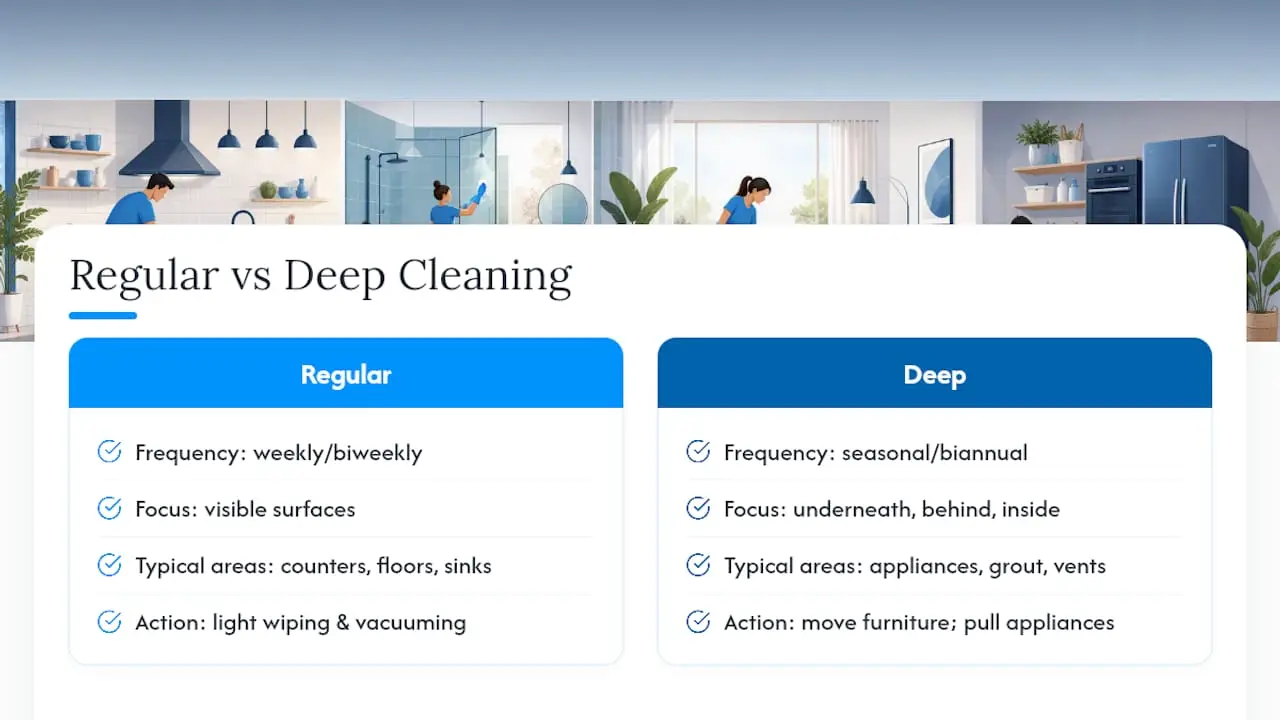
Most homeowners deep clean the whole house on a seasonal or biannual basis while handling kitchens and bathrooms more often, since those rooms accumulate grease and moisture fastest.
Before You Start: Prep, Supplies, and Safety
Clear the floors and surfaces in whatever room you’re tackling first. Clutter is the single biggest time sink in a deep clean because you end up cleaning around objects instead of through the space.
Build a portable caddy with your core supplies before you start room one. Martha Stewart’s cleaning team notes that gathering everything into a caddy up front cuts down on the back-and-forth trips that eat up half a cleaning day. Work top to bottom in each room, ceiling fans and light fixtures before floors, so dust falls onto surfaces you haven’t cleaned yet instead of ones you just finished.
- Clear clutter and floors before you touch a single surface
- Pack a caddy: microfiber cloths, all-purpose cleaner, degreaser, glass cleaner, gloves
- Work top to bottom, then left to right, in every room
- Split the project across two or three days if a single weekend feels tight
- Open windows or run exhaust fans whenever you’re using strong chemicals
- Never mix bleach with ammonia or vinegar. The combination produces toxic fumes.
- If pets or renters are in the home, confirm which products are safe and which areas require notice before you deep clean
Pro Tip: Timebox each room to two hours max on your first pass. If you’re still going after two hours, you’re detail cleaning instead of deep cleaning, and that’s a job for a follow-up session, not day one.
Kitchen Deep Cleaning Checklist
The kitchen eats more deep cleaning time than any other room, mostly because of the appliances. Budget three to four hours here alone if you’re doing it properly.
- Empty and clean the refrigerator. Pull everything out, toss expired items, and wipe down shelves and drawers with warm water and mild soap. Vacuum the coils on the back or underneath, dust buildup there forces the compressor to work harder and drives up energy use. Wipe the door gaskets, where mold loves to hide.
- Degrease the stovetop and range hood. Use a degreasing spray and let it sit for a few minutes before wiping. Remove and soak the hood filter if it’s washable.
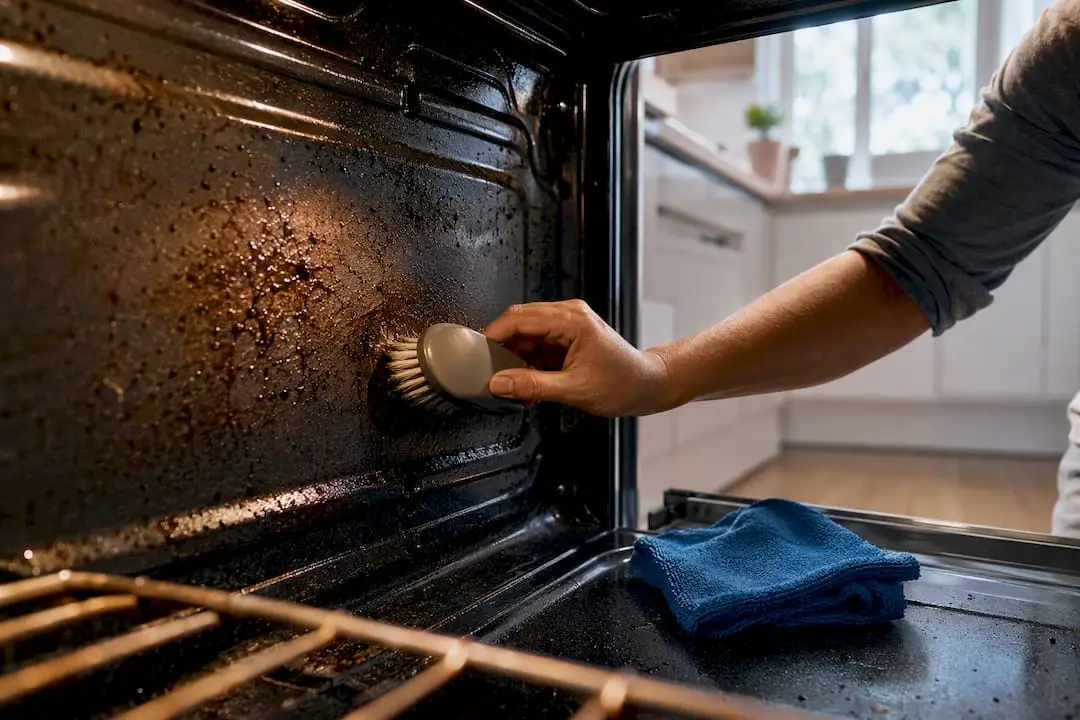
- Deep clean the oven. Use the self-clean cycle if your model has one, or apply an oven cleaner and let it sit overnight before scrubbing. Wipe down the door glass and racks separately.
- Clean the microwave inside and out. Microwave a bowl of water with lemon slices for three minutes, the steam loosens dried food so you just wipe it away.
- Run the dishwasher through a cleaning cycle. Remove and rinse the filter first, then run an empty cycle with a dishwasher cleaner or a cup of white vinegar to clear mineral buildup and odor.
- Freshen the garbage disposal. Grind ice cubes with a few drops of dish soap, then follow with citrus peels to cut odor.
- Wipe out cabinet interiors and clean the backsplash. Grease travels farther than you’d think; splash zones behind the stove often need a degreaser, not just soap and water.
- Descale the sink and clean the drain. A paste of baking soda and water works on stainless steel without scratching it.
- Finish with the floors, including the corners and under any pull-out furniture or trash bins.
Kitchen appliances deserve their own attention beyond a quick wipe. The Spruce’s deep cleaning guide recommends treating refrigerator coils, oven interiors, and dishwasher-clean cycles as non-negotiable steps, not optional extras, because skipping them shortens appliance lifespan and lets odors build. A printable, room-specific plan can help you track exactly which steps you’ve finished. Our kitchen deep cleaning checklist breaks the whole sequence into a timeboxed format you can follow room by room.
Bathroom Deep Cleaning Checklist
Bathrooms combine moisture, soap residue, and mineral buildup, which means mildew and grime show up faster here than almost anywhere else in the house.
- Scrub the tub and shower walls with a bathroom-specific cleaner, focusing on corners where soap scum collects.
- Descale the showerhead. Fill a plastic bag with white vinegar, tie it around the showerhead, and let it soak for 30 minutes to dissolve mineral deposits.
- Deep clean the grout lines with a stiff brush and a baking soda paste, or a dedicated grout cleaner for stains that have set in.
- Clean the toilet completely, bowl, tank, base, and the often-ignored bolts at the floor. A toilet brush handles the bowl; a disinfecting wipe handles everything else.
- Sanitize high-touch surfaces: light switches, door handles, and faucet handles. These get missed constantly during routine cleaning, and This Old House’s overlooked-spots guide flags them as a top source of household germs that a quick wipe-down never reaches.
- Clean the exhaust fan cover by removing it, vacuuming the dust, and wiping it down before reinstalling. A clogged fan can’t pull humidity out, which feeds mold growth.
- Wipe down mirrors and glass shower doors with a streak-free glass cleaner.
- Launder bath mats and towels on a hot cycle, and swap in fresh ones once the room is done.
Bathroom deep cleans generally take 45 minutes to an hour per full bath, longer if grout or hard water stains have had months to set in.
Bedroom Deep Cleaning Checklist
Bedrooms don’t look dirty the way kitchens and bathrooms do, but dust, dead skin cells, and allergens build up in fabric and under furniture faster than most people realize.
- Strip and wash all bedding, including pillow shams and mattress pads, on the hottest safe setting
- Wash or fluff pillows according to their care label; most synthetic pillows can go through the wash
- Flip or rotate the mattress if the manufacturer recommends it, and vacuum both sides with an upholstery attachment
- Vacuum underneath the bed frame, this is one of the biggest dust traps in the entire house
- Wipe down the headboard and bed frame with a damp microfiber cloth
- Empty closets completely, wipe shelves and rods, then vacuum the floor before anything goes back in
- Sort clothes into keep, donate, and toss piles while the closet is empty. It’s the only time this task feels manageable
- Dust dresser tops, nightstands, and any decor, then vacuum curtains or blinds
Set aside about an hour per bedroom, longer for a closet that hasn’t been sorted in a year or more.
Living Room, Dining Room, and Home Office Deep Cleaning Checklist
Shared spaces collect a mix of dust, pet hair, and fabric grime that regular vacuuming only skims.
- Vacuum upholstery thoroughly, including under cushions, then spot-treat any stains with an upholstery-safe cleaner
- Shampoo area rugs if they haven’t been cleaned in six months or more, or send them out for professional cleaning
- Dust and wipe down electronics, including the vents on the back of TVs and game consoles where dust accumulates fastest
- Clean shelving unit by unit, removing books and decor to wipe the actual shelf surface
- Move furniture away from the wall to vacuum and dust the floor and baseboards behind it
- Polish wood furniture with a product made for the finish, avoid generic sprays on antiques or unfinished wood
- Clean window treatments: vacuum blinds slat by slat, or launder fabric curtains if the care tag allows it
- Wipe baseboards throughout the room with a damp cloth; they trap more dust than most people expect
Plan on 90 minutes to two hours for a typical living room, more if you’re shampooing a rug.
Laundry Room and Utility Area Deep Cleaning Checklist
The washer and dryer need their own maintenance pass, since buildup inside these machines affects both performance and safety.
- Run a cleaning cycle in the washer using a washer-cleaning tablet or a cup of white vinegar to clear detergent residue and odor
- Wipe down the detergent drawer and the rubber door seal, where mold and mildew build up fastest
- Empty the lint trap completely and vacuum inside the dryer’s lint compartment
- Inspect and vacuum the dryer vent line running to the exterior; manufacturers and cleaning professionals recommend this regularly because built-up lint in the venting is a known fire risk
- Vacuum behind and underneath both machines, where lint and dust pile up unseen
- Scrub the utility sink and wipe down any nearby shelving
This area takes about 30 to 45 minutes and is easy to skip, which is exactly why it belongs on the checklist.
Garage and Outdoor Area Deep Cleaning Checklist
Garages and patios rarely make anyone’s weekly cleaning routine, so a deep clean here often means catching up on months of neglect at once.
- Sort everything into keep, donate, and toss piles before you clean a single surface
- Sweep the garage floor, then scrub oil stains or grime with a degreaser and stiff brush
- Wipe down shelving units and any storage bins before putting sorted items back
- Wipe the garage door opener, remote, and door hardware, which collect grease and dust from regular use
- Wash or pressure-wash the patio surface to lift ground-in dirt and mildew
- Clean outdoor furniture cushions and frames, and scrub grill grates with a wire brush before the next cookout
Budget half a day for a garage that’s gone a full year without attention.
Appliance Care and the Spots Everyone Forgets
Certain tasks get skipped in almost every home cleaning routine, not because they’re hard, but because they’re invisible until you go looking.
- Vacuum refrigerator coils and pull the unit away from the wall to clean behind and underneath it
- Change HVAC filters and vacuum vents, registers, and return grilles throughout the house
- Do a high-dusting pass on ceiling fan blades, crown molding, and the tops of door frames
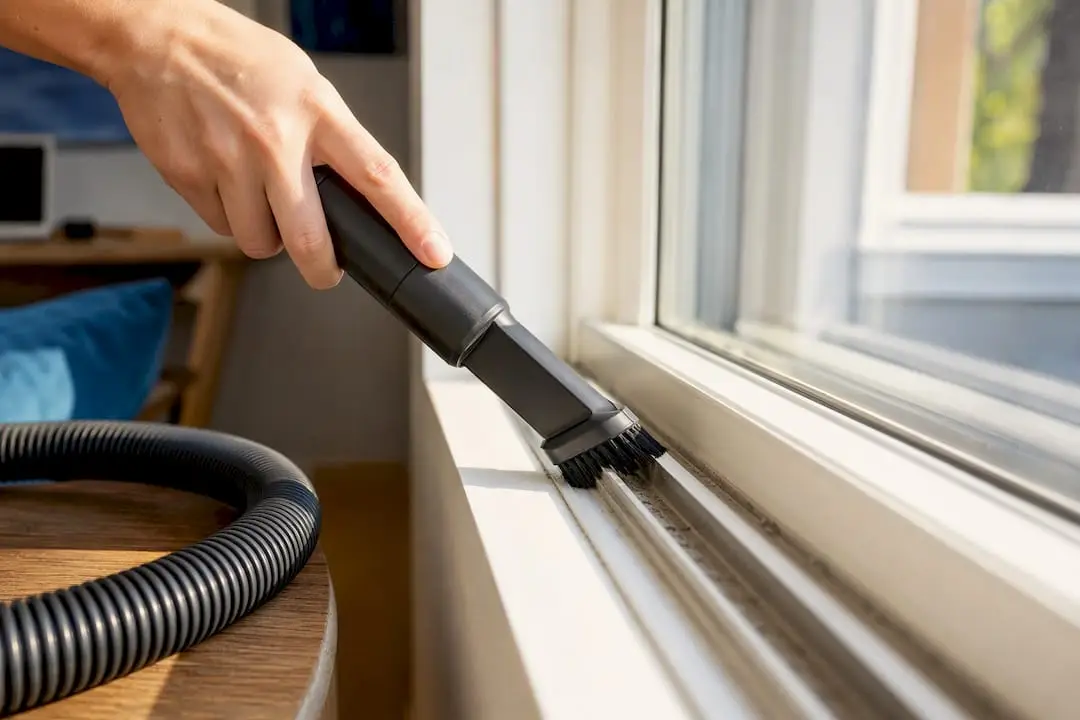
- Clean window tracks with a vacuum attachment or an old toothbrush, dirt and dead insects collect there constantly
- Vacuum and wipe down blinds slat by slat instead of just dusting the visible surface
- Wipe baseboards and door frames throughout the house, not just in rooms you’re actively deep cleaning
Sanitizing high-touch surfaces, light switches, doorknobs, remotes, cabinet pulls, is one of the most frequently missed steps in any home cleaning routine, and it delivers an outsized hygiene payoff for the small amount of time it takes, according to This Old House. Our guide to high-touch surface cleaning walks through the full protocol if you want a room-by-room breakdown.
Pro Tip: Keep a small vacuum attachment brush in your caddy specifically for window tracks and vents. Using the wrong tool here, a rag instead of a brush, is the number one reason people skip this task entirely.
How Often to Deep Clean and How Long It Actually Takes
Most homes benefit from a full deep clean several times a year, with the exact frequency depending on household size, pets, and local humidity or allergen levels, as recommended by Care. Kitchens and bathrooms often need more frequent attention given how fast grease and moisture rebuild, while bedrooms, living spaces, and garages can usually stretch to a seasonal or annual schedule.
- Kitchen and bathrooms: monthly spot deep cleans, full deep clean quarterly
- Bedrooms and living spaces: deep clean every three to six months
- Garage, laundry vents, and outdoor areas: deep clean once or twice a year
- Whole-house deep clean: at minimum once annually, ideally each spring
A single room typically takes around an hour or two to deep clean properly. Deep cleaning a full house often takes several hours spread over a few days for most homeowners, longer if it’s been over a year since the last real deep clean. If you’re planning a seasonal reset, our spring cleaning checklist lays out a cadence you can repeat every year without reinventing the plan each time.
Supplies, Cleaners, and Safety Basics
The right tools matter more than the right cleaner in most cases. Microfiber cloths, detail brushes, an extendable duster, and a vacuum with hose attachments cover nearly every task on this checklist, and using the correct tool for each job speeds up the entire process compared to improvising with whatever’s under the sink.
- Bleach handles heavy mold and disinfecting but should never be mixed with ammonia or vinegar
- Vinegar and baking soda cut grease and mineral buildup without harsh fumes, useful for most everyday surfaces
- Enzyme cleaners break down organic stains and odors, ideal for pet messes and laundry
- Choose fragrance-free or plant-based formulas around pets and young kids, and always ventilate the room
- Wear gloves when using degreasers, oven cleaner, or anything with a strong chemical warning label
Some manufacturers now push eco-friendly formulations that skip harsh chemicals entirely, and Dyson’s home cleaning guide notes these work fine for routine grime but still recommends stronger commercial products for set-in grease or mold. Our pet-safe cleaning guide covers which products to avoid entirely if animals share the home.
What Professional Cleaners Prioritize That Homeowners Often Skip
Professional teams work rooms in a set sequence, top to bottom, dry to wet, so nothing gets recontaminated halfway through. Color-coded cloths keep bathroom rags separate from kitchen rags, which stops bacteria transfer between rooms, a habit our color-coded cleaning cloth system is built around.
- Use a dedicated checklist per room instead of relying on memory, it’s how pros avoid skipping steps under time pressure
- Reach for eco-friendly, pet-safe products by default rather than switching only when asked
- Hire out tasks that carry real risk or require specialty tools: dryer vent clearing, HVAC duct cleaning, and heavy appliance servicing are worth leaving to a technician like Another Cycle Appliance Repair rather than DIYing with the wrong equipment
- Treat interior doors and trim with the right product; harsh cleaners can strip finish, and this guide on cleaning interior doors covers what actually works without damaging the wood
A Cleaning Team Lead’s Take on What Actually Slows People Down
Homeowners lose the most time switching tasks mid-room instead of finishing one category before moving to the next, dusting, then wiping, then vacuuming, in that order, saves real time over bouncing back and forth. The most common mistake we see corrected on a second visit is skipping appliance interiors because they “look fine” from the outside. They rarely are.
— Local
Ready to Skip the Weekend? Book a Professional Deep Clean
If a full weekend of scrubbing sounds like a lot to take on between work and family obligations, that’s exactly what a professional deep clean solves. Professional deep cleaning services can handle the entire checklist above, including kitchen appliances, bathroom grout, window tracks, and ceiling fans, often using eco-friendly, pet-safe products, so you don’t have to research which cleaner is safe for which surface.

Hiring out makes the most sense around a move, after an illness, or whenever the time cost outweighs the DIY savings. If you’re deciding between a routine refresh and the full treatment, our breakdown of standard versus deep cleaning can help you figure out which one your home actually needs right now. Moving out soon? Our move-out cleaning checklist covers the deposit-critical spots landlords check first. Ready to get it scheduled? Book a deep cleaning appointment with Purehomescleaning and get your whole house handled in one visit.
Sources
This checklist draws on room-by-room guidance from Martha Stewart, The Spruce, This Old House, and Care.com, each covering different pieces of the full process from appliance care to cleaning frequency. For device-specific steps, always check your appliance’s manufacturer manual first. Coil placement, filter types, and safe cleaning cycles vary enough between brands that a general checklist can only get you most of the way there.
- Use Our Deep Cleaning Checklist for Every Room in Your Home
- Overlooked places to clean
- A Complete Guide for Deep Cleaning Every Room in Your Home
- How often to deep clean a house
FAQ
What should be included in a deep cleaning checklist?
A complete checklist covers every room, kitchen, bathrooms, bedrooms, and living spaces, plus appliance-specific steps like refrigerator coils, oven interiors, and dishwasher cycles, and overlooked spots like window tracks, vents, and high-touch surfaces.
How much should I charge to deep clean a 2,000-square-foot house?
Pricing varies widely by region, home condition, and included tasks, so it’s best to request a direct quote from a local provider rather than rely on a flat national estimate.
How do you deep clean a house step by step?
Start by decluttering and gathering supplies, then work room by room from top to bottom: kitchen and appliances first, bathrooms next, then bedrooms, living spaces, laundry, and finally the garage or outdoor areas.
What are the six main stages of an effective deep clean?
A practical sequence runs: prep and declutter, kitchen and appliances, bathrooms, bedrooms and closets, living and shared spaces, and finally laundry, garage, and overlooked spots like vents and window tracks.
How long does a full deep clean actually take?
A single room typically takes one to two hours, while a full house runs six to ten hours split across a weekend, depending on how long it’s been since the last deep clean.