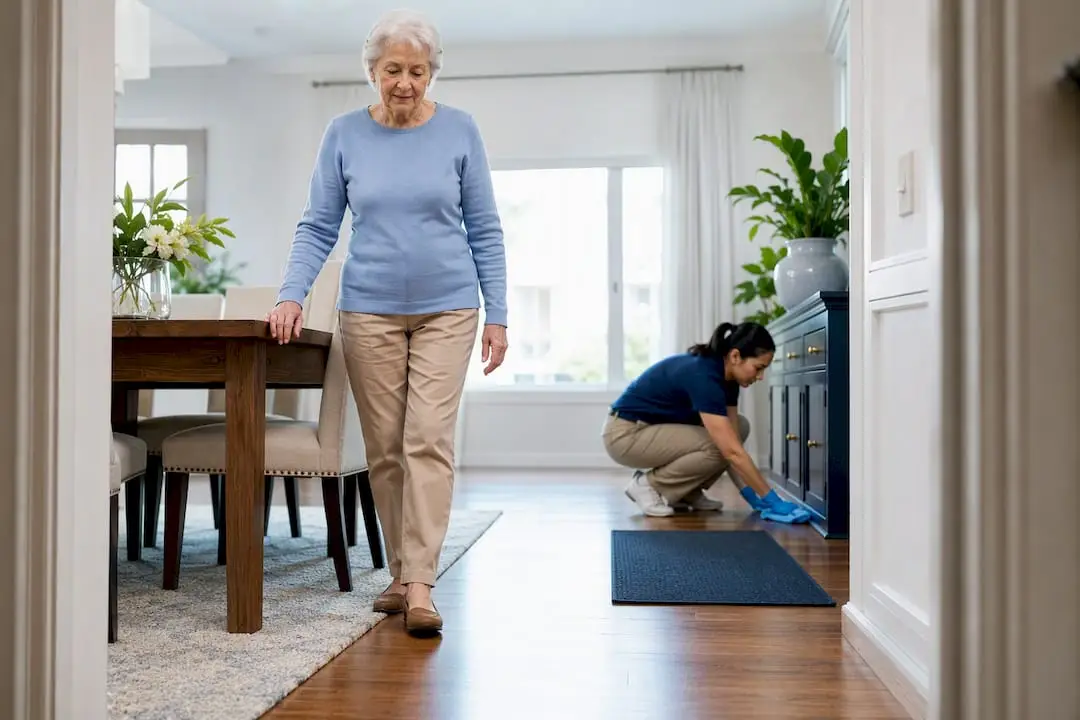
Senior-focused home cleaning is a safety-first, recurring service built around fall prevention, sanitized high-touch surfaces, and a consistent cleaner who knows the home. It cuts the physical risks of scrubbing floors or reaching under furniture, and it gives family members an extra set of eyes on the house. The right next step is simple: book a home consultation and ask for a safety-focused, recurring plan rather than a one-off clean.
TL;DR:
- Regular, weekly cleaning is recommended for seniors with limited mobility or household members managing health issues, to maintain consistent hazard reduction.
- Deep cleaning visits should be followed by lighter recurring services to monitor home safety and address emerging hazards promptly.
- Verify that cleaning providers carry liability insurance, conduct background checks, and assign a consistent cleaner to ensure safety and familiarity.
- Cleaners will not handle personal medical supplies or contaminated items, so biohazards should be pre-removed, and caregivers should stay present if dementia is involved.
- Custom requests for fragrance-free, eco-friendly products and a paced, clear communication style help create a comfortable and safe cleaning experience for seniors.
Table of Contents
- What Senior-Focused Cleaning Services Include
- Why Cleaning Is a Real Fall-Prevention Tool
- How Often Should a Senior’s Home Be Cleaned?
- How to Choose and Vet a Cleaning Provider
- What Cleaners Won’t Handle and How to Prepare
- Customizing the Service for Comfort and Health
- Deciding to Hire Someone Else to Clean
- How Pure Homes Cleaning Supports Senior Households
- Sources
- FAQ
What Senior-Focused Cleaning Services Include
A senior-focused cleaning visit covers the same rooms as a standard house cleaning, but the priorities shift toward what actually causes injuries or illness in an aging body. The core service typically includes:
- Kitchen: countertops, stovetop, sink, exterior of appliances, and floor mopping with attention to spills that could cause a slip.
- Bathroom: toilet, tub or shower, sink, mirrors, and disinfecting grab bars and faucet handles, which get touched constantly.
- Bedroom: dusting, vacuuming, fresh linens if requested, and clearing floor clutter that creates a trip hazard.
- Living areas: vacuuming, dusting surfaces and electronics, and wiping down remote controls, light switches, and doorknobs.
Common add-ons include laundry and linen changes, inside-refrigerator or oven deep-cleans, and light decluttering of hallways and stairwells. Most providers will not touch personal medical supplies or attempt to move heavy furniture without a second person present, and that boundary is worth confirming before the first visit. A full breakdown of service types helps set expectations for what a routine visit covers versus what belongs in a deeper reset.
Why Cleaning Is a Real Fall-Prevention Tool
About 25% of adults 65 and older fall each year, and roughly half of those falls require hospital care. Clutter, loose rugs, and wet floors are among the most avoidable triggers in that statistic, which is exactly where a senior-focused cleaning plan earns its keep.
Fall risk drops when a home stays consistently clear and dry. A trained cleaner treats hazard removal as part of the job, not an afterthought:
- Clearing walkways, stairwells, and doorways of boxes, cords, and loose items.
- Securing or removing throw rugs that slide on hard flooring.
- Letting floors air-dry fully before the client walks through, instead of leaving a damp surface behind.
- Disinfecting high-touch points like light switches, railings, and phone surfaces to lower infection risk between visits.
A good cleaner also acts as an informal set of eyes. If a loose stair tread, a burned-out hallway light, or a fraying rug edge shows up during a visit, that gets flagged to the family. That kind of ongoing observation is hard to replicate with a once-a-year deep clean.
How Often Should a Senior’s Home Be Cleaned?
Frequency depends on mobility, household size, and whether someone recently left the hospital. A useful way to think about it:
- Weekly fits seniors with limited mobility, pets, or a household member managing an illness, since surfaces and floors need constant upkeep.
- Biweekly works for most independent seniors who can handle light tidying between visits but need help with floors, bathrooms, and kitchens.
- Monthly suits seniors who are still highly active and mainly want deeper tasks handled, like baseboards, appliance interiors, or window sills.
Recurring service beats one-off cleanings because the same provider notices changes over time, whether that is new clutter, a decline in mobility, or a lingering odor that signals a larger problem. After a hospital stay, the most effective pattern is an initial deep clean followed by a lighter recurring schedule, which resets the home and then keeps it maintained without repeating heavy work every visit.
How to Choose and Vet a Cleaning Provider
Not every cleaning company is built for senior clients, and the vetting process matters more here than for a typical household booking. Before signing up, confirm the following:
- Proof of liability insurance and bonding, so damage or injury during a visit is covered.
- Background checks and verifiable references for anyone entering the home, especially if the cleaner will work independently.
- A consistent cleaner model rather than a rotating roster, so the same person learns the home’s layout and the client’s routine.
- A trial visit before committing to a long-term contract, plus a written scope of what is and is not included.
- An emergency contact process in case something feels off during a visit, like a client seeming disoriented or unwell.
Requesting background checks, proof of insurance, and a trial cleaning is standard advice for a reason: agencies typically build in that screening, while an independently hired cleaner may not carry any of it. Hourly rates vary by region and scope, but expect deep cleans and first-time visits to run higher than recurring maintenance cleanings, since the initial visit takes longer to assess and reset the home.
Pro Tip: Ask the provider directly how they handle a client who seems confused or unsteady during a visit. Their answer tells you more about training than any brochure will.
What Cleaners Won’t Handle and How to Prepare
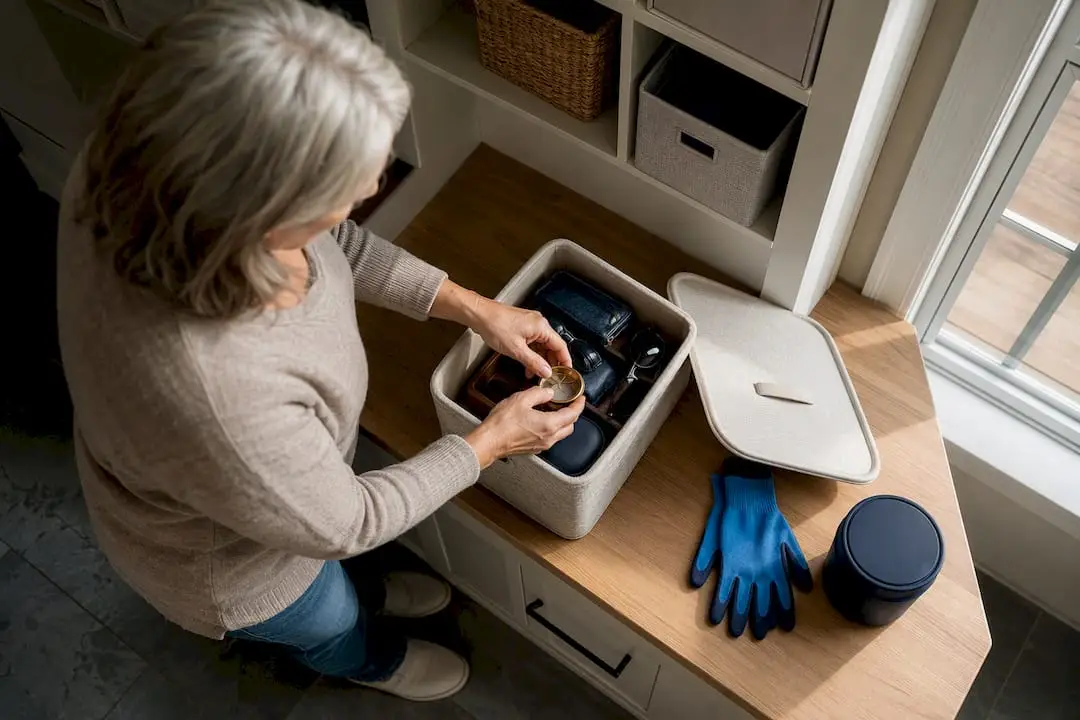
Professional cleaners are not medical staff, and reputable providers draw a clear line around that. Soiled linens, sharps, and medical waste typically fall outside the scope of a cleaning visit, and cleaners generally avoid touching medical equipment or contaminated items altogether.
Before a visit, a few small steps prevent confusion:
- Bag and set aside anything biohazard-related so the cleaner can work around it.
- Label medical devices like oxygen equipment so no one accidentally disconnects or moves them.
- Have a caregiver present if the client has dementia, since an unfamiliar person moving through the home can cause agitation or confusion without that reassurance.
If the need extends beyond environmental tasks into personal care, medication management, or mobility assistance, that calls for home-care staff, not a cleaning service. The two are complementary but distinct.
Customizing the Service for Comfort and Health
Small requests make a big difference for older clients, and most providers will accommodate them without extra hassle. Asking for low-VOC, fragrance-free products helps clients with respiratory sensitivities or chemical intolerance, and it’s a request worth making explicitly rather than assuming.
- Request the same cleaner for every visit so trust builds and changes in the home get noticed early.
- Ask the cleaner to pace the visit and communicate clearly, especially for clients who get anxious around unfamiliar noise or movement.
- Confirm product choices in advance if allergies or breathing conditions are a concern.
Pure Homes Cleaning builds customizable plans around exactly these preferences, including eco-friendly product options for households that need gentler cleaning chemistry. Decluttering hallways and closets during a visit also pairs well with broader home-organization strategies for families tackling a bigger seasonal reset.
Deciding to Hire Someone Else to Clean
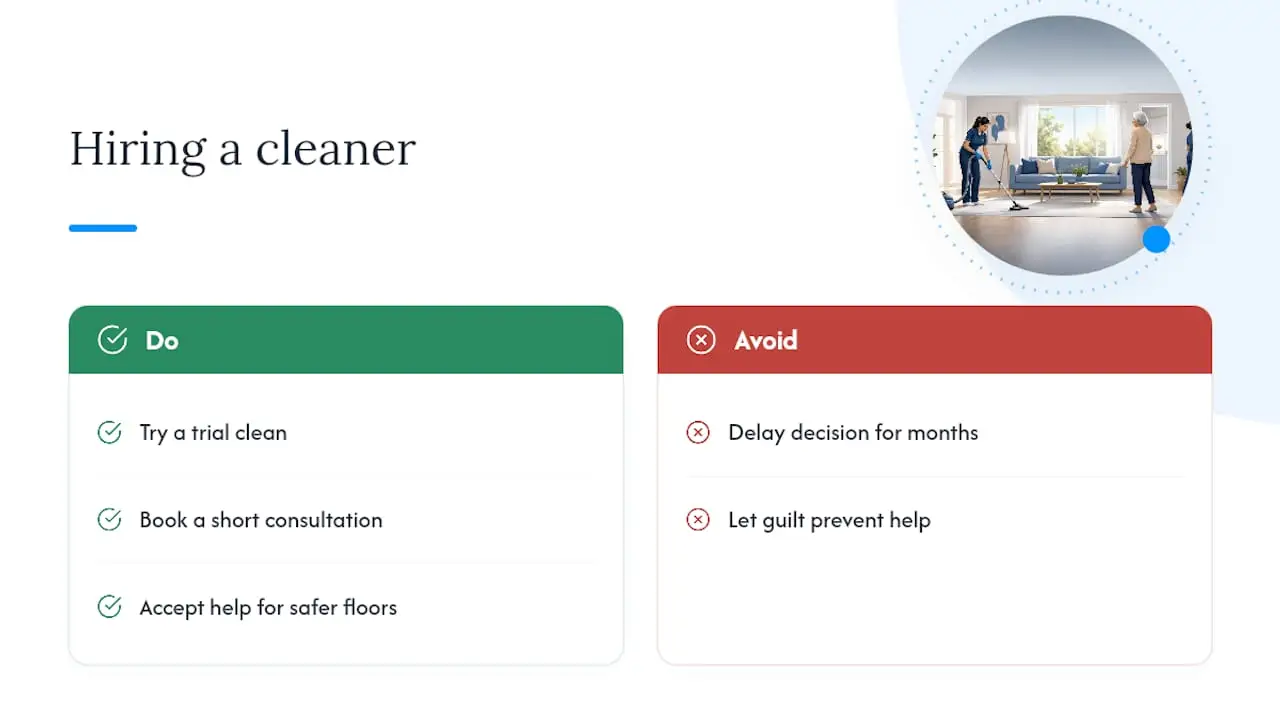
Handing over the keys to a cleaner can feel like an admission that something has changed, and for a lot of families it comes with guilt before it comes with relief. That relief usually shows up fast: fewer worries about a parent climbing on a step stool to dust a ceiling fan, fewer arguments about “I can still do it myself,” and a visibly safer floor.
The families who wait the longest tend to regret the delay, not the decision. A single trial clean or a short consultation costs little and answers the question faster than months of back-and-forth.
— Local
How Pure Homes Cleaning Supports Senior Households
Pure Homes Cleaning builds its recurring plans around exactly what this article covers: consistent scheduling, customizable scope, and eco-friendly product options for clients who need gentler chemistry. Families across Washington, DC, Virginia, and Maryland can request the same cleaner for every visit, start with a deep clean before settling into a lighter recurring cadence, and adjust the plan as needs change.

Getting started takes one call or a few clicks. A home consultation lets Pure Homes Cleaning map out the space, flag any access needs, and quote a plan that fits the household’s schedule and budget. From there, browse the full range of cleaning services or head straight to book a cleaning online and set the first visit for this week.
Sources
Fall statistics and aging guidance come from the National Council on Aging. Hiring guidance comes from AARP. Service structure and product guidance come from the National Cleaning Authority and Love My Clean House.
- Get the facts on healthy aging | National Council on Aging (NCOA)
- What Caregivers Should Know When Hiring a House Cleaner | AARP
- Hiring cleaners for seniors: ensure safety and care at home | Love My Clean House
FAQ
Does Medicare pay for elderly housecleaning help?
Original Medicare does not cover routine housecleaning, though some Medicare Advantage plans or Older Americans Act programs through local Area Agencies on Aging may include limited housekeeping assistance for eligible seniors.
What is the 5-5-5 rule for cleaning?
Definitions of this rule vary by source and it isn’t a standard senior-cleaning framework, so ask a provider directly how they structure a visit rather than relying on a catchy shorthand.
What is a good daily cleaning routine for seniors?
A manageable daily routine focuses on wiping kitchen counters, clearing floor clutter, and keeping walkways dry, while heavier tasks like bathroom scrubbing and floor mopping get handled during scheduled professional visits.
How much is a 2 hour clean?
Pricing varies by region, home size, and scope of work, so it’s best to request a home consultation for an accurate quote rather than relying on a flat national average.