Tidy up before your cleaner arrives. Don’t pre-clean. Pick up clutter, load the dishwasher, secure valuables and medications, and confirm access, parking, and pet arrangements before the appointment. That’s the whole job. Everything else, the scrubbing, the disinfecting, the actual cleaning, belongs to the professionals you’re paying.
TL;DR:
- Tidying and decluttering your home before the cleaner arrives significantly reduces cleaning time and ensures they can focus on disinfecting and scrubbing.
- Lock valuables, medications, and sensitive documents in secure locations, and clarify access and parking arrangements to prevent appointment delays and security issues.
- Confine pets to safe rooms or arrange outdoor time to avoid delays and prevent them from sniffing cleaning products or interfering with the process.
- Confirm whether the cleaner provides supplies or if you need to gather and label specific cleaning products in advance to prevent mishandling or unsuitable use.
- Communicate your top cleaning priorities and scope clearly through brief notes or instructions to avoid misunderstandings and scope creep during the appointment.
Table of Contents
- How Should You Prepare for Cleaners?
- Securing Valuables and Confirming Access
- Managing Pets on Cleaning Day
- Who Provides Supplies: You or the Cleaner?
- How Do You Brief Your Cleaner on Priorities?
- What’s the Fastest Way to Prep the Day Of?
- What Do Cleaners Wish You Knew?
- Book a Cleaning With Pure Homes Cleaning
- Sources
- FAQ
How Should You Prepare for Cleaners?
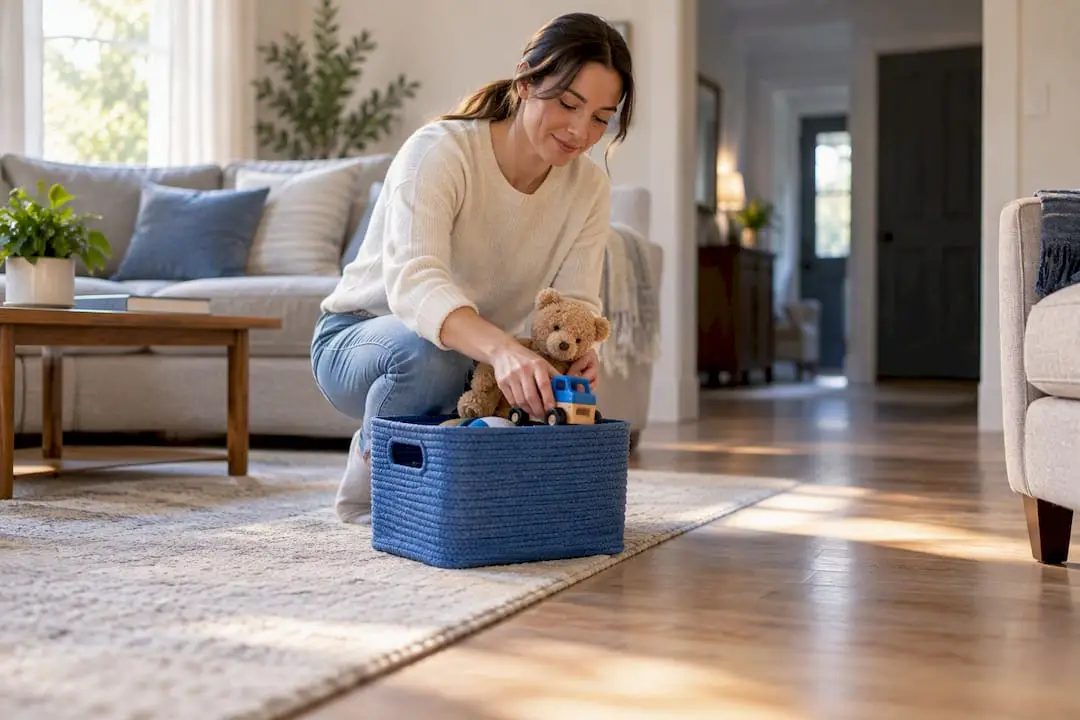
The short version: declutter, don’t scrub. Cleaners charge for their time, and most of that time should go toward actual cleaning, not digging through piles of mail or navigating around toys on the floor. Clearing surfaces and floors lets your cleaner reach the stuff that actually needs cleaning, which is the single most important prep task according to most professional guidance.
Here’s the room-by-room breakdown that gets you there in under 30 minutes total.
Kitchen:
- Load the dishwasher or stack dirty dishes in the sink
- Clear countertops of mail, dishes, and small appliances you’re not using
- Put away food items left out from breakfast or last night’s dinner
Bathrooms:
- Put toiletries, hair tools, and cosmetics back in cabinets or drawers
- Move medications somewhere private (more on this below)
- Pick laundry and towels up off the floor
Living areas:
- Gather toys, remotes, and stray shoes into a basket or closet
- Stack loose papers, mail, and magazines instead of leaving them scattered
- Clear off coffee tables and TV stands so surfaces can actually get wiped down
Bedrooms:
- Collect dirty laundry into a hamper
- Clear nightstands of cups, chargers, and clutter
- Tuck away personal items you’d rather a stranger not handle
None of this is deep cleaning. It’s the equivalent of clearing your desk before a coworker borrows it. Clearing counters and loading the dishwasher specifically lets a cleaner get straight to disinfecting and scrubbing instead of playing Tetris with your dishes first.
Securing Valuables and Confirming Access
Locking up cash, jewelry, prescription medications, and sensitive financial documents before any new person enters your home is standard precaution, not an accusation. A drawer, a small safe, or even a closet shelf works fine. The point isn’t distrust. It’s removing temptation and protecting yourself if something ever goes missing for an unrelated reason.
Access logistics matter just as much:
- Decide how the cleaner gets in: lockbox code, garage keypad, a hidden key, or you’re letting them in yourself
- If you use a home alarm, share the code and specify whether you want the system re-armed after the visit
- Note parking realities: permit-only streets, a driveway spot they can use, or where street parking is easiest near your entrance
Skipping this step is the number one reason cleaning appointments start late. A cleaner standing on your porch for 15 minutes is 15 minutes you’re still paying for.
Managing Pets on Cleaning Day
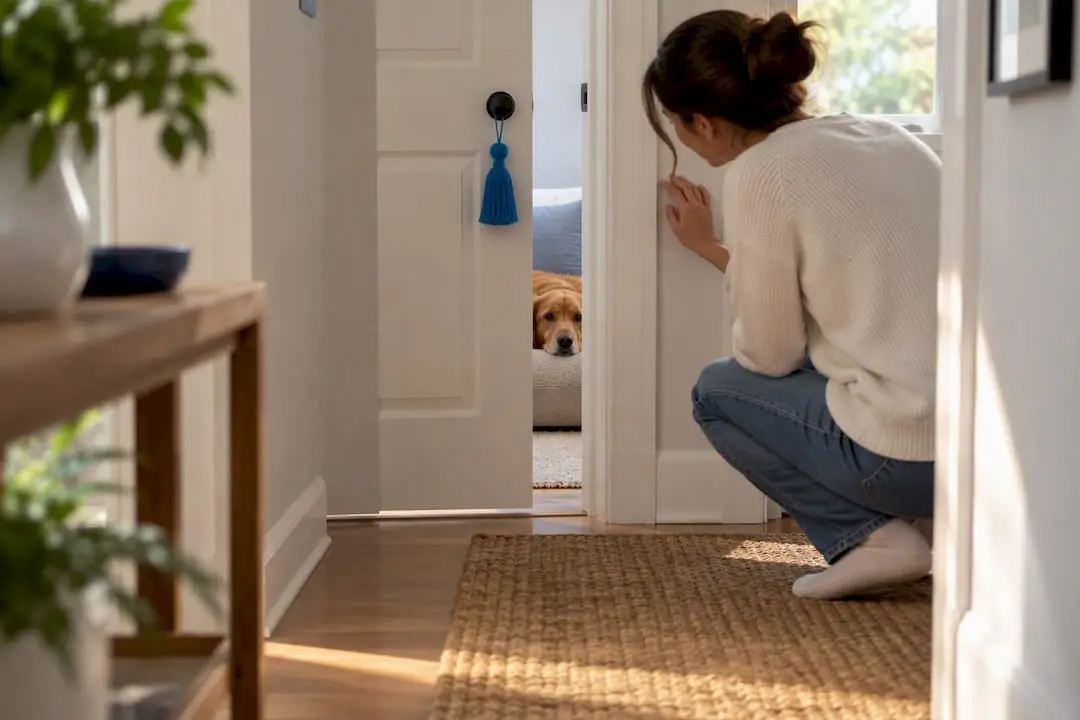
Confine dogs and cats to a room that isn’t being cleaned, or arrange for them to be outside or on a walk during the visit. Loose pets slow everything down, and some cleaning products aren’t something you want a curious dog sniffing while it’s still wet.
- Crate or gate pets in an off-limits room, or schedule outdoor time
- Tell the cleaner about feeding times, temperament, and whether a pet fee applies
- Ask about low-VOC or fragrance-free products if anyone in the house has allergies or sensitivities
- If a pet is loose but safely contained in one room, leave a note on that door so nobody accidentally opens it
Most services expect pet details disclosed at booking, not discovered when someone opens a bedroom door to a hissing cat.
Pro Tip: Stick a sticky note on the confined room’s door that just says “Rex is in here, please don’t open.” It sounds obvious, but it’s saved more than one nervous dog from bolting out the front door.
Who Provides Supplies: You or the Cleaner?
This depends entirely on who you book. Confirm it before the appointment, not the morning of. Most companies bring their own products and equipment, but some independent cleaners prefer using items already in your home, especially for surfaces that need a specific formula.
- Ask at booking whether supplies are included or if you’re expected to provide them
- If you’re supplying products, gather everything into one caddy or a clearly marked shelf
- Label anything surface-specific, like stone cleaner or wood polish, and leave a quick usage note
- Request fragrance-free or pet-safe formulas ahead of time if that matters in your home
Skipping this conversation is how you end up with a cleaner using dish soap on granite because nobody mentioned the sealer needs a specific product.
How Do You Brief Your Cleaner on Priorities?
Say what matters most before the vacuum even comes out. A cleaning appointment isn’t a mind-reading exercise, and the fastest way to get a disappointing result is assuming your cleaner will guess that the guest bathroom matters more than the guest bedroom this week.
- Share your top one or two priorities at booking, or leave a short note the morning of
- List any rooms to skip entirely or fragile items that need extra care
- Agree on scope ahead of time (dishes, laundry, moving furniture) so nobody’s surprised by what’s included
- For recurring visits, use quick notes like “focus on the guest bath this time” instead of repeating your entire wish list every week
A five-word sticky note beats a lengthy text sent two hours before arrival. Clear, written instructions prevent scope creep far better than a verbal mention you both forget by the next visit.
What’s the Fastest Way to Prep the Day Of?
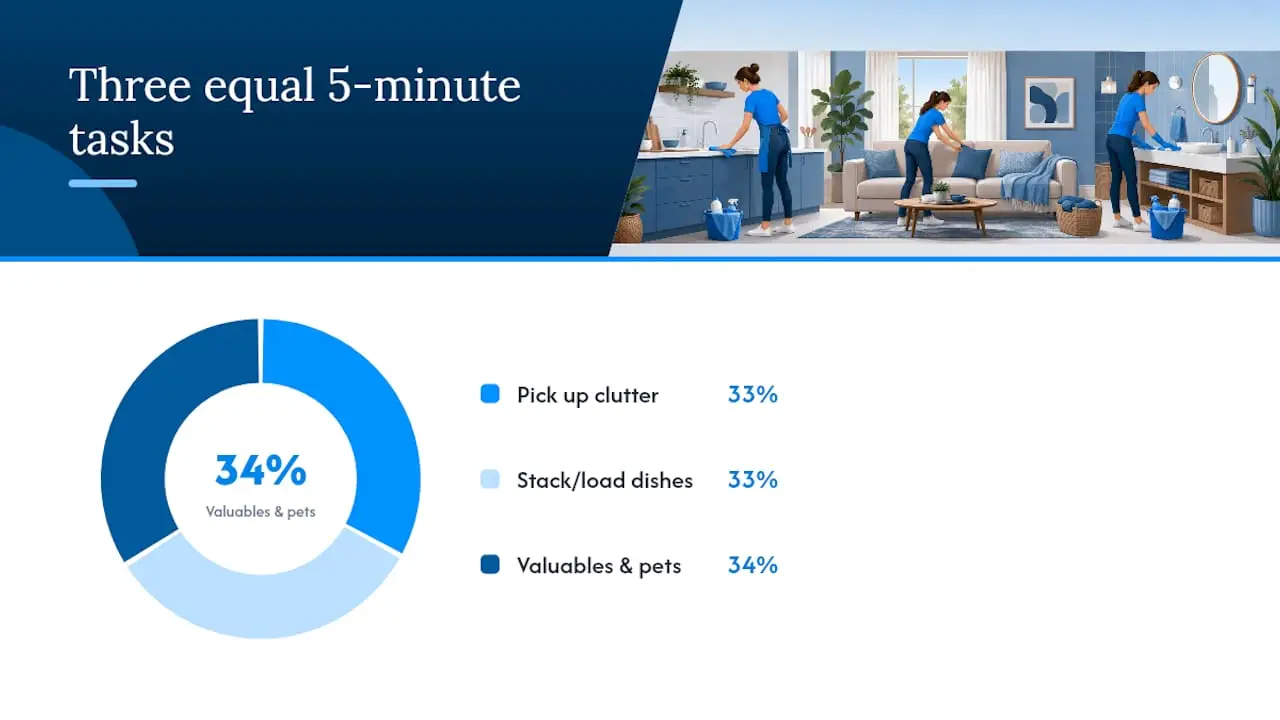
Fifteen minutes, split three ways, covers almost everything:
- Five minutes: Walk through and pick up obvious clutter, shoes, mail, toys, cups
- Five minutes: Load or stack dishes so the sink and counters are clear
- Five minutes: Secure valuables and double check pet arrangements are actually in place
What not to do: don’t pre-scrub the shower, don’t deep clean the oven, don’t drag furniture around to vacuum underneath it yourself. That’s the job you’re paying for. Professionals also rely on products that need a few minutes of dwell time to actually disinfect properly, so rushing in to wipe something down first can undo the point of hiring help at all.
If you won’t be home, leave a visible note by the entrance with your priorities and access details.
Pro Tip: Set a timer for the 15 minutes and treat it like a game. It keeps you from spiraling into an actual deep clean the night before, which defeats the entire purpose of hiring someone.
What Do Cleaners Wish You Knew?
Professional cleaners work top to bottom and dry to wet for a reason. That sequence keeps dust and residue from resettling on surfaces already cleaned. Your tidying makes that sequence possible; a cluttered counter or a floor full of toys forces them to improvise around obstacles instead of following the workflow that actually gets your home clean fastest.
Pre-cleaning before your cleaner shows up is paying twice for the same work. Clear instructions, not a spotless house, are what actually save you time and money.
— Local
Book a Cleaning With Pure Homes Cleaning
Pure Homes Cleaning is built around exactly the kind of preparation this guide walks through. Once your home is tidy and your priorities are clear, booking is the easy part.
Pure Homes Cleaning offers Standard Cleaning, Deep Cleaning, and Move In and Move Out Cleaning, all built around eco-friendly products and plans you can customize to your household. Mention pets, allergies, or product preferences when you book, and the team plans around them instead of finding out on arrival. If you’re not sure which service fits your situation, the comparison between standard and deep cleaning breaks down what each one actually covers. Ready to get on the schedule? Head to the booking page and pick a time that works.
Sources
For more on the logistics covered above, CleanersRated’s prep guide and Homes & Gardens’ take on pre-cleaning both go deeper into why tidying beats scrubbing. KKA Cleaning Services’ rundown of the seven rules of housekeeping explains the professional sequence referenced above in more detail.
If you’re moving and prepping a new place at the same time, the apartment move-in cleaning checklist covers that specific scenario, and Pure Homes Cleaning’s guide to who brings supplies answers that question in more depth. Pet owners can check Pure Homes Cleaning’s pet-cleaning routine guide for more specific strategies.
- How to prepare for a house cleaner — CleanersRated
- Is it wrong to clean before a professional cleaner comes? — Homes & Gardens
- House cleaner and maid tips and earnings: 2026 Guide — Server44
- What Are the 7 Rules of Housekeeping? — KKA Cleaning Services
FAQ
What Is the 5-5-5 Rule for Cleaning Prep?
It’s a simple day-of routine: five minutes picking up clutter, five minutes loading or stacking dishes, and five minutes securing valuables and confirming pet arrangements. Fifteen minutes total covers nearly everything a cleaner needs from you before arriving.
How Much Should You Tip a House Cleaner?
Standard recurring cleanings typically get 15-20% or a flat $10 to $20 per visit, while deep cleans or move-out cleans often earn a larger tip given the extra labor involved. Tipping isn’t required, but it’s the norm for most U.S. households.
What Is the 80/20 Rule for Cleaning a House?
There’s no single standardized definition of an “80/20 rule” specific to house cleaning, and it’s not a recognized professional standard the way the seven rules of housekeeping are. If you’ve heard the phrase, it likely refers loosely to focusing effort on the 20% of tasks or areas that create 80% of the visible impact, like counters and floors, rather than an official cleaning methodology.
What Are the Seven Rules of Housekeeping?
The seven rules describe a professional cleaning sequence, including cleaning top to bottom and working dry to wet so debris and residue don’t resettle on already-clean surfaces. Preparing your home by tidying clutter first makes that sequence possible instead of forcing a cleaner to work around obstacles.
Should You Clean Before the Cleaner Arrives?
No. Tidying and decluttering are helpful, but scrubbing, disinfecting, or deep cleaning beforehand means paying twice for the same work. Focus on clearing surfaces and floors so the professionals can get straight to the actual cleaning you’re paying them for.