
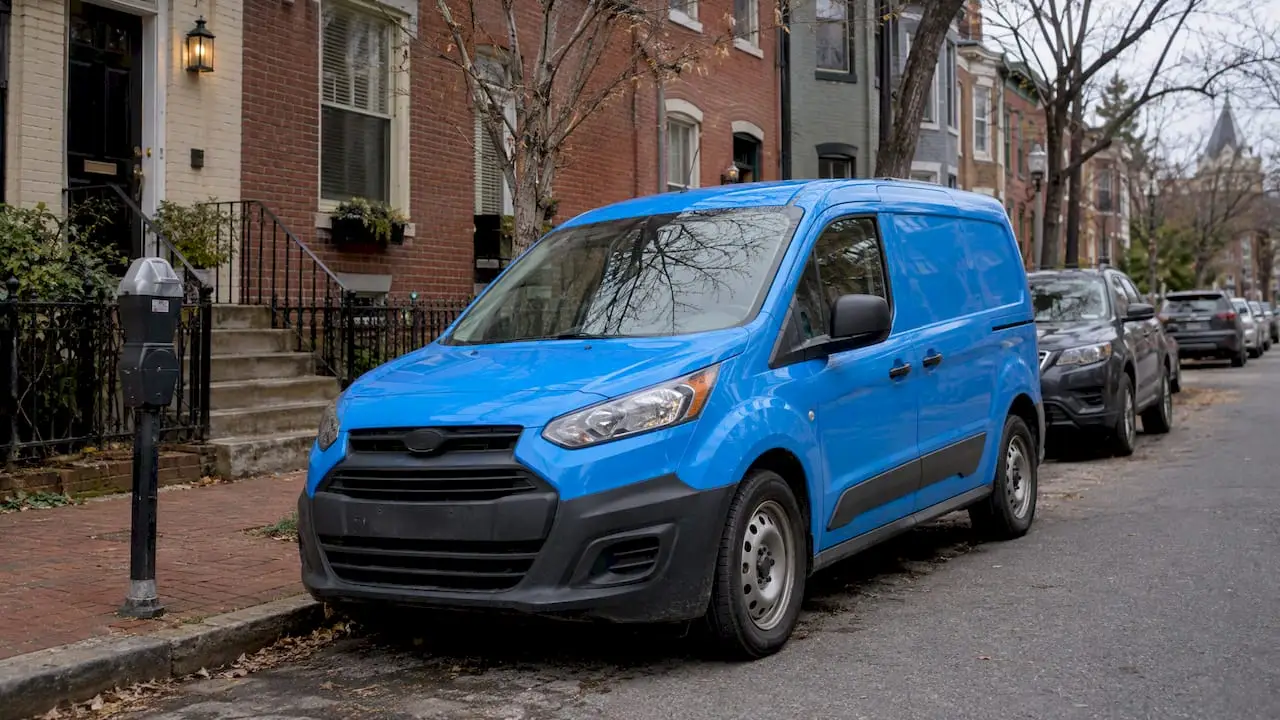
Reserve a nearby garage through SpotHero if you need to unload supplies or stay a while. For a short stop, use an on-street meter and pay with parkDC or ParkMobile. Before you lock the car, read the posted street-sweeping sign, because DPW fines violators $45 and may add a relocation fee.
TL;DR:
- Standard DC meters cost $2.30 per hour and usually operate Monday through Saturday; National Park Service meters near the Mall are enforced daily, including holidays.
- Garages commonly cost $10 to $30, and reserving ahead is the safer choice for long jobs, bulky equipment, or busy weekdays.
- Posted sweeping runs March 2 through October 31 on signed streets; violations bring a $45 fine, with a possible $100 relocation fee.
- Moving a car within the same block does not reset the 72 hour limit, and work vehicles receive no exemption from posted parking rules.
Table of Contents
- Where can you park near The Cleaner of Cleaners?
- How do DC parking meters work?
- What are the street-sweeping rules and fines in DC?
- How can cleaners avoid tickets and towing?
- What parking strategies work best in residential neighborhoods?
- How can cleaners handle parking efficiently during appointments?
- Do cleaning service vehicles need permits in residential areas?
- How should you tell clients where to park?
- What our approach to DC parking logistics looks like
- How to book a cleaning that fits your parking situation
- FAQ
- Sources
Where can you park near The Cleaner of Cleaners?
Parking in this part of Washington, DC comes down to two choices: a garage or lot you reserve ahead, or a meter on the street. For a cleaner carrying vacuums, caddies, and mops, the garage usually wins. You get a guaranteed spot, shelter from the weather, and no clock ticking toward a ticket.
Here is what we tell drivers to expect:
- Reservable garages and lots nearby. SpotHero keeps a parking page for The Cleaner of Cleaners with reservable spots and price ranges, so you can see options before you leave home.
- Typical garage cost. Local guides put DC garages at $10 to $30, depending on location and how long you stay. Event nights and weekday rush hours push prices to the high end.
- Booking platforms. SpotHero and ParkWhiz both let you compare and prepay. Booking ahead tends to help most on weekdays, near events, and whenever you need a guaranteed spot for several hours.
- When the meter beats the garage. A quick drop-off is often cheaper on the street, as long as the block is not under a sweeping restriction.
- Security and access. A garage keeps your vehicle off the curb overnight and keeps equipment out of sight. You can also load and unload without worrying about blocking a lane.
The choice also depends on how much you are hauling; for urban residents balancing convenience and cost, understanding apartment parking options can provide useful insights. A deep clean or a move-out clean needs more equipment and more hours than a standard visit. For those jobs, paying a garage rate is often cheaper than gambling on a single meter or risking a tow.
If you expect to park for an extended time, consider reserving a garage ahead. Spots near popular blocks fill up fast, and a prepaid reservation removes the guesswork. The street is a fine plan B for short stops, but it should not be your plan A for a long job.
How do DC parking meters work?
Most DC meters are simple once you know three things: the rate, the hours, and the exceptions. Knowing them keeps you from paying when you do not have to, and from skipping payment when you do.
- The rate. DDOT lists standard metered parking at $2.30 per hour.
- Typical hours. Enforcement usually runs Monday through Saturday from 7:00 am to 6:30 pm. Busier commercial districts can extend enforcement to 10:00 pm.
- Sundays and holidays. Most meters are free on Sundays and federal holidays.
- The big exception. National Park Service meters near the National Mall are enforced daily, including Sundays and federal holidays.
- How to pay. Use the parkDC or ParkMobile app so you can add time from the job site instead of running back to the curb.
Standard DC meter rate: $2.30 per hour. Use that rate to estimate your parking cost, and check the sign for the hours that apply on your block.
The parkDC app, from DDOT, also lets you filter by price and time limits and shows demand-based pricing zones in busy districts. In those zones the price can shift with demand, so check the app before you assume the base rate. Always confirm whether you are at a city meter or an NPS meter before you walk away.
What are the street-sweeping rules and fines in DC?
Street sweeping catches more drivers than any other rule, mostly because the sign is easy to miss. DPW runs residential street sweeping from March 2 through October 31 each year. On signed streets, parking is generally prohibited for a two-hour window, commonly 9:30 am to 11:30 am or 12:30 pm to 2:30 pm.
- Season: March 2 through October 31 on posted residential streets.
- Window: two hours, usually mid-morning or early afternoon, on the day shown on the sign.
- Fine: $45 for violators, with a possible $100 relocation fee in some cases.
- Warning period: DPW begins each season with a grace stretch. In 2026 it announced that posted sweeping resumed Monday, March 2, with warnings only from March 2 through March 13 before $45 fines were issued.
Sweeping violation: $45 fine, plus a possible $100 relocation fee. A two-hour mistake can cost more than a full day in a garage.
Do not rely on memory or on what the block looked like last week. The posted sign controls the exact day and hours, and it can differ from the next street over. Make reading it part of every arrival, the same way you check your supplies. If the sign shows a restriction starting within your visit, move your car or choose a garage instead.
How can cleaners avoid tickets and towing?
Most parking trouble is a planning problem, not bad luck. A few habits cut the risk sharply:
- Schedule around sweeping windows. If your route includes signed streets, book mid-day or after the posted window ends.
- Pay from the app. Use parkDC or ParkMobile to add time from inside the home, so a long task never turns into an expired meter.
- Reserve a garage for long or heavy jobs. SpotHero works well when you carry bulky equipment or expect several hours on site.
- Check the signs before you leave the car. Look at the high-mounted signs for snow emergency routes, which are marked in red and white and bring ticketing and towing when an emergency is declared.
- Confirm the meter type. A city meter and an NPS meter follow different rules on Sundays and holidays.
- Know the 72-hour rule. Moving a car within the same block does not reset the time limit.
- If your car disappears, check before panicking. Call 311 or use the city’s online towed and booted vehicle lookup before assuming it was stolen.
Pro Tip: Take a photo of the posted sign and your parked spot when you arrive. It takes five seconds and gives you evidence if you ever need to contest a ticket.
Our prepare-for-cleaners checklist also helps here. When a home is ready before the team arrives, unloading and setup can move more smoothly, reducing time at the curb.
What parking strategies work best in residential neighborhoods?
Residential blocks are tight, and neighbors notice a work vehicle that sits in the wrong spot all day. The goal is simple: be present for as short a time as possible and be easy to live next to.
Start by thinking about the vehicle itself. A smaller car or van is easier to place on a narrow rowhouse street than a large truck. Carrying supplies efficiently can reduce the time spent double-parked or in a loading zone. Pack the vehicle in the order you will use things, so the first trip brings everything you need for the first room.
Next, pick the right kind of spot. A legal metered space near the entrance is ideal for a short visit. For a longer job, a garage a block or two away often costs less than a ticket and keeps you out of a neighbor’s way. Do not block driveways, alleys, or fire hydrants, even for a quick unload. Those are the spots that draw complaints and tows.
Timing matters as much as placement. Arrive just before your appointment, not an hour early, so you are not circling or idling while you wait. Avoid arriving during a posted sweeping window, and leave extra time if your job might run long.
Finally, keep the street quiet. Turn the engine off while you unload, close doors gently, and avoid blocking trash pickup or delivery trucks. A small bit of courtesy keeps clients happy and means fewer awkward conversations about the van outside.
How can cleaners handle parking efficiently during appointments?
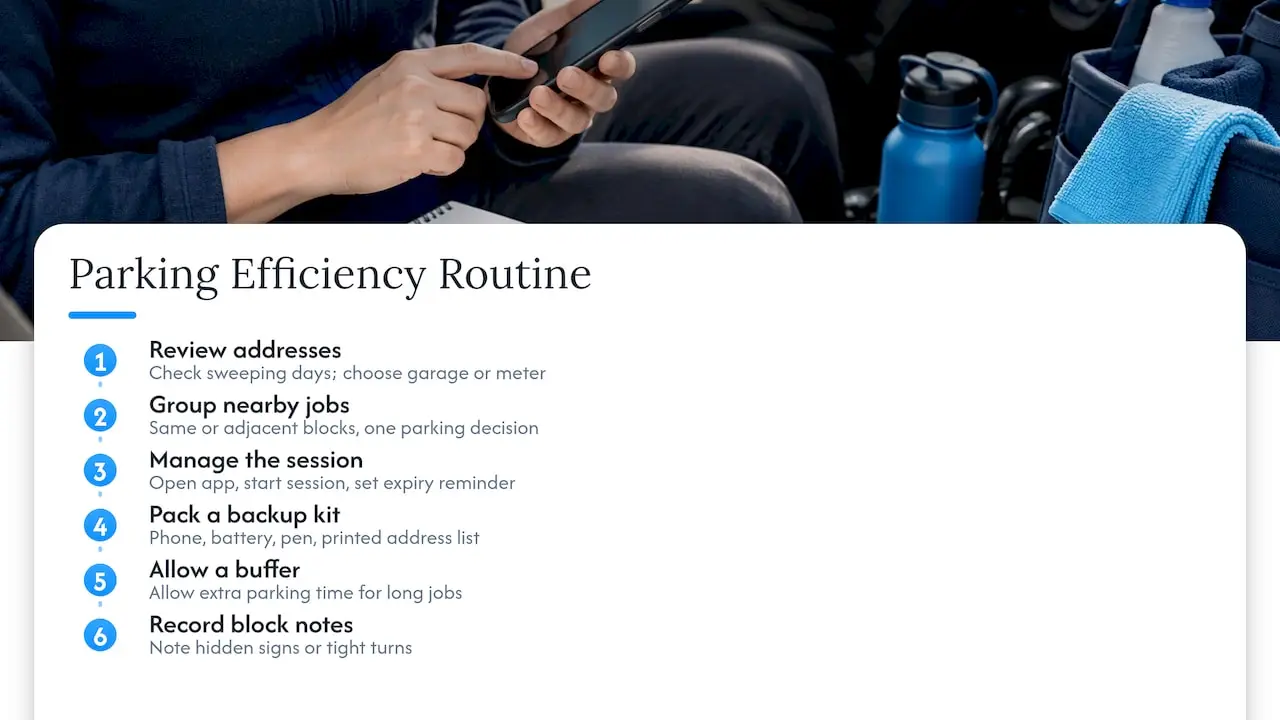
Efficiency starts the day before. Look at tomorrow’s addresses, check each block for sweeping days, and decide whether you need a garage reservation or a meter. A review the night before can save time in the morning.
Group your jobs when you can. Two appointments on the same or adjacent blocks mean one parking decision instead of two. If your day includes a garage stop, plan the order so the longest job lines up with the reserved spot.
Use your apps as a routine, not a rescue. Open parkDC or ParkMobile as soon as you park, start the session, and set a reminder before it expires. If the job runs over, extend the session from inside rather than hoping for the best. The parkDC app is built to reduce parking stress by letting you filter by price and time limits, which is useful when you are comparing options on the fly.
Keep a short kit in the car: a charged phone, a backup battery, a pen, and a printed list of the day’s addresses with notes on parking. If your phone dies mid-job, you still know where you are and what rules apply.
Build in slack. If a job might take a while, allow extra time for parking. A real buffer is cheaper than a ticket and lets you finish properly instead of rushing the last room to beat the meter.
Finally, close the loop. When you finish, note anything that surprised you about the block, such as a hidden sign or a tight turn, so the next visit is easier.
Do cleaning service vehicles need permits in residential areas?
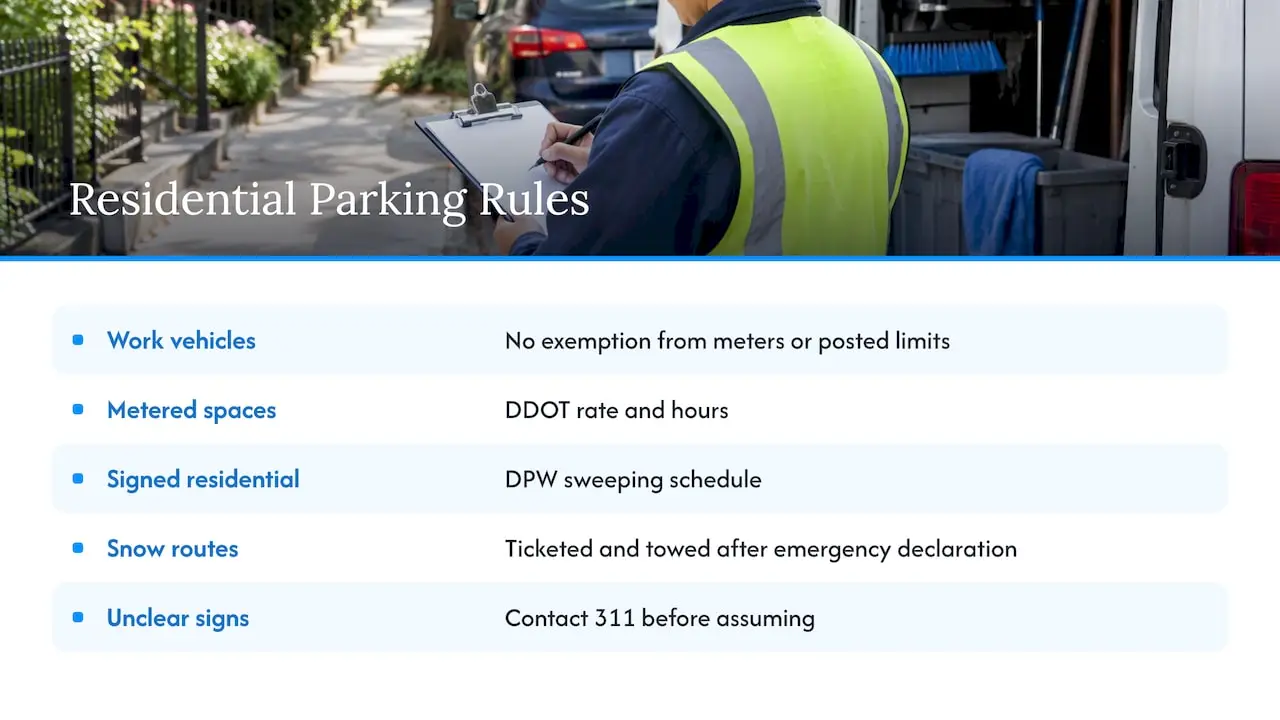
This is where cleaners most often assume the rules are looser than they are. A work vehicle is generally treated like any other car on a residential street. Having a cleaning company sticker or a visible uniform does not exempt you from meters, sweeping rules, or posted limits.
What matters is what is posted. Metered spaces follow the meter rate and hours set by DDOT. Signed residential streets follow the sweeping schedule from DPW. Snow emergency routes follow the city’s snow emergency rules, and vehicles on those routes can be ticketed and towed once an emergency is declared.
Some blocks also have time limits meant for residents, and a few areas carry additional posted restrictions. Because these vary block by block, the posted sign is the only dependable source. If a sign is unclear or you think a permit might apply to your situation, contact the city through 311 before you assume anything. The information is not published as one simple rule for service vehicles, so confirm the specifics for the block you will actually use.
Check posted time limits before leaving a vehicle in the same area for an extended period, since moving it may not reset those limits. For a cleaner who works one client regularly, parking in the same place all week is not a safe plan.
The practical answer is to treat every stop as a public-parking stop. Pay the meter, read the sign, and choose a garage when the street rules will not fit your schedule.
How should you tell clients where to park?
Clear instructions from the client make the visit smoother for everyone. When we confirm an appointment, we ask for parking details, because a short note from the client can save the cleaner time on the day.
Ask about the nearest legal parking, any posted restrictions on the block, whether there is a garage or reserved spot, and the best entrance for unloading. If the building has a loading area or a concierge, ask for the check-in steps ahead of time.
Share your own details in return. Tell the client your arrival window and the type of vehicle you will drive, so they can warn a doorman or neighbor. If you will be there during a sweeping window, say so and agree on a plan, such as moving the car or arriving after the window ends.
Keep messages short and specific. “Street parking is metered; sweeping is Tuesday 9:30 to 11:30 on the north side” beats “parking can be tricky.” A photo of the nearest sign or entrance helps even more.
Clients also benefit from a quick reminder before the visit. If parking near the home is limited, they may suggest a better time or confirm a garage option nearby. That small conversation prevents late arrivals, rushed work, and tickets.
Finally, set expectations about timing. Let the client know that if a parking problem delays the start, you will update them right away. A short, honest message earns more goodwill than silence and a late knock on the door.
What our approach to DC parking logistics looks like
We treat parking as part of the job, not an afterthought. When clients book ahead in busy zones, we can plan for parking and arrival. We bring what the job needs and aim to keep the car’s time at the curb short. We plan ahead to reduce time spent hunting for a space.
— Local
How to book a cleaning that fits your parking situation
Longer jobs are the ones where parking matters most. If you need a deep clean or a move-in or move-out clean, booking early gives our team time to plan loading and parking.

- Pick your service on our services page: standard, deep, or move-in and move-out cleaning.
- Book ahead for jobs that need extra time or heavy equipment, as we explain in our security deposit cleaning guide.
- Tell us about parking limits at your address when you book, and we will plan arrival timing and equipment to match.
Ready to schedule? Book your cleaning now.
FAQ
Is there free parking in Washington, DC?
Yes, but it is limited. Most meters are free on Sundays and federal holidays, except National Park Service meters near the National Mall, which are enforced daily. Always check the posted sign for the block you use.
How much does parking in DC cost?
Meters run $2.30 per hour at the standard rate. Garages commonly cost $10 to $30, depending on location and how long you stay.
Where can you park legally for free?
Free options depend on the block and the time of day. Meters are generally free outside enforcement hours and on Sundays, but street sweeping, snow emergency routes, and posted limits still apply. Read the sign before you leave your car.
What happens if you park during street sweeping?
You can be ticketed and, in some cases, charged a relocation fee. DPW lists a $45 fine and a possible $100 relocation fee for violators on signed streets during the sweeping season.
Sources
- Parking Meters | ddot
- Spring Operations | config
- Parking in Washington DC: The Complete Guide (2026) – Unscripted DC