
Hiring a professional move-out cleaner does improve your odds of getting your full security deposit back, mainly because pros hit the grease, grout, and buildup that landlords check first and DIY cleans often miss. If you’re short on time or the lease is on the line, book a move-out clean. If you’re doing it yourself, work from a room-by-room checklist and photograph every space when you finish.
TL;DR:
- Professional move-out cleaning covers deep-clean tasks like grout scrubbing, appliance degreasing, and dusting high surfaces that DIY efforts often miss.
- Additional services such as carpet shampooing, mold remediation, or junk removal usually incur extra fees and should be clarified upfront before booking.
- Booking a cleaner at least 48 to 72 hours before the final walkthrough ensures full access to the unit and avoids last-minute scheduling issues.
- Taking timestamped photos of each room both before and after cleaning provides crucial evidence if a landlord disputes the unit’s condition.
- Ensuring documentation of the scope of work, photos, and receipts helps protect against unfair deposit deductions related to routine wear and tear.
Table of Contents
- Room-by-room move-out cleaning checklist you can copy or hand to a cleaner
- What professional move-out cleaning covers vs. what DIY misses
- How to vet and hire a move-out cleaner in DC, MD, and VA
- Pricing guidance and common extra fees
- Steps to properly dispose of cleaning waste
- How local rules affect deposit deductions for cleaning
- Why Pure Homes Cleaning is a local solution for move-out cleaning
- Local author’s perspective: the one habit that protects your deposit
- Sources
- FAQ
Room-by-room move-out cleaning checklist you can copy or hand to a cleaner
Landlords use checklists to judge whether a unit is ready for the next tenant, and the American Apartment Owners Association notes that landlords rely on these lists as documentation when deciding what to deduct from a deposit. Matching your cleaning to that same standard is the fastest way to avoid a dispute.
Start in the kitchen, since it’s usually where deposits get docked hardest:
- Degrease the oven inside and out, including racks and the door seal.
- Empty the fridge completely and wipe down every shelf and drawer.
- Wipe cabinet fronts and interiors, plus the backsplash where grease collects.
- Clean the range hood, vent filter, and microwave interior.
- Clear and wipe all counters so nothing is left behind.
Bathrooms come next. Remove soap scum from tile and glass, descale the shower and tub, and scrub grout lines that tend to hold mildew. Clean the toilet base and behind it, wipe down mirrors, and clean the exhaust fan and vent cover, which collects dust that’s easy to overlook.
In bedrooms and living spaces, dust high shelves, light fixtures, and ceiling fan blades, then work down to baseboards and window sills. Wash the windows themselves if the lease requires it, fill small nail holes with spackle, and swap out any burned-out light bulbs.
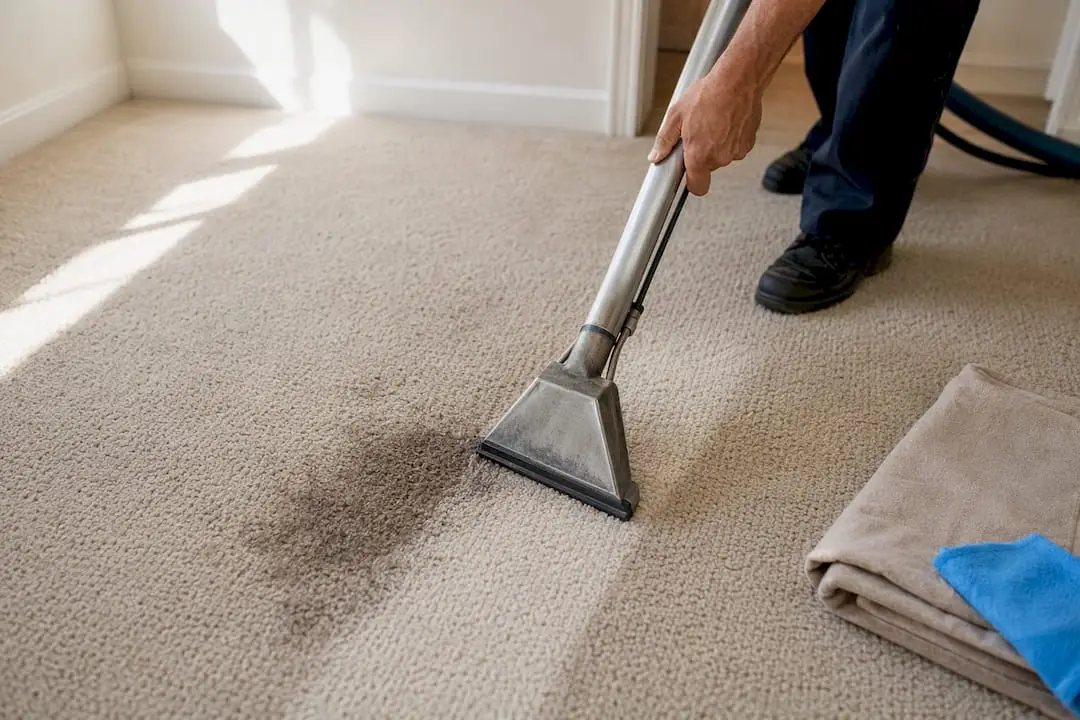
For floors and carpets, vacuum thoroughly and mop hard surfaces, treating any visible stains as you go. If carpets have deep staining, pet odor, or heavy wear, a professional carpet cleaning is usually worth the cost over a rented spot cleaner, since landlords often check carpets closely during the final walkthrough.
Before you call it done, sweep for a few extras: clear cobwebs from corners and ceilings, empty every cabinet and drawer, and replace air filters if your lease asks for it. Then take time-stamped photos of each finished room. The Zillow move-out cleaning guide recommends photographing cleaned spaces specifically because those images often become the deciding evidence if a landlord disputes the condition of the unit later.
Once you’ve worked through the list, save it as a PDF or take a screenshot and send it directly to your cleaning company or landlord before the walkthrough. Our own move-out cleaning checklist is built in this same format and works well as a shared reference point for both sides.
Pro Tip: Photograph each room from the doorway first, then close up on any spot that had visible buildup before cleaning, so the “before and after” contrast is obvious if a landlord questions it.
What professional move-out cleaning covers vs. what DIY misses
A professional move-out clean typically goes deeper than a standard tidy-up. Crews deep-clean appliances inside and out, scrub grout instead of just the tile surface, wipe baseboards and vents, and dust high spots most tenants skip because they don’t have the right tools or the time.
Some tasks commonly show up as add-ons rather than part of the base price:
- Carpet shampooing for stains, odors, or heavy traffic wear.
- Grout restoration when discoloration has set in over time.
- Mold remediation in bathrooms or under sinks.
- Junk removal for anything left behind after the move.
The PODS move-out cleaning guide points to these same categories as the extras that most often raise the final bill, so it’s worth asking upfront which ones apply to your unit.
Good cleaning companies also back their work with proof: before-and-after photos, a signed checklist, and confirmation that the crew is insured. That documentation matters if a landlord later claims the unit wasn’t properly cleaned.
DIY can work fine for a small, lightly used apartment with no major stains and a flexible move-out date. Hiring pros makes more sense when you’re tight on time, dealing with stubborn buildup, or your full deposit is riding on the result. For a closer look at how move-out cleaning differs in scope from a routine deep clean, see our comparison of deep cleaning versus move-out cleaning.
How to vet and hire a move-out cleaner in DC, MD, and VA
Booking the wrong cleaner can cost you the deposit anyway, so run through a short vetting process before you commit.
- Ask directly: “Is move-out cleaning included in your services, and do you provide an itemized checklist?”
- Confirm insurance: “Are you insured and bonded in case something is damaged during the clean?”
- Get specifics on cost: “What extra charges might apply for carpets, mold, or heavy buildup?”
- Request documentation: an itemized quote, before-and-after photos, and a receipt that references the checklist you gave them.
- Check their cancellation policy in case your move-out date shifts.
On timing, book the cleaning at least 48 to 72 hours before your final walkthrough. When possible, schedule the crew after almost all furniture and boxes are out but before the landlord’s inspection, since cleaners can’t fully reach floors, baseboards, or corners with belongings still in the way.
Watch for red flags: a vague scope of work, no written checklist, or a price that’s noticeably lower than every other quote with no reviews to back it up. If you’re also handling general move-out prep, a property turnover resource like Trinity Inspections’ guide to preparing a rental for long-term tenants is a useful reference for what landlords look for during inspections.
Pro Tip: Text or email your checklist to the cleaning company before they arrive, so there’s no confusion about scope once the crew shows up.
Pricing guidance and common extra fees
Move-out cleaning costs vary by home size, condition, and how many add-ons you need. The PODS blog cites median cleaning rates around $50 to $55 per hour, with add-on services like carpet cleaning or junk removal typically adding $150 to $400 on top of the base price depending on scope.
The biggest cost drivers are:
- Square footage of the unit, since larger spaces take longer to clean.
- Overall condition, especially grease buildup in kitchens and mildew in bathrooms.
- Carpet cleaning, mold remediation, or junk removal if any apply.
You can reduce the total by removing personal items, clearing counters and the fridge, and moving small furniture out of the way before the crew arrives, all of which cut down the labor time cleaners bill for. Combining a move-out clean with any needed carpet service in one visit also tends to be cheaper than booking them separately.
A slightly higher quote can be worth paying when it comes with a guarantee of a re-clean if the landlord isn’t satisfied, an insured crew, and a documented, signed checklist. The Zillow guide specifically recommends asking about re-clean guarantees before booking, since that protection matters more than a small difference in price if your deposit is at stake.
Steps to properly dispose of cleaning waste
Move-out cleaning generates more trash than a normal weekly clean, from old cleaning product bottles to worn sponges, used filters, and any junk left behind in cabinets or closets. Handling it correctly keeps the unit presentable and avoids leaving a mess for the landlord to deal with.
Start by sorting as you go. Regular household trash, like packaging and disposable wipes, goes in your normal trash bags. Recyclables such as empty cleaning bottles should be rinsed and placed in your building’s or municipality’s recycling stream rather than the general trash.
Chemical products need more care. Leftover bleach, ammonia-based cleaners, or oven degreaser should never be poured down a drain or tossed in regular trash. Most DC, Maryland, and Virginia jurisdictions run household hazardous waste drop-off programs specifically for items like these, and checking your local public works or sanitation department’s website before move-out day will tell you the nearest drop-off location and hours.
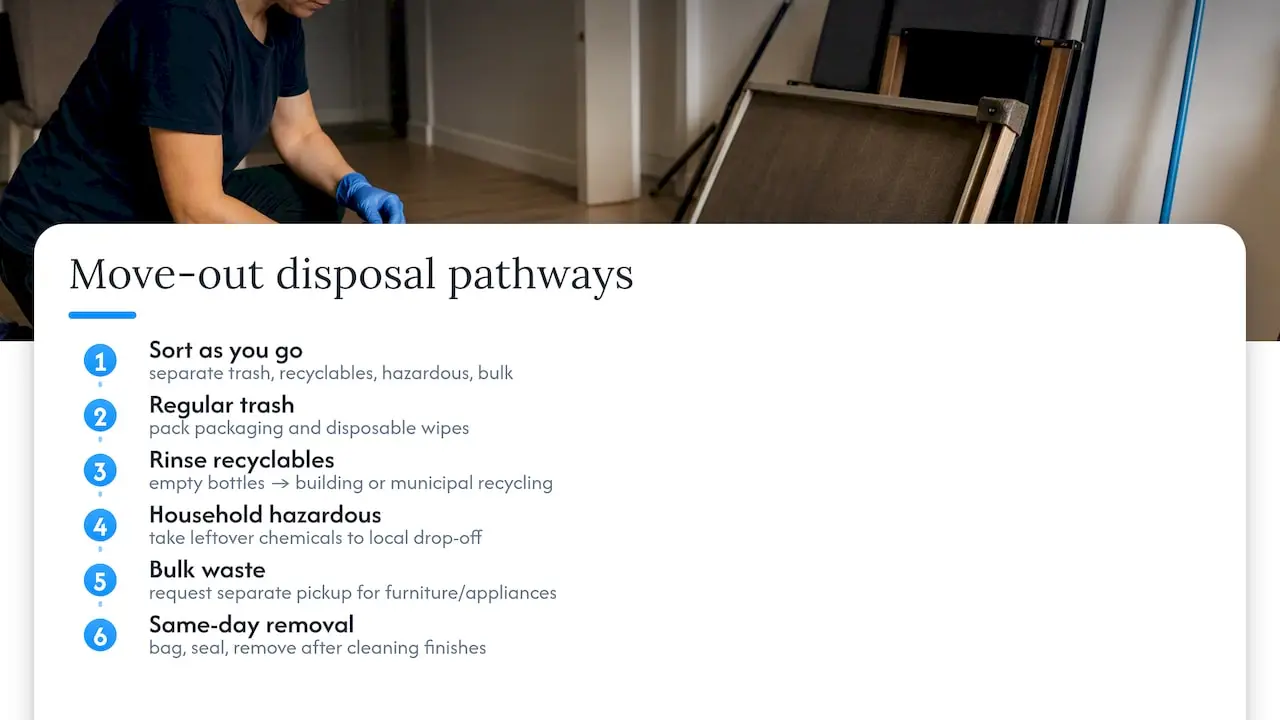
If you’re clearing out old furniture, broken appliances, or large amounts of debris during the move, that typically counts as bulk waste and needs a separate pickup request rather than curbside trash. Many cleaning companies offer junk removal as an add-on precisely because bulk waste has different disposal rules than everyday trash.
Bag and seal everything before it leaves the unit, and take it out the same day the cleaning finishes rather than leaving bags in a hallway or on a balcony. A unit that still has trash sitting around at the final walkthrough can undercut all the cleaning work you just paid for.
How local rules affect deposit deductions for cleaning
Security deposit rules differ across Washington, DC, Maryland, and Virginia, and cleaning-related deductions generally have to reflect actual damage or excess dirt beyond normal wear and tear rather than routine aging of the unit. A landlord generally can’t charge you for cleaning a carpet that’s simply worn from years of normal use, but they can charge for removing stains, odors, or buildup you caused.
This is exactly why documentation matters so much. The American Apartment Owners Association notes that landlords use move-out checklists as evidence when deciding on deductions, which means the same checklist works in your favor if you can show every item was addressed. Keeping your own copy, along with photos and a receipt from a professional cleaning service, gives you a paper trail if a landlord tries to deduct for something you already handled.
Lease agreements often spell out cleaning expectations directly, sometimes requiring professional carpet cleaning or specifying that the unit be returned “broom clean.” Read your lease’s move-out clause before you clean, since it may set a standard beyond a general tidy-up.
If a deduction still shows up on your final statement that you believe is unfair, request an itemized breakdown in writing and compare it against your checklist and photos. Each jurisdiction has its own deadlines and procedures for returning deposits and for disputing deductions, so checking your specific jurisdiction’s tenant rights office is worth doing if a disagreement doesn’t resolve through simple documentation.
Why Pure Homes Cleaning is a local solution for move-out cleaning
Booking a move-out clean shouldn’t mean guessing whether the crew will hit the spots your landlord checks. Pure Homes Cleaning builds its Move Out Clean around a checklist that mirrors what property managers in this area actually look for, using eco-friendly products that are safe for families and pets while still cutting through grease, soap scum, and grime.

- Move Out Clean and Deep Cleaning are available as separate or combined services, depending on how much attention your unit needs.
- Plans are customizable, so you can add carpet attention or extra rooms without booking a separate service.
- Online booking and current promotions are available directly through the site, with coverage across Washington, DC, Maryland, and Virginia.
When you book, share this article’s checklist or our own printable move-out checklist, ask for before-and-after photos, and confirm any extras like carpet cleaning in writing before the crew arrives. You can book your move-out clean here and get a scope confirmed before the day of your final walkthrough.
Local author’s perspective: the one habit that protects your deposit
If you take one thing from this guide, it’s this: document everything and hand your checklist over at the final walkthrough. Photograph each room right after cleaning, label the files by room and date, and keep them saved somewhere you can find fast if a landlord disputes the unit’s condition weeks later.
— Local
Sources
- Moving-out cleaning checklist | Zillow
- Move-out cleaning checklist | PODS blog
- Apartment move-out checklist | American Apartment Owners Association
FAQ
Does hiring a professional cleaner really help get my deposit back?
Yes, professional cleaners typically cover deep-clean tasks like degreasing ovens, descaling showers, and scrubbing grout that landlords check closely and DIY cleans often miss. Pairing a professional clean with your own photos and checklist gives you strong documentation if a dispute comes up.
What is included in a typical move-out cleaning checklist?
A move-out checklist usually covers the kitchen, bathrooms, bedrooms, living areas, floors, and windows, including tasks like oven degreasing, grout scrubbing, baseboard cleaning, and dusting high surfaces. The Zillow guide recommends photographing each room once it’s finished as part of the process.
How much does move-out cleaning cost?
Move-out cleaning rates run around $50 to $55 per hour on average, with add-ons like carpet cleaning or junk removal typically adding $150 to $400 depending on scope, according to the PODS blog. Pure Homes Cleaning’s Move Out Clean pricing is available directly through its booking page.
When should I schedule my move-out cleaning?
Schedule the cleaning at least 48 to 72 hours before your final walkthrough, ideally after most furniture and boxes are already out of the unit. This gives cleaners full access to floors, baseboards, and corners that are hard to reach around belongings.
Can a landlord deduct cleaning costs from my deposit?
A landlord can generally only deduct cleaning costs tied to damage or excess dirt beyond normal wear and tear, not routine aging of the unit. Keeping your own checklist, photos, and a professional cleaning receipt, as recommended by the AAOA, gives you documentation if a deduction seems unfair.