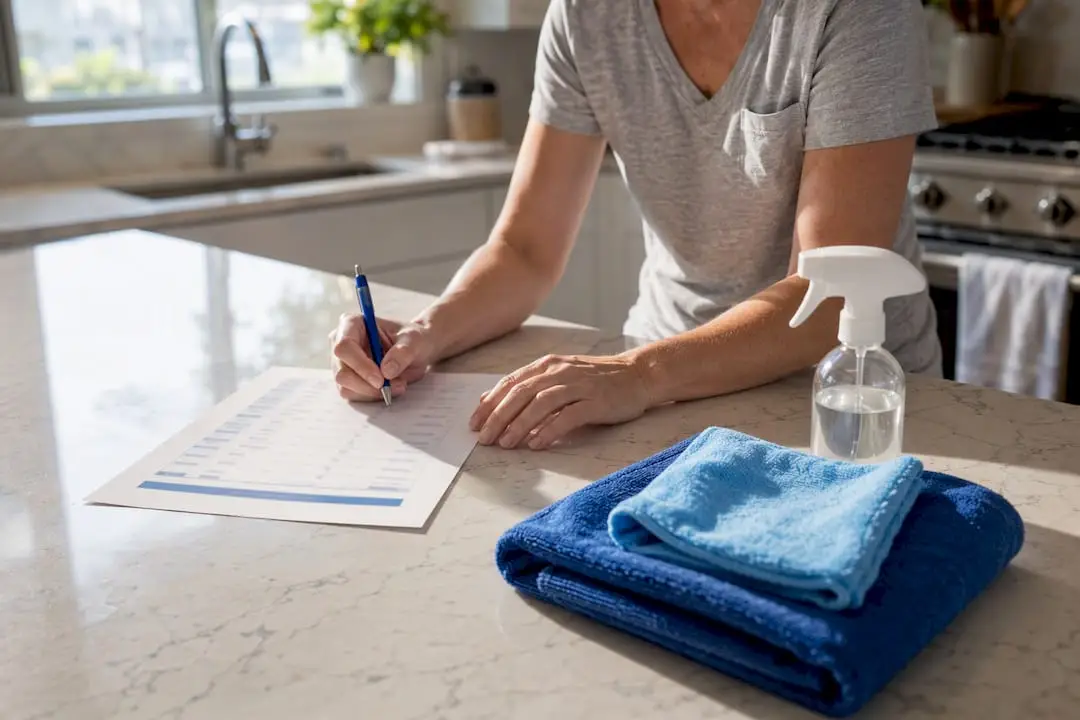
A complete house cleaning checklist gives you a one-page daily reset plus room-by-room tasks and a simple frequency schedule, so the whole house stays clean without guesswork. Do this now: make beds, clear counters, wipe high-touch spots, load the dishwasher, run a quick vacuum pass, and take out the trash. That six-item reset covers most of what visitors actually notice. The full room-by-room lists, time estimates, and printable templates are below.
TL;DR:
- Most cleaning involves only the daily reset tasks, which take about 10 to 15 minutes, with weekly tasks adding an extra 1-2 hours for a more thorough clean.
- Hiring a professional is advisable for deep cleaning, move-in/out cleaning, or when clutter and heavy buildup make DIY efforts impractical or less effective.
- Cleaning time per room varies: 15-25 minutes for kitchens, 15-20 for bathrooms, and 10-15 for bedrooms, increasing significantly with clutter or heavy residue.
- A room-by-room checklist and printable templates can keep cleaning organized, while batching similar tasks reduces time spent switching tools and supplies.
- For ongoing maintenance, focus on the most impactful tasks like surface clearing and bed-making, especially during busy weeks when only the daily reset is feasible.
Table of Contents
- What Goes Into a House Cleaning Checklist
- Your One-Page Quick Checklist
- The Room-by-Room House Cleaning Checklist
- How Often You Should Clean Each Area
- Supplies and Time Estimates by Room
- Clean in the Right Order to Save Time
- Standard Clean vs. Deep Clean: What’s Different
- Printable Checklists to Keep on Hand
- A Realistic Take on Keeping Up With It
- When It’s Time to Book a Professional Instead
- Sources
- FAQ
What Goes Into a House Cleaning Checklist
A house cleaning checklist works because it splits one overwhelming job into small, specific tasks tied to a room and a frequency. Instead of “clean the house,” you get “wipe kitchen counters daily” and “scrub the shower weekly.” That specificity is what separates a real cleaning service checklist from a vague to-do list, and it’s the same logic professional cleaners use to train new staff and maintain consistency between visits.
If you’ve ever wondered what do house cleaners do during a standard visit, the answer is a structured version of what’s below: a room order, a task list per room, and a rough time budget. A maid vs cleaner debate is mostly semantic. Both terms describe the same house cleaner duties. What matters more is whether the visit is a standard recurring clean or a deep clean, since that distinction changes the whole task list.
Your One-Page Quick Checklist
Keep this taped inside a cabinet door. It’s the fastest path to a house that looks and feels clean, even on a day you have ten minutes to spare.
Daily reset (10-15 minutes total):
- Make beds (30 seconds each)
- Clear kitchen counters and load the dishwasher (2 minutes)
- Wipe down high-touch surfaces: doorknobs, light switches, remote controls (3 minutes)
- Quick vacuum or sweep of main walkways (3 minutes)
- Take out kitchen trash if full (1 minute)
- Hang up towels and close cabinet doors (1 minute)
Weekly mini-session (1-2 hours):
- Full bathroom wipe-down and floor mop
- Vacuum all carpeted rooms and upholstery
- Dust flat surfaces and electronics
- Change kitchen towels and sponge
The Pareto principle applied to cleaning holds up in practice: roughly 80% of how clean a home feels comes from about 20% of the effort, mostly clearing surfaces and making beds. Skip everything else on a busy week and just do the daily reset.
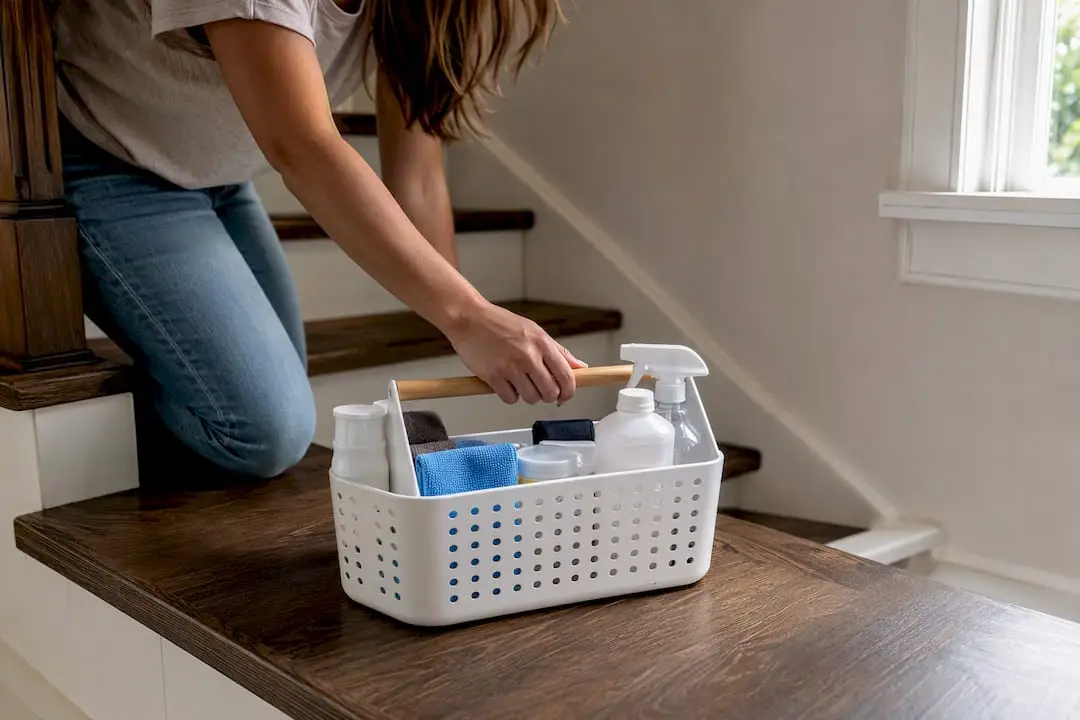
Pro Tip: Keep a small caddy with all-purpose cleaner, microfiber cloths, and disinfecting wipes on each floor of the house. The two minutes you save not walking to fetch supplies is the difference between doing the daily reset and skipping it entirely.
The Room-by-Room House Cleaning Checklist
This is the professional house cleaning checklist structure, organized the way Martha Stewart’s deep-cleaning guide and most professional cleaners lay it out: room by room, task by task.
1. Kitchen (25-40 minutes)
- Clear and wipe counters, then declutter mail or stray items
- Clean the sink and polish the faucet
- Wipe the stovetop and spot-clean the fridge exterior and handles
- Wipe cabinet handles and appliance surfaces (a hot spot for germs; see the high-touch surface protocol for the full task list)
- Sweep, then mop the floor last
2. Bathrooms (20-35 minutes each)
- Scrub the toilet bowl inside and out
- Wipe down fixtures, mirror, and countertop
- Clean the shower or tub and tile, then squeegee glass doors
- Mop the floor and empty the trash bin
3. Bedrooms (10-20 minutes each)
- Change and launder sheets
- Dust nightstands, dressers, and shelves
- Vacuum floors and mop hard surfaces
- Tidy closets as needed rather than every visit
4. Living areas (20-30 minutes)
- Dust electronics, shelves, and picture frames
- Vacuum upholstery and under cushions
- Wipe down tables and surfaces
- Polish wood furniture when it looks dull, not every clean
5. Entry and hallways (5-10 minutes)
- Sweep or vacuum, shake out entry mats
- Wipe light switches and door handles
- Straighten shoes, coats, and mail clutter
6. Laundry room (10-15 minutes)
- Clean the lint trap and wipe the dryer drum
- Wipe washer controls and exterior surfaces
- Run an empty washer cleaning cycle monthly to prevent odor buildup
Households with pets or kids need one adjustment: pet hair and high-traffic mess mean floors and upholstery move from weekly to every few days. The guide by Pure Homes Cleaning to cleaning with pets covers what to add to the daily reset.
How Often You Should Clean Each Area
Frequency is what turns a one-time checklist into a routine you can sustain. Most published cleaning schedules split tasks into five layers, and matching each task to the right layer is what keeps the workload from piling up.
- Daily: dishes, counters, beds, high-touch surfaces, trash
- Weekly: bathrooms, floors throughout the house, dusting, bedding
- Monthly: baseboards, inside the microwave, ceiling fans, door frames
- Seasonal: windows, deep carpet cleaning, closet purge, spring cleaning tasks
- Annual: upholstery deep clean, gutter and vent cleaning, mattress rotation
On a genuinely busy week, run the daily reset only and let weekly tasks slide by a day or two. A simple weekly split works well for most households: bathrooms on Monday, floors on Tuesday, dusting on Wednesday, bedrooms on Thursday, and a catch-all Friday session. Spread monthly detail work across four weeks instead of doing it all in one sitting; it’s easier to sustain and rarely feels like a chore.
Supplies and Time Estimates by Room
Stock a caddy with microfiber cloths, a mop, a vacuum with upholstery and crevice attachments, an all-purpose cleaner, a degreaser for the kitchen, a grout brush, and rubber gloves; for tips on maintaining indoor air quality, see the seasonal HVAC maintenance checklist for homeowners provided here. That covers nearly every task above without switching products mid-room.
Time estimates vary with square footage, clutter, and whether pets shed in that room, but published ranges from professional cleaning guides give a solid baseline:
| Room | Standard Clean | Deep Clean |
|---|---|---|
| Kitchen | 15-25 min | 30-90 min |
| Bathroom | 15-20 min | 30-60 min |
| Bedroom | 10-15 min | 20-35 min |
| Living room | 15-20 min | 30-60 min |
These ranges come from professional house cleaning checklist benchmarks and align with estimates from Agape Cleaning Services. A cluttered kitchen or a bathroom with heavy soap scum buildup pushes toward the high end every time.
One safety note: ventilate the room when using degreasers or bleach-based products, and test any new cleaner on a small hidden spot before using it on tile, grout, or wood finishes. Mixing bleach and ammonia-based products releases toxic fumes, so never combine cleaning chemicals from different bottles.
Clean in the Right Order to Save Time
Work top to bottom in every room. Dust and cobwebs fall as you clean ceiling fans, shelves, and counters, so cleaning floors last means you’re not redoing them. The Spruce’s deep-cleaning workflow backs this up: skip the order and you re-soil surfaces you already finished.
Finish one room completely before moving to the next. Bouncing between rooms, often called cleaning drift, is why a two-hour session can stretch to four with half the house still messy. Batch similar tasks when cleaning the whole house: dust every room first, then vacuum everywhere, then mop last. Fewer tool switches means a faster finish.
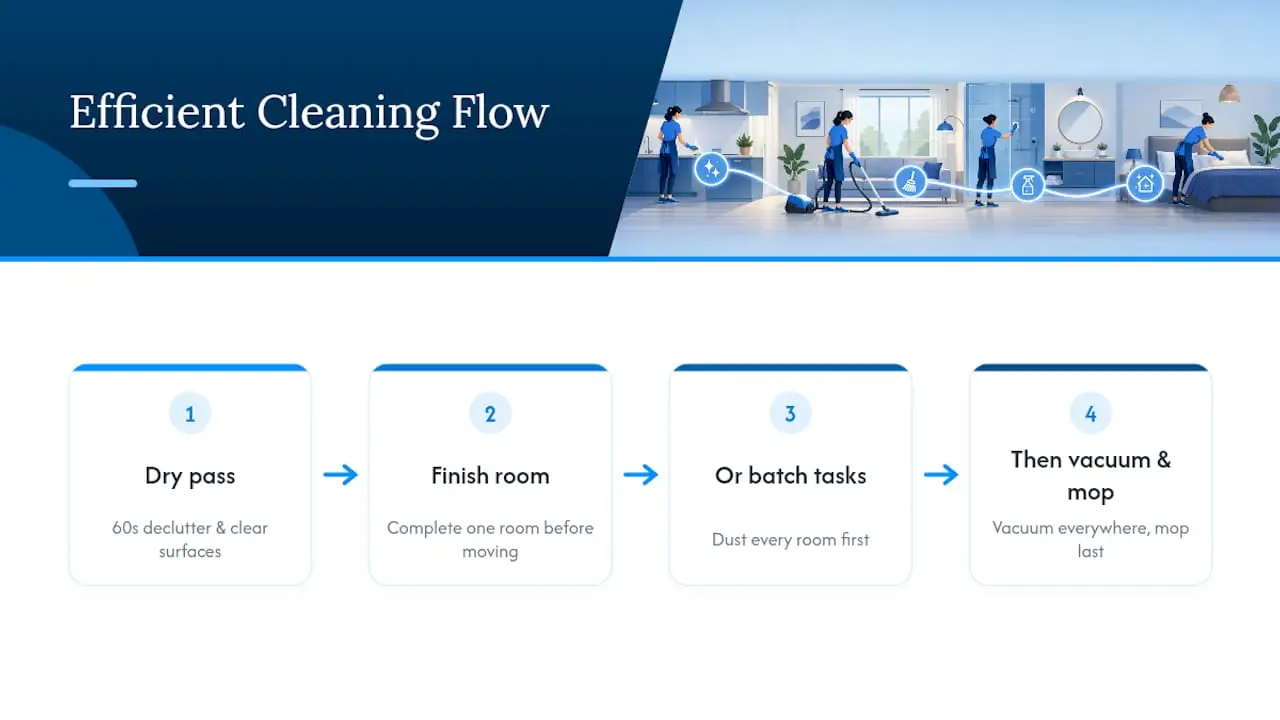
Pro Tip: Do a 60-second “dry pass” before you grab any spray bottle: pick up clutter, empty small trash cans, and clear surfaces. Wet cleaning goes twice as fast once nothing is in the way.
Standard Clean vs. Deep Clean: What’s Different
A standard clean covers the daily and weekly items above. A deep clean adds baseboards, inside appliances, window tracks, grout scrubbing, and behind or under furniture.
- Deep-clean-only tasks: oven interior, fridge interior, blinds, light fixtures, vents
- Included in both: counters, floors, bathrooms, dusting
- First deep cleans commonly run 2 to 6 hours longer than a standard visit for the same square footage
- Consider hiring a pro for move-outs, a first-ever deep clean, heavy pet or grease buildup, or when your schedule has no realistic block of time
If you’re deciding between the two for an upcoming clean, standard vs. deep cleaning breaks down which one fits your situation.
Printable Checklists to Keep on Hand
Print the daily reset list and the room-by-room checklist above, then tape them inside a kitchen cabinet or laundry room door. Physical checklists get used; checklists buried in a phone folder don’t.
- Days 1-3: catch up on overdue weekly tasks (bathrooms, floors, dusting)
- Days 4-7: establish the daily reset as a fixed habit
- Days 8-14: add one monthly task per day until the backlog clears
For move-related cleaning, the apartment move-in checklist and move-out cleaning checklist follow the same room-by-room format, adjusted for an empty unit.
A Realistic Take on Keeping Up With It
Most checklists fail because they assume unlimited time. Cut yours to a 30-minute floor: beds, counters, high-touch wipes, one load of laundry started, done. On weeks that’s all you get, and that’s fine.
Assign recurring chores by household member, even young kids can handle beds or trash. A focused 90-minute session, done well, covers a full daily reset plus one bathroom and one room’s floors, which is enough to reset the whole feel of a home.
— Local
When It’s Time to Book a Professional Instead
DIY checklists work great for upkeep. They get a lot harder to stick to around a move, after a renovation, or when work and family leave zero hours free for a first deep clean. That’s the exact gap Pure Homes Cleaning fills: a done-for-you version of everything above, run by people who’ve timed these tasks across thousands of visits, not a guess based on a Saturday afternoon.
Pure Homes Cleaning offers standard recurring cleans, deep cleans, and move-in/move-out service across Washington, DC, Virginia, and Maryland, all using eco-friendly products safe for kids and pets. Every plan is customizable, so you can book just the rooms that need it or the whole house top to bottom. If you’re weighing a deep clean against a move-out clean, this comparison helps you pick the right service before booking. Check availability and get a quote through the full list of cleaning services to have a pro handle the parts of this checklist you’d rather not.
Sources
- Martha Stewart — Deep cleaning checklist
- Real Simple — Cleaning schedule
- The Spruce — How to deep clean a house
- Apartment Therapy — Pareto principle for cleaning
FAQ
What Should Be on a Basic House Cleaning Checklist?
A basic checklist covers the daily reset (beds, counters, high-touch surfaces, trash) plus weekly bathroom and floor tasks, organized room by room for the kitchen, bathrooms, bedrooms, living areas, entry, and laundry.
What Do House Cleaners Do During a Standard Visit?
Standard visits cover the tasks listed above: kitchens, bathrooms, dusting, vacuuming, and mopping. Deep-clean-only tasks like oven interiors and window tracks aren’t included unless requested.
How Long Does It Take to Clean a House Using a Checklist?
A standard clean runs about 15 to 25 minutes per room; a deep clean runs 30 to 90 minutes per room depending on size and clutter, based on published professional time estimates.
What’s the Difference Between a Maid and a Cleaner?
There’s no real difference. Both terms describe someone performing the same house cleaner duties; the label is regional preference, not a distinct job scope.
What Is Included in a Professional House Cleaning Service?
Pure Homes Cleaning’s standard, deep, and move-out plans include the full room-by-room task list on this page, using eco-friendly products, with customizable add-ons for pet-related messes or extra detail work.