The safest way to clean when you have asthma is to focus on removing allergens with damp methods and HEPA filtration while skipping sprays, fragrances, and harsh fumes that irritate your airways. Start today by swapping any spray bottle for a cloth and cleaner, cracking a window for airflow, and running a HEPA vacuum instead of a broom. The sections below walk through exact steps, safer products, ventilation, and a realistic weekly schedule.
TL;DR:
- Vacuum carpets and rugs slowly with a HEPA filter at least weekly, then leave the room briefly while airborne dust settles.
- Use soap and water for routine messes; reserve disinfectants for situations such as illness, and apply any needed cleaner to a cloth.
- Ventilate during cleaning and for 20 to 30 minutes afterward, keep humidity between 30% and 50%, and treat HEPA air cleaners as support, not source control.
- Have a professional handle mold patches larger than about three feet or recurring growth after a leak; small spots can be scrubbed with mild cleaner.
Table of Contents
- Cleaning Steps That Cut Down Asthma Triggers
- Which Cleaning Products Are Safer for Asthma
- Ventilation and Air Filtration Steps That Help
- A Weekly and Monthly Routine That Fits Real Life
- What the Research and Guidance Actually Say
- Living With Asthma While Keeping a Clean Home
- A Lower-Exposure Cleaning Option When You’d Rather Not Do It Yourself
- FAQ
- Sources
Cleaning Steps That Cut Down Asthma Triggers
A few changes in how you dust, vacuum, and wash can lower the amount of dust, mold, and chemical residue floating in your air.
- Dust top to bottom with a damp cloth. Dry dusting just scatters particles back into the air, while a damp microfiber cloth traps them so they go in the trash instead of your lungs.
- Vacuum with a HEPA filter, slowly. Fast strokes stir up more dust than they collect. Go over carpets and rugs at least once a week, and leave the room for a few minutes afterward so settled particles have time to clear.
- Wash bedding weekly in hot water. Use allergen-proof covers on mattresses and pillows, and wash stuffed toys on the same cycle to keep dust mite buildup low.
- Treat small mold spots right away. A small patch on a shower wall can usually be scrubbed off with a stiff brush and a mild cleaner. Anything larger than about three feet, or mold that keeps coming back after a leak, is a job for a professional rather than a DIY fix.
Carpets and upholstery deserve extra attention since they hold onto dust and pet dander long after surface cleaning. A deep steam clean every few months, done by a professional if possible, reaches what a weekly vacuum pass misses.
Pro Tip: Keep your pet off the bed and out of the bedroom, since dander collects fastest in fabric close to where you sleep.
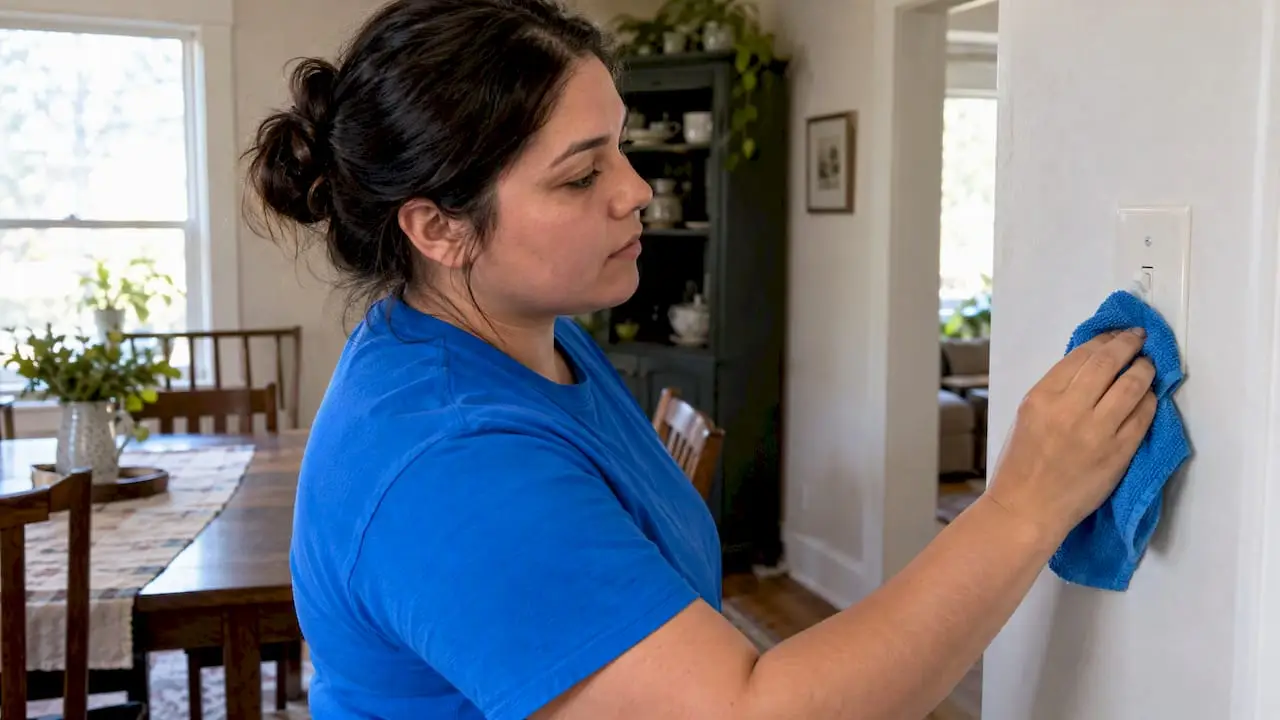
For homes with a regular rotation of frequently touched surfaces, like doorknobs and light switches, a structured surface cleaning routine keeps grime from building up between deeper cleaning sessions.
Which Cleaning Products Are Safer for Asthma
Not every cleaner on the shelf is built the same, and the gap between cleaning and disinfecting matters more than most labels suggest. For most everyday messes, soap and water remove dirt and germs well enough, and reaching for a disinfectant on top of that just adds unnecessary chemical exposure, according to CDC guidance. Save disinfectants for situations that actually call for them, like after illness in the home, which is covered in more detail in our flu season cleaning guide.
When you do need a stronger product, read the label closely:
- Skip anything listed simply as “fragrance” or “parfum,” since those terms can hide dozens of unlisted compounds.
- Avoid mixing bleach and ammonia-based products, and choose one or the other only when plain cleaning isn’t enough.
- Look for hydrogen peroxide, citric acid, or alcohol-based formulas, which tend to be gentler on the airways than heavily scented sprays.
- Pour or spray cleaner onto a cloth rather than directly into the air, a step the CDC specifically recommends for people with asthma.
A systematic review and meta-analysis found that frequent exposure to household cleaning agents was associated with roughly three times the odds of pediatric asthma (odds ratio of about 2.90). That number is a strong argument for choosing fewer, milder products rather than stacking multiple sprays in one cleaning session. Our guide to green versus regular cleaning breaks down which low-VOC swaps make the biggest difference, and our disinfectant versus cleaner breakdown covers exactly when the stronger option is worth it.
Ventilation and Air Filtration Steps That Help
Moving air matters as much as the products you use. Before you start cleaning, open a window or turn on an exhaust fan, and keep it running for at least 20 to 30 minutes after you finish.
- Point box fans toward an open window to push fumes outdoors instead of circulating them through the house.
- Run a portable HEPA air cleaner during and after cleaning. The EPA notes that these units can improve some allergy and asthma symptoms, though results vary and they aren’t a replacement for removing the source of the problem.
- Check your HVAC filter rating and replace it on schedule. A partner guide on home air quality explains how filter ratings and duct maintenance affect what circulates through your vents.
- Keep indoor humidity between 30% and 50% to discourage dust mites and mold growth.
Pro Tip: Run your air cleaner on high for the first hour after vacuuming, since that’s when the most dust is suspended in the air.
A Weekly and Monthly Routine That Fits Real Life
You don’t need to deep clean every day to keep triggers low. A simple weekly and monthly split keeps exposure down without eating your whole weekend.
- Weekly: vacuum with a HEPA filter, wash bedding in hot water, damp-dust surfaces, and empty trash before it overflows.
- Monthly or seasonal: deep-clean carpets and curtains, check under sinks and around windows for leaks or early mold, and confirm your HVAC system has had its scheduled service.
- Order matters: ventilate the room first, wipe surfaces with a damp cloth, then vacuum last, so you’re not stirring up dust right before you breathe heavily from exertion.
- Delegate what you can. Heavy chemical cleaning or large mold removal goes to a household member without asthma, or to a professional crew, whenever that’s an option.
A checklist built around your HVAC system first can shrink your home’s dust load within a few weeks rather than months.
What the Research and Guidance Actually Say
- A meta-analysis of pediatric asthma risk found a strong link between frequent cleaning-product exposure and asthma odds in children, and separate research on occupational cleaners points to similar respiratory risks with repeated exposure over time.
- The CDC’s position is that routine soap-and-water cleaning handles most daily messes, which limits unnecessary chemical exposure.
- The EPA’s review of HEPA air cleaners found they can ease some symptoms but work best alongside source control, not instead of it.
- A professional low-VOC cleaning visit can take the heaviest chemical exposure off your own plate entirely, which matters most on the days your airways are already sensitive.
Living With Asthma While Keeping a Clean Home
You’re never going to eliminate every trigger in your house, and chasing that goal usually just adds stress on top of a condition stress already makes worse. What actually helps is steady, modest exposure reduction, paired with a clinician who can help you pin down your specific triggers rather than guessing from a general list. If your household has pets, carpet throughout, or a family member who’s especially sensitive, it’s worth weighing a professional cleaning service that keeps the heaviest chemical exposure out of your hands altogether.
— Local
A Lower-Exposure Cleaning Option When You’d Rather Not Do It Yourself
Some weeks, the safest move is handing the heavy cleaning to someone else. We offer Standard Cleaning and Deep Cleaning services for ongoing upkeep, plus Move In Clean and Move Out Clean services for transitions between homes, designed with eco-friendly products suitable for sensitive households.

- Our cleaning teams use HEPA-capable vacuums and avoid heavily fragranced products on request.
- Scheduling is flexible, allowing you to set up a recurring visit or book a one-time deep clean as needed.
- We can accommodate specific product preferences if you provide a list of ingredients that may trigger your symptoms.
If you’re weighing which service fits your situation, our comparison of standard and deep cleaning walks through the difference, and you can book a cleaning whenever you’re ready for a lower-exposure option.
This article is general information, not a substitute for advice from a qualified doctor. Consult a qualified healthcare professional about your own circumstances before acting on anything here.
FAQ
Are people with asthma considered immunocompromised?
No, asthma is a chronic airway condition, not an immune deficiency, so having asthma alone doesn’t mean someone is immunocompromised. Some asthma medications or overlapping conditions can affect immune response, which is a question worth raising with a personal physician.
What are the most common triggers for asthma?
Common indoor triggers include dust mites, pet dander, mold, tobacco smoke, and chemical irritants from cleaning products or fragrances, according to EPA guidance on asthma triggers. Controlling humidity and reducing dust buildup are two of the most effective ways to limit exposure to several of these at once.
How can I stop an asthma cough at night without an inhaler?
Elevating your head, using a HEPA air cleaner in the bedroom, and keeping humidity in a moderate range can ease nighttime coughing tied to airway irritation. These steps support symptom management but don’t replace prescribed asthma medication, so ongoing nighttime symptoms are worth discussing with a doctor.
How can I stay calm during an asthma flare-up?
Slow, controlled breathing and sitting upright rather than lying down can help reduce panic while you use prescribed rescue medication. Leaving the room if a chemical irritant triggered the flare, and getting to fresh air, also helps calm both breathing and anxiety.
Sources
- Household cleaning agents impact on pediatric asthma: a systematic review and meta-analysis
- Cleaning and disinfecting: evidence and guidance (CDC)
- What to do when an emergency occurs | Asthma | CDC
- Guide to air cleaners in the home (EPA)