
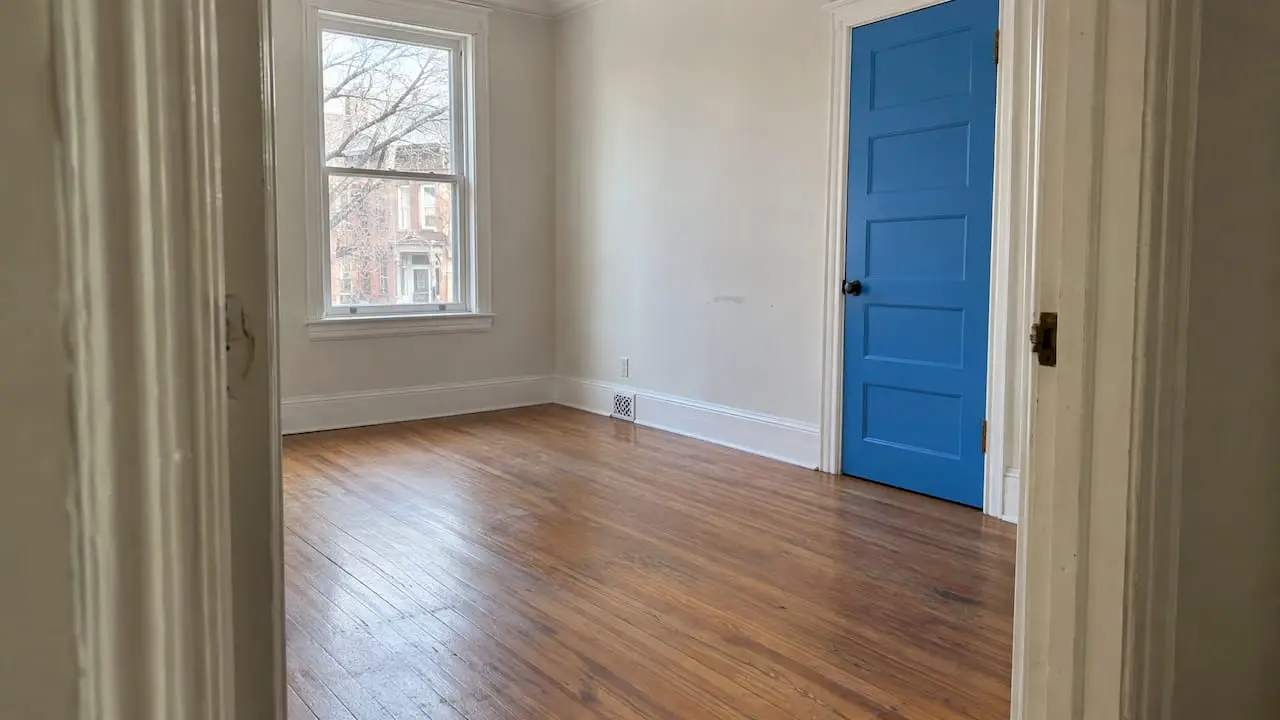
DC law does not hand tenants a single official move-out cleaning checklist. What it does is protect you from being charged for ordinary wear and tear, and let your landlord deduct for damage and for messes beyond it. So the practical requirement is to leave the unit clean, empty and documented. A thorough move-out clean by Pure Homes Cleaning gets a DC rental to that standard, so the walkthrough and the deposit letter go your way.
TL;DR
- DC landlords cannot keep your deposit for ordinary wear and tear, but can deduct for damage from negligence, carelessness, accident or abuse.
- Within 45 days after you move out, the landlord must return the deposit or send a written notice of deductions, with documentation.
- Leave the unit empty, with every room, appliance, cabinet and floor cleaned, and photograph everything with dates.
- A move-out clean differs from a deep clean: it is done in an empty home and covers insides of cabinets, drawers, closets and appliances.
- Check your lease for cleaning language and read your notice period before you book anything.
Table of Contents
- What DC law actually requires of a moving-out tenant
- The deposit timeline you can count on
- Before you clean: notice, lease and documentation
- What “clean” means at a move-out walkthrough
- Utilities and an empty home
- Move-out cleaning versus deep cleaning
- Doing it yourself or booking a pro
- Book a move-out clean in DC
- What changed recently, and what to watch
- FAQ
- Sources
What DC law actually requires of a moving-out tenant
The rule that matters most is in the security deposit statute. Under D.C. Code § 42-3502.17, a housing provider may not withhold a deposit for the replacement value of items damaged by ordinary wear and tear. The statute defines that as deterioration from the intended use of the unit, including breakage due to age. Damage from a tenant’s, family member’s or guest’s negligence, carelessness, accident or abuse is different, and can be deducted.
The District’s Office of the Tenant Advocate explains the same split: withholding is allowed to recover repair costs from tenant-caused damage, and prohibited for ordinary wear and tear.
Can a landlord charge a professional cleaning fee?
Since the Fairness in Renting Clarification Amendment Act of 2023 took effect on November 28, 2023, a landlord may not charge a professional cleaning fee if you return the apartment in a condition consistent with ordinary wear and tear. The same law bars charging tenants for services needed to keep the unit consistent with the implied warranty of habitability.
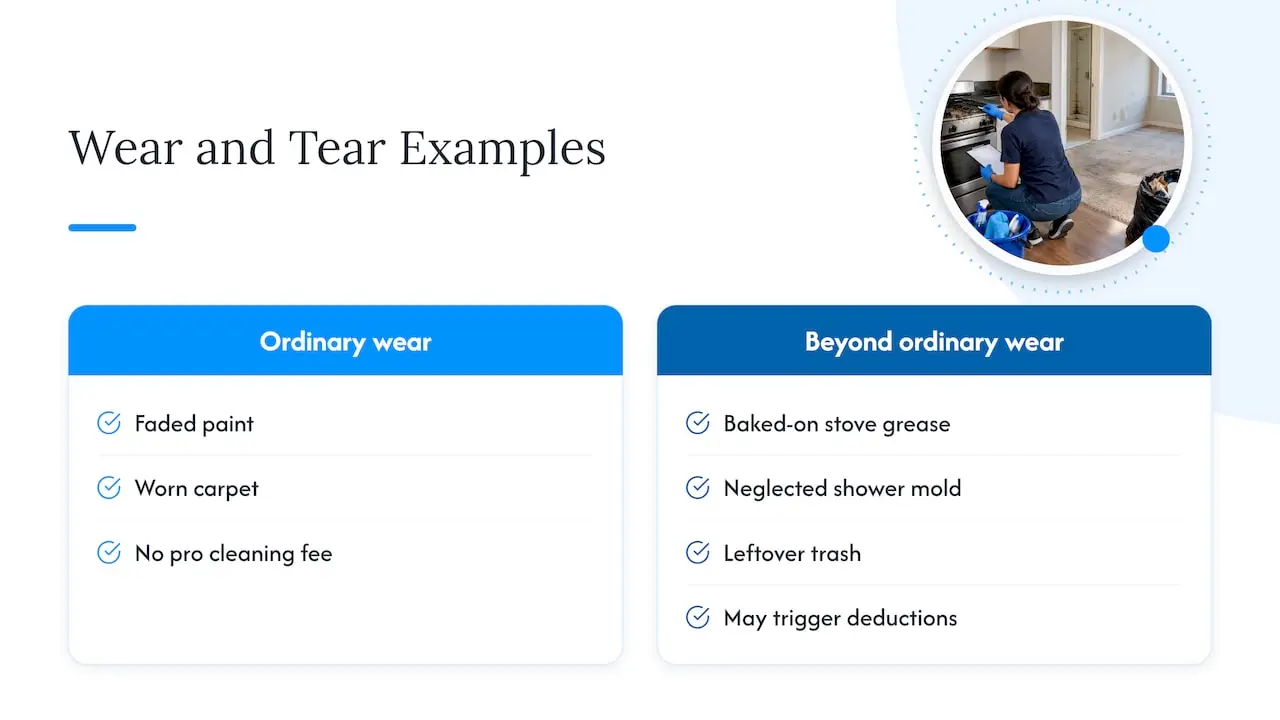
The key phrase is “consistent with ordinary wear and tear.” Faded paint and worn carpet are wear and tear. Grease baked onto a stove, mold in a shower you never cleaned, or trash left behind are not. Those are where deductions come from.
What this means in practice
There is no statute listing the tasks you must complete. A landlord’s lease may add expectations, so read the cleaning clause. Landlords commonly treat cleanliness as part of the tenant’s upkeep, and a DC landlord association notes that tenants are typically responsible for minor upkeep such as filters, light bulbs and cleanliness. Your goal is to leave nothing that can be framed as more than normal use.
The deposit timeline you can count on
Knowing the clock helps you plan your cleaning and your records.
| Step | What the rule says |
|---|---|
| Deposit size | May not exceed the first month’s rent, and must be held in an interest-bearing account (Tenant Bill of Rights) |
| Within 45 days of move-out | Landlord returns the deposit with interest for tenancies of 12 months or more, or sends written notice of unpaid amounts |
| The notice | Must list unpaid rent, damage beyond ordinary wear and tear, or charges for removing items left behind, with photos or other documentation and your right to dispute (D.C. Code § 42-3502.17(e)) |
| Your response | You have 30 calendar days to dispute |
| Balance | Returned within 30 days after the initial notice |
If the landlord withholds anything, Legal Aid DC’s self-help packet says you are owed the remaining deposit plus an itemized statement listing the cost of each item. Repairs from ordinary wear and tear are the landlord’s responsibility.
If you receive a deduction you think is wrong, the Office of the Tenant Advocate and Legal Aid DC are the right places to take it. This article is general information, not legal advice.
Before you clean: notice, lease and documentation
Give proper notice
A month-to-month tenant, including one whose lease term has ended, must give 30 days’ notice before moving out and may owe another month’s rent otherwise. You also usually cannot apply the deposit to your last month’s rent without the landlord’s permission.
Use the move-in/move-out checklist
The DC Department of Disability Services publishes a Tenant Move-In/Move-Out Checklist. It tells tenants to record the unit’s condition, take dated photos of problems, have the landlord initial each page and sign the last page, and keep a signed copy. It warns that tenants may be charged for problems not noted on the checklist. It covers walls, ceilings, doors, exhaust fans, windows, screens, blinds, closets, shelves, lights, cabinets, outlets and switches, which is a useful map of what a landlord will look at.
Compare your move-in checklist with the move-out condition. Anything that was already worn on day one is not yours to fix.

What “clean” means at a move-out walkthrough
The unit should be empty, since cleaning is most effective once furniture and belongings are gone and every surface is reachable. Here is a room-by-room standard that matches what inspectors and landlords check.
Kitchen
- Inside and outside of the refrigerator and freezer, emptied and wiped, with shelves and drawers cleaned.
- Oven interior, racks and stovetop, including burner pans and the grease on the hood.
- Inside every cabinet and drawer, plus countertops, backsplash and sink.
- Dishwasher filter and door seal, and the microwave inside and out.
Bathrooms
- Toilet inside, outside and around the base.
- Tub, shower, tile and grout, with soap scum and mildew removed.
- Sink, vanity, mirror, fixtures and exhaust fan cover.
- Floors, including behind the toilet.
Bedrooms, living areas and closets
- Dust ceiling fans, light fixtures, vents and window sills.
- Wipe baseboards, doors, door frames and switch plates.
- Clean closet shelves and rods.
- Vacuum carpets and mop hard floors, especially the spots furniture covered.
- Wipe blinds, window tracks and screens.
Last steps
Remove all trash and belongings. Landlords can charge for removing items left behind, as the notice rules above list. Replace burned-out bulbs and filters if your lease makes them your job. Then take dated photos of every room after you finish. For a longer version, see our move-out cleaning checklist, and for the order to work in on moving day, our moving day cleaning order guide.
Utilities and an empty home
Keep electricity and hot water on through your final clean and the walkthrough. Cleaning with no hot water is slow and leaves grease and soap scum behind, and a landlord may inspect the same day. Do not cancel service on the day you hand over keys. Also keep the unit empty: a cleaner can reach insides of cabinets, closets and appliances only once belongings are out.
Move-out cleaning versus deep cleaning
A deep clean happens in a lived-in, furnished home and goes after detail work such as baseboards, grout, appliance interiors, vents and dusting. A move-out clean happens in an empty home and covers insides of cabinets, drawers, closets and appliances, plus floors where furniture stood, so the unit is ready for a walkthrough.
If you are still living in the place and only want it reset, a deep clean fits. If you are handing back keys, you need the move-out version. Our guide to deep cleaning vs move-out cleaning goes through the differences.
Doing it yourself or booking a pro
Most tenants can finish a small apartment in a long day, but the last week of a move is the busiest of all: packing, utilities, keys, address changes. The tasks that take the longest are ovens, refrigerators, grout and baseboards, and these are the items landlords most often point to. A professional move-out clean removes that load and lets you spend your final days on the move itself. The security deposit is usually a month’s rent, so the stakes are real.
Our view on move-out cleaning
We see the move-out clean as part of protecting your deposit, not a chore to squeeze in at midnight. Our service is built for busy households in DC, Virginia and Maryland: trained, insured staff, eco-friendly products that are safe for families and pets, and flexible scheduling for one-time cleans. We offer Move Out Clean as its own service, separate from standard and deep cleaning, because an empty home needs a different scope.
Our advice is to book once you know your handover date, and to photograph the finished unit before you hand over keys. Clean, documented and empty is the strongest position a tenant can take into a walkthrough.
Local
Book a move-out clean in DC
Pure Homes Cleaning offers Move Out Clean and Move In Clean for homes and apartments across Washington DC, Virginia and Maryland, with online booking. Our page on security deposit cleaning explains how to book ahead of your handover. You can reserve through our booking page.

If you are also unsure of the scope, our apartment inspection cleaning guide shows what to clean and fix first.
What changed recently, and what to watch
The security deposit statute was most recently amended by D.C. Law 26-156 in August 2026, per the D.C. Law Library. Separately, the Fair Housing Practices Amendment Act of 2025 (Bill 26-126) would amend the Rental Housing Act if enacted, and attorneys advise landlords to review deposit procedures ahead of it. Rules change, so confirm the current text with the District’s Office of the Tenant Advocate before you rely on a deadline.
FAQ
Are tenants required to clean before moving out in DC?
No statute lists required tasks, but you can be charged for damage beyond ordinary wear and tear, and your lease may set cleaning expectations. Leave the unit clean and empty. A landlord cannot charge a professional cleaning fee if the unit is returned consistent with ordinary wear and tear.
How long does a DC landlord have to return my deposit?
Within 45 days after you move out, the landlord must return the deposit, with interest for tenancies of 12 months or more, or send written notice of deductions. You then have 30 calendar days to dispute.
Can the landlord keep my deposit for the last month’s rent?
You usually cannot apply your deposit to the last month’s rent without the landlord’s permission, so plan to pay it. Giving the required notice avoids owing extra rent.
What is the difference between a move-out clean and a deep clean?
A move-out clean is done in an empty home and includes insides of cabinets, drawers, closets and appliances. A deep clean is done in a furnished home and focuses on detailed work such as grout, vents and baseboards.
Sources
- D.C. Code § 42-3502.17, Security deposit (D.C. Law Library)
- District of Columbia Tenant Bill of Rights (OTA)
- Residential Lease Law FAQ (OTA)
- Tenant Move-In/Move-Out Checklist (DC Department of Disability Services)
- Security Deposit Self-Help Packet (Legal Aid DC)
- DC enacts Fairness In Renting Clarification Amendment Act of 2023
- Lease, Laws & Liabilities (DC Landlord Association)
- What DC’s Fair Housing Practices Amendment Act of 2025 means
- Move-Out Cleaning vs. Deep Cleaning