

A good cleaner breakage policy answers three questions in writing: who reports damage and how fast, who pays when a cleaner causes it, and what proof you will need. If a cleaner breaks something in your home, photograph it, tell the company right away, and keep every receipt and message. This guide explains how those policies usually work, how insurance fits in, and what to ask before anyone enters your home. It is written for homeowners and renters in Washington, DC, Virginia and Maryland.
TL;DR
- Photograph or video the damage before you clean up or throw anything away, and report it to the cleaning company at once.
- A reputable company’s liability insurance is the usual route for damage its staff cause. Ask for the policy terms in writing before your first visit.
- Your own homeowners or renters policy is a separate route. Report to your insurer as soon as you know about damage and decide to claim, and ask how long you have to file.
- Move fragile, sentimental and unstable items out of the work area. Most disputes start with items that were already loose, cracked or worn.
- Wear and tear, pre-existing damage and accidents are different things. Document the condition of valuable items before the visit.
Table of Contents
- What a cleaner breakage policy is
- What to do the moment something breaks
- How soon to report damage
- Who pays: the company’s insurance versus yours
- Accident, wear and tear, or pre-existing damage
- Before the first visit: a short prevention routine
- Questions to ask any cleaner before you book
- Our perspective on breakage
- Booking with confidence in DC, Maryland and Virginia
- FAQ
- Sources
What a cleaner breakage policy is
A breakage policy is the company’s written rule for what happens when its staff damage something in your home. It normally covers four things: what counts as covered damage, how long you have to report it, how the company resolves it (repair, replacement or reimbursement), and what is excluded.
Policies vary from company to company, so there is no single standard you can assume. Some companies set a short reporting window, such as 24 hours. Others allow longer. Some route every claim through their insurer, and others settle small items directly. That is why the policy matters more than the sales pitch: it tells you in advance what your options are.
It also helps to know what a breakage policy is not. It is not a promise that nothing will ever break. Cleaning means handling shelves, décor, appliances and fragile surfaces, and accidents are part of any hands-on service. A policy is the plan for when one happens.
What to do the moment something breaks
Whether you discover the damage during the visit or hours later, the first steps are the same. They follow the evidence habits that state insurance regulators recommend for any property claim.
- Stop and photograph. Take photos or video of the damage before you clean up or move anything. The Minnesota Department of Commerce advises photographing or videotaping damage before cleanup and not discarding damaged items until an adjuster says it is fine.
- Keep the pieces. Do not throw broken items away. If the item is hazardous or perishable, that is the exception, but photograph it first.
- Report to the company right away. Use the method the company names (phone, email or booking account) so there is a dated record. Save the message.
- Make temporary repairs only. If a broken item creates a hazard or lets water in, secure it. Keep receipts for anything you spend.
- Log every contact. Write down who you spoke with, when, and what they said. The same Minnesota guidance recommends keeping a log of contacts and expenses.
- Gather proof of value. Find the receipt, order confirmation, appraisal or a past photo of the item in your home. Make, model and serial numbers help for electronics and appliances, as FEMA’s claim guidance notes for documenting property.
Do not sign anything that calls a first payment a full and final settlement until you have read it. The California Department of Insurance cautions that an insurer’s first payment may be an advance rather than the final amount, and warns against signing a release without review. That advice is written for insurance claims, but the habit is sound for any settlement.
How soon to report damage
Report as soon as you notice it. Companies often set their own deadline, and the wording in their policy controls. You will see windows such as 24 or 72 hours in company policies, so check yours before the visit and not after.
The insurance side has its own clock. The Maryland Insurance Administration says to notify your insurer as soon as you know there is damage and decide to file a claim, and to ask how long you have to file under your policy. The National Association of Insurance Commissioners adds that you should weigh the deductible and the possibility of hidden damage before deciding a loss is worth claiming.
In practice, that means a small broken mug probably never reaches your insurer, while a cracked countertop, a damaged appliance or water damage deserves a call to both the cleaning company and your insurance agent.
Who pays: the company’s insurance versus yours
There are two separate insurance paths, and it helps to know which one you are on.
The cleaning company’s liability coverage
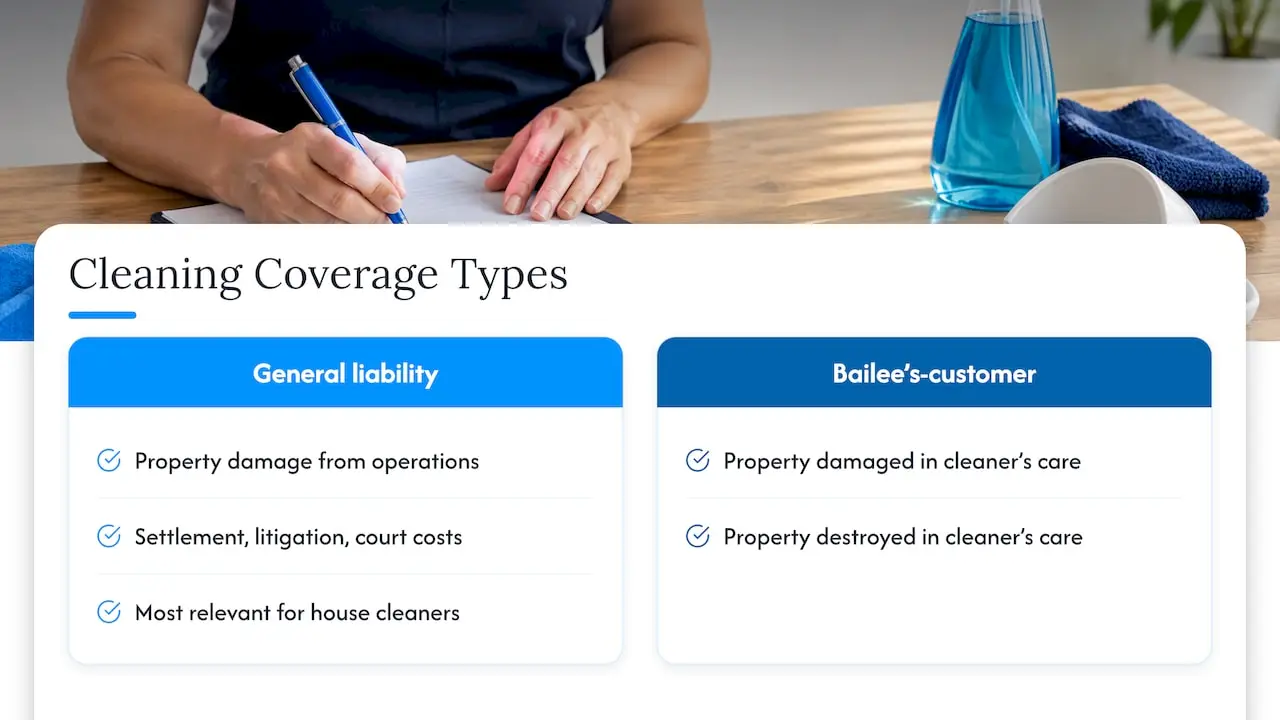
The District of Columbia Department of Insurance, Securities and Banking explains that commercial general liability insurance covers property damage caused by a business’s operations, including settlement, litigation and court-awarded costs. The same guide describes bailee’s-customer coverage, which addresses liability for property damaged or destroyed while in a cleaner’s care. For a house cleaner, general liability is the coverage most relevant to accidental breakage in your home.
This is why verifying insurance before you book matters. Our guides on how to verify a cleaner’s insurance and the four certificate and bond checks walk through asking for a certificate of insurance and reading what it actually shows.
Your homeowners or renters policy
Your own policy is a fallback or a second route, depending on the terms. Two definitions matter if you go this way. The California Department of Insurance defines replacement cost as the amount needed to replace an item with one of similar kind and quality without deducting depreciation, and actual cash value as the amount needed to replace it at current market value. The gap between the two can be large for older items.
Nolo describes the usual insured-claim sequence as reporting the incident, insurer investigation, repair or replacement estimates, and payment for covered costs. Whether damage caused by a third party such as a cleaner is covered, and how your deductible applies, depends on your policy language, so ask your agent.
Independent cleaners versus companies
Who you hire changes who stands behind the work. A solo cleaner may carry no liability coverage at all, which leaves you to absorb the loss or pursue it personally. If you are weighing that choice, see our comparison of an independent cleaner versus a company.
Accident, wear and tear, or pre-existing damage
This is the question that causes most disputes, and there is no formula. Companies generally separate three categories:
| Category | What it looks like | How it is usually treated |
|---|---|---|
| Accidental damage | A dropped frame, a chipped dish, a scratch from a vacuum or a cleaning tool | Typically what a breakage policy is meant to address |
| Wear and tear | Fading, loosened hardware, aging grout, finish that was already thinning | Typically excluded, since it comes from age and use |
| Pre-existing damage | A hairline crack, a wobbly shelf, a stain that was there before | Hard to attribute without a record of the item’s earlier condition |
The table shows common practice, not a rule for every company, so read your own provider’s wording. The practical point is that the burden of proof usually rests on records. A dated photo from before the visit settles most arguments in seconds.
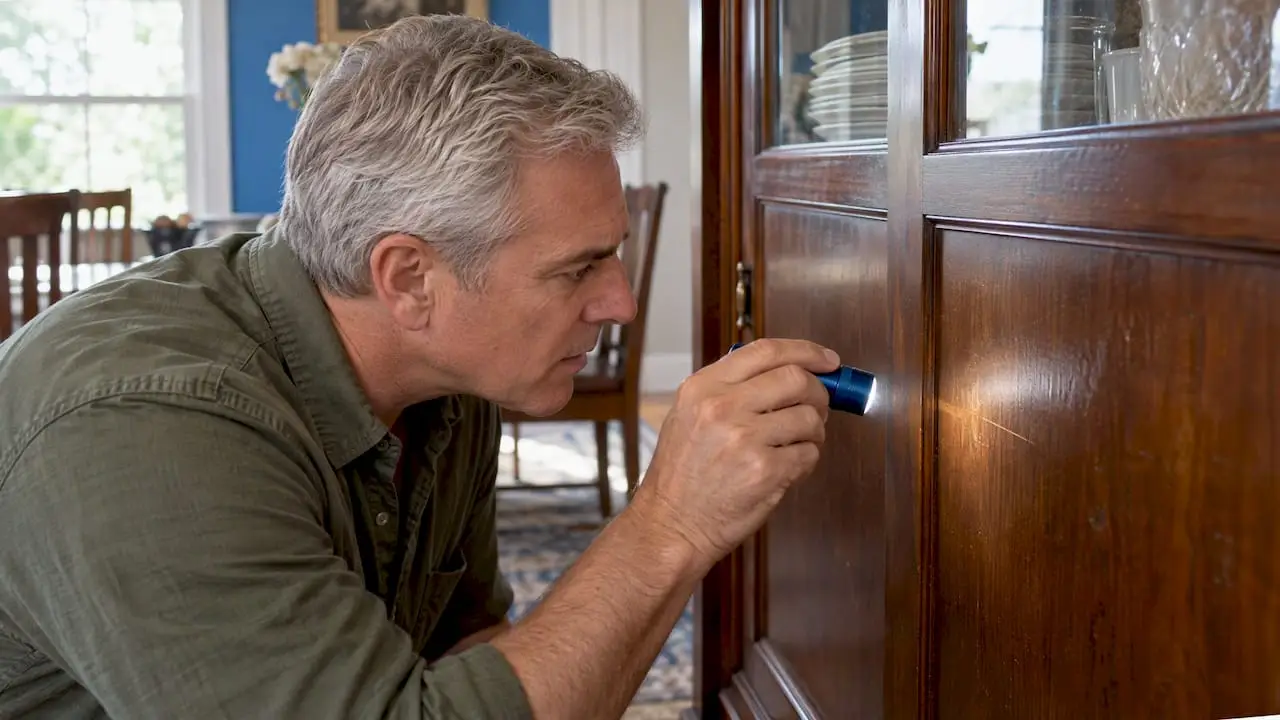
Some finishes show damage only at certain angles or in certain light. A scratch you can only see with a flashlight is treated differently from one visible across the room, and judging how visible a scratch is on a finished panel is a useful way to describe a mark accurately in a report. Cabinets are another place where finish damage is common, and kitchen cabinet care guidance can help you tell cleaning-related dulling from a real defect.
Older homes add another layer. Original plaster, painted trim and aged finishes can be more fragile than they look. If you live in one, read our old house cleaning rules and tell your cleaner which surfaces need a gentle approach.
Before the first visit: a short prevention routine
Most breakage is avoidable with ten minutes of preparation.
- Clear the fragile stuff. Put glassware, ceramics, collectibles and heirlooms in a closet or room that is off the cleaning list. Remove unstable items that could tip when someone dusts nearby.
- Photograph valuables. Take a quick set of photos of high-value items, countertops, appliances and floors. Store them in a dated folder on your phone.
- Flag the fragile. Tell the team about loose tiles, wobbly railings, delicate finishes or antique furniture before they start.
- Secure access. Decide how the team will enter and how keys are handled. Our guide on safe key handling covers it.
- Read the policy. Ask for the breakage and damage terms in writing, including the reporting window and who handles the claim.
- Walk through afterward. For a first visit or a deep clean, do a short walkthrough when the team finishes so any problem is noted the same day.
If you are preparing a rental for a deposit inspection, documentation matters even more. A before-and-after record protects you with the landlord and the cleaner. Our move out cleaning checklist shows what to photograph.
Questions to ask any cleaner before you book
Use these as a screening list. A company that answers them plainly is easier to trust.
- Are your cleaners employees, and is the company insured? Can you send a certificate of insurance?
- What is your damage reporting window, and how do I report?
- How do you resolve a covered claim: repair, replacement, reimbursement or insurance claim?
- What do you exclude, such as wear and tear, unstable items or items left in the work area?
- How do you handle items of high or sentimental value?
- Do I need to sign anything to make a claim?
- What happens if we disagree about whether the damage was already there?
Vague answers or a refusal to put terms in writing are a signal to keep looking.
Our perspective on breakage
We think a breakage policy should be one of the first things a household asks about, not something found out after a mishap. Cleaning is hands-on work in people’s most personal space, and the right response to that is preparation, trained people and clear communication.
At Pure Homes Cleaning, our approach rests on reliability, professionalism and trained, insured staff. We use eco-friendly products that are safe for families and pets, and we tailor each plan to the household, whether that is a recurring routine clean, a one-time deep clean or a move-in or move-out clean. That tailoring includes learning which items and surfaces in your home need extra care.
Our advice to every client is the same: tell us what is fragile, photograph what is valuable, and speak up quickly if something looks wrong. The faster a concern reaches us, the easier it is to sort out fairly.
Local
Booking with confidence in DC, Maryland and Virginia
If you want a team that is trained and insured, with plans built around your household, we serve homes and apartments across Washington, DC, Virginia and Maryland. You can choose standard or deep cleaning for ongoing care or a reset, or book a move-in or move-out clean when you are changing homes.

Not sure which service fits? Our guide to standard versus deep cleaning helps you choose, and the security deposit cleaning page explains how far ahead to book for a lease end.
FAQ
What should I do if a cleaner damages something in my home?
Photograph or film the damage before you clean up, keep the broken pieces, and report it to the company right away in writing. Save receipts and note every conversation. If the item is valuable, also contact your own insurer promptly and ask how long you have to file.
Does the cleaning company or my insurance pay for breakage?
Usually the company’s general liability coverage is the first route for damage its staff cause, though the company’s own policy decides how claims are handled. Your homeowners or renters policy is a separate route, and coverage depends on its wording and your deductible. Ask both parties before you assume.
How long do I have to report broken items?
The company sets its own window, so check the written policy before the visit. Insurers have their own deadlines too. The Maryland Insurance Administration advises reporting as soon as you know of damage and asking your insurer how long you have to file.
Is a cleaner responsible for items that were already damaged?
Usually not, and wear and tear is commonly excluded as well. That is why a dated photo of valuable or fragile items before the visit is so useful. It lets you and the company agree on what changed.
Sources
- Tips for Residential Property Owners and Renters on Filing a Claim, Minnesota Department of Commerce
- Reporting an Insurance Claim, Maryland Insurance Administration
- How Do I Start My Flood Claim?, FEMA
- Residential Claims Guide, California Department of Insurance
- Post-Disaster Claims Guide, National Association of Insurance Commissioners
- Insurance Coverage for a Cleaning Business, DC Department of Insurance, Securities and Banking
- How Do I Make a Property Damage Claim?, Nolo
- Panel scratch repair and visibility test
- Kitchen cabinet maintenance for homeowners