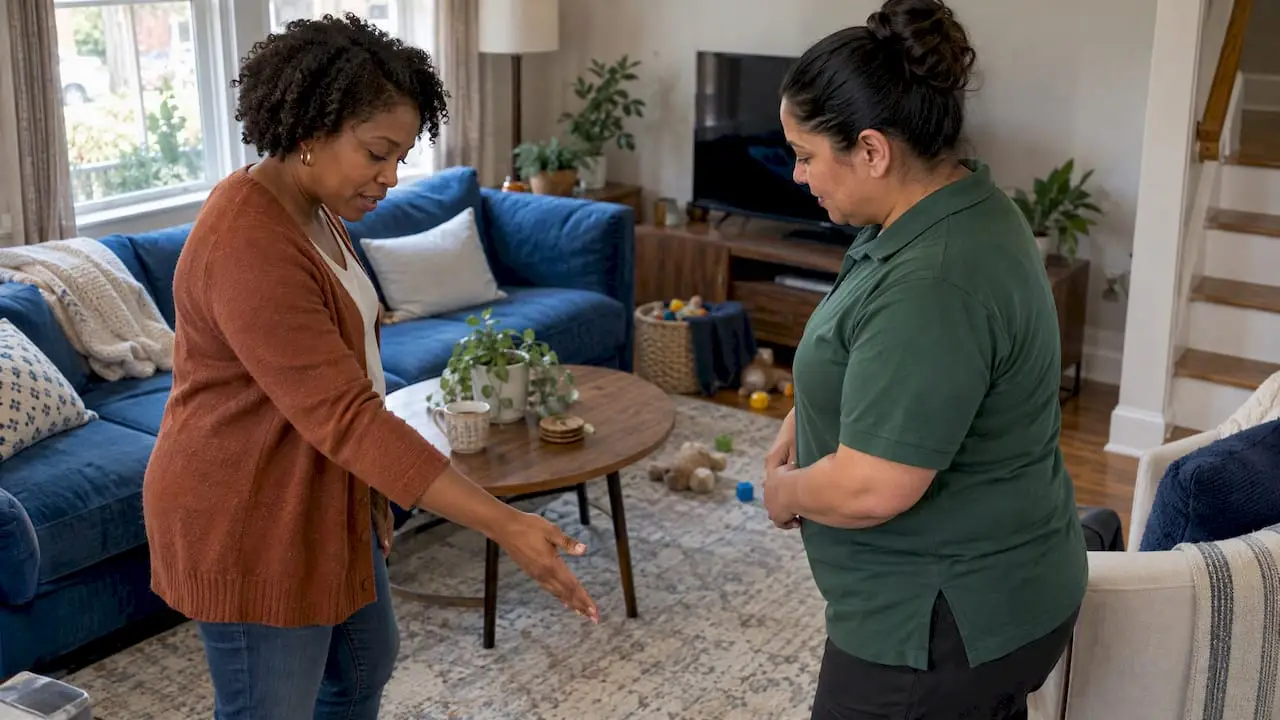
A customized cleaning service is a plan built around your home, not a package picked off a menu. You choose the type of visit, the rooms and tasks that matter most, how often someone comes, and what products are used around your kids and pets. This guide shows you how to do that step by step, what to put in writing, and how to tell whether a company will actually follow your plan. It is written for households in Washington, DC, Virginia and Maryland.
TL;DR
- Start with the visit type (standard, deep, or move-in/move-out), then adjust the room list, frequency and products around it.
- Write your priorities down before you book. A short checklist beats a long phone call.
- Ask about insurance, products and cancellation terms, and get the agreed scope in writing.
- Plans should change as your life does. A good company lets you add, skip or swap tasks without starting over.
- At Pure Homes Cleaning, you can book standard, deep, move-in and move-out cleans online and tailor the visit to your home.
Table of Contents
- What “customizing” a cleaning service really means
- Step 1: Pick the right baseline visit
- Step 2: Build your scope with a priority list
- Step 3: Set frequency that you can keep
- Step 4: Choose products around your household
- Step 5: What it costs, and what moves the price
- Step 6: Vet the company before you hand over a key
- Perspective: why we build plans around the home, not the package
- Put your plan into practice with Pure Homes Cleaning
- A sample plan, start to finish
- Common mistakes when customizing a plan
- FAQ
- Sources
What “customizing” a cleaning service really means
Most companies sell the same three building blocks: a recurring standard clean, a deep clean, and a move-in or move-out clean. Customizing means shaping those blocks. You can think of it as five dials:
- Visit type. Maintenance, reset, or empty-home clean.
- Scope. Which rooms, surfaces and appliances are included, and which are skipped.
- Frequency. Weekly, every two weeks, monthly, or one time only.
- Products and methods. Standard, fragrance-light, or eco-friendly, with attention to pets, allergies and asthma.
- Access and logistics. Key or code, parking in a rowhouse neighborhood, pets crated, preferred time window.
The first dial matters most, because it sets the baseline everything else adjusts. If you pick the wrong baseline, no amount of extras will fix it.
Step 1: Pick the right baseline visit
Standard cleaning for upkeep
A standard visit keeps a reasonably clean home that way: dusting, vacuuming, mopping, kitchen and bathroom surfaces, and trash. It is the right base for recurring service. Our printable standard cleaning checklist lists what a typical visit covers, so you can see where your own priorities differ.
Deep cleaning for a reset
A deep clean goes after what routine visits skip: baseboards, inside appliances, buildup in grout and around fixtures, and the corners that have collected months of dust. If your home has not been professionally cleaned in a long time, start here and move to maintenance afterward. We explain the reasoning in why to deep clean before recurring visits, and the comparison in standard vs deep cleaning.
Move-in and move-out cleaning for an empty home
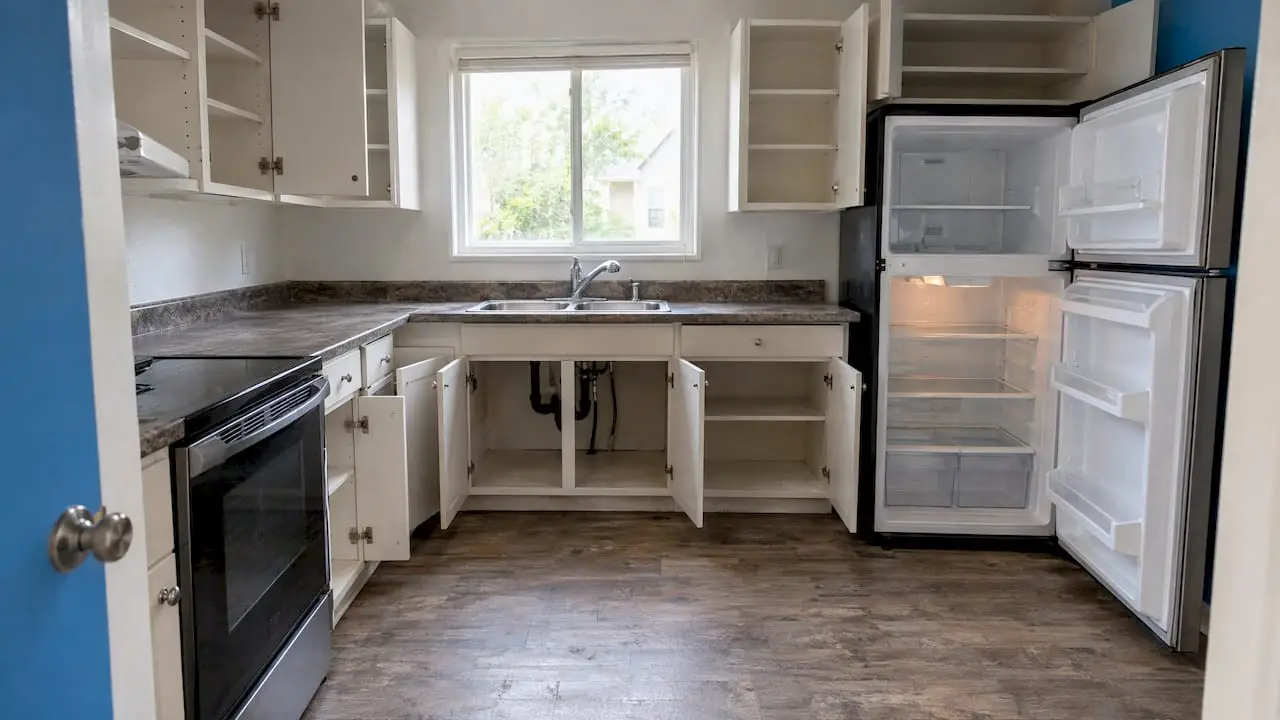
Empty homes are cleaned differently. Cabinets, closets, inside the oven and refrigerator, and window tracks are all reachable, and landlords and buyers look at them. If you are leaving a rental, our move-out cleaning checklist is built around getting your deposit back. If you are arriving, the room-by-room move-in checklist includes safety checks. Not sure which clean you need? Deep cleaning vs move-out cleaning settles it.
Step 2: Build your scope with a priority list
Before you contact anyone, walk through your home with your phone and write three lists.
- Must-do: the things that would make the visit worth it. For many households that is bathrooms, kitchen and floors.
- Nice-to-have: inside the refrigerator, interior windows, baseboards, the cluttered entry.
- Do not touch: a home office desk, a nursery, fragile collections, a room with a pet that needs to stay closed.
Then note the details only you know. Hardwood floors that cannot be wet-mopped. A glass shower door that streaks. A cat who hides under the bed. These details are what separate a custom plan from a generic one, and they cost you five minutes.
Trade time for scope
Every home has a time budget. If you want more tasks, the visit either runs longer or some other task gets dropped. A good plan states this plainly. A common approach is to rotate: a standard visit most weeks, with a different “focus” task added each time, such as baseboards one visit and the inside of the oven the next. Rotation spreads out the work without turning every visit into a deep clean.
Match the plan to your household
| Household | Typical customization |
|---|---|
| Busy dual-income family | Recurring standard clean on a fixed day, kitchen and bathrooms prioritized, entryway and floors |
| Pet owner | Extra attention to floors, upholstery and pet areas, pet-safe products, pets secured during the visit |
| Renter moving out | One-time move-out clean, scheduled with time before the final walkthrough |
| New homeowner | Move-in clean first, then a deep clean if needed, then a recurring plan |
| Allergy or asthma household | Fragrance-light, eco-friendly products, dusting emphasis, ventilation |
Step 3: Set frequency that you can keep
The best frequency is the one that matches how fast your home gets dirty and what you can stand. Weekly suits households with kids, pets or several adults at home all day. Every two weeks is the most common compromise. Monthly works if you do light tidying in between. One-time visits fit seasonal resets, hosting, and moves.
A practical tip: start more often than you think you need. The first two or three visits show you how much work builds up. Then you can step down to a lower frequency without losing the baseline. Stepping up after a slip is harder, because it brings you back to a deep clean.
Step 4: Choose products around your household
Products are one of the most useful dials for families and pet owners, and one where labels beat marketing. The EPA explains how to identify greener cleaning products and recommends looking for recognized labels rather than trusting words like “natural” alone. If you want to understand what that means room by room, we cover it in our eco-friendly house cleaning guide and in pet-safe cleaning: what to use and what to avoid.
Cleaning, sanitizing and disinfecting are different
The CDC separates cleaning, sanitizing and disinfecting: cleaning removes dirt and germs with soap and water, and in most situations that alone is enough. Disinfecting is the step to add when someone in the home is sick or when you are dealing with specific high-risk surfaces. This matters for customization, because a plan that disinfects everything every visit uses more chemicals than most homes need. If you do want a disinfecting add-on, for example during illness, ask for it by name, and see our guide to eco-friendly disinfecting for DC homeowners and the high-touch surface protocol.
Why you should not mix your own products
If you supplement a professional visit with your own cleaning, do not combine products, because that can create toxic vapors. The EPA’s guidance on improving your indoor environment also recommends ventilating during and after cleaning. Open a window on visit day, especially in a small apartment.
Odors and rugs
Pet odors and spills often live in rugs, not on floors. Before you add a rug task to your plan, find out what you are dealing with. A short guide on deodorizing a rug walks through diagnosing the cause before you try a cleaner, which helps you tell your cleaner exactly what the problem is and avoid trial and error on a delicate piece.
Step 5: What it costs, and what moves the price
Price depends on home size, condition, visit type and frequency, so a flat citywide number is only a starting reference. One current data point: Angi reports that professional house cleaning in Washington, DC averages $183, with most homeowners paying between $129 and $237. Labor rates in the District run higher than the national average, and multi-level rowhouses take longer than a one-bedroom condo.
The things that raise or lower your quote:
- Square footage, number of bathrooms and floors
- Time since the last professional clean
- Add-ons such as inside appliances, interior windows or baseboards
- Pets, heavy shedding or clutter
- Frequency: recurring visits are usually cheaper per visit than one-time cleans
We do not publish fixed prices for our services because each home is different. You tell us about your home when you book, and the quote reflects your scope.
Step 6: Vet the company before you hand over a key
A custom plan is only as good as the people carrying it out. Ask these questions before you commit. Our six questions to ask a cleaning service goes deeper.
- Are your cleaners insured? Ask for proof, not a yes. Our page on how to verify a cleaner’s insurance shows how.
- Are your staff screened and trained? See our guide to background checks for cleaning services.
- What products do you use, and can I request mine?
- What is your cancellation and rescheduling policy? Get it written down.
- How do I change the plan? You want to adjust tasks without a new contract.
- What happens if something is missed or damaged? Ask how issues are reported and fixed.
Licensing differs by place
Rules for residential cleaners vary by jurisdiction. In Virginia, for instance, there is no state cleaning license, so what matters is local business registration and proper insurance. Ask any company serving Virginia, Maryland or DC which local registrations it holds, and treat a vague answer as a signal to keep looking.
Perspective: why we build plans around the home, not the package
We work with busy households across DC, Virginia and Maryland, and the same pattern shows up again and again: people do not want “a cleaning.” They want a specific problem handled. For one family it is the kitchen floor with two dogs. For another it is a spotless apartment for a final walkthrough. For another it is a bathroom they can use without worrying about fumes.
That is why we offer standard, deep, and move-in and move-out cleans as building blocks, then tailor each visit to what you tell us. Reliability comes first: trained, insured staff who arrive when scheduled. Then products that are safe around families and pets, because that is a decision you should not have to negotiate. Our advice is to start with a clear baseline, write down your priorities, and expect the plan to change over the first few visits. A company that adapts is worth more than one with a perfect brochure.
— Local
Put your plan into practice with Pure Homes Cleaning
If you are ready to set up a plan, our standard and deep cleaning services cover routine upkeep and resets, with recurring or one-time scheduling. Moving? You can book a move-in or move-out clean online. If you are in a rental and need to protect your deposit, read how to book 48 to 72 hours ahead for security deposit cleaning first.
When you book, tell us about your home, your pets, your must-do list and any products you want us to avoid. That is the whole customization process.
A sample plan, start to finish
Here is how one household might assemble everything above. The details are illustrative, not a quote.
The situation: a three-bedroom townhouse, two adults working from home, one dog, one child. The home has not been professionally cleaned in about a year.
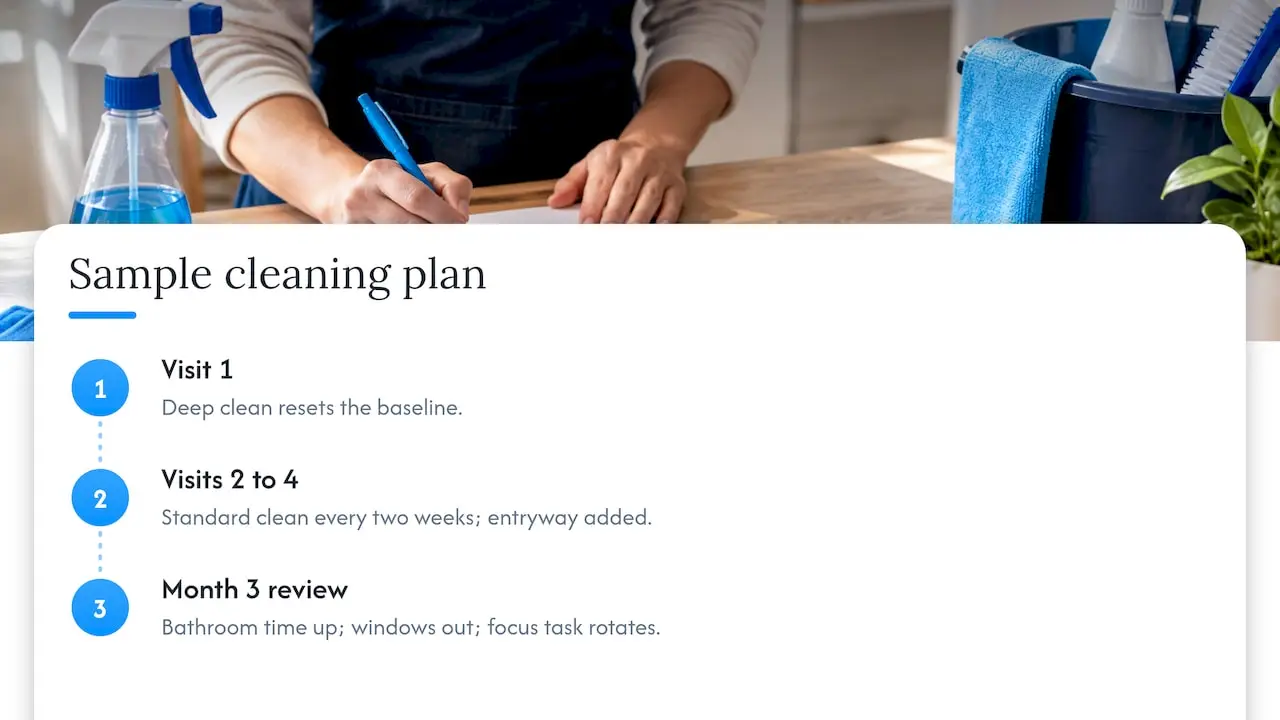
Visit 1: deep clean. This resets the baseline: kitchen appliances, bathrooms, baseboards, floors, and high-dust areas. The family flags the dog’s sleeping area and asks for pet-safe products.
Visits 2 to 4: standard clean every two weeks. The scope covers kitchen, bathrooms, floors, dusting and trash. The family adds the entryway to the must-do list because the dog tracks in dirt.
Month 3 review. The family finds that every-two-weeks works, but the bathroom needs more time. They swap interior windows out of the plan and add a longer bathroom task. They keep a rotating “focus” item each visit.
What changed: frequency stayed the same, scope shifted twice, and the products never changed. That is what customization looks like in practice: small adjustments, made often, with a baseline you trust.
Common mistakes when customizing a plan
- Starting with a standard clean in a neglected home. The visit ends up being a partial deep clean, and nobody is happy with the result. Begin with a deep clean when it is warranted.
- Asking for everything every visit. Rotating tasks is more realistic than expecting a full detail each time.
- Skipping the written scope. Verbal promises fade. Keep your checklist and any agreed changes in writing.
- Ignoring access details. Unclear parking, a missing code or a loose dog turns a cleaning visit into a logistics problem.
- Treating products as an afterthought. If someone in your home has asthma or allergies, or you have pets, say so up front. See our comparison of green cleaning vs regular cleaning for respiratory health.
FAQ
Can I change my cleaning plan after I start?
Yes, and you should expect to. Most households adjust the scope or frequency after the first few visits once they see what builds up. Tell your cleaner what to add, skip or swap, and ask for the change to be noted in your plan.
How do I customize a cleaning plan if I have pets?
Say so when you book, list where your pets stay during the visit, and ask for products suited to pets. Mention shedding hot spots, litter areas and any rugs that hold odors. Our pet-safe cleaning guide explains what to use and what to avoid.
What are the three types of cleaning services?
In residential cleaning, the three common types are standard (routine upkeep), deep (a detailed reset of buildup), and move-in or move-out (an empty-home clean). Most customization starts from one of these. Our services page describes each.
Do I need disinfecting in every visit?
Usually not. The CDC says that in most situations cleaning alone with soap and water can remove germs, and disinfecting is needed when someone is sick or at risk. Add it when your household situation calls for it, not by default.
Sources
- CDC: Cleaning and Disinfecting
- EPA: Identifying Greener Cleaning Products
- EPA: Improving Your Indoor Environment
- Angi: House Cleaning Cost in Washington, DC
- Start Business by State: Virginia Cleaning Service