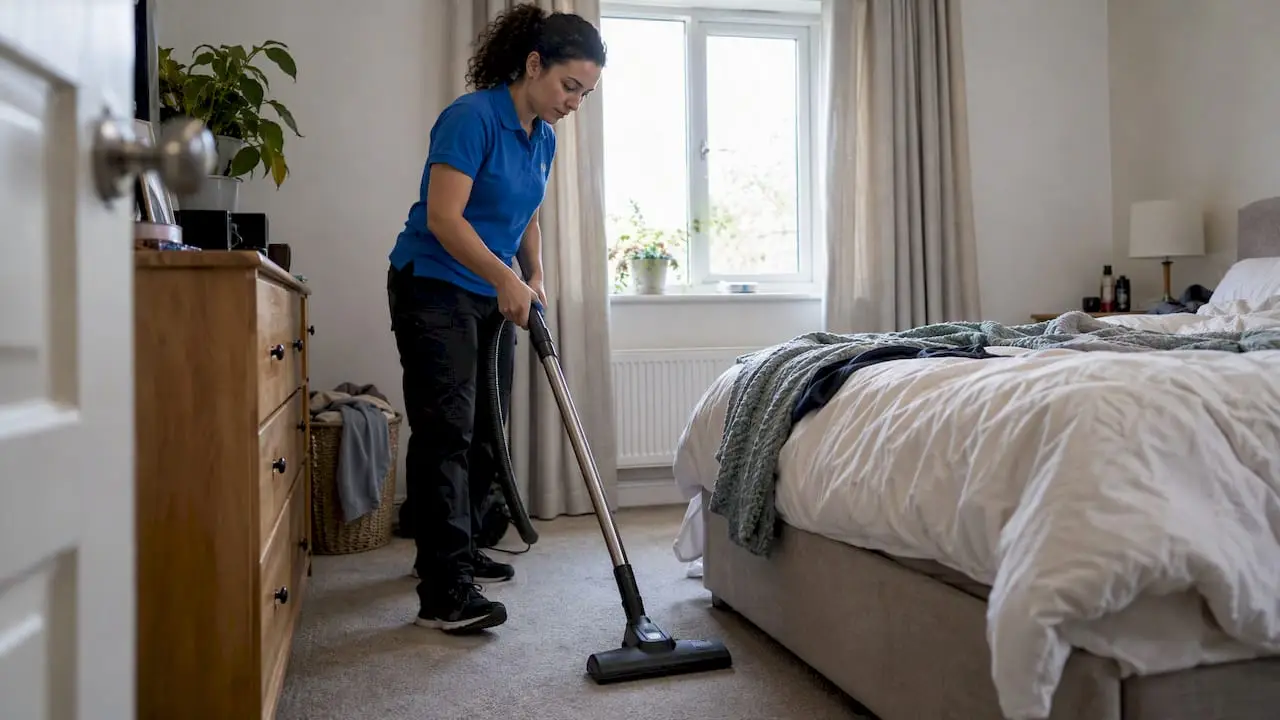
Your first professional cleaning is usually the longest and most thorough visit you will ever book. The team is working from zero: they don’t yet know your home, your standards or where the buildup hides. Plan for a longer appointment, a quick walk-through at the start, and a home that is clean top to bottom. After that, every visit gets lighter and faster.
This guide walks through the visit in order, from booking to the final check. It covers what we do, what you should do (very little), and what to say so the second visit is even better than the first. We are Pure Homes Cleaning, and we serve homes and apartments in Washington, DC, Virginia and Maryland.
TL;DR
- Expect the first visit to take longer than later ones, because the team is building a clean baseline. The length depends on home size, condition and the service you book.
- Spend 15 minutes before the team arrives: clear counters and floors, put away personal items, and plan for pets. You don’t need to scrub anything first.
- The team works in a set order, top to bottom, and finishes with floors. Tell them your priorities at the start, in the first five minutes.
- Give feedback within a day. Small adjustments after visit one are what make recurring service feel custom.
- Choose the service that matches your home’s condition: standard for a home kept up, deep cleaning for a first visit after a long gap.
Table of Contents
- Before the Visit: Choosing the Right Service
- What to Do Before the Team Arrives
- Arrival and the Walk-Through
- How the Cleaning Actually Goes
- Products, Safety and Pets
- Our Perspective: What Makes a First Visit Go Well
- After the Visit: The Walk-Through and Feedback
- Special Cases: Moves, Rentals and Home Sales
- Book Your First Cleaning
- FAQ
- Sources
Before the Visit: Choosing the Right Service
What happens on day one depends mostly on what you book. We offer standard cleaning and deep cleaning, plus move-in and move-out cleans for people changing homes.
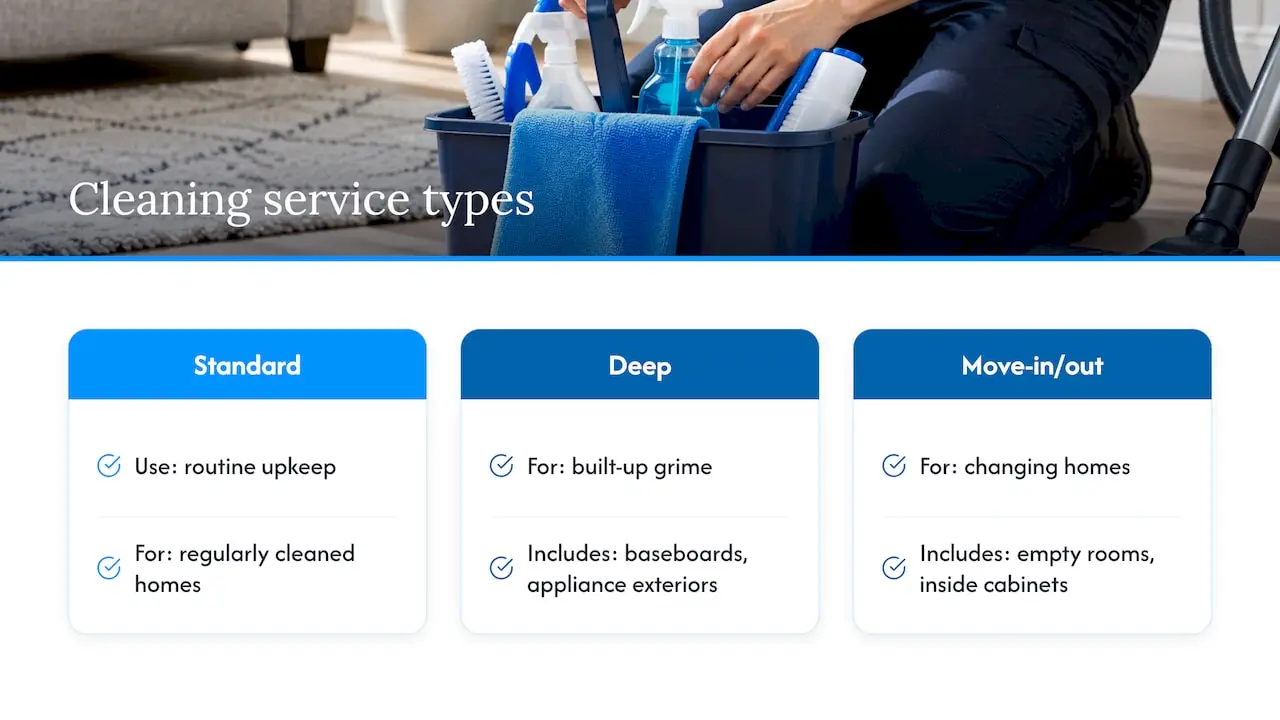
Standard cleaning covers the routine upkeep: dusting, vacuuming, mopping, and cleaning kitchens and bathrooms. It suits a home that has been cleaned regularly, by you or someone else.
Deep cleaning goes further into the places routine work skips. Think baseboards, appliance exteriors, built-up grime in showers and the corners that collect dust for months. If it has been a long time since anyone did a full reset, a deep clean is the better first visit. Then a lighter standard schedule can hold the result. We explain the trade-off in Standard vs Deep Cleaning: Which One Should You Book? and in our guide to deep cleaning before recurring visits.
Moving? A move-in or move-out clean is its own thing, built around empty rooms and inside cabinets. See Deep Cleaning vs Move Out Cleaning to decide which you need.
Why the first visit takes longer
Cleaners can’t skip ahead on a first visit. They are removing whatever has accumulated since the last thorough clean, and they are learning the layout, the surfaces and your preferences. A home that has been professionally maintained is quicker to reset than one where cleaning has slipped for a season. That is why first visits run longer than the visits that follow, and why many companies price them differently.
We don’t publish a flat price for any service, because the right quote depends on the size and condition of the home. For context only, Angi’s 2026 data for Washington, DC puts the average professional house cleaning at $183, with most homeowners paying between $129 and $237. Treat that as a market reference, not our quote.
What to Do Before the Team Arrives
You are not expected to clean before the cleaners come. You are expected to make the home workable. Every minute a cleaner spends moving laundry or toys is a minute not spent on your bathroom.
The American Cleaning Institute’s advice for fast home cleaning starts with picking up before you clean, because cleaning around clutter slows everything down. The same logic applies when a professional is doing the work.
Here is the 15-minute version:
- Clear the kitchen sink and counters. Dishes in the sink block the first thing the team wants to clean.
- Clear floors in every room. Shoes, bags, cords and toys. Floors are the last step, and anything left down gets skipped or moved.
- Put away personal items. Mail, paperwork, medications, jewelry and anything fragile or valuable. Surfaces can’t be wiped around a pile of papers.
- Make a plan for pets. A closed room, a crate, or a walk during the appointment keeps animals calm and keeps cleaners safe. See our guide to pets during house cleaning.
- Decide on access. Tell us whether you will be home, where the key or door code is, and where to park. In many DC blocks, street parking rules matter, so mention anything unusual.
- Point out the problem spots. A stained tub, a sticky stovetop or a rug that needs extra care. A quick note when you book saves a conversation later.
For a room-by-room version you can print, use 15 Minutes to Prep for Cleaners.
What you don’t need to do
Don’t pre-scrub the shower. Don’t buy supplies. Don’t run the dishwasher to empty the sink at midnight. Don’t tidy to the point of embarrassment either: cleaners have seen every kind of home, and a lived-in house is the normal starting point.
Arrival and the Walk-Through
The visit opens with a short conversation. The team confirms what you booked, asks what matters most to you, and checks anything unusual: delicate surfaces, rooms to skip, products you prefer to avoid.
This is the best moment to say what you care about. A few useful things to cover:
- The rooms where you want the most effort, such as a kitchen that gets heavy daily use.
- Surfaces that need special care: natural stone, unsealed wood, antique pieces.
- Allergies, sensitivities or pets in the home.
- Areas that are off-limits, such as a home office with open papers.
- Whether you want the team to work around you or you plan to be out.
You don’t need to tell cleaners how to clean. You only need to tell them what a good result looks like to you.
If you are home, it’s fine to stay and work in another room. If you are out, a short written note on the counter works as well as a conversation.
How the Cleaning Actually Goes
A professional visit follows a sequence. The logic is simple: dirt falls, so you clean from the top down, and you finish with the floor so you don’t redo work. The American Cleaning Institute describes the same approach, working systematically from the top down rather than jumping around the room.
In practice that looks like this:
| Stage | What happens |
|---|---|
| Declutter and trash | Visible trash is collected and loose items are staged out of the way |
| Dusting | High to low: fixtures, shelves, surfaces, baseboards where included in the service |
| Kitchen | Counters, sink, stovetop, appliance exteriors, cabinet fronts |
| Bathrooms | Toilets, tubs, showers, sinks, mirrors, fixtures |
| Bedrooms and living areas | Surface cleaning, dust removal, bed areas and furniture surfaces as agreed |
| Floors | Vacuuming first, mopping last, working back toward the exit |
On a deep clean, add the detail layers: heavier work on buildup in the kitchen and bathrooms, and extra attention to the spots a routine visit wouldn’t reach. Our deep cleaning checklist lists what that includes room by room, with appliance care.
What a first visit may not finish
Be realistic. If a home hasn’t had a thorough clean in years, one visit may not erase everything. Heavy limescale, baked-on oven grease and old stains can need extra time or repeat attention. A good team tells you honestly what improved, what only partly did and what would need a follow-up. That honesty is worth more than a promise of perfection.
Products, Safety and Pets
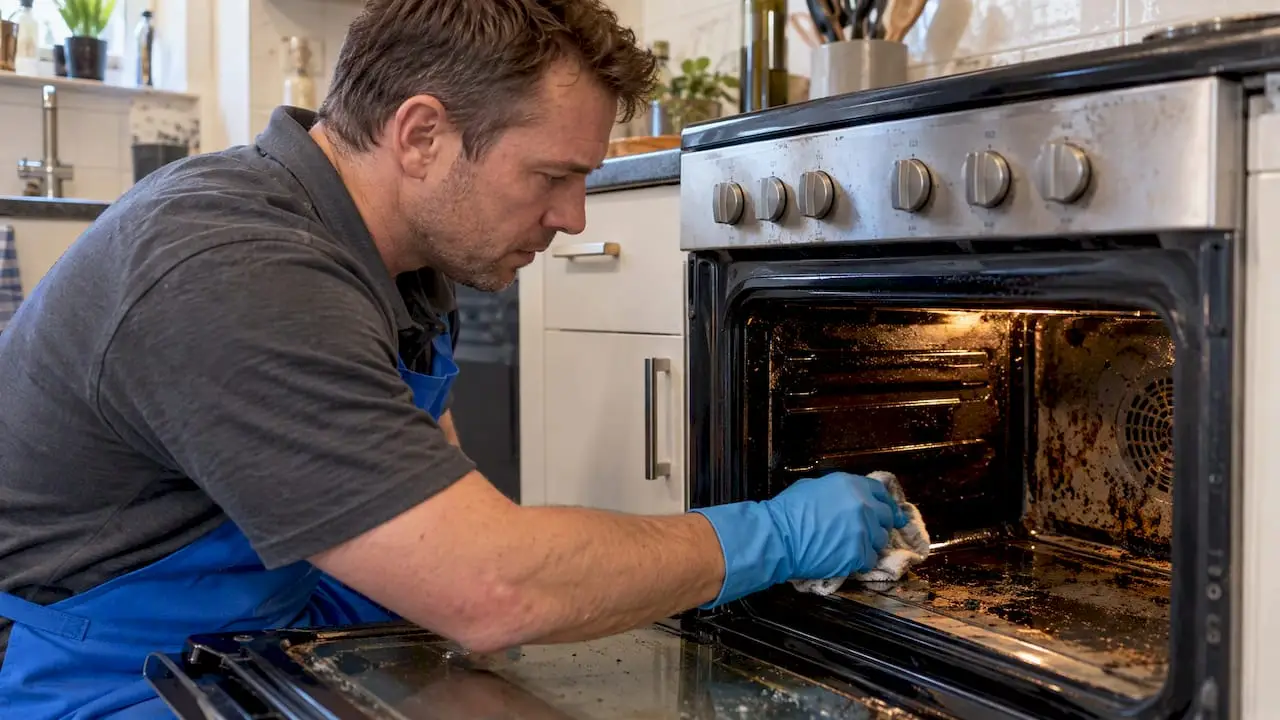
If you have kids or animals, the products matter as much as the clean itself. Our approach is eco-friendly products that are safe for families and pets. Tell us in advance if anyone in your home has sensitivities, so we can plan around them.
A few things worth knowing as a homeowner:
- Cleaning and disinfecting are different. The CDC explains that cleaning removes germs, dirt and impurities, while disinfecting kills remaining germs. Most days, cleaning is what you need. Disinfecting makes sense in specific cases, such as when someone is sick.
- Never mix products. The CDC warns against combining chemicals, and gives bleach with ammonia as an example of a mix that can create toxic gas. If you keep your own supplies, don’t ask anyone to blend them.
- Follow the label. For EPA-registered disinfectants, the contact time on the label is how long the surface must stay wet for the product to work. Wiping early undoes it. Read more in Stop Wiping Early: Disinfectant vs Cleaner.
- Look for certified products. The EPA’s page on identifying greener cleaning products is a good place to start if you want to understand labels.
For animals, see Pet Safe Cleaning: What to Use and What to Avoid. If you want extra attention on doorknobs, switches and remotes, our high touch surface cleaning protocol covers the full routine.
Our Perspective: What Makes a First Visit Go Well
We have found that the first visit succeeds or fails on three things, and none of them is scrubbing power.
First, clear expectations. Most disappointment comes from a gap between what the customer pictured and what the booked service covers. A standard clean is not a deep clean, and a deep clean is not a move-out clean. When we help a customer choose the right service up front, the result matches what they imagined.
Second, a home that is workable. We are trained and insured, and we bring the products and equipment. What slows a visit is clutter, locked rooms and unmanaged pets. Fifteen minutes of prep from you returns hours of actual cleaning.
Third, feedback after the visit. Customers sometimes hold back because they don’t want to seem picky. We want the opposite. If the bathroom needed more attention or you’d rather skip a product, tell us. Recurring service works when the plan is adjusted to your household, whether that is weekly for a busy family, every two weeks, or a single reset before guests or a move.
A good first visit isn’t one where nothing was missed. It’s one where we learn your home well enough that the second visit needs no explaining.
— Local
After the Visit: The Walk-Through and Feedback
When the team finishes, do a quick check of the rooms that matter most to you. Don’t hunt for flaws, but do look at the places you named at the start.
Use this short list:
- Kitchen counters, sink and stovetop
- Bathroom fixtures, tub or shower, and toilet
- Floors, especially corners and edges
- Anything you specifically asked for
- Anything you asked us to skip, to confirm it was left alone
If something is off, contact us promptly with specifics. “The shower glass still has marks on the lower left” is more helpful than “the bathroom wasn’t great”. The sooner you tell us, the easier it is to fix and to note for next time.
Setting up the schedule
Once you’ve seen the result, decide how often you want service. There is no single right answer:
- Weekly suits busy households with kids, pets or several people at home.
- Every two weeks is a common balance of cost and upkeep.
- Every four weeks keeps a baseline but lets some buildup return between visits.
- One-time cleans work for guests, a seasonal reset, or a move.
The more often a home is cleaned, the less each visit needs to do. A home on a steady rhythm rarely needs another deep clean.
Special Cases: Moves, Rentals and Home Sales
Not every first visit is a regular cleaning. A few common situations in DC, Maryland and Virginia change what to expect:
- Move-in. The home is empty, so the team can reach inside cabinets, drawers and closets. Our apartment move-in cleaning checklist and the room by room move-in checklist with safety checks show what gets covered.
- Move-out. The goal is usually the security deposit. Landlords look at the details, so the clean has to be thorough. See the move-out cleaning checklist and our note on booking 48 to 72 hours ahead for security deposit cleaning.
- Pre-listing. If you’re selling, cleaning supports staging and photos. Our pre-listing cleaning checklist is built for sellers.
Book Your First Cleaning
If you’re ready, you can book your first standard or deep cleaning through our services page. For a move-in or move-out clean, use online booking. Tell us about your home, your pets and your priorities, and we’ll match the service to what you need. We serve homes and apartments across Washington, DC, Virginia and Maryland.
FAQ
How long does a first cleaning take?
Longer than a routine visit. The exact time depends on the size of the home, how long since its last thorough clean, and whether you booked standard or deep cleaning. We can give you a realistic estimate when you describe your home at booking.
Do I need to be home for the first visit?
No, but the first visit is easier if you are there for the first few minutes. A walk-through lets you set priorities and mention delicate surfaces. If you can’t be home, leave clear access instructions and a short note about the rooms that matter most.
Do I need to clean before the cleaners arrive?
No. You only need to clear counters and floors, put away personal items and plan for pets. Cleaning around clutter slows the work, as the American Cleaning Institute notes, so a quick tidy lets the team spend time on actual cleaning.
Should my first visit be a standard or a deep clean?
If your home has been cleaned regularly, standard is usually enough. If it has been months or years since a full clean, or you are moving, start with a deep clean or a move clean. After that, a standard schedule can keep it up.
Are your products safe for kids and pets?
We use eco-friendly products that are safe for families and pets. Tell us about allergies or sensitivities when you book, and we’ll plan around them. Keep any pets in a separate room or out of the house during the visit.
Sources
- CDC: When and How to Clean and Disinfect Your Home
- American Cleaning Institute: Fast and Efficient Home Cleaning Guide
- US EPA: Identifying Greener Cleaning Products
- Angi: How Much Does Professional House Cleaning Cost in Washington, DC?