Stopping dust at the door, upgrading your HVAC filter, and switching to damp dusting is the fastest way to reduce dust in your home. Source control cuts what comes in, better filtration traps what’s airborne, and damp microfiber removes settled dust instead of scattering it. The EPA ranks source control as the most cost-efficient fix, and most homeowners notice a visible difference within two to four weeks.
TL;DR:
- Using a MERV 8 to 13 filter and replacing it every 60 to 90 days can significantly reduce airborne dust without restricting airflow.
- Sealing leaks around vents, ducts, and attic hatches often yields more lasting benefits than frequent duct cleaning.
- Regular damp dusting with microfiber cloths, vacuuming with sealed HEPA systems, and vacuuming before mopping are key routines for controlling settled dust.
- Enforcing no-shoes policies, using high-quality doormats, and cleaning entryways weekly effectively minimize outdoor dirt tracked inside.
- Indoor plants help slightly by moderating humidity, but they are a supplementary measure, not a primary solution for dust reduction.
Table of Contents
- How Do You Reduce Dust in Home Fast?
- Where Does Household Dust Come From, and Which Rooms Need the Most Work?
- HVAC and Filtration: What Actually Reduces Airborne Dust?
- Which Cleaning Tools Actually Trap Dust Instead of Spreading It?
- What’s the Best Entryway Strategy for Keeping Outdoor Dust Out?
- What Hidden Building Issues Keep Dust Coming Back?
- Impact of Indoor Plants on Dust Reduction and Which Plants Work
- How Furniture Materials and Arrangement Affect Dust Buildup
- How Do Personal Habits Affect Indoor Dust Levels?
- The Pure Homes Cleaning Perspective on Long-Term Dust Control
- Book a Deep Clean That Targets Dust at the Source
- Sources
- FAQ
How Do You Reduce Dust in Home Fast?
Dust reduction works best as a system, not a single chore. Tackle these in order and each one buys leverage for the next.
- Source control first. Put a commercial-grade doormat outside and inside every entry, enforce a no-shoes rule, and brush pets outdoors. Do this daily at the door, weekly for mat cleaning. Time cost: near zero once the habit sticks.
- Filtration second. Swap your HVAC filter for a MERV 8 to 13 model rated for your system, and check it monthly. Replace regularly, more often if you have pets or a furnace that runs constantly. Takes five minutes and pays off across the whole house.
- Cleaning order and technique third. Dust top to bottom, ceiling fans and shelves first, floors last, using damp microfiber instead of a dry rag. Weekly for high-traffic rooms, biweekly elsewhere. Fifteen to twenty minutes per room.
- Textiles and bedding fourth. Wash sheets weekly in water at least 120°F and vacuum upholstery every week, per American Lung Association guidance. Twenty minutes of laundry loading, mostly hands-off.
- Portable purifiers as polish. Add a HEPA unit in the bedroom or home office after the first four steps are routine, not before. Run continuously; check the filter monthly.
Pro Tip: Clean top to bottom and back to front in every room. Dust knocked loose from a ceiling fan or bookshelf settles on the floor, and vacuuming last catches everything gravity just pulled down.
Where Does Household Dust Come From, and Which Rooms Need the Most Work?
Household dust is a mix of outdoor soil, dead skin cells, pet dander, textile fibers, and cooking residue, according to EPA data on indoor particulate matter. It concentrates wherever airflow is low and fabric surfaces are dense, which is why some rooms need attention every week and others can wait.
- Bedrooms collect the most dust mite activity because of bedding, carpet, and long hours of skin contact. Use allergen-proof mattress and pillow encasements and wash linens hot weekly.
- Living rooms trap dust in upholstery and under furniture where vacuums rarely reach. Pull cushions and vacuum crevices monthly, not just the visible seat.
- Entryways are the front line. A dirty or undersized doormat just relocates outdoor grit onto your floors instead of stopping it.
- Kitchens generate grease-laced dust from cooking; run the exhaust fan every time you cook and wipe range hood filters monthly.
- Vents and baseboards show you systemic problems. Heavy black buildup around a supply vent, or dust that reappears within days of cleaning, usually points to duct leakage or a filter that’s overdue.
Children spend more time on floors, which raises their exposure to whatever settles there, so floor-level surfaces deserve priority in family homes.
HVAC and Filtration: What Actually Reduces Airborne Dust?
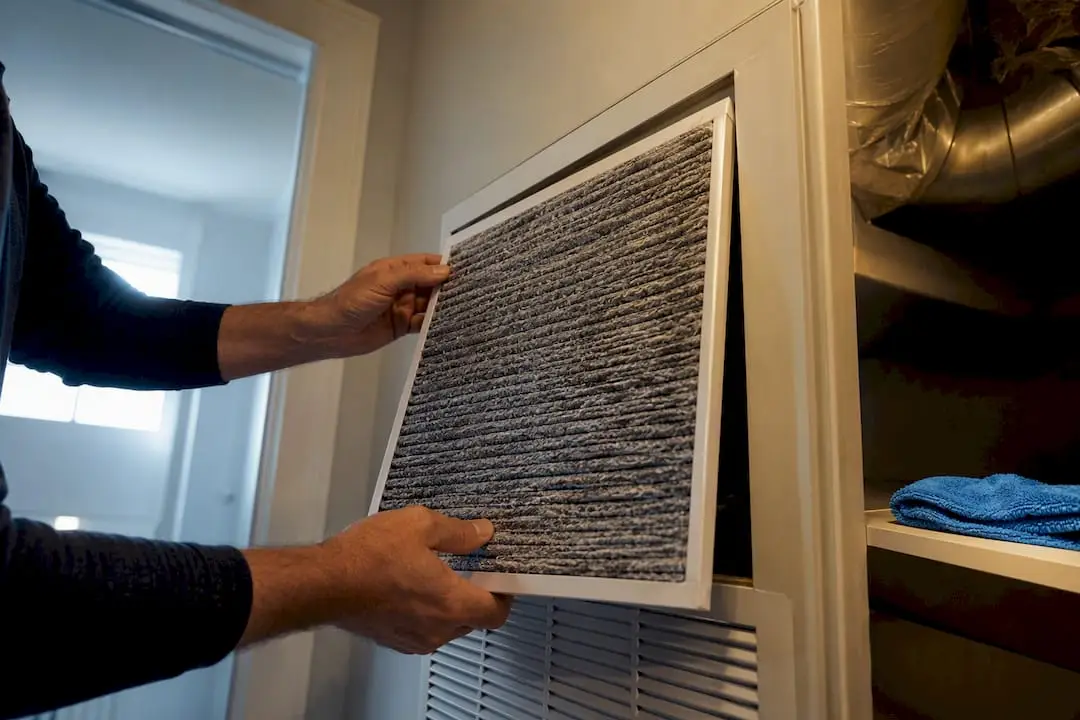
For most homes, a MERV 8 to 13 filter strikes the right balance between capture and airflow.
Higher isn’t automatically better. The EPA’s filtration technical bulletin warns that MERV filters above what a system is designed for can restrict airflow, straining the blower and, in some cases, reducing overall air circulation rather than improving it. Jumping from a MERV 8 to a MERV 16 in a standard residential system often backfires unless the ductwork and equipment were built for it.
Practical filter guidance:
- Choose MERV 8 to 13 unless a professional confirms your system handles higher.
- Replace every 60 to 90 days; monthly if you have pets, allergies, or the system runs near-constantly.
- Make sure the filter fits snugly in its slot. Gaps around the frame let unfiltered air bypass the filter entirely.
- Mark your filter’s install date on the frame with a marker so you’re not guessing at the next change.
Portable HEPA purifiers work as a supplement, never a substitute, for source control and filtration, a point the EPA emphasizes directly. Size the unit to the room’s square footage, place it away from walls and corners for airflow, and run it in bedrooms or home offices where you spend the most hours. A HEPA vacuum paired with a HEPA purifier catches what a standard HVAC filter never touches, since the vacuum handles settled dust and the purifier handles what’s still floating.
Which Cleaning Tools Actually Trap Dust Instead of Spreading It?
A dry feather duster or a bone-dry rag doesn’t clean dust, it launches it back into the air where it eventually resettles somewhere else, often on a surface you already wiped. Damp microfiber cloths and electrostatic dusters hold particles through moisture and static charge instead of just pushing them around.
- Use a damp microfiber cloth for shelves, electronics, and baseboards; rinse or swap it out once it feels loaded with grit.
- Choose a vacuum with a sealed HEPA filtration system, not just a HEPA-labeled filter dropped into a leaky housing. A sealed system stops fine particles from leaking out through the vacuum’s seams.
- Bagged vacuums generally contain dust better during disposal; bagless models are fine if you empty the canister outdoors and let dust settle before opening it.
- Use the crevice tool for baseboards and window tracks, and a motorized brush attachment for upholstery and stairs.
- Vacuum first, then damp mop hard floors. Mopping before vacuuming just turns dry dust into a paste you smear around.
Wash bedding weekly in water of at least 120°F, the temperature threshold the American Lung Association cites for killing dust mites, and keeping indoor humidity between 30% and 50% keeps mite populations from rebuilding between washes.
Pro Tip: If anyone in the house has asthma, leave the room while vacuuming and for a few minutes after. Even a HEPA vacuum stirs some particles into the air during the pass.
What’s the Best Entryway Strategy for Keeping Outdoor Dust Out?
Outdoor soil, pollen, and street grit ride in on shoes, pet paws, and bags, so the entryway is where most incoming dust either gets stopped or gets tracked through the whole house.
- Enforce a no-shoes policy and keep a shoe rack or basket right at the door so it’s easier to comply than not.
- Install commercial-grade doormats, both outside and inside each entrance, and vacuum or shake them out weekly.
- Set up a drop zone for backpacks, coats, and delivery boxes near the entry instead of letting them travel to bedrooms and couches.
- Brush pets outdoors after walks and bathe them on a regular schedule if allergies are a concern in the household, and consider keeping pets off upholstered furniture. A realistic daily routine for cleaning with pets makes this manageable without turning into a full-time chore.
- Declutter surfaces regularly. Every stack of mail, pile of clothes, or open shelf of knickknacks is another spot dust can settle undisturbed.
What Hidden Building Issues Keep Dust Coming Back?
Homeowners chase visible dust while the real source sometimes hides behind drywall. Return-duct leaks pull unfiltered attic or crawl space air directly into your supply air, attic hatch gaps let insulation particles and outdoor dust drift down into living spaces, and recessed light housings often have gaps around the trim that do the same thing from above.
- Return-duct leaks at the seams or boot connections bypass your filter entirely, feeding dusty air straight into the system.
- Attic hatch gaps and unsealed recessed lighting are common, overlooked entry points for insulation fibers and outdoor particulates.
- Sealing these with mastic or foam gasket kits often produces a bigger, more lasting drop in surface dust than another round of cleaning ever will.
Duct cleaning itself is not the default fix. The EPA states plainly that duct cleaning hasn’t been shown to reliably prevent health problems or consistently lower dust levels, and it’s recommended only when ducts show visible mold, pest infestation, or heavy debris. If dust keeps reappearing within days of a thorough cleaning, or you spot dark buildup rimming your vents, that’s a signal to call an HVAC technician for a duct-seal inspection rather than booking another duct-cleaning service.
Impact of Indoor Plants on Dust Reduction and Which Plants Work
Indoor plants don’t filter dust the way an air purifier does, but they play a modest supporting role by adding humidity, which can help dust particles clump and settle out of the air faster rather than staying suspended. The effect is real but limited, so plants belong in the “supplement” category alongside portable purifiers, not as a primary fix.
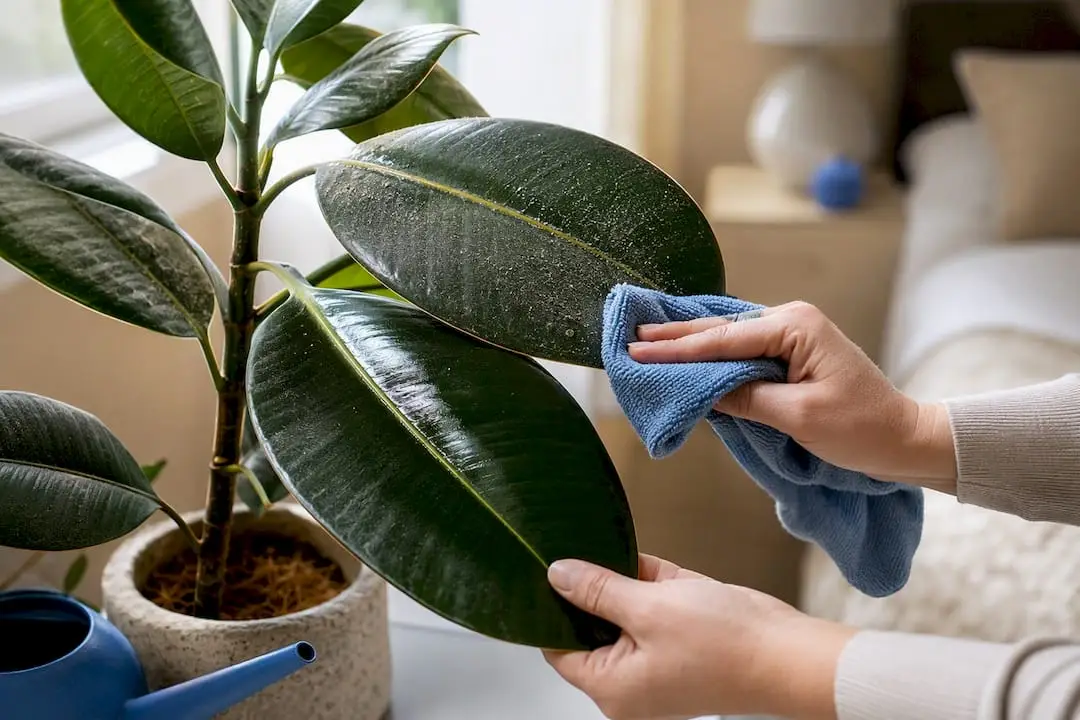
Plants with broad, textured leaves, like the snake plant, spider plant, and rubber plant, tend to collect visible dust on their own leaves, which is a useful signal: it shows you where airborne particles are landing in that room. That dust has to be wiped off regularly with a damp cloth, or the plant just becomes another surface holding what it should be helping remove.
Where plants genuinely help is humidity regulation in dry climates or heated homes during winter, when low humidity lets dust particles stay airborne longer and travel farther on air currents.
Skip plants with fuzzy or heavily textured foliage in bedrooms if allergies are a concern, since those surfaces hold more particulate matter than smooth-leaved varieties. A couple of well-placed, easy-to-wipe plants add a small benefit. A dozen plants crammed into a small room without regular leaf cleaning just adds more surface area for dust to land on.
How Furniture Materials and Arrangement Affect Dust Buildup
Fabric choice on furniture matters more than most homeowners realize. Tightly woven synthetic blends and leather shed far less lint and trap far less dust than loosely woven natural fibers like chenille or wool blends, which act almost like a net for airborne particles. If you’re furnishing a room from scratch, a guide to selecting low-shed decor fabric can help you pick upholstery and curtains that don’t turn into permanent dust reservoirs.
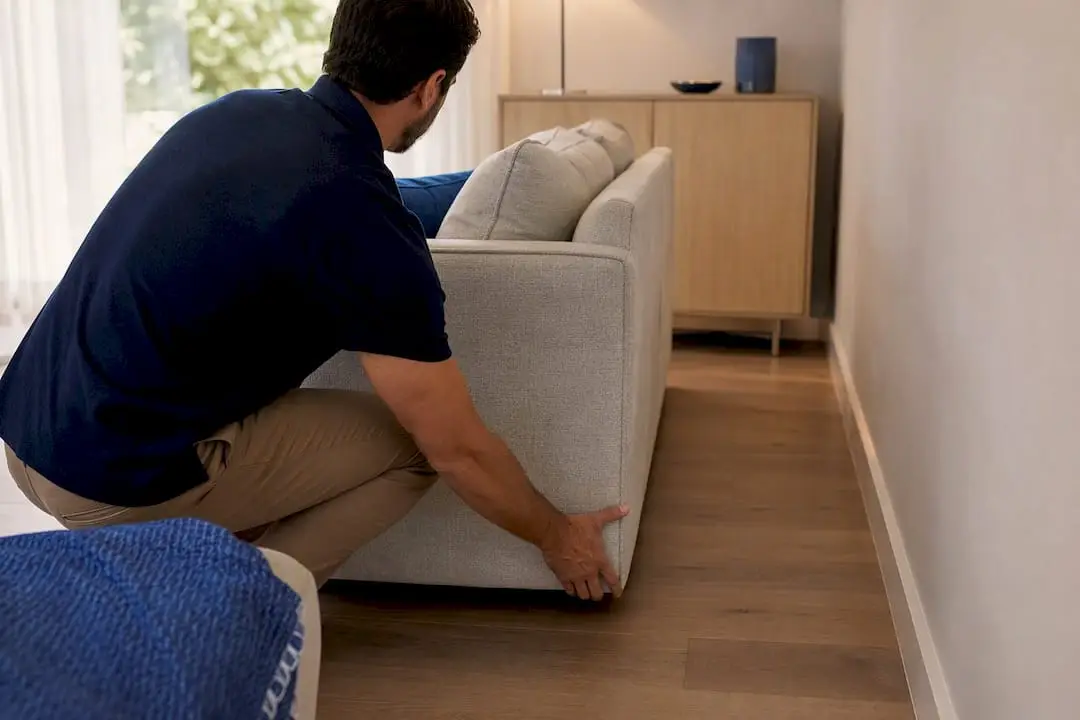
Arrangement matters just as much as material. Furniture pushed flush against walls blocks airflow behind it, creating pockets where dust settles undisturbed for months. Leaving even a few inches of clearance behind bookshelves, dressers, and sofas lets air circulate and makes those zones easier to vacuum.
Open shelving collects more dust than closed cabinets simply because every item on it is an exposed surface. Glass-front or closed-door storage cuts down on the square footage of dust-catching surface in a room without changing how much stuff you own.
Rugs and curtains deserve the same scrutiny as upholstery. Heavy, deep-pile rugs hold dust the way a mattress holds mites, and they need vacuuming with a beater-bar attachment weekly, not the occasional once-over. Swapping heavy drapes for washable curtains or blinds in high-traffic rooms cuts one more fabric surface out of the dust cycle entirely.
How Do Personal Habits Affect Indoor Dust Levels?
Human skin sheds constantly, and it’s one of the components the EPA identifies in household dust alongside pet dander, soil, and fibers. That means personal habits inside the home directly add to or subtract from the dust load, independent of anything happening at the front door.
Changing out of outdoor clothes when you get home keeps whatever you picked up outside, pollen, exhaust particulates, dust from a shared office, contained to one hamper instead of spreading across a couch or bed. It’s a small habit with an outsized payoff, especially in households with allergy sufferers.
Grooming habits matter too. Brushing hair over a trash can rather than a bathroom counter, and doing it away from bedding, cuts down on one of the most persistent fiber sources in a bedroom. Regular haircuts and beard trims produce a burst of fine particulate that settles fast, so a quick vacuum of the bathroom after grooming prevents it from traveling on foot traffic to the rest of the house.
Where you dry laundry indoors also counts. None of these habits eliminate dust on their own, but stacked together they shrink the raw volume your cleaning routine has to catch.
The Pure Homes Cleaning Perspective on Long-Term Dust Control
Homeowner routines and professional cleaning solve different halves of the same problem. A weekly damp-dusting habit keeps surface dust from piling up, but it rarely reaches sealed vents, the tops of ceiling fans, behind heavy furniture, or the deep fibers of upholstery and carpet padding where dust and mite allergens actually accumulate over months.
That’s the gap a periodic deep clean is built to close. Professional residential cleaning services structure routine, deep, and move-in and move-out cleaning around overlooked zones, using HEPA-capable equipment and eco-friendly products to help households manage allergies or reduce dust resettling within days. A deep clean resets the baseline; your weekly routine keeps it there.
The honest math is that neither approach works well alone. Skip the professional reset and dust migrates into places your vacuum never reaches. Skip the weekly habit and even the best deep clean is undone within a month. Homeowners who pair both report the most durable results, which lines up with what the American Lung Association describes as treating dust control as a recurring process rather than a one-time event.
— Local
Book a Deep Clean That Targets Dust at the Source
Purehomescleaning gives you what a weekend of DIY cleaning can’t: someone actually pulling furniture from walls, working baseboards and vents by hand, and running HEPA-capable equipment through the fabric surfaces where dust hides deepest.

Every plan is built around what your home actually needs, whether that’s a one-time deep clean to reset a dusty house, a recurring routine cleaning to keep it that way, or a move-in and move-out clean before your next chapter starts. Eco-friendly products come standard, and HEPA vacuum service may be available for bedrooms and living rooms where airborne allergens are a concern. If your baseboards, vents, and upholstery haven’t seen a real deep clean in a while, that’s the fastest way to see the difference source control and filtration alone can’t deliver.
Check available times and see the full range of cleaning services Purehomescleaning offers, or head straight to booking a cleaning to get a date on the calendar.
Sources
For further reading, the EPA’s indoor air quality guide covers source control fundamentals, the EPA’s filtration technical bulletin explains MERV trade-offs in depth, and the American Lung Association’s dust mite page details humidity and bedding guidance referenced throughout this article.
- EPA — The inside story: a guide to indoor air quality
- American Lung Association — Dust mites and indoor air
FAQ
What Is Grandma’s Simple Trick to Eliminate Dust?
The old trick of wiping surfaces with a slightly damp cloth, sometimes with a drop of dish soap, instead of a dry rag holds up: damp microfiber traps dust rather than scattering it back into the air.
Do Air Purifiers Really Get Rid of Dust?
Air purifiers with true HEPA filters remove airborne particles effectively, but the EPA treats them as a supplement to source control and filtration, not a replacement for stopping dust at the door and cleaning regularly.
How Can I Get Rid of Dust Fast in My Home?
Start with source control (no-shoes policy, doormats), upgrade your HVAC filter to MERV 8 to 13, and do a top-to-bottom damp dusting and vacuuming pass; most households see a noticeable drop within two to four weeks.
Is Duct Cleaning Worth It for Reducing Dust?
Duct cleaning is only recommended when ducts show visible mold, pest infestation, or heavy contamination; otherwise, sealing duct leaks and changing your filter regularly does more to reduce dust long-term.