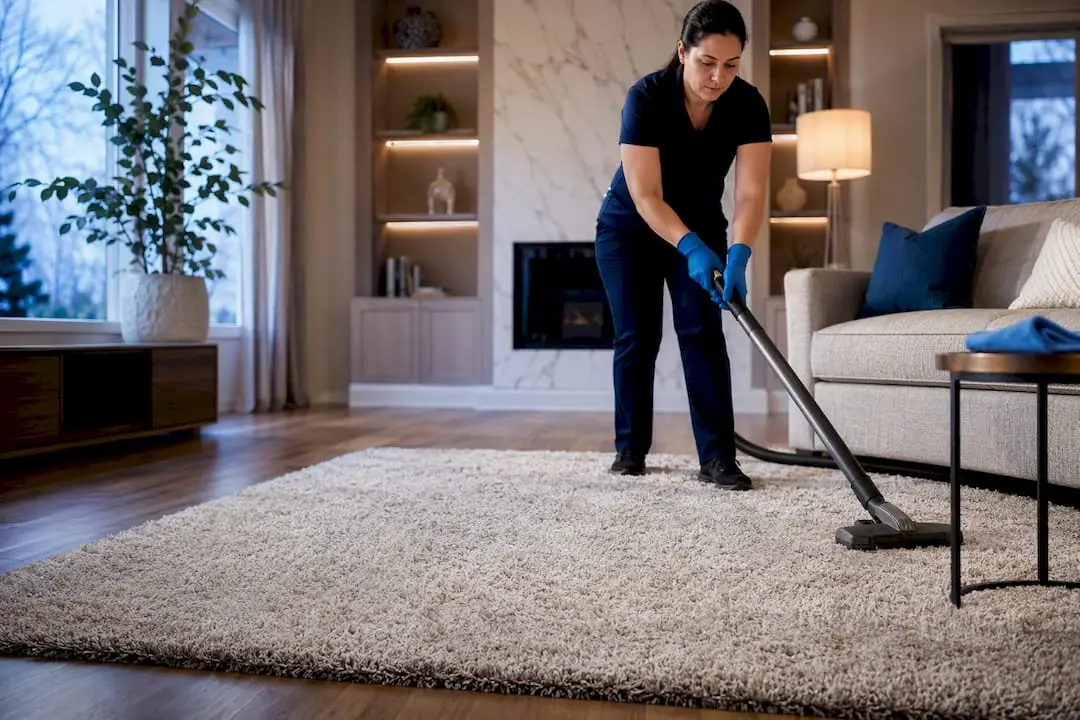
A standard cleaning checklist is a room-by-room list of routine maintenance tasks that keeps a home tidy and sanitizes high-touch surfaces between deep cleans. It covers dusting, vacuuming, sweeping, mopping, and wiping down kitchens and bathrooms on a weekly, biweekly, or monthly cadence. It does not cover deep-clean tasks like scrubbing grout, cleaning inside ovens, or washing baseboards.
TL;DR:
- Regular cleaning every one to four weeks is recommended to maintain cleanliness, with weekly visits being ideal for homes with pets or children.
- Deep cleaning should be scheduled every three to six months or when visible buildup appears on baseboards, grout, or behind furniture before transitioning to standard maintenance.
- A standard cleaning typically takes 1 to 4 hours depending on home size, and a basic kit includes microfiber cloths, all-purpose cleaner, disinfectant, and a vacuum, among other supplies.
- Preparing your home by clearing surfaces, securing valuables, handling pets, and confirming access can significantly reduce cleaning time and improve results.
- Hiring a professional ensures consistent, thorough results and saves time compared to DIY cleaning, especially once a routine schedule is established.
Table of Contents
- What’s on a Standard Cleaning Checklist, Room by Room
- Standard Cleaning vs. Deep Cleaning: Where the Line Is
- How Often to Clean and How Long It Takes
- Supplies and Tools for a Standard Clean
- Getting Your Home Ready Before a Cleaner Arrives
- Why Hiring a Pro Beats DIY for Standard Cleaning
- Keeping Results Between Visits
- Book a Standard Clean With Pure Homes Cleaning
- Sources
- FAQ
What’s on a Standard Cleaning Checklist, Room by Room
A printable, room-by-room list is the easiest way to make sure nothing gets skipped, whether you’re doing the work yourself or handing instructions to a cleaner. The tasks below reflect what most professional cleaning services, including Pure Homes Cleaning’s own service packages, treat as the core of a standard visit.
Kitchen:
- Wipe down counters and backsplash
- Clean exteriors of appliances (fridge, oven, dishwasher)
- Scrub the sink and faucet
- Wipe the microwave interior
- Wipe cabinet fronts
- Sweep and mop the floor
- Empty trash and reline the bin
Bathrooms:
- Sanitize toilets, inside and out
- Wipe sinks and vanities
- Clean mirrors
- Scrub visible shower and tub surfaces
- Sweep and mop the floor
- Swap towels if requested
Bedrooms:
- Dust dressers, nightstands, and shelves
- Make beds (or change linens if provided)
- Vacuum carpets or sweep hard floors
- Tidy visible clutter on surfaces
- Empty trash bins
Living rooms and common areas:
- Dust furniture and accessible surfaces
- Vacuum rugs and upholstery
- Straighten cushions and throws
- Clean accessible glass, like coffee tables or cabinet fronts
Entry and hallways:
- Sweep or vacuum entry floors
- Spot-clean scuff marks on walls and doors
- Wipe light switches and door handles, echoing the CDC’s advice to prioritize high-touch surfaces
A few extras round out most standard visits: a quick spot-clean of visible wall marks, light dusting of fixtures, and a pass over accessible blinds if they’re within easy reach. None of these take long, but they’re the details that make a home feel genuinely cleaned rather than just picked up.
Standard Cleaning vs. Deep Cleaning: Where the Line Is
Standard cleaning maintains what’s already reasonably clean. It covers surface dusting, vacuuming, sweeping and mopping, kitchen wipe-downs, bathroom fixture sanitizing, and trash removal. It does not include baseboards, the inside of the oven or fridge, grout scrubbing, vent cleaning, moving heavy appliances, or full window washing.
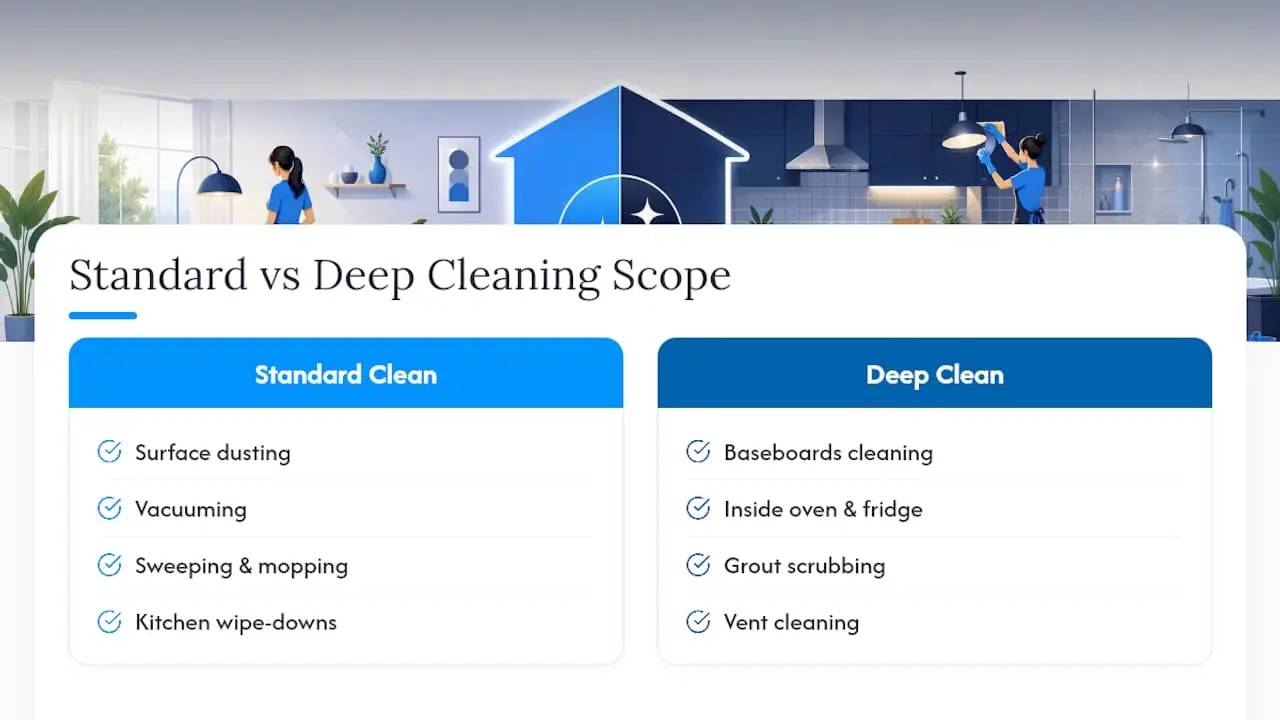
When to book a deep clean instead: if your home hasn’t had one in three to six months, or you can see buildup on baseboards, grout, or behind furniture, a deep clean should come first. Skipping that step and jumping straight into a recurring standard plan usually means the buildup just gets maintained around, never actually removed.
Industry practice generally treats the two as a sequence, not a choice: one deep clean to reset the home, then standard visits every one to four weeks to hold that baseline. Anyone unsure which to book can compare the scope directly on our deep cleaning versus move-out cleaning breakdown.
How Often to Clean and How Long It Takes
Frequency depends on your household, not a fixed rule. Weekly service tends to suit homes with pets, kids, or heavy foot traffic. Biweekly is the most common choice for average households. Monthly works for lower-traffic homes or tighter budgets, though buildup shows up faster at that pace.
Time on-site scales with square footage:
- Small apartments or condos: roughly 1 to 3 hours
- Mid-size homes (3 to 4 bedrooms): roughly 2 to 4 hours
- Larger homes: 4-plus hours, sometimes with two cleaners working together
If it’s been a while since the last real clean, start with a deep clean and move into a recurring standard schedule afterward. Trying to fold deep-clean tasks into a standard time slot usually means something gets rushed or skipped entirely.
Supplies and Tools for a Standard Clean
A basic kit covers almost every task on the checklist above:
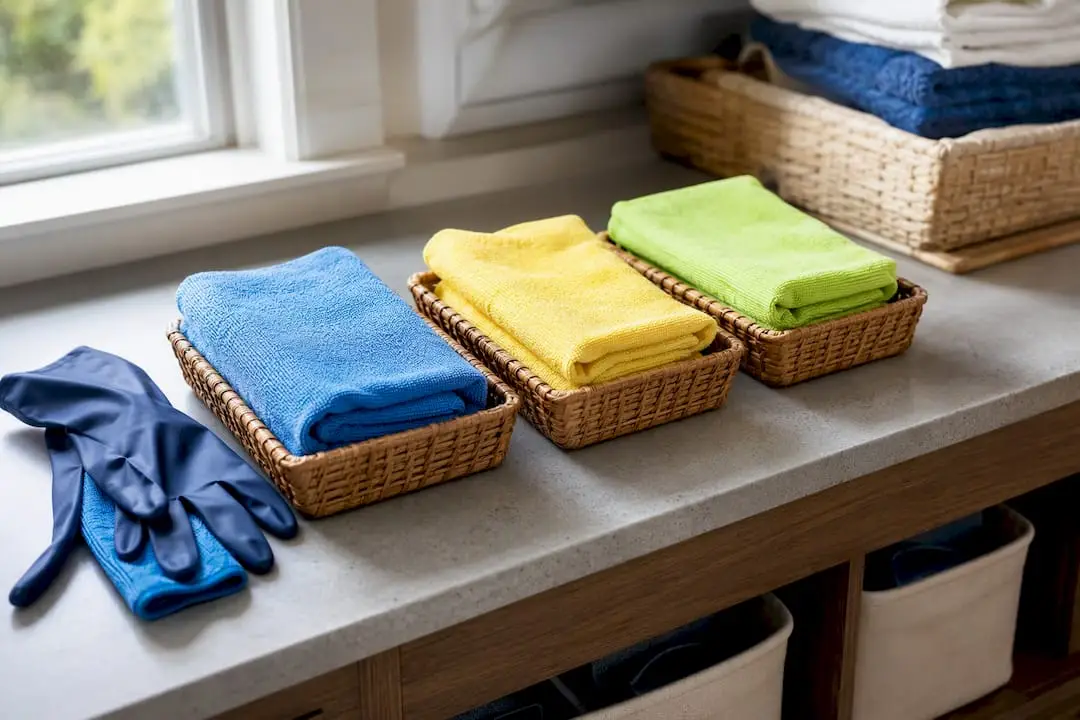
- Microfiber cloths (color-coded by area)
- All-purpose cleaner
- Glass cleaner
- Disinfectant for high-touch surfaces
- Mop and bucket
- Vacuum with attachments
- Broom and dustpan
- Toilet brush
- Sponges (non-abrasive for most surfaces)
- Trash bags
Fragrance-free or eco-friendly formulas are worth choosing if anyone in the home has allergies or breathing sensitivities. The CDC recommends focusing disinfecting efforts on high-touch surfaces like doorknobs and light switches rather than treating every surface the same way.
Pro Tip: Color-coded cloths aren’t just an organizing trick. Using a separate color for bathrooms, kitchens, and general surfaces prevents you from spreading bathroom bacteria onto a kitchen counter without realizing it. Pair that with a pair of gloves for bathroom work, and you’ve covered most of the cross-contamination risk in a home.
Getting Your Home Ready Before a Cleaner Arrives
A little prep goes a long way toward a faster, more thorough visit:
- Clear counters, floors, and tabletops of loose items so cleaners can actually reach the surfaces.
- Secure valuables, cash, and important documents out of sight.
- Handle pet arrangements, whether that’s a crate, a walk beforehand, or a closed-off room.
- Confirm access and parking instructions if you won’t be home.
- Leave a short written list of problem spots or priorities.
Homeowners who spend 30 to 90 minutes on this kind of prep tend to see faster, more focused visits, since cleaners spend their time cleaning instead of navigating clutter. That same window of prep also gives you a chance to flag anything fragile or off-limits before anyone starts working. If you’re sharing an entry code or alarm code, treat that information the way you’d treat any other personal data you hand to a service provider.
Why Hiring a Pro Beats DIY for Standard Cleaning
DIY works fine if you have the time and don’t mind the upkeep. Where it falls short is consistency. Life gets busy, corners get skipped, and “standard clean” quietly turns into “whatever I had time for.”
Pure Homes Cleaning built its standard cleaning service around eco-friendly products, customizable plans, and straightforward online booking, so the same checklist gets followed the same way every visit. Customer reviews on the site reflect that consistency matters more to most households than any single deep-clean marathon. Hiring a pro buys back hours you’d otherwise spend cleaning, and it means the bathroom sink gets scrubbed on schedule whether your week was calm or chaotic.
Keeping Results Between Visits
Cadence matters more than intensity. A home that gets a real deep clean once, then a standard visit every one to four weeks, holds up far better over a year than one that gets scrubbed hard twice and ignored in between. If your home hasn’t seen a deep clean recently, that’s the better starting point before locking into a recurring schedule.
Small daily habits stretch a professional clean much further than people expect. A five to ten minute tidy each evening, wiping counters, putting dishes away, running a quick sweep, keeps the visible mess from piling up between visits. It’s a modest habit, but it’s the difference between a home that still looks clean on day twelve of a two-week cycle and one that doesn’t.
Questions about scheduling or what to prioritize on a given visit are always worth asking before you book.
— Local
Book a Standard Clean With Pure Homes Cleaning
Pure Homes Cleaning is the alternative to piecing together your own supply kit and cleaning schedule: book online in a few minutes, choose eco-friendly products if you prefer them, and customize which rooms or tasks get priority on each visit.
Every plan can flex around pets, allergies, or specific problem areas, so the checklist above becomes a starting point rather than a rigid script. If you want a written checklist tailored to your home, or you’d rather just list your top three priorities and let the crew handle the rest, both options are available when you book a standard cleaning online. Reviews on our services page walk through what recurring clients typically request, which is a useful starting point if you’re not sure what to ask for. Ready to get a date on the calendar? Booking takes about the same time as reading this checklist.
Sources
For hygiene guidance behind the high-touch-surface priorities in this checklist, the CDC’s home cleaning and disinfecting guidance is the primary reference. For homeowner prep steps before a cleaning visit, both Sophia’s Cleaning prep guide and FindTrustedHelp’s pre-visit checklist offer practical, step-by-step advice. Save this article’s room-by-room list as a PDF or print it directly to keep on the fridge or hand to a cleaner.
FAQ
What does a standard cleaning include?
A standard cleaning covers dusting, vacuuming, sweeping, mopping, wiping kitchen and bathroom surfaces, sanitizing toilets, and emptying trash. It skips deep-clean tasks like baseboards, inside appliances, and grout scrubbing.
What is the 20/10 rule for cleaning?
The 20/10 rule is a time-management technique where you clean and rest in cycles to make ongoing upkeep feel less overwhelming. It’s a pacing method, not a specific checklist standard.
What are the 5 cleaning standards?
Definitions vary by industry and source, so there’s no single universally agreed list. Most standard cleaning checklists, including the one above, group tasks into dusting, vacuuming/sweeping, mopping, surface sanitizing, and trash removal.
Is $50 an hour good for house cleaning?
Rates vary widely by region, home size, and whether you’re hiring an individual or a service, so hourly rates can differ greatly depending on your market. Comparing quotes from a few local providers is the most reliable way to judge.