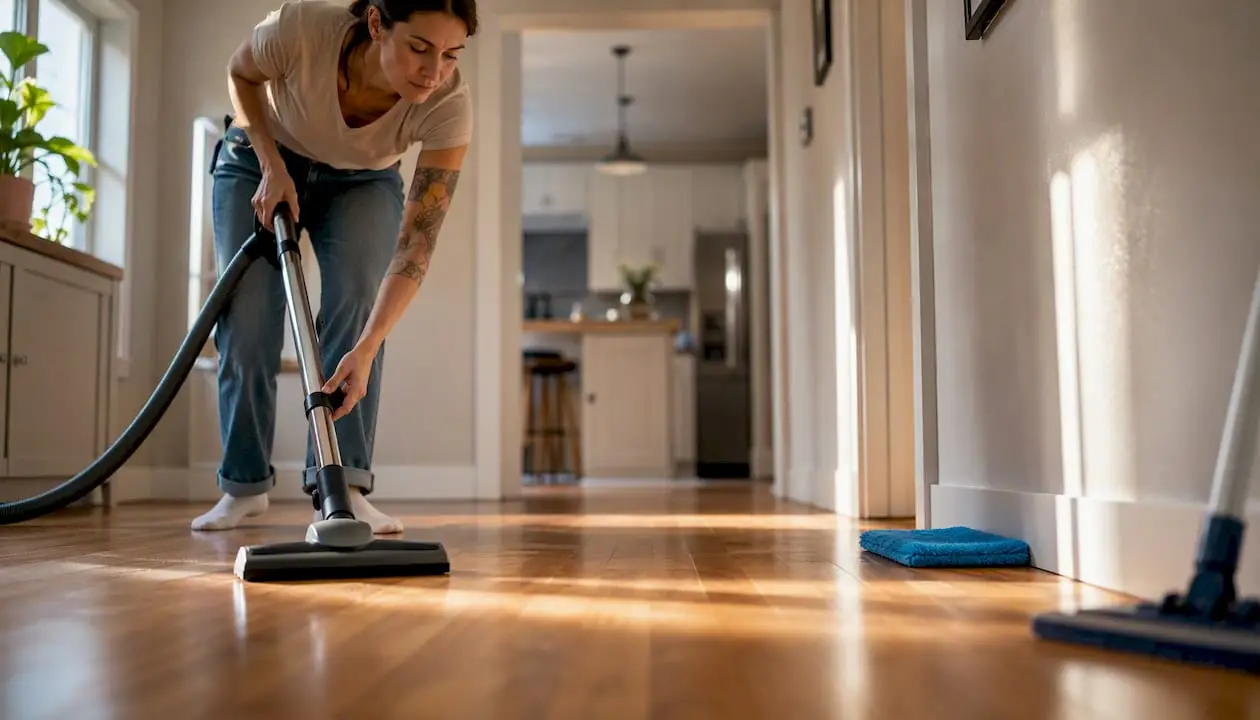
Vacuum first, mop second. Always do a dry pass before you introduce water, because loose dirt and dust turn into a muddy paste the moment they get wet, and that paste ends up ground into your floor’s finish instead of off of it. There are a few narrow exceptions for spot cleanups, which we’ll cover, but the sequence for whole-room cleaning never really changes.
TL;DR:
- Vacuum thoroughly before mopping to remove loose dirt, pet hair, and allergens, which prevents muddy streaks and reduces floor damage.
- Spot spills and light traffic refreshes can be cleaned by mopping without vacuuming first, provided the floor isn’t heavily soiled.
- Different floor types require tailored moisture levels and tools, with hardwood, laminate, and tile needing minimal water and appropriate attachments.
- Using separate microfiber pads for different surfaces prevents transferring grit and prolongs the effectiveness of cleaning tools.
- Two-pass vacuum and mop cleaning or specialized wet-dry vacuums offer more control, especially on heavily soiled or detailed surfaces, compared to robotic or combined machines.
Table of Contents
- Why Vacuum First Before You Ever Touch a Mop
- When Mopping First Is Actually Fine
- Adjusting the Rule for Hardwood, Tile, Laminate, Vinyl, and Carpet
- Two-Pass Cleaning vs. Wet-Dry and Robot Machines
- A Simple Room-by-Room Routine You Can Follow Today
- How a Professional Applies the Same Routine
- What Most Cleaning Advice Gets Wrong
- Book a Professional Clean With Purehomescleaning
- Sources
- FAQ
Why Vacuum First Before You Ever Touch a Mop
Dry debris and water don’t mix well. Skip the vacuum and drag a wet mop across a dusty floor, and you’re not cleaning. You’re painting a thin layer of grit-laced mud across every surface the mop touches, then letting it dry back into place.
Grit is also abrasive when it’s wet. Sand, pet litter dust, and gravel tracked in from outside act like sandpaper under mop pressure, dulling hardwood finishes and scratching tile glaze over time. A dry pass gets that material off the floor before it can do damage.
There’s a hygiene angle too. Vacuuming, especially with a HEPA-equipped machine, pulls dander, hair, and fine dust out of the air and off surfaces in a way mopping simply can’t. Mopping pushes fine particulate around; it doesn’t capture it. If anyone in the house has allergies or asthma, that distinction matters for daily comfort, not just floor appearance.
Cleaning professionals treat this as standard operating procedure, not a suggestion. The typical order runs decluttering, dusting from high surfaces down, a short pause, then vacuuming, and only then mopping. Skipping steps doesn’t save time. It usually creates rework, because a floor mopped over loose debris often needs a second pass once the grit reappears as it dries.
A few reasons the dry-first habit pays off:
- Prevents muddy streaking on hard floors
- Reduces scratching and dulling from ground-in grit
- Pulls allergens out of carpet and off hard surfaces before they get resettled by mopping
- Cuts down on redoing the job because the first mop pass didn’t actually clean anything
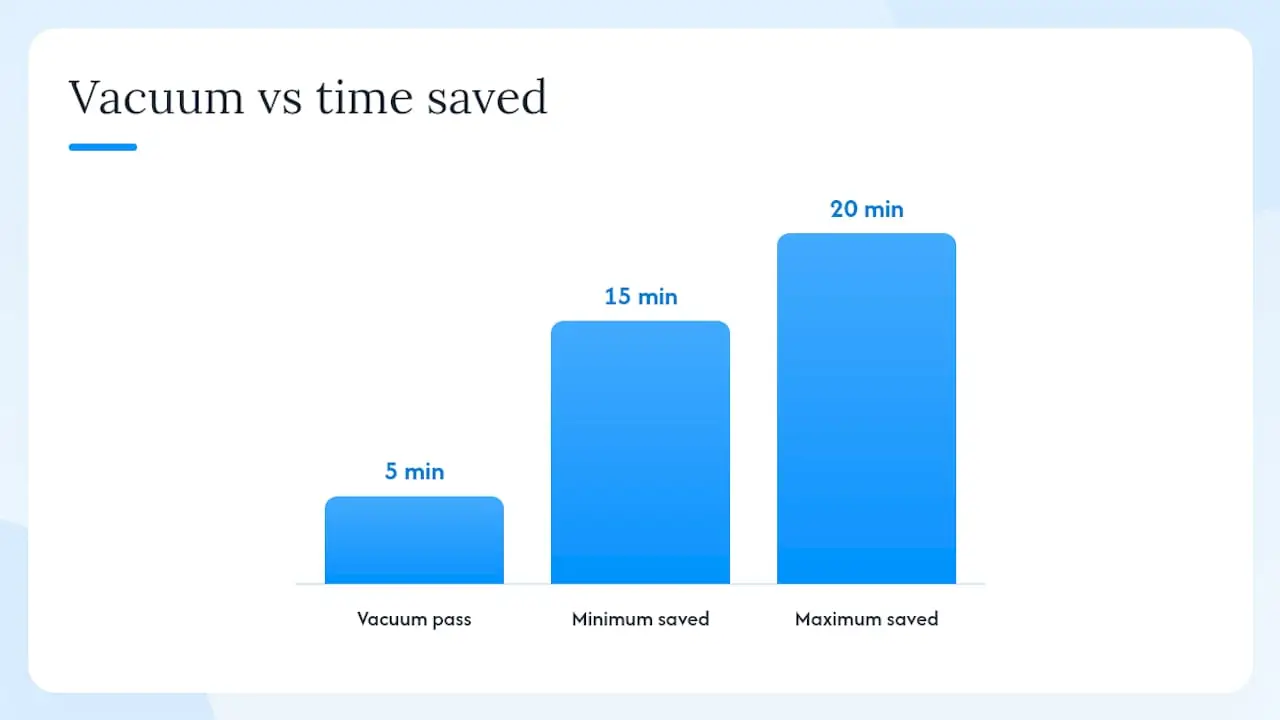
Quick math on the payoff: a five-minute vacuum pass that removes loose grit can save a second full mop cycle later, since re-mopping a floor that’s still gritty after drying easily eats another 15 to 20 minutes per room.
When Mopping First Is Actually Fine
The vacuum-first rule is about whole-floor cleaning, not every situation. A few cases call for mopping without a full vacuum pass first, and treating them as exceptions rather than the default keeps you from overthinking a simple job.
- Spot spills. Wine on the kitchen tile or a tracked-in mud print doesn’t need a vacuum run first. Wipe or mop the localized area immediately, working from the outside edge in so you’re not spreading the mess wider.
- Same-day touch-ups. If you vacuumed that morning and the floor picked up light traffic since, a quick mop over an already-dry floor is reasonable. DreameTech’s cleaning guidance notes this is one of the few scenarios where skipping the dry pass doesn’t backfire.
- Tack or dust mopping. A microfiber dust mop or tack cloth that physically traps debris (rather than pushing it around wet) can substitute for a light vacuum pass on hard floors between deeper cleanings.
For any spot mop, change your rinse water often and wring the pad out well. Reusing dirty water just relocates grime instead of removing it. The mistake to avoid is mopping a widely dirty floor without vacuuming first just because it feels faster. It never actually is.
Adjusting the Rule for Hardwood, Tile, Laminate, Vinyl, and Carpet
The dry-then-wet order stays constant. What changes by floor type is how much moisture you use and which tools touch the surface.
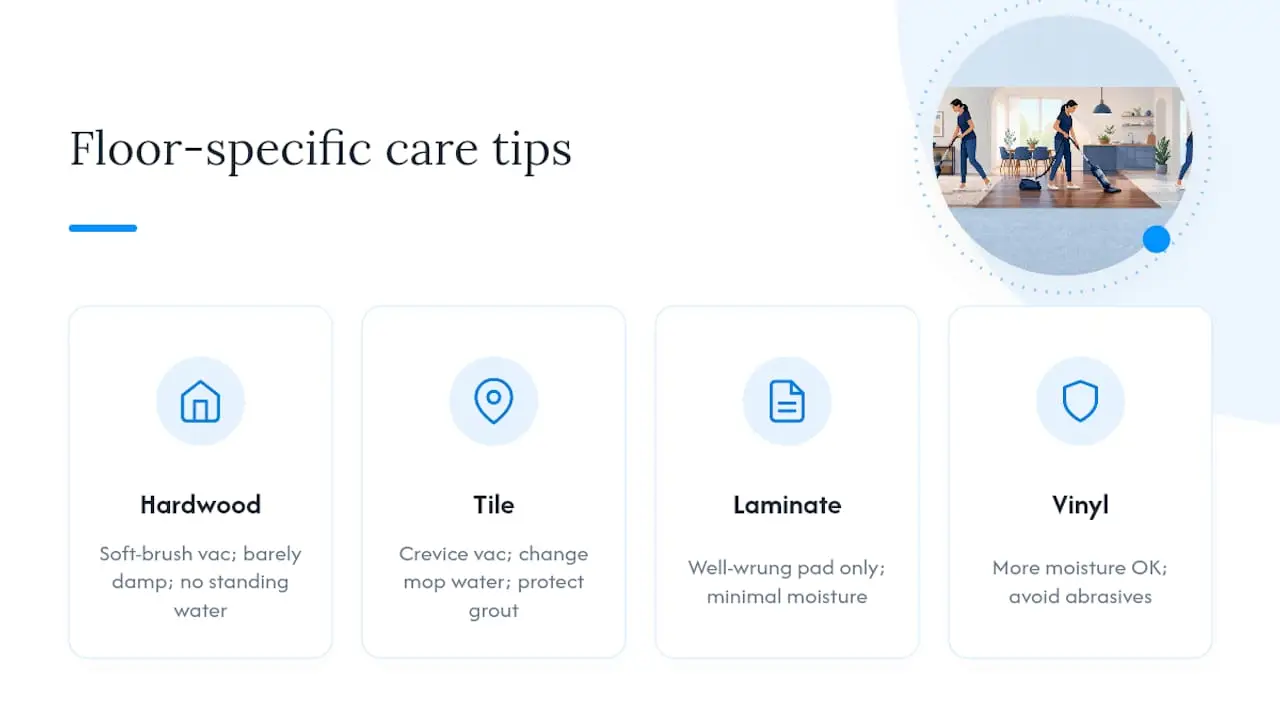
Hardwood needs the lightest touch. Use a soft-brush vacuum attachment so you’re not scuffing the finish, then mop with a microfiber pad that’s barely damp, never soaked. Standing water is hardwood’s enemy: it seeps into seams and causes swelling or warping. Dry the floor quickly with a clean towel or by opening windows for airflow.
Tile and grout trap grit in the grout lines where a regular vacuum head can’t reach, so use a crevice attachment first. Change your mop water between rooms or heavily soiled sections. Dirty water dragged across tile pushes grime straight into porous grout, which is exactly the opposite of what you’re trying to do.
Laminate behaves like a more fragile version of hardwood. Minimal moisture is non-negotiable, since laminate’s core layer swells fast when water gets under the surface. Check the manufacturer’s care instructions before using anything beyond a well-wrung microfiber pad.
Vinyl tolerates more moisture than laminate but still needs floor-appropriate cleaners rather than harsh degreasers, and avoid abrasive scrub pads that can lift or scratch seams.
Carpet and rugs don’t get mopped, period. Vacuuming is the entire dry-cleaning step, and any deeper wet cleaning needs a carpet extraction machine, not a mop. Mop water sitting on carpet fiber breeds mold and mildew underneath the surface long before it looks wet on top.
Pro Tip: Keep a separate microfiber pad for hardwood and one for tile. Cross-using pads spreads grit from rougher floors onto softer finishes and defeats the purpose of switching pads between rooms.
Two-Pass Cleaning vs. Wet-Dry and Robot Machines
There are really two ways to handle the vacuum-then-mop sequence: doing it as two separate tools and passes, or using a machine built to do both in one motion.
The two-pass approach, a standard vacuum followed by a separate mop, gives you the most control. It’s the better call for heavily soiled floors, grout lines that need targeted attention, or any room where you want to inspect the floor between steps.
Wet-dry vacuums work differently. They hold separate clean and dirty water tanks, so the machine can lay down clean solution and immediately extract dirty water in a single forward pass. That design is what makes one-pass cleaning viable at all, since without separated tanks you’d just be smearing dirty water back onto the floor. The tradeoff is coverage: these machines handle open floor space well but struggle with tight corners and heavy debris the way a dedicated vacuum attachment can.
Robot vacuums with mopping pads sit at the maintenance end of the spectrum. They’re built for light upkeep after most debris is already gone, not for deep cleaning a floor that hasn’t been touched in weeks. Running one on a heavily soiled floor just drags dirt around with a damp pad.
Whichever tool you choose, maintenance matters:
- Empty dirty-water tanks after every use, not just when they’re full
- Swap mop pads once they look gray, not after they’ve fallen apart
- Use the cleaning solution the manufacturer specifies, since generic soap can leave residue or void warranties
- Keep a crevice attachment on hand for baseboards and corners that flat pads miss
A Simple Room-by-Room Routine You Can Follow Today
A full cleaning session doesn’t need to be complicated. Following the same order every time turns it into a habit instead of a decision you re-make each week.
- Declutter each room so nothing blocks the vacuum or mop.
- Dust high to low, shelves and counters before baseboards, so falling dust lands on the floor rather than on a surface you already cleaned.
- Wait 10 to 15 minutes. Airborne dust needs time to settle before vacuuming can catch it.
- Vacuum the whole space, including edges and corners where dust collects fastest.
- Mop from the cleanest area to the dirtiest, usually working toward the exit so you’re not walking back over a wet floor.
- Let it dry fully with a window cracked or a fan running before foot traffic resumes.
Frequency depends on your household. Homes with pets or high foot traffic generally need vacuuming daily or every other day, while a weekly vacuum works as a baseline elsewhere. Mopping once a week keeps most homes in good shape, though winter months bring in more salt and grit, which usually means bumping that up.
Pro Tip: Rinse or swap your mop pad between rooms, especially after bathrooms or kitchens. Carrying the same dirty pad into a bedroom just transfers grime you already picked up somewhere else.
How a Professional Applies the Same Routine
A professional cleaning service typically follows the same top-to-bottom, dry-then-wet sequence on every visit, often paired with eco-friendly products that are safe around kids and pets. Hiring a professional makes the most sense when you’re short on time, dealing with heavy soil buildup, or handling a move-in or move-out clean where every surface needs attention, not just the visible ones.
What Most Cleaning Advice Gets Wrong
Most floor-cleaning guides treat the vacuum-then-mop order like it’s the whole answer, and it isn’t. The order matters less than people think once you’ve actually vacuumed properly, meaning slow, overlapping passes with attention to edges, not a quick once-over down the middle of the room. A rushed vacuum pass followed by a technically correct mop still leaves grit behind.
The bigger blind spot is floor type. Generic advice treats hardwood, tile, and laminate as interchangeable when they’re not. Soaking a laminate floor because a tile-cleaning guide said it was fine is how people end up with swollen seams and a five-year floor replacement six months in.
If you take one thing from this, prioritize matching your moisture level to your floor material over worrying about exact timing between steps. Vacuum thoroughly, mop appropriately for what’s underfoot, and the sequence takes care of itself.
— Local
Book a Professional Clean With Purehomescleaning
Professional cleaning companies provide trained staff who know which cleaner belongs on laminate versus tile and bring the right tools, serving homes and apartments across many areas with Standard Cleaning, Deep Cleaning, and Move In and Move Out services, often using eco-friendly products.

If your floors need more than a weekly upkeep pass, a deep cleaning tackles buildup that routine vacuuming and mopping won’t touch, and a move-in or move-out clean covers every surface before keys change hands. Ready to hand the floors off to someone else this week? Book online now and pick a time that works around your schedule.
Sources
- How do wet-dry vacuums work? — Bissell Commercial
- Should You Vacuum First? Cleaning Pros Say the Order Matters — The Spruce
- Vacuum or Mop First? The Golden Rule — DreameTech
FAQ
What Is the Correct Order for Cleaning Floors?
Declutter, dust from high surfaces to low, wait about 10 to 15 minutes for dust to settle, then vacuum the entire space before mopping. This sequence, recommended by cleaning professionals, prevents dust from resettling on surfaces you already cleaned.
Should I Vacuum, Sweep, and Mop, or Just Two of Them?
Vacuuming and sweeping do the same job, so you generally only need one before mopping, not both. Choose vacuuming for carpets, rugs, and most hard floors where suction reaches into grout lines and crevices, and reserve sweeping for quick cleanups when a vacuum isn’t handy.
Is It Okay to Vacuum After Mopping?
A light vacuum pass on a fully dry floor won’t hurt anything, but it defeats the purpose since any grit tracked in during drying should have been removed before mopping. The efficient order is always vacuum first, then mop, so you’re not cleaning the same debris twice.
Should I Sweep Before I Use a Wet Mop Pad?
Yes. A dust or tack mop that traps debris can substitute for a full vacuum in a pinch, but skipping any dry pass and going straight to a wet pad means you’re mopping loose dirt into a muddy film. That’s one of the most common mistakes homeowners make with quick cleaning tools.
Does Purehomescleaning Follow This Same Cleaning Order?
Yes, Purehomescleaning uses a top-to-bottom, dry-then-wet approach on every job, paired with eco-friendly products. Current pricing for Standard and Deep Cleaning is available on the site, and Move In and Move Out cleaning can be booked directly through online booking.