The only home methods that permanently remove pet odor are enzymatic cleaners applied with real dwell time, paired with baking soda for surface maintenance and a HEPA plus carbon air purifier for airborne dander. Enzymes break down the organic matter causing the smell; baking soda and charcoal only absorb what’s already in the air or on the surface. Fragranced sprays mask the problem and can even encourage pets to re-mark the same spot. If odor keeps returning, especially when the room gets humid, the contamination has likely gone deeper than any home method can reach, and that’s the signal to call a professional.
TL;DR:
- Enzymatic cleaners require dwell time to fully neutralize pet urine, especially on carpets and upholstery, and should be used without layering baking soda on top.
- Air purifiers with HEPA and activated carbon filters effectively remove floating dander and gaseous odors, but only if filters are regularly maintained and appropriately sized for the room.
- Surface cleaning methods address surface odor but cannot eliminate deep-seated contamination that has penetrated to the carpet pad or subfloor, often requiring professional remediation.
- Regular maintenance like washing pet bedding, vacuuming, and changing filters is crucial for preventing odor buildup, but persistent smells often indicate contaminated padding or subfloor.
- When odor recurs after thorough home treatments, professional deep cleaning with targeted enzyme treatments and possible pad replacement is the most effective solution.
Table of Contents
- How to Remove Pet Smell from Your House Right Now
- Why Enzymatic Cleaners, Baking Soda, and Air Filters Work Differently
- Room-by-Room Steps for Carpet, Upholstery, and Hard Floors
- A Realistic Weekly Routine That Keeps Odor from Coming Back
- When Pet Odor Needs a Professional, Not Another Spray
- Living with Pets Means Making Peace with Imperfect Solutions
- When It’s Time to Call in Pure Homes Cleaning
- Sources
- FAQ
How to Remove Pet Smell from Your House Right Now
Before you reach for a scented spray, work through this sequence. It takes roughly an hour and handles most fresh odor problems without any specialty equipment.
- Ventilate first. Open windows, turn on exhaust fans, and move pets out of the affected room.
- Find the actual source. Walk the room with a flashlight at a low angle across carpet or upholstery. Dried urine often fluoresces faintly under a black light if you have one handy.
- Blot, don’t rub, fresh accidents. Rubbing pushes liquid deeper into carpet fibers and padding.
- Apply an enzymatic cleaner to anything organic (urine, vomit, drool stains). Use baking soda only for general surface odor, not biological messes.
- Wash pet bedding and soft toys on the hottest safe cycle. These absorb oil and dander faster than almost anything else in the house.
- Run an air purifier in the room for a few hours to catch what’s floating in the air.
- Check your HVAC or room air filters. A filter that’s overdue for a change is quietly recirculating the smell you’re trying to get rid of.
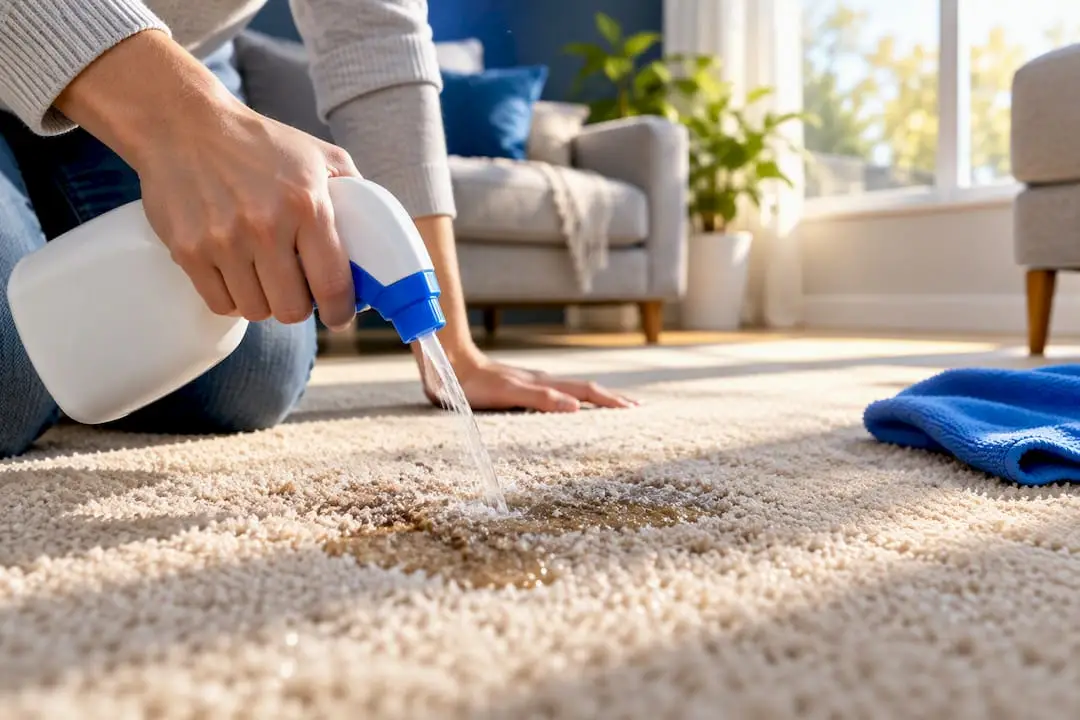
For a fresh urine spot specifically: blot up as much liquid as you can, saturate the area generously with enzyme cleaner, then cover it with a damp cloth or plastic wrap to keep the spot moist while the enzymes work. Keep pets and kids off the area until it’s fully dry, since enzymatic cleaners are generally safe around families but should be given time to work undisturbed.
Pro Tip: Never layer baking soda over a spot you just treated with enzyme cleaner. Baking soda is alkaline, and it can deactivate the enzymes before they finish breaking down the stain. Vacuum up any baking soda residue first, then treat with enzymes on a clean surface.
Why Enzymatic Cleaners, Baking Soda, and Air Filters Work Differently
Each of these tools solves a different part of the problem, and confusing them is the number one reason pet odor comes back after a weekend of cleaning.
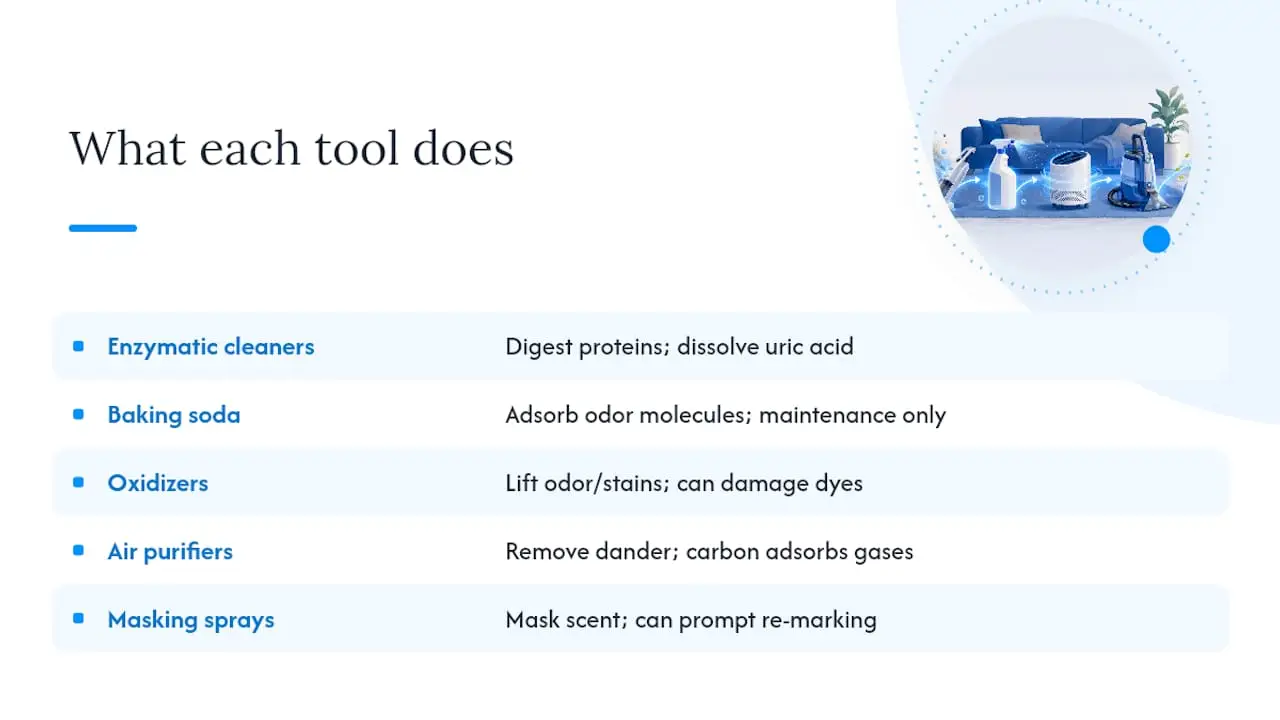
Enzymatic cleaners contain live bacterial cultures that produce enzymes such as proteases, which digest the proteins in urine, feces, and other organic residue. Enzymes need moisture and time to work, and they typically dissolve uric acid crystals that other cleaners can’t touch. Cat urine is notoriously harder to fully neutralize than dog urine because it carries a higher concentration of uric acid and stronger volatile compounds. Skip the dwell time, and you’re left with a stain that looks clean but still smells the moment humidity rises.
Baking soda and activated charcoal work through adsorption. They trap odor molecules on their surface rather than breaking them down chemically. That makes them excellent for daily maintenance, carpets, litter box bottoms, closets, but useless against set-in uric acid crystals, which is why baking soda should be treated as a follow-up step, not a primary urine treatment.
Oxidizers and hydrogen peroxide formulas can lift odor and lighten stains, but they carry real risk on colored fabrics, hardwood finishes, and dyed carpet. Independent testing has found real variability across enzyme and oxidizer spray formulations, so test any oxidizer on a hidden patch before treating a visible area.
Air purifiers handle what surface cleaners can’t: the dander and volatile compounds floating in the room itself. A HEPA filter captures airborne pet dander effectively when the unit is appropriately sized for the room and its filters are maintained regularly, while an activated carbon layer adsorbs the gaseous odor molecules HEPA alone misses. A quality HEPA vacuum and filter routine matters just as much for dander control as the purifier itself.
Masking sprays deserve a specific warning. Fragrance alone doesn’t remove the organic residue underneath, and pets often re-mark a spot that still smells like urine to their much sharper sense of smell. Spray it, and you may be setting up the exact accident you were trying to erase.
Room-by-Room Steps for Carpet, Upholstery, and Hard Floors
Different surfaces trap odor differently, so the right sequence changes depending on where the mess landed.
For carpet, fresh accidents:
- Blot up excess liquid with paper towels or a clean cloth.
- Saturate the spot with enzyme cleaner, matching the volume of the original accident.
- Cover and let it sit per the product’s dwell time, usually 10 to 15 minutes minimum.
- Extract with a wet vac or blot dry with clean towels.
- Let the area air dry fully before allowing pets back on it.
For set-in urine stains, surface treatment alone often isn’t enough. If the smell returns whenever the room gets humid, urine has likely soaked through to the carpet pad or subfloor. Cleaning professionals typically map the extent of contamination before applying controlled enzyme treatments, and in some cases pad replacement is the only real fix.
Upholstery and cushions:
- Remove and machine wash any covers that come off.
- For fixed cushions, use a wet/dry vac with an upholstery attachment and an enzyme solution formulated for fabric.
- Never soak upholstery, since trapped moisture inside foam cushions can grow mold long after the smell seems gone.
Hard floors need caution around heat. Steam cleaners and hot water can actually reactivate dried uric acid crystals, releasing the odor right back into the air instead of removing it. Lab-tested guidance recommends a blot, enzyme-saturate, sit, and repeat sequence rather than heat-based cleaning for urine on sealed wood or tile.
Litter boxes absorb odor into the plastic itself over time. Replacing plastic litter boxes every 6 to 12 months solves a problem no amount of scrubbing will fix.
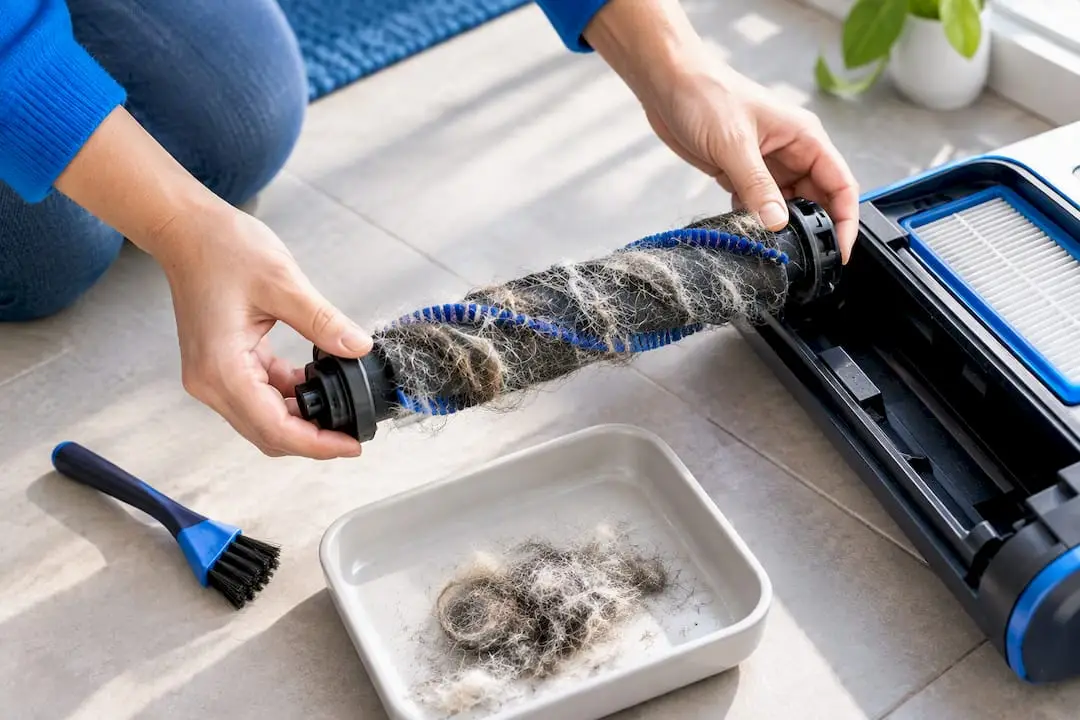
And don’t overlook your vacuum: a clogged canister, dirty filter, or hair-wrapped brush roll will redistribute odor across every room you clean.
A Realistic Weekly Routine That Keeps Odor from Coming Back
Odor control isn’t a one-time project. It’s a handful of small habits that take maybe 20 minutes a week once they’re routine.
Weekly:
- Launder pet bedding and any washable covers.
- Vacuum high-traffic areas and furniture your pet favors.
- Scoop the litter box daily, not just weekly.
Monthly:
- Deep clean upholstery and rugs, even without a visible stain.
- Replace or clean HVAC and room air purifier filters.
- Spot-check trouble zones, doorways, favorite nap spots, under furniture, for odor you might be missing.
Grooming matters more than most owners realize. Regular baths reduce the oil and dander buildup that feeds household odor, and wiping paws after walks keeps outdoor debris from working into carpet fibers. A pet-safe daily cleaning routine built around these habits does more to prevent odor than any single deep clean.
Keep a small kit on hand: enzyme cleaner, baking soda, and spare filters for your purifier. It costs less than one bottle of specialty odor spray and covers nearly every situation that comes up.
Pro Tip: Stick a reminder on your calendar for filter changes. Most people forget until the smell comes back, and by then the filter has been doing almost nothing for weeks.
When Pet Odor Needs a Professional, Not Another Spray
Some odor problems are past the point where home treatment helps. Watch for these signs:
- The smell returns within a day or two of humid weather, even after you’ve deep cleaned.
- Your pet keeps marking the same general area across multiple spots in a room.
- You can see discoloration on the carpet backing or a soft, damp feel in the padding underneath.
- Anyone in the house is reporting respiratory irritation that seems tied to a specific room.
At that point, the contamination has likely reached the carpet pad or subfloor. Professional remediation typically starts with mapping the full extent of contamination, then applies controlled enzyme treatments and replaces padding or seals the subfloor where needed, using fast-dry techniques that avoid soaking the area further. When you’re vetting a cleaning service, ask what their inspection covers, whether they give a written estimate before work starts, and what follow-up looks like if odor resurfaces. A deep clean versus a full move-out clean address different levels of contamination, so it’s worth understanding which one your situation actually calls for before you book anything.
Living with Pets Means Making Peace with Imperfect Solutions
No home smells like a showroom when a dog or cat actually lives there, and chasing that standard is a losing game. The realistic goal is a house that smells neutral to a visitor walking in the front door, not one that’s been sterilized of every trace of your pet.
What actually moves the needle is boring consistency: enzyme cleaner on accidents the day they happen, not the week after; a purifier that’s actually maintained; bedding washed on schedule instead of when it starts to smell. Skip the trend-chasing sprays and gadgets promising instant results. Eco-friendly, pet-safe products do the job without exposing your household to harsh residue, and that matters just as much as whether the smell disappears.
— Local
When It’s Time to Call in Pure Homes Cleaning
If you’ve worked through enzyme treatments, filter changes, and weekly maintenance and the smell still comes back, that’s not a failure on your part. It usually means the odor has settled somewhere a spray bottle can’t reach.

Purehomescleaning is the alternative to guessing your way through another round of home remedies. Our deep cleaning service targets exactly the buildup that causes recurring pet odor, upholstery, baseboards, and high-touch areas that regular tidying skips, using eco-friendly products that are safe for pets and kids. If you’re moving out of a rental with pet odor concerns, our move-out cleaning is built to handle exactly that kind of deposit-threatening problem. Every technician is trained and insured, and you can compare Standard Cleaning and Deep Cleaning to see which fits your situation. When you’re ready, book your cleaning online and get a clear estimate before anyone sets foot in your home.
Sources
- Best sprays for tackling pet stains and strong odors – Consumer Reports
- Do enzymatic cleaners work? – Rover
- How to get cat pee smell out of carpet – Good Housekeeping
FAQ
How Do I Get Rid of a Strong Pet Smell in My House?
Start by identifying the source, whether it’s a urine spot, bedding, or general dander buildup, then match the treatment to the cause. Use an enzymatic cleaner on any organic stains, baking soda for surface maintenance, and a HEPA plus carbon air purifier for airborne odor, since each addresses a different part of the problem.
How Can I Get Rid of Dog Smell in My House?
Wash bedding weekly, bathe your dog regularly to reduce oil and dander buildup, and vacuum high-traffic areas at least once a week. For any urine accidents, treat immediately with an enzyme cleaner rather than a scented spray, since masking odor without removing the residue can encourage repeat marking.
What Is the Most Effective Pet Odor Eliminator?
For biological stains like urine, an enzymatic cleaner is the most effective option because it breaks down the uric acid crystals other cleaners leave behind. For airborne odor and dander, pair that with a properly sized HEPA and carbon air purifier.
How Do I Stop My House from Smelling Like Pets?
Combine enzyme treatment for accidents, baking soda for daily maintenance, and consistent grooming and laundering habits, since prevention matters as much as cleanup. If odor keeps returning despite a solid routine, the contamination may have reached the carpet pad or subfloor, which is when professional deep cleaning becomes the more reliable fix.