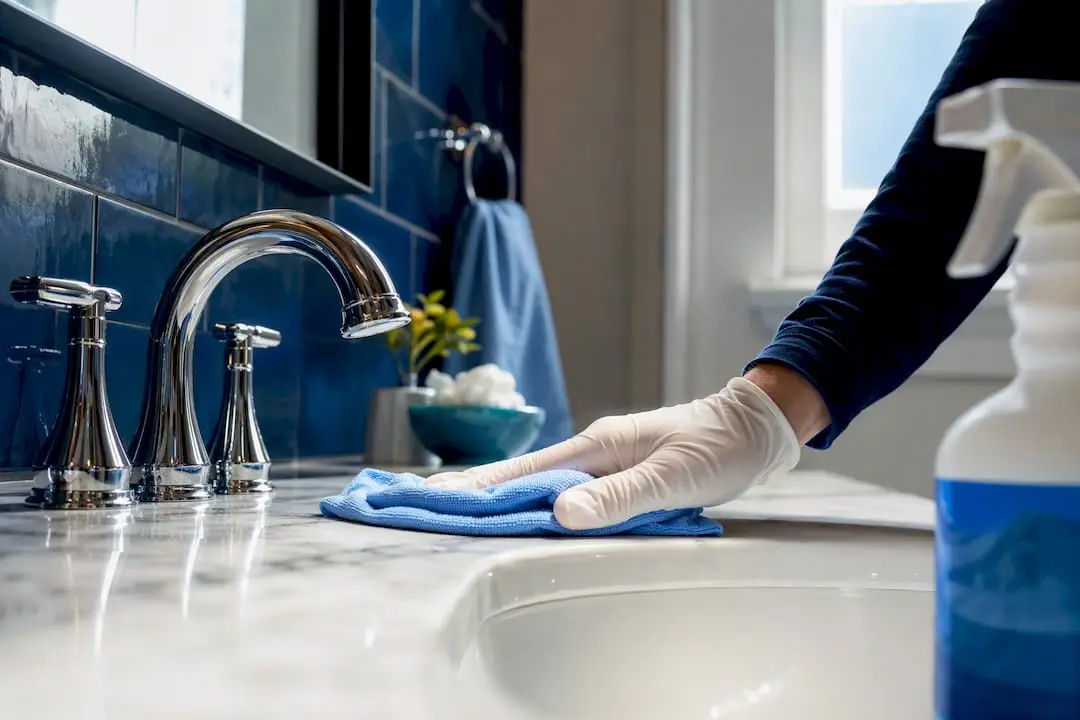
For disinfecting that matters, reach for an EPA-registered disinfectant carrying the Design for the Environment (DfE) mark, or a stabilized hydrogen peroxide or alcohol product with a concentration effective for disinfection, and let it sit wet on the surface for the full label contact time. Skip the disinfectant entirely for routine cleaning; soap, water, and a microfiber cloth handle most daily grime just fine. Household vinegar is not a registered disinfectant and won’t reliably kill viruses like norovirus or flu, so save it for cutting grease, not for fighting germs.
TL;DR:
- Disinfectants need to be EPA-registered with proper label contact time; household vinegar is ineffective against viruses and should not replace registered disinfectants.
- Regular household cleaning with soap and water often suffices; disinfection is mainly necessary for high-touch surfaces, areas touched by sick household members, or post-raw food handling.
- EPA-approved eco-friendly disinfectants, such as stabilized hydrogen peroxide and 60 to 70 percent alcohol, provide effective germ killing with less environmental and health risk.
- Proper use involves cleaning first, applying the disinfectant evenly, maintaining surface wetness for the full contact time, and ensuring adequate ventilation during use.
- Avoid greenwashing claims by checking for EPA registration numbers, verified certifications, and organism claims on labels rather than marketing language.
Table of Contents
- What Does Eco-Friendly Disinfecting Actually Mean?
- When Do You Actually Need to Disinfect?
- Which Eco-Friendly Disinfectants Actually Kill Germs?
- How to Use Eco-Friendly Disinfectants Safely at Home
- How to Spot a Genuinely Greener Disinfectant (and Avoid Greenwashing)
- Non-Chemical Ways to Cut Down on Disinfectant Use
- A Simple Weekly Eco-Friendly Cleaning and Disinfecting Routine
- When It Makes Sense to Hire a Professional Eco-Friendly Cleaning Service
- Does Eco-Friendly Disinfecting Improve Indoor Air Quality?
- How Should You Dispose of Used Disinfectants and Wipes?
- Balancing Efficacy With Exposure Reduction: An Editorial Take
- A Cleaner, Safer Home Without the Guesswork
- Where to Verify Eco-Friendly Disinfectant Claims
- Sources
- FAQ
What Does Eco-Friendly Disinfecting Actually Mean?
The terms “clean,” “sanitize,” and “disinfect” get used interchangeably, but they describe three different jobs. Cleaning removes dirt, dust, and some germs from a surface using soap or detergent and water. It doesn’t kill pathogens; it physically lifts them away. Sanitizing reduces germs to a level public health codes consider safe, which is why you see the word on restaurant equipment. Disinfecting goes further: it uses EPA-registered chemicals to kill bacteria and viruses on hard, non-porous surfaces, and it’s the only one of the three that requires federal registration to make that claim.
That distinction matters because disinfectants are pesticides, legally speaking. The EPA classifies and regulates them differently from standard cleaning products, which means a disinfectant has to prove, in lab testing, that it kills specific organisms within a specific amount of time. A basic all-purpose cleaner never has to clear that bar.
Eco-friendly disinfecting isn’t about avoiding chemicals altogether. It’s about choosing chemistries that do the job with less risk to your lungs, your skin, your pets, and the water supply once they go down the drain. Two things push this beyond a personal preference:
- Respiratory and skin exposure. Many conventional disinfectants rely on quaternary ammonium compounds or bleach, both linked to asthma triggers and skin irritation with repeated exposure.
- Environmental persistence. Some active ingredients don’t break down quickly in wastewater treatment, which is part of why regulators started building greener alternatives programs in the first place.
That’s where certifications like EPA’s Design for the Environment program come in. DfE-certified disinfectants are still EPA-registered, meaning they’ve passed the same efficacy testing as any other disinfectant, but they’ve also been screened for reduced human and environmental hazard. You’re not trading effectiveness for safety. You’re choosing a product that’s already cleared both bars.
When Do You Actually Need to Disinfect?
Most households disinfect far more than necessary, and the CDC’s own guidance backs that up. Daily whole-house disinfecting is typically unnecessary unless someone in the home is sick or at higher risk for infection. Outside of that, regular cleaning with soap and water removes the vast majority of germs on its own.
Here’s a practical way to decide what needs disinfectant and what just needs a wipe-down:
- High-touch surfaces get priority. Door handles, light switches, faucet handles, remote controls, and phone screens accumulate the most contact and the most germs, so they’re worth disinfecting regularly on frequently touched surfaces even in a healthy household.
- Bathroom surfaces after regular use. Toilet handles and sink fixtures benefit from routine disinfecting regularly in bathrooms, more often if someone is ill.
- Kitchen counters after raw food contact. Disinfect after handling raw meat, poultry, or eggs as a precaution. A quick wipe with soap and water is enough after most other tasks.
- Anything touched by a sick household member. This is when disinfecting frequency should jump, targeting shared bathrooms, doorknobs, and bedside surfaces daily until symptoms clear.
- Floors, walls, and low-touch furniture. These rarely need disinfectant. Regular cleaning is sufficient because they’re not a major transmission pathway.
Over-disinfecting isn’t just wasteful, it can backfire. Repeated exposure to strong disinfectant fumes in a closed room raises indoor air pollutant levels, and some ingredients contribute to the kind of low-grade respiratory irritation that’s easy to mistake for seasonal allergies. There’s also a practical cost: disinfectant is more expensive per bottle than all-purpose cleaner, and using it where you don’t need to just burns through it faster. Reserving disinfectant for the situations above, rather than treating every counter and surface as a biohazard, is the difference between a healthy routine and an expensive habit that adds unnecessary chemical exposure to your home.
Which Eco-Friendly Disinfectants Actually Kill Germs?
Not every “natural” claim on a bottle holds up once you check the label. Some chemistries genuinely disinfect and carry EPA registration to prove it; others are marketing dressed up as science. Here’s what actually works.
EPA-registered options with a track record:
- Stabilized or accelerated hydrogen peroxide breaks down into water and oxygen after use, and formulations built into registered disinfectants combine proven antimicrobial activity with a lower toxicity profile than many quaternary ammonium products, provided you follow the label’s contact time.
- 60 to 70 percent ethanol or isopropanol on hard, non-porous surfaces disinfects quickly and evaporates without leaving residue, though it’s flammable and not ideal for large-area use in an unventilated space.
- Certain organic acids, including specific lactic and citric acid formulations, are registered as disinfectants in some products, though not every acid-based cleaner on a shelf carries that registration. Check the label, not the ingredient list.
- Properly used steam, at the right temperature and dwell time, can sanitize hard surfaces without any chemical residue at all, which makes it a strong complement to chemical disinfecting rather than a full replacement.
Pro Tip: Check the EPA registration number on the back label, not the front marketing claims. If a product calls itself a “disinfectant” without an EPA registration number printed on it, it legally cannot make that claim, and it probably won’t perform like one.
Here’s the myth that needs to die: household vinegar does not reliably disinfect. It’s acidic enough to cut through grease and mineral deposits, and it has mild antibacterial properties against some bacteria, but it is not registered or proven effective against viruses like norovirus or influenza. Plain castile soap has the same limitation. Both are fine cleaning agents. Neither is a disinfectant, no matter how many DIY blogs suggest otherwise.
One insight worth internalizing: dwell time and surface prep matter as much as the active ingredient itself. A premium disinfectant sprayed and wiped off in five seconds performs no better than water. The chemistry only works if you let it work.
Fabrics and porous surfaces need a different approach entirely, since you generally can’t apply a surface disinfectant to them the way you would a countertop. Launder items on the hottest setting the fabric allows, using regular detergent, which handles the vast majority of germ reduction on clothing, towels, and bedding. For upholstery or carpet that can’t go in a washing machine, spot treatment with a fabric-safe cleaner followed by thorough drying is more realistic than trying to disinfect the material outright. Steam cleaners designed for upholstery can also help here, since heat does a lot of the work that liquid disinfectants can’t reach into fibers.
How to Use Eco-Friendly Disinfectants Safely at Home
Effectiveness and safety both come down to following a process, not just picking the right bottle off the shelf. Skipping steps is the most common reason a “disinfected” surface isn’t actually disinfected.
- Clean first. Wipe away visible dirt, grease, or food residue with soap and water. Disinfectants can’t penetrate grime to reach germs underneath, so a dirty surface defeats the product before you even start.
- Apply the disinfectant according to label directions. Spray or wipe on an even layer covering the entire surface.
- Keep the surface visibly wet for the full contact time listed on the label. This can range from 30 seconds to 10 minutes depending on the product and the organism it’s targeting. This is the step most people skip, and it’s the one that determines whether the product actually works.
- Rinse if the label says to, particularly on surfaces that contact food, like cutting boards or high chair trays.
- Let the surface air dry rather than immediately wiping it, unless the label specifies otherwise.
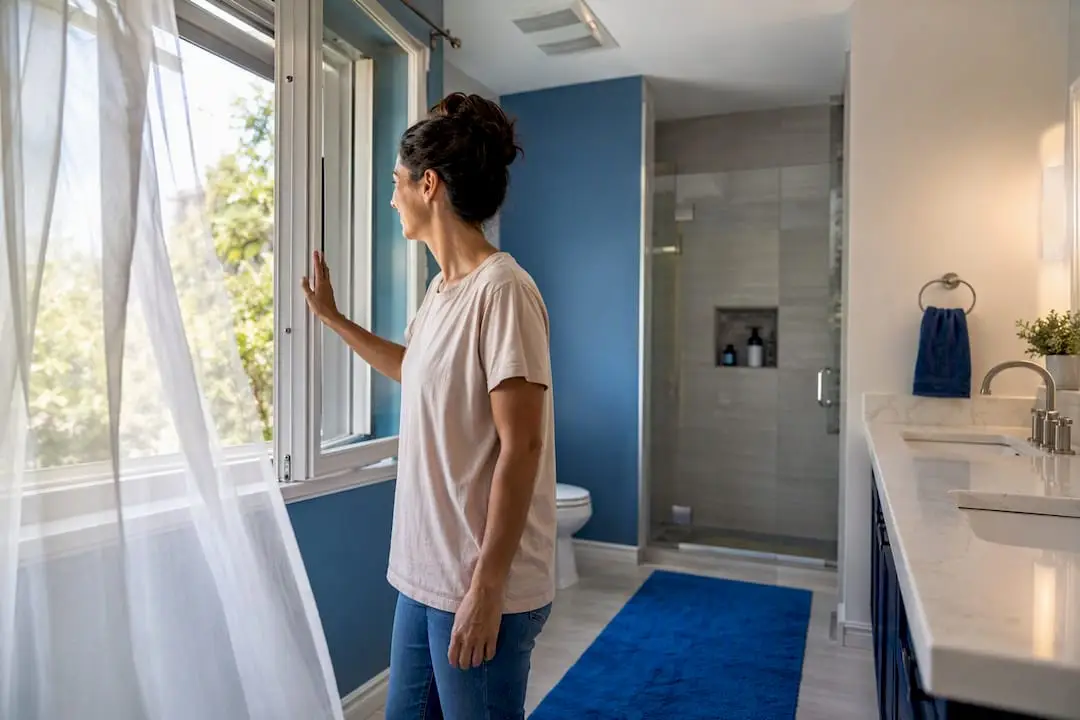
Ventilation deserves its own mention. Open a window or run an exhaust fan while disinfecting, especially in bathrooms and kitchens where fumes concentrate quickly in a small, enclosed space. Wear gloves if you have sensitive skin, and never mix disinfectant products, especially bleach and ammonia-based cleaners, which produces toxic chloramine gas. This isn’t a rare accident; it happens in real households when someone tries to “boost” a bathroom cleaning job by combining two bottles under the sink.
Store disinfectants in their original, labeled containers, out of reach of children and pets, and away from heat sources if the formula is alcohol-based and flammable. If you’re diluting a concentrate at home, measure it rather than eyeballing it. Too weak a dilution won’t disinfect; too strong wastes product and increases exposure risk without adding effectiveness. Following the CDC’s guidance on protective equipment and ventilation turns disinfecting from a guessing game into a repeatable routine that actually protects your household.
How to Spot a Genuinely Greener Disinfectant (and Avoid Greenwashing)
Greenwashing on cleaning products is common enough that regulators have built entire programs to counter it. The word “natural” on a label has no legal definition when it comes to disinfectants, so a bottle can say it and mean almost nothing.
Look for these certifications instead of marketing language:
- EPA Design for the Environment (DfE), which confirms the product is both EPA-registered as effective and screened for reduced hazard.
- Safer Choice, a related EPA program covering a broader range of cleaning products beyond disinfectants specifically.
- Green Seal, a third-party certification with its own ingredient and performance standards.
- UL ECOLOGO, another independent certification that evaluates environmental and health impact across a product’s life cycle.
The EPA is explicit that these labels exist specifically because consumers can’t rely on marketing copy alone to identify genuinely safer products. That’s a useful thing to know next time a bottle promises “plant-powered” disinfecting with no certification anywhere on the package.
Beyond the logo, check three things on the actual label. First, confirm there’s an EPA registration number, usually a series of numbers separated by hyphens near the ingredients panel. No number means no legal disinfectant claim, regardless of what the front of the bottle says. Second, check which organisms the product claims to kill and whether your concern, cold and flu viruses, norovirus, staph, is actually listed. Third, note the contact time, since a product with a 10-minute dwell time isn’t going to work if you’re wiping it off in ten seconds.
Red flags worth walking away from: “chemical-free” claims (every substance is a chemical, including water), vague “no toxins” language with nothing to back it, and any disinfectant claim with zero registration number in sight. If you want to verify a specific product, the EPA’s disinfectant search tool and List N let you check registration status directly rather than trusting the label’s word for it.
Non-Chemical Ways to Cut Down on Disinfectant Use
Chemical disinfectants aren’t the only tool in the kit, and leaning on heat, water, and sunlight for some tasks reduces both cost and chemical exposure at home.
- Steam cleaning can sanitize many hard surfaces and some fabrics when the steam reaches sufficient temperature and stays in contact long enough, though results vary by device and material, and steam alone doesn’t carry an EPA disinfectant claim.
- Hot-water laundering, generally 140°F or higher with regular detergent, handles the bulk of germ reduction on clothing, towels, and bedding without needing an added disinfectant.
- Direct sunlight and open-air drying support germ reduction on outdoor items and can help dry damp fabrics faster, reducing mold risk, though it’s a supportive measure rather than a primary disinfecting method.
- UV-C devices can be effective against certain pathogens under controlled exposure, but they carry real safety caveats: direct UV-C exposure can burn skin and damage eyes, and consumer devices vary widely in actual output and effectiveness.
None of these fully replace a registered disinfectant when one is genuinely needed, say, after someone in the house has been sick. But for the majority of routine sanitizing tasks, steam and hot water get you most of the way there without a chemical footprint at all.
A Simple Weekly Eco-Friendly Cleaning and Disinfecting Routine
A workable routine separates “clean everything” from “disinfect the few spots that matter,” which keeps chemical use down without cutting corners on the surfaces that count.
- Daily: Wipe kitchen counters with soap and water after food prep; disinfect only after raw meat, poultry, or egg contact.
- Two to three times weekly: Disinfect high-touch points, door handles, light switches, faucet handles, remote controls.
- Weekly: Disinfect bathroom fixtures, toilet handles, and sink handles; clean floors and other low-touch surfaces with soap and water.
- If someone gets sick: Escalate immediately. Isolate the person where practical, launder their bedding and towels on the hottest safe setting, and disinfect shared bathroom and bedroom surfaces daily until symptoms resolve.
| Situation | Action | Product type |
|---|---|---|
| Routine daily surfaces | Clean with soap and water | All-purpose cleaner |
| High-touch points (weekly) | Disinfect | EPA-registered DfE or peroxide/alcohol disinfectant |
| Raw meat contact areas | Disinfect after uses likely to contaminate surfaces | EPA-registered disinfectant |
| Sick household member | Daily targeted disinfecting + laundering | EPA-registered disinfectant, hot-water laundering |
| Fabrics and porous items | Launder or spot-treat | Regular detergent, hot water setting |
A compact supplies list covers most of this: a DfE-certified spray disinfectant, a bottle of 70 percent isopropyl alcohol for small hard-surface jobs, plain soap and microfiber cloths for daily cleaning, and a hot-water laundry cycle you actually use when needed. That’s a smaller shopping list than most cleaning aisles suggest you need.
When It Makes Sense to Hire a Professional Eco-Friendly Cleaning Service
Not every household has the time to run this routine consistently, and that’s precisely the gap professional cleaning fills. A service that shows up on a set schedule and applies eco-friendly products correctly, every time, removes the guesswork of matching the right chemistry to the right surface and the right contact time.
Purehomescleaning builds its residential services around this same balance of proven cleaning methods and safer product choices, offering routine standard cleaning, deep cleaning, and move-in or move-out service across Washington, DC, and the surrounding area. That range matters because different situations call for different intensity. A weekly routine cleaning keeps high-touch surfaces in check between visits. A deep cleaning tackles buildup that routine wiping misses, grout lines, baseboards, appliance interiors, where germs and grime accumulate over weeks.
Hiring a professional makes particular sense in a few scenarios: when someone in the household has a compromised immune system and consistent disinfecting isn’t optional, when work and family schedules leave no realistic time for a thorough weekly routine, or when a household simply wants the reassurance that surfaces are getting disinfected correctly rather than sprayed and wiped in five seconds. Consistency is the underrated benefit here. A professional applying the correct contact time on every visit outperforms a rushed, inconsistent DIY effort even when the DIY effort uses the same products.
For a family juggling two jobs and a toddler who touches everything, that consistency isn’t a luxury. It’s the difference between disinfecting happening on paper and disinfecting actually happening.
Does Eco-Friendly Disinfecting Improve Indoor Air Quality?
Indoor air quality is one of the more overlooked reasons to switch to greener disinfectants, and the effect is noticeable in homes that make the change. Conventional disinfectants built around heavy fragrance loads, bleach, or high concentrations of quaternary ammonium compounds release volatile organic compounds into the air as they’re applied and while they dry. In a poorly ventilated bathroom or kitchen, those compounds linger longer than most people realize, and repeated exposure over months can aggravate asthma or trigger headaches in sensitive individuals.
Stabilized hydrogen peroxide and alcohol-based disinfectants tend to break down faster and leave less airborne residue once dry, particularly alcohol, which evaporates cleanly without the heavier fragrance carriers found in many conventional sprays. DfE-certified products go through screening specifically aimed at reducing these kinds of exposure risks, which is part of why the certification exists in the first place.
None of this means ventilation becomes optional. Even the gentlest disinfectant benefits from an open window or running fan during and after application, since airflow clears any residual fumes faster than a sealed room ever will. The chemistry matters, but airflow still does real work.
How Should You Dispose of Used Disinfectants and Wipes?
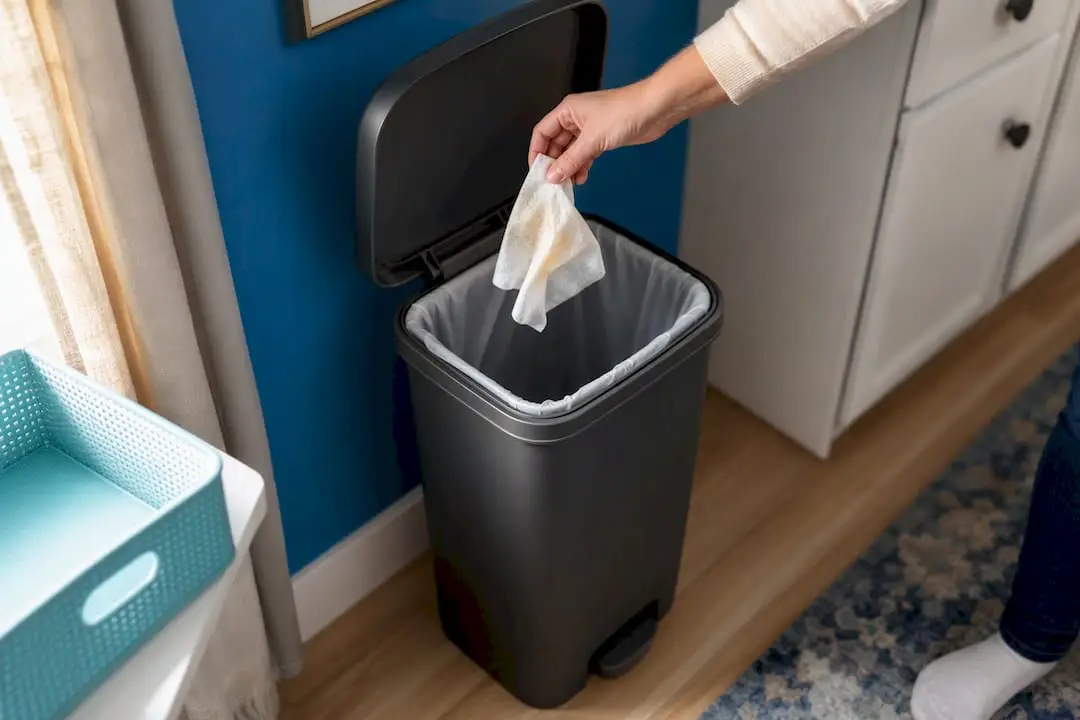
Disposal is the step most households skip entirely, and it matters more than it seems. Used disinfecting wipes should go in the regular trash, never flushed, since even wipes labeled “flushable” cause sewer blockages and don’t break down the way toilet paper does. Let a used wipe dry out before tossing it if it was saturated with a strong chemical, which reduces the concentration reaching a landfill in liquid form.
Leftover diluted disinfectant solution mixed for one-time use can generally go down the drain with running water, since municipal wastewater treatment is designed to handle small household quantities of registered disinfectants. Concentrated, unopened, or unused product is a different matter. Check the label for disposal instructions, and if none are given, contact your local household hazardous waste program rather than pouring it out. Many counties run periodic collection events specifically for this kind of chemical.
Empty spray bottles and containers can typically be recycled once rinsed, though check the plastic type on the bottom, since not every municipal program accepts every resin code. Keeping a small stock of concentrate rather than a cabinet full of half-used bottles cuts down on both waste and the temptation to use more than the label calls for.
Balancing Efficacy With Exposure Reduction: An Editorial Take
The conventional wisdom on this topic splits into two unhelpful camps. One says disinfect everything, constantly, for safety. The other treats any registered disinfectant as inherently toxic and pushes vinegar and essential oils as a substitute. Both miss the point.
The evidence supports a narrower position: disinfect the specific surfaces where it matters, using products that have actually passed EPA registration testing, and skip it everywhere else. That’s not a compromise between safety and effectiveness, it’s what the data actually recommends. A DfE-certified disinfectant isn’t a watered-down version of a “real” disinfectant. It’s a registered product that happened to also clear a hazard screening most conventional products never bothered to take.
If there’s one habit worth building, it’s reading the contact time before assuming a product failed you. Most disinfecting “doesn’t work” complaints trace back to wiping a surface dry ten seconds after spraying it, not to a bad product. The second habit: stop treating every surface in the house like a hospital room. Your kitchen counter after cutting vegetables doesn’t need the same treatment as a doorknob during flu season.
— Local
A Cleaner, Safer Home Without the Guesswork
Reading labels, timing dwell periods, and matching the right chemistry to the right surface takes real attention, week after week. Purehomescleaning handles that entire process for you, using eco-friendly products and methods built around the same EPA-backed standards covered in this article, applied consistently on every visit rather than whenever time allows.

Whether you need a routine cleaning to keep high-touch surfaces in check, a deep cleaning to reset a home that’s fallen behind, or move-in and move-out service for a transition, Purehomescleaning’s residential cleaning services are built around exactly this balance of effectiveness and reduced chemical exposure. Serving Washington, DC, Virginia, and Maryland, the team follows the same clean-first, disinfect-with-purpose approach outlined above, so you’re not stuck double-checking contact times on a Sunday afternoon. Ready to hand off the disinfecting checklist entirely? Book your cleaning online and pick a plan that fits your household’s actual needs.
Where to Verify Eco-Friendly Disinfectant Claims
For a closer look at any claim made in this article, or to check a specific product’s status yourself, the CDC’s home cleaning and disinfecting guidance covers the full framework this piece draws from. The EPA’s list of DfE-certified disinfectants and its broader Safer Choice and greener product search tools let you check whether a specific bottle on your shelf actually carries the certification it claims. Parents looking to cut chemical exposure more broadly around the house may also find this guide to non-toxic products for kids useful as a companion resource.
Sources
- When and How to Clean and Disinfect Your Home | CDC
- What’s the difference between products that disinfect, sanitize and clean surfaces? | US EPA
FAQ
What Is the Best Eco-Friendly Disinfectant?
There’s no single “best” option for every surface, but stabilized hydrogen peroxide and alcohol-based products carrying EPA Design for the Environment certification consistently combine proven efficacy with lower toxicity than many conventional alternatives.
What Is the Most Effective Natural Disinfectant?
Among plant-derived or “natural” options, few carry EPA registration as true disinfectants; stabilized or accelerated hydrogen peroxide formulations come closest to a natural-leaning chemistry with documented, registered antimicrobial activity.
Does Vinegar Disinfect Surfaces?
No. Vinegar has mild antibacterial properties and works well for cutting grease and mineral buildup, but it is not registered or proven effective against viruses like flu or norovirus, so it shouldn’t be relied on where true disinfecting is needed.
What Are Some Eco-Friendly Cleaning Chemicals?
Soap and water remain the most eco-friendly choice for routine cleaning, while stabilized hydrogen peroxide, 60 to 70 percent alcohol, and DfE-certified formulas cover situations that call for actual disinfecting.
What Is a Non-Toxic Alternative to Conventional Disinfectant Sprays?
Look for a Design for the Environment or Safer Choice certified spray using hydrogen peroxide or alcohol as the active ingredient; these pass the same EPA efficacy testing as conventional products while screening for reduced health hazard. For households that would rather not manage product selection at all, a professional service like Purehomescleaning applies these same standards on every visit.