

Yes, some cleaners do laundry, but usually as an add-on rather than a standard part of a cleaning visit. The reason comes down to time and liability: wash-and-dry cycles run 30 to 90 minutes each, which turns a two-hour cleaning into a half-day commitment, and clothing damage (shrinkage, dye transfer, snags) creates a risk most flat-rate cleaning contracts don’t cover.
Here’s what to expect once laundry enters the conversation:
- Towels and bed linens get accepted far more often than a full hamper of clothes.
- Starting or transferring a load is common; folding and put-away often cost extra or aren’t offered at all.
- Ironing and steaming are frequently treated as separate, billable tasks.
- Delicates, dry-clean-only items, and anything without a care tag are often declined outright.
- Pickup or drop-off for dry cleaning is a specialty add-on, not a default.
- Full closet reorganization or wardrobe management almost never falls under “laundry.”
Key Takeaways
Laundry is rarely a default cleaning task; it’s an add-on that depends on time, scope, and a clear liability policy agreed on upfront.
| Point | Details |
|---|---|
| Laundry is usually an add-on | Most cleaners charge separately for laundry rather than including it in a base cleaning visit. |
| Housekeepers handle laundry more often | Ongoing housekeepers typically manage laundry routinely; task-based cleaners usually don’t unless requested. |
| Linens beat wardrobes | Towels and bed linens get accepted far more often than full closets of personal clothing. |
| Confirm pricing and damage policy first | Ask about per-load versus hourly rates and what happens if an item is damaged before booking. |
| Purehomescleaning scopes laundry in writing | Add-on laundry, linen swaps, and eco-friendly detergent options are confirmed at booking, not guessed at. |
Table of Contents
- What “Laundry” Actually Means When You Book a Cleaner
- House Cleaner vs. Housekeeper: Who Actually Does Laundry?
- Common Laundry Policies (and Red Flags to Watch For)
- How to Ask a Cleaner to Do Laundry (Without the Guesswork)
- What Laundry Service Actually Costs
- How Purehomescleaning Handles Laundry Requests
- A Simple Rule of Thumb for Homeowners
- Book a Cleaning That Actually Covers Your Laundry Needs
- Sources
- FAQ
What “Laundry” Actually Means When You Book a Cleaner
“Laundry” isn’t one task. It’s shorthand for a chain of steps, and a cleaner might do all of them, one of them, or none, depending on what you booked.
The full sequence looks like this:
- Sorting: separating by color, fabric, and care label
- Washing: choosing the right cycle and temperature
- Drying: machine or air-dry, depending on fabric
- Folding: basic stacking versus tight, closet-ready folds
- Hanging: shirts, dresses, anything that wrinkles in a dryer
- Ironing or steaming: a distinct skill and time cost
- Putting away: returning folded items to drawers or closets
- Linen and towel swaps: stripping beds and replacing bath linens
- Wash-and-fold or dry-cleaning pickup/drop-off: a bundled specialty service some companies offer separately
Vague requests get vague results. Sorting by color and fabric type before a cleaner arrives, a practice The Spruce recommends for anyone doing laundry, also protects your clothes when someone unfamiliar with your wardrobe is running the machine.
Pro Tip: Instead of writing “please handle laundry” on a booking form, spell out the exact scope: “Wash and fold two loads of towels, and swap the bed linens in the primary bedroom.” Specific requests get specific results.
House Cleaner vs. Housekeeper: Who Actually Does Laundry?
The industry draws a real line here, and it matters more than most homeowners realize. House cleaners are task-based: they show up on a schedule, hit a defined checklist of surfaces and rooms, and leave. Housekeepers work more like ongoing household staff, often present daily or several times a week, managing tasks that pile up between visits, laundry included.

Angi’s comparison of the two roles notes that housekeepers are typically the ones who take on laundry as a routine responsibility, while house cleaners usually don’t unless it’s explicitly added to the job.
Picture two households. One has a housekeeper who comes three mornings a week and treats laundry like any other recurring chore. The other books a cleaner every other week for a deep clean, and that cleaner might start a load of towels but isn’t touching the family’s closets. If laundry needs to happen every few days, you want a housekeeper. If you just want linens fresh when the cleaner visits, a task-based service with a laundry add-on covers it.
Common Laundry Policies (and Red Flags to Watch For)
Most cleaning companies land somewhere similar: laundry is an optional add-on, towels and linens are fair game, and full wardrobes usually aren’t. A cleaning industry blog reports that adding laundry can stretch a visit by an hour and a half to three hours, which is exactly why it’s priced separately rather than folded into a base rate.
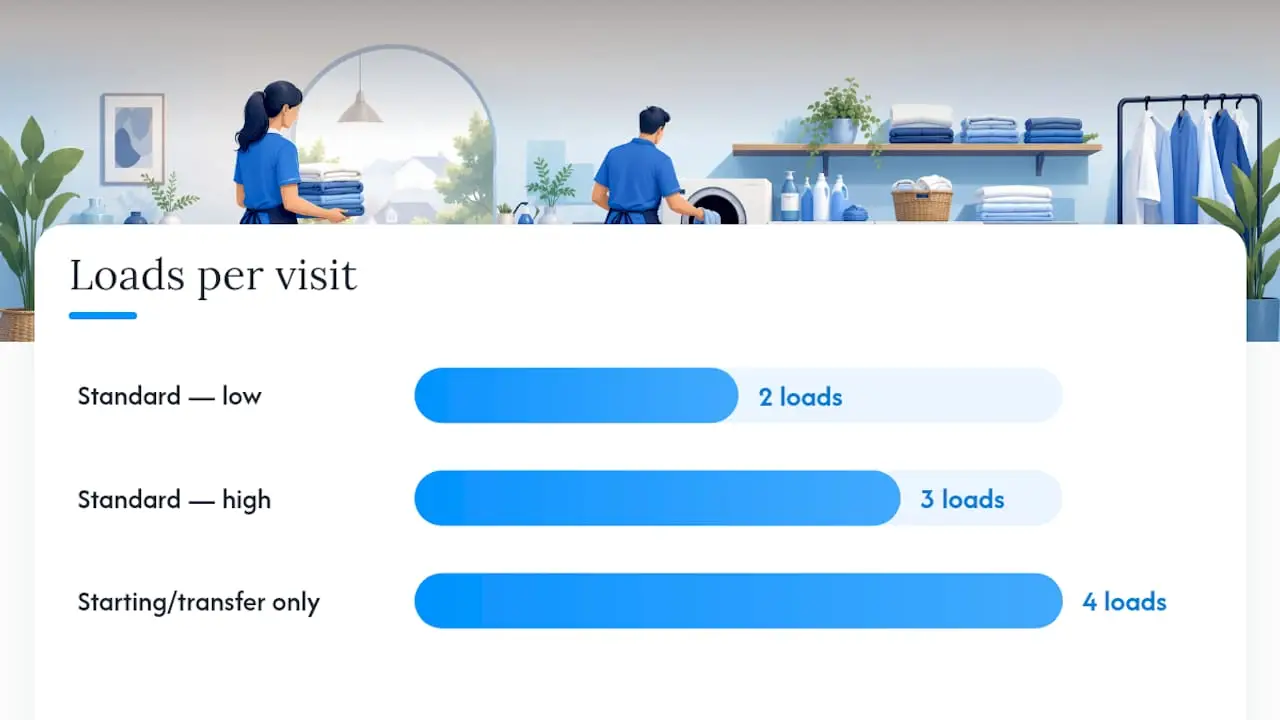
Time isn’t the only constraint. Machine cycles cap how many loads fit into a single visit. Most cleaners can realistically manage two to three loads in a standard appointment, four if they’re only starting or transferring, not folding and putting away.
Liability is the other piece homeowners underestimate.
Standard cleaning insurance often excludes personal apparel damage, which is why many companies ask clients to supply their own detergent and flag any stain-treatment needs upfront. If a $200 sweater shrinks in the dryer, “who pays for that” needs an answer before the machine ever starts.
Watch for these red flags before you hand over a hamper:
- A cleaner who says “sure, we’ll figure it out” instead of naming a specific scope.
- No written laundry policy anywhere on the company’s website or booking form.
- No mention of what happens if an item is damaged or shrinks.
- Reluctance to say which items they won’t handle (delicates, dry-clean-only, anything without a tag).
How to Ask a Cleaner to Do Laundry (Without the Guesswork)
Getting laundry done right starts with what you say at booking, not what you hope happens on the day.
- State the exact tasks. Say “wash, dry, and fold” or “wash and hang,” not just “laundry.”
- Confirm who supplies detergent. Some companies bring their own; others expect you to provide it, especially for sensitive skin or specific brands.
- Ask about put-away. Folding is common; putting clothes back in drawers is not always included.
- Get the pricing model in writing. Per-load, hourly, or bundled into a package, before the visit, not after.
- Clarify the damage policy. Ask directly what happens if something shrinks, bleeds color, or gets damaged.
A simple booking message covers most of this in two sentences: “Please wash, dry, and fold two loads of towels and bedding, and swap the linens in the primary bedroom. I’ll leave detergent and stain treatment out on the washer.”
Before you hit send, confirm these details out loud with the provider:
- Is pricing per load or per hour?
- Are delicates or dry-clean-only items excluded?
- What’s the realistic turnaround for the loads you need done?
- Does adding laundry cut into time budgeted for other cleaning tasks?
What Laundry Service Actually Costs
Pricing for laundry add-ons runs a few different ways, and none of them are universal across the industry. Some companies charge a flat per-load fee. Others tack on an hourly rate specifically for laundry time. Larger cleaning companies sometimes bundle a set number of loads into a recurring plan instead of pricing it separately.
Per-load fees for a basic wash-and-dry cycle commonly fall in the $20 to $45 range, according to Gardenspace’s breakdown of cleaning service scope, with folding or ironing pushing costs toward the higher end. Heavy bedding, comforters especially, tends to cost more since it often needs a larger machine or an extra cycle.
- Per-load flat fee: simplest to compare across providers.
- Hourly add-on: common when laundry is bundled with a longer cleaning visit.
- Package pricing: laundry included as a line item in a recurring weekly or biweekly plan.
Pro Tip: If you need laundry done regularly, ask about folding it into a standing recurring schedule rather than paying per-visit add-on rates. Providers often price recurring laundry more favorably than one-off requests because it’s predictable work they can plan around.
How Purehomescleaning Handles Laundry Requests
Purehomescleaning treats laundry as a flexible add-on rather than a fixed inclusion, which keeps pricing transparent and scope clear from the first conversation. Basic linen and towel swaps fit easily into a standard visit; wash-and-fold service for larger loads gets scoped and quoted separately so there are no surprises on either side.
What homeowners can expect:
- A published services page that spells out what’s included in each cleaning tier and what counts as an add-on.
- Vetted, insured staff, so questions about liability have a clear answer before work starts.
- Eco-friendly product options for households that want fragrance-free or sensitive-skin-safe detergents.
- Transparent online booking with pricing visible before you confirm.
After booking through Purehomescleaning’s online scheduler, you’ll get a confirmation that lays out the agreed scope, so both sides know exactly which laundry tasks are covered before the team arrives.
Pro Tip: When you book, mention laundry needs in the notes field rather than assuming it’s automatically covered. A two-line note saves a ten-minute conversation at the door.
A Simple Rule of Thumb for Homeowners
If you need laundry handled daily or several times a week, hire a housekeeper. If you just want fresh towels and linens on cleaning day, book a cleaner and add laundry as a line item.
That distinction saves you from the most common frustration in this whole topic: expecting ongoing laundry management from a service that was only ever built to handle periodic surface cleaning. Match the job to the role, and the rest sorts itself out.
Book a Cleaning That Actually Covers Your Laundry Needs
Purehomescleaning is the practical alternative to guessing whether your cleaner will touch your hamper. Every laundry add-on gets scoped in writing before your team arrives, so there’s no ambiguity about loads, folding, or put-away, and no surprise charges after the fact.

Homeowners across Washington, DC, and the surrounding area can add laundry to any standard or deep cleaning visit, from a simple towel and linen swap to full wash-and-fold service. Every team is vetted and insured, and eco-friendly detergent options are available for anyone with sensitivity concerns. Laundry scheduling depends on your service area and visit length, so it’s worth confirming load capacity when you book.
Ready to add laundry to your next visit? Book your cleaning online and note your exact laundry needs in the scheduling form, our team will confirm scope and pricing before the visit.
Sources
- Should I hire a house cleaner or a housekeeper? – Angi
- Gardenspace
- How to sort laundry for best results – The Spruce
FAQ
Do cleaners usually do laundry?
Not by default. Most house cleaners treat laundry as an optional add-on, while housekeepers are more likely to include it as part of routine household upkeep.
How much do cleaners charge for laundry?
Per-load fees commonly range from $20 to $45 for a basic wash-and-dry cycle, with folding or ironing pushing costs higher, according to industry pricing data.
How much does it cost to pay someone to do a load of laundry?
A single load typically falls within that same $20 to $45 range when handled as a standalone add-on, though heavier items like comforters can cost more due to extra cycle time.
Do cleaners change sheets and towels?
Yes, linen and towel swaps are among the most commonly accepted laundry tasks, far more so than full loads of personal clothing.
Does Purehomescleaning offer laundry as part of its cleaning services?
Purehomescleaning offers laundry as a flexible add-on, from linen swaps to wash-and-fold, scoped and priced clearly during online booking.