
Get written estimates from two or three vetted providers before you book anything. Confirm each one carries a certificate of insurance and runs background checks on staff, then ask for an itemized scope of work in writing. Book a single trial clean rather than a recurring contract right away. That one visit, evaluated against a written satisfaction policy, tells you more than any sales call ever will.
TL;DR:
- Confirm the cleaning provider has a valid insurance certificate, employs screened staff, and provides a detailed scope of work before booking a trial visit.
- Ensure the scope matches your needs, whether for standard, deep, or move-in/move-out cleaning, and clarify any special surface or allergy considerations early.
- Book a single trial clean to assess service quality, check adherence to scope, and document satisfaction before committing to recurring appointments.
- Ask for transparent, itemized quotes with “not to excess” price caps, especially for add-ons, to avoid unexpected bills.
- Verify payment methods are traceable, avoid cash-only providers, and review contract terms for minimum commitments or cancellation policies.
Table of Contents
- Identify What You Actually Need Before You Choose a Cleaning Service
- Where Should You Look for a Reliable Cleaning Company?
- What Should You Ask During the Estimate Call?
- How Do You Compare Pricing Without Getting Surprised by the Bill?
- Running a Trial Clean: What to Watch and What to Document
- What Does a Vetted Cleaning Service Actually Look Like?
- How Should You Handle Payment and Billing?
- What Contract Terms Should You Watch For?
- Is Hiring a Professional Cleaner Worth the Cost?
- How Pure Homes Cleaning Fits This Checklist
- Sources
- FAQ
Identify What You Actually Need Before You Choose a Cleaning Service
Before you call anyone, figure out what “clean” means for your home. Every estimate you get afterward should be measured against this list, not the other way around.
Cleaning companies generally sell three tiers. A standard clean covers the maintenance basics: kitchens, bathrooms, floors, dusting, and trash. A deep clean adds baseboards, inside appliances, window tracks, and grout, and it’s the right call for a first visit or a home that hasn’t seen a professional in a while. A move in/move out clean strips a property to bare walls, cabinets, and closets, since no one’s belongings are in the way. Specialty add-ons like upholstery or carpet cleaning usually get quoted separately because they require different equipment.
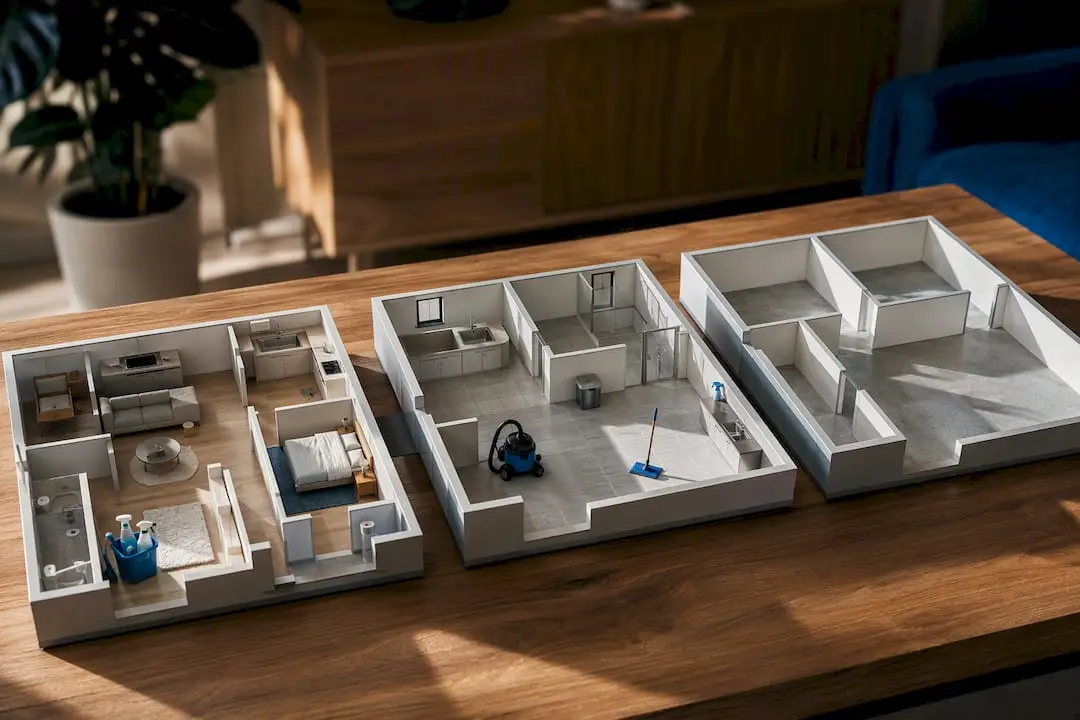
Frequency changes the math. A weekly or biweekly schedule lets a crew do lighter maintenance passes since buildup never gets a chance to set in, while monthly or one-time visits usually need closer to a deep clean scope just to catch up. Most companies also apply frequency discounts, so a recurring biweekly plan often costs less per visit than a single one-off booking.
A few details are worth flagging on the first call, especially for delicate surfaces where expert surface-care guidance is crucial: clean and maintain architectural film.
- Pets in the home (hair, litter boxes, pet-safe product requirements)
- Allergies or sensitivities that rule out certain fragrances or chemicals
- Delicate surfaces like natural stone, since acidic cleaners can etch marble and other stone finishes if the wrong product gets used
- A preference for eco-friendly or green cleaning products throughout the home
Where Should You Look for a Reliable Cleaning Company?
Start with people you trust, not a search engine. Referrals from friends, neighbors, or coworkers surface cleaners who’ve already proven they show up and do the work, and that track record is worth more than a five-star badge on a directory page.
Neighborhood platforms are the next best thing to a direct referral. A reliable house cleaner recommendation on Nextdoor or a local Facebook group carries real weight because the people posting have no reason to exaggerate, and you can usually message them directly with follow-up questions.
Once you’ve got a short list, spend ten minutes on each company’s website before you call:
- A clear breakdown of services offered, not vague marketing language
- Sample scopes that spell out exactly what’s included in each tier
- Recent third-party reviews, ideally with dates and specific details rather than generic praise
- Some visible mention of insurance or bonding, even if it’s just “fully insured” in the footer
Vetted directories add a layer of verification most random Google results skip, since they often confirm licensing or insurance before a company gets listed.
What Should You Ask During the Estimate Call?
This is where you separate a legitimate business from a side hustle running without a safety net. Ask these questions in order, and don’t move forward until you get straight answers.
- Can you send a certificate of insurance? A real COI names the insurance carrier, policy limits, and coverage dates for general liability and workers’ compensation. If a company hesitates or promises to “email it later,” that’s a stall tactic.
- Are your cleaners employees or contractors? W-2 employees typically mean the company handles training, background checks, and tax withholding, which matters for consistency and liability if something goes wrong in your home. Contractor-only setups can still be legitimate, but they shift more risk onto you.
- Do you run background checks and provide references? Consistent, screened teams are one of the clearest signals of a well-run operation, according to hiring guides that track what separates dependable services from risky ones.
- Can I get a written, itemized scope of work? This should list every task included, not just “standard clean,” and it protects you from a crew skipping steps or padding time.
- What’s your cancellation and reschedule policy? Get the notice window and any fees in writing before you book.
Pro Tip: Ask how the company handled its last customer complaint. A confident, specific answer tells you more about accountability than any star rating.
Watch for red flags: cash-only payment demands, vague or evasive answers about insurance, or a refusal to put anything in writing. Legitimate questions to ask before hiring a cleaning service always include pricing structure and cancellation terms, and a company that dodges either one isn’t worth a second call.
How Do You Compare Pricing Without Getting Surprised by the Bill?
Pricing usually falls into three structures. Hourly rates are common for smaller jobs or first-time deep cleans where the scope is unpredictable. Flat-rate pricing is typical for standard recurring visits once a company knows your home. Per-room or per-square-foot pricing shows up most with larger properties or move-out jobs.
None of these structures is inherently better. What matters is what’s driving the number you’re quoted.
- Home condition (clutter, pet hair buildup, how long since the last professional clean)
- Add-ons like inside-the-oven cleaning, interior windows, or laundry
- Frequency, since recurring clients almost always pay less per visit than one-time bookings
- Travel time and distance from the company’s service area
Before you sign anything, ask for an itemized quote with “not to exceed” language, meaning the final price can drop if the job goes faster but won’t jump without your approval. Add-on pricing should be spelled out per item, not lumped into a vague “extra charges may apply” line.
Running a Trial Clean: What to Watch and What to Document
Book a single visit before committing to a recurring schedule. It’s the cheapest insurance you’ll buy in this whole process.
- Track the basics on visit day. Did the crew arrive within the promised window? Did they follow your written scope, or improvise? Check the details you flagged, like whether pet areas got handled the way you asked.
- Set up access deliberately. Decide whether you’re handing over a key, a lockbox code, or a smart-lock entry, and confirm the company’s policy for storing or returning access credentials.
- Get everything in writing afterward. Request an updated scope, confirmed schedule, and locked-in price based on what the trial actually took. If something was missed, this is the moment to raise it and see how the company responds.
Trial visits and references remain the most reliable way to verify a company’s claims before you’re locked into a recurring relationship.
What Does a Vetted Cleaning Service Actually Look Like?
Pure Homes Cleaning’s own service model provides a useful reference point for what this checklist looks like in practice. It offers routine standard cleaning, deep cleaning, and move-in/move-out service, with eco-friendly product options built into the plans rather than tacked on as an upsell.
Online booking removes the back-and-forth of phone tag, and an itemized services page lets you see what’s included before you ever pick up the phone. Customer reviews provide a third-party check on consistency, supporting the vetting process for any provider you’re considering.
How Should You Handle Payment and Billing?
Ask how and when you’re expected to pay before the first visit, not after. Most established companies accept credit or debit cards and invoice electronically, since that creates a paper trail for both sides if a dispute ever comes up.
Cash-only arrangements are a red flag, mostly because there’s no record if something goes wrong with pricing or a damage claim. A legitimate company will tell you upfront whether you’re billed per visit, on a monthly cycle, or with a card on file that runs automatically after each cleaning.
Clarify these specifics before your first appointment:
- Whether payment is due at time of service or invoiced afterward
- Accepted payment methods (card, ACH, check) and any surcharges for certain methods
- How tips are handled, if the company allows or expects them
- What happens if a payment fails or a card on file expires before a scheduled visit
Ask, too, how the company handles damage claims. A trustworthy business will have a clear process for reporting an issue and a timeline for resolving it, backed by the general liability coverage you already confirmed during vetting. If a company can’t explain its own billing process clearly on the phone, that’s worth noting before you hand over your card number.
What Contract Terms Should You Watch For?
Read the fine print before you sign anything, especially around commitment length and how to get out if the service doesn’t work.
Some companies require a minimum number of visits or a set contract term to lock in discounted recurring pricing. That’s not unreasonable, but you should know the exact number and the fee for backing out early before you agree to it. Others operate month-to-month with no lock-in at all, which costs slightly more per visit but gives you an easy exit if quality slips.
Pay close attention to:
- Minimum commitment length, if any, and what discount you’re trading for it
- Notice period for cancellation, typically 24 to 48 hours for a single visit or a set number of days for ending a recurring plan
- Price-change clauses, since some contracts allow rate increases with notice
- What happens if you skip or reschedule a visit, including any fees
A company confident in its own service usually won’t need a long lock-in to keep your business. If the only way a provider retains customers is through a hard-to-exit contract, that’s worth weighing against a company that earns repeat bookings through consistent work instead.
Is Hiring a Professional Cleaner Worth the Cost?
Research from Harvard Business Review found that spending money on time-saving services correlates with higher life satisfaction. The math tips clearly toward hiring when allergies, dual-income schedules, or a move are in play.
— Local
How Pure Homes Cleaning Fits This Checklist
Everything in this guide points toward providers who make it easy to verify what you’re getting before you commit, and that’s exactly the standard Pure Homes Cleaning built its service around. Online booking replaces phone tag, eco-friendly product options are available for households that want them, and the services page lays out routine, deep, and move-in/move-out cleaning with clear scopes instead of vague marketing copy. Customer reviews sit right alongside those service details, giving you the same third-party check this article recommends you look for anywhere else.
The lowest-risk next step is the same one this guide recommends for any provider: book a single trial visit and judge the results for yourself. You can request a quote or book a trial clean directly online, and if anything about the scope needs adjusting after that first visit, you can update it before your next scheduled appointment. No long call, no pressure to commit to a recurring plan before you’ve seen the work firsthand.
Sources
- What to Buy for Happiness? Spending on Time-Saving Services Can Help
- Questions to ask before hiring house cleaning services — Angi
- Questions to Ask Before Hiring a House Cleaning Service | Apartment Therapy
- DIY vs Professional Cleaning: Which is Better for Your Home in 2026? | Tidied
- What to look for in a maid service: full hiring guide — Amenify
FAQ
What Is the 5-5-5 Rule for Cleaning?
The 5-5-5 rule is a DIY time-management method where you spend five minutes each on three quick tasks (like clearing counters, wiping surfaces, and picking up clutter) to keep a room manageable between deeper cleans. It’s not a professional industry standard, so cleaning companies won’t reference it in a quote.
How Much Do Most Cleaning Services Charge?
Pricing varies by structure (hourly, flat-rate, or per square foot), home size, condition, and frequency, so an itemized quote from two or three local providers is the most reliable way to know your actual cost. Recurring bookings typically cost less per visit than one-time deep cleans.
What Is the 80/20 Rule for Cleaning a House?
It’s a general household productivity concept, not a cleaning-industry standard.
How Much Is a One-Hour Clean?
A single hour typically covers light maintenance in a small space, like one bathroom and a kitchen, rather than a full home. For anything larger than an apartment, most providers will recommend a longer block or a flat-rate quote instead of billing strictly by the hour.
What’s the Fastest Way to Vet a New Cleaning Company?
Request a certificate of insurance, ask whether staff are employees or contractors, and book a single trial clean before agreeing to any recurring schedule. Providers like Pure Homes Cleaning that publish itemized services and visible reviews make this verification step faster since the basics are already public.