
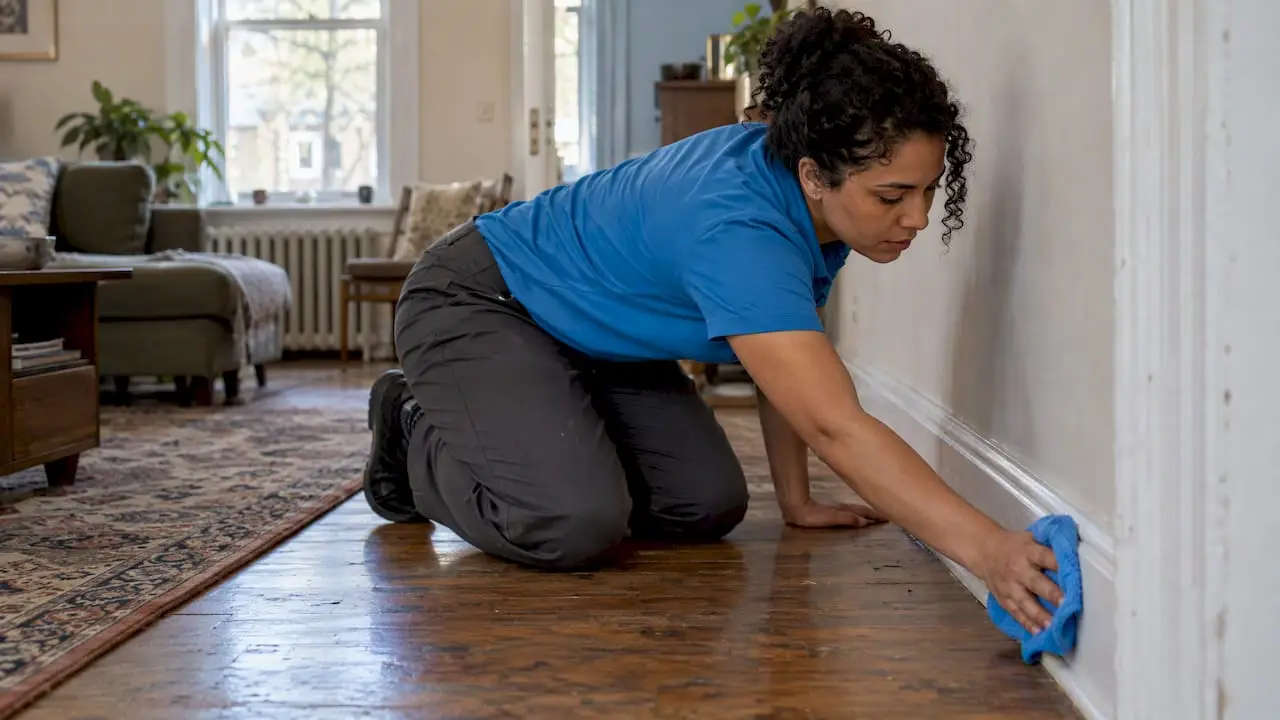
Usually, yes, but it depends on the type of visit. Baseboards are a standard part of a deep clean and a move-out clean. In a routine maintenance visit they are often a light dusting or an add-on, and the scope varies by company. The only reliable answer comes from the checklist of the visit you book, so ask for it in writing before the appointment.
This guide explains what to expect from each kind of clean, how often baseboards need attention, and how to handle them yourself between visits. It also shows how to word your booking so the baseboards don’t get skipped.
TL;DR
- Deep cleans and move-out cleans normally include baseboards. Routine cleans may only cover them lightly, or not at all, so confirm the scope when you book.
- Dry dust first, then wipe with a barely damp microfiber cloth. Skipping the dry step turns dust and pet hair into mud.
- A realistic rhythm: vacuum or dust every two weeks, wipe down every other month, and more often if you have pets.
- Baseboards are easy to overlook: a Dyson survey found 47% of Americans neglect skirting boards during deep cleans.
- If your baseboards haven’t been touched in a year or more, start with a deep clean, then maintain with standard visits.
Table of Contents
- Why the answer changes from visit to visit
- What each type of clean usually covers
- What “clean the baseboards” actually involves
- How often baseboards really need cleaning
- Why baseboards matter beyond looks
- How to clean baseboards yourself between visits
- Our perspective on baseboards
- How to make sure baseboards get cleaned when you book
- Book a clean that includes baseboards
- Frequently asked questions
- Sources
Why the answer changes from visit to visit
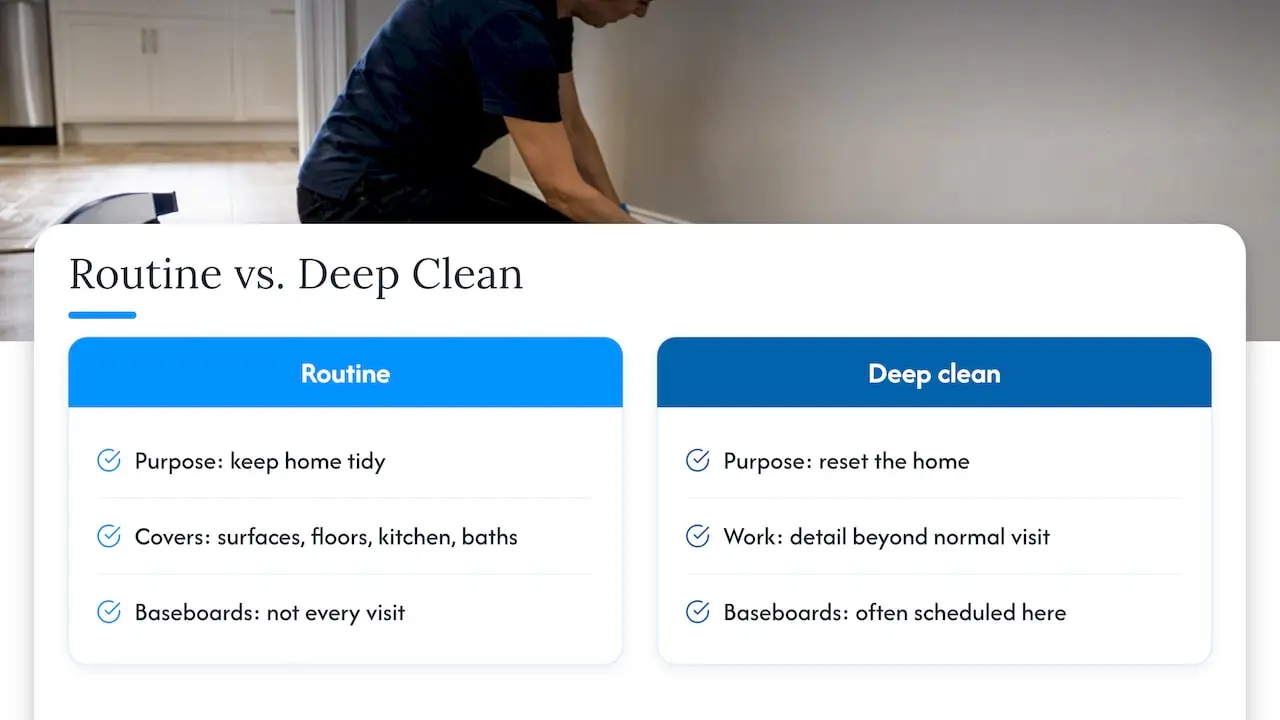
Nobody agrees on a single definition of “house cleaning.” A routine clean is built to keep a home that is already in decent shape tidy: surfaces, floors, kitchen and bathrooms. A deep clean is built to reset a home: the detail work that doesn’t fit into a normal visit’s time.
Baseboards sit in the second group for most households. They are low, they take time, and they don’t change how a room looks day to day. That is why the work is often scheduled in a deep clean rather than every visit. Cleaners aren’t being lazy. They are working to a time budget, and a routine appointment has to cover the kitchen and bathrooms first.
So the useful question isn’t “do cleaners clean baseboards?” It is “which visit includes baseboards, and how thoroughly?”
What each type of clean usually covers
The table below describes common industry practice, not a promise from any single company. Scope differs by provider, which is why we suggest confirming it.
| Type of visit | Baseboards | What that usually means |
|---|---|---|
| Standard (routine) clean | Sometimes, lightly | A pass with a duster or vacuum brush where reachable, or an add-on request |
| Deep clean | Yes, commonly | Dust removal and a damp wipe along the full length of each room |
| Move-out clean | Yes, commonly | Wipe-down of baseboards so the home is ready for the next occupant or the final walkthrough |
| Move-in clean | Yes, commonly | Wiping surfaces before you unpack, when it is easiest to reach everything |
If you’re deciding between the first two, our guide on standard vs deep cleaning lays out how to choose. For leases and walkthroughs, deep cleaning vs move-out cleaning covers where the two overlap.
What “clean the baseboards” actually involves
When a cleaner does baseboards properly, it is a two-step job, and the order matters.
- Remove loose dust and hair. A vacuum with a brush attachment or a dry duster picks up what sits on top. Consumer Reports’ testers note that going straight to wet cleaning or a magic sponge makes a muddy mess when there is heavy hair and dust.
- Wipe with a barely damp cloth. A microfiber cloth wrung out until it is just damp lifts what remains. Spot-treat scuffs after that.
- Dry the surface. Leftover moisture can leave water spots on glossy paint, and dust settles quickly onto a tacky surface, according to Home Depot’s baseboard guide.
Corners and the gap where the baseboard meets the floor hold the worst buildup. A cotton swab or a chopstick wrapped in a damp microfiber cloth gets in there without pushing grime deeper.
Where baseboard work usually stops
A cleaner will not usually repaint chipped trim, repair water-damaged wood, or remove years of caked-on residue from textured or damaged surfaces in a single standard visit. Heavily built-up baseboards are a reason to book a deep clean first. Our article on deep cleaning before recurring visits explains why a reset visit makes later routine cleans faster and better.
How often baseboards really need cleaning
You don’t need to do them weekly. Home Depot’s guidance suggests this rhythm:
- Vacuum with a brush attachment about every two weeks.
- Do a damp microfiber wipe-down about every other month.
- In homes with pets, increase that to at least twice a month, since fur and skin oils build up fast.
In practice, many households fit this around their visit schedule. If you have a recurring standard clean, the dry-dusting pass can ride along with it when you ask for it. The damp wipe-down fits a deep clean a few times a year. For the full room-by-room scope of a thorough visit, see our deep cleaning checklist.
Why baseboards matter beyond looks
Baseboards catch the dust that settles out of the air and the hair that drifts along walls. That matters if anyone in your home has allergies or asthma. The Washington State Department of Health’s safe cleaning guidance points to simple tools such as microfiber cloths and a HEPA-filter vacuum rather than relying on sprays and disinfectants.
If allergies are the reason you’re asking, two of our guides go deeper: what to know about HEPA vacuums and room-by-room cleaning for pet allergies. For asthma specifically, read cleaning with asthma without sprays before you choose products.
How to clean baseboards yourself between visits
You don’t need much. A vacuum with a brush attachment, two microfiber cloths, a small bowl of warm water with a few drops of mild dish soap, and something to kneel on.
Step by step
- Dust the wall above first. Dust falls down, so start high. Lift cobwebs off the wall rather than brushing them down, because they are greasy and can leave a streak.
- Vacuum the baseboard along its whole length, including corners.
- Wring out a microfiber cloth until it is only damp. Too much water can warp wood or dull and peel paint, as the same South Dakota State extension material warns.
- Wipe in sections, rinsing the cloth often.
- Dry with a second cloth.
- Treat scuffs last, gently and only where needed.
Saving your knees
There is no way around the bending, as Consumer Reports puts it, though a folded towel or kneepad helps. If you can’t get down at all, wrap a microfiber cloth around a broom head or use a long-handled duster. Angi’s baseboard tips suggest the same for reaching without crouching. Expect to press harder to lift scuff marks that way.
Products to avoid
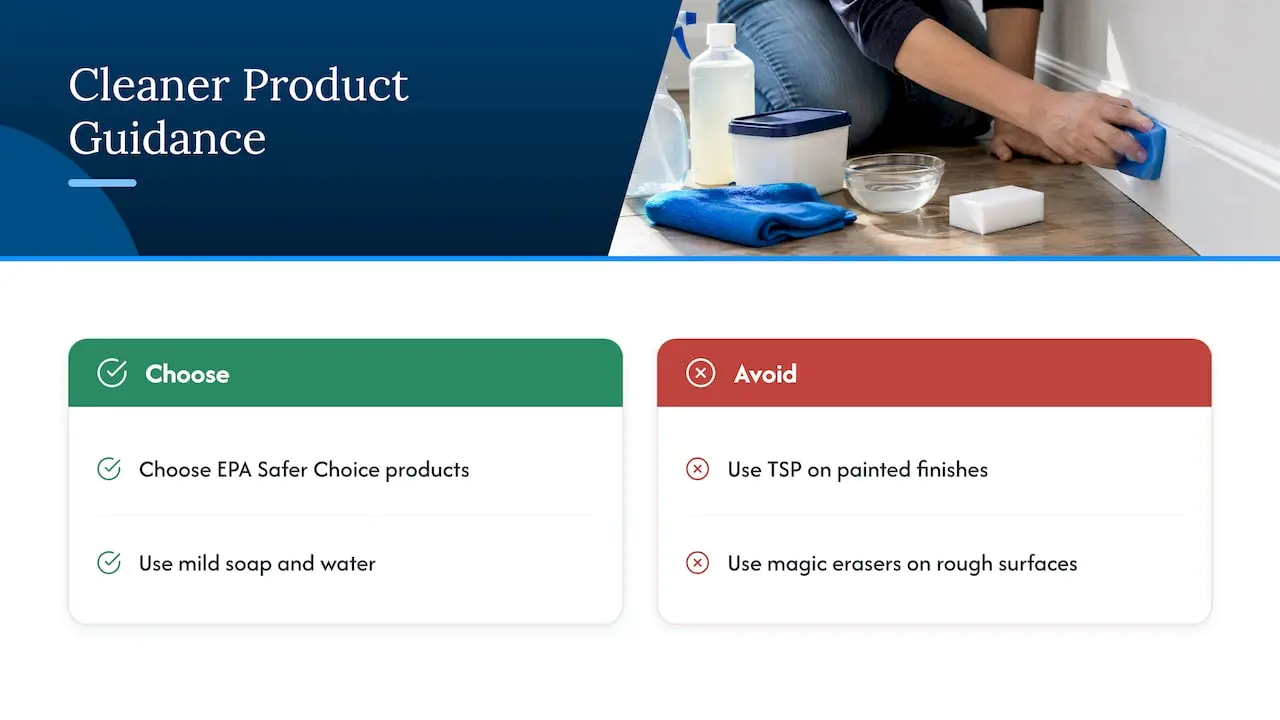
Magic eraser sponges lift scuffs, but Consumer Reports warns they take effort, tear easily on rough or very dirty surfaces, and clog quickly with dust and pet hair. Harsh degreasers such as TSP can strip paint finishes over time. For pet households and families, the EPA points to products carrying the Safer Choice label, and its indoor air guidance recommends mild soap and water as a less toxic option.
Our perspective on baseboards
We hear the same thing from busy households across DC, Maryland and Virginia: the kitchen and bathrooms look great after a visit, but the baseboards are still gray. Usually that isn’t a mistake. It is a scope mismatch. The homeowner assumed baseboards were part of every clean, and the booking was for a routine one.
Our advice is simple. Decide what you want before you book, not after. If your trim hasn’t been wiped in a long time, start with a deep clean so the dirt isn’t just pushed around. Then keep up with recurring standard visits. We also build our approach around eco-friendly products that are safe for families and pets, which suits baseboards well because a damp cloth and mild cleaner do most of the work.
For tenants, baseboards are one of the places a landlord looks at the final walkthrough. If a deposit is at stake, the move-out cleaning checklist shows what to cover, and our page on security deposit cleaning explains the timing.
— Local
How to make sure baseboards get cleaned when you book
A few small habits prevent disappointment.
- Name them. Put “baseboards” in your booking notes rather than assuming. If the visit is a routine clean, ask whether they can be included or added.
- Ask for the checklist. Compare it with our standard cleaning checklist so you know what a routine visit covers.
- Mention pets. Fur along the trim changes how long the job takes.
- Flag problem spots. Scuffs, paint chips and old stains are worth pointing out up front. Paint damage is a repair job, not a cleaning job.
- Time it to a reset. Spring is a natural moment for it, and our spring cleaning checklist places baseboards in a broader plan.
If dust keeps coming back even after baseboards are clean, the cause may be your air system. Our HVAC-first checklist for reducing dust walks through what to check.
Book a clean that includes baseboards
Pure Homes Cleaning offers standard cleaning, deep cleaning, and move-in and move-out cleaning for homes and apartments in Washington, DC, Virginia and Maryland. Our staff are trained and insured, and we use eco-friendly products that are safe for families and pets. You can compare options on our standard and deep cleaning page. If you are moving, book a move-in or move-out clean online and note the baseboards in your request.
Frequently asked questions
Are baseboards included in a regular house cleaning?
Sometimes, and often only lightly. Routine visits focus on kitchens, bathrooms, floors and surfaces, so baseboards may get a quick dusting or be left for a deep clean. Ask for the visit’s checklist, or request baseboards as an add-on.
Do cleaners clean baseboards during a move-out clean?
Usually, yes. Baseboards are one of the details that separate a move-out clean from a routine one, because the home needs to look ready for the next occupant. Confirm it in your booking so it appears on the scope.
Can I use dish soap on baseboards?
In most cases, yes. A few drops of mild dish soap in warm water on a barely damp microfiber cloth is a common recommendation, including in the EPA’s advice to use mild soap and water. Dry the surface afterward and test a small hidden spot first on delicate or unusual finishes.
How often should baseboards be cleaned if I have a dog or cat?
At least twice a month, according to Home Depot’s guidance, because pet hair and skin oils collect quickly along the trim. A quick vacuum pass between professional visits keeps the buildup manageable.
Sources
- Dyson: most neglected spots during a deep clean
- Consumer Reports: the best tool for cleaning your baseboards
- The Home Depot: how to clean baseboards
- Washington State Department of Health: safe cleaning practices
- South Dakota State University extension fact sheet on cleaning walls
- Angi: 9 baseboard cleaning tips
- EPA Safer Choice products
- EPA: improving your indoor environment