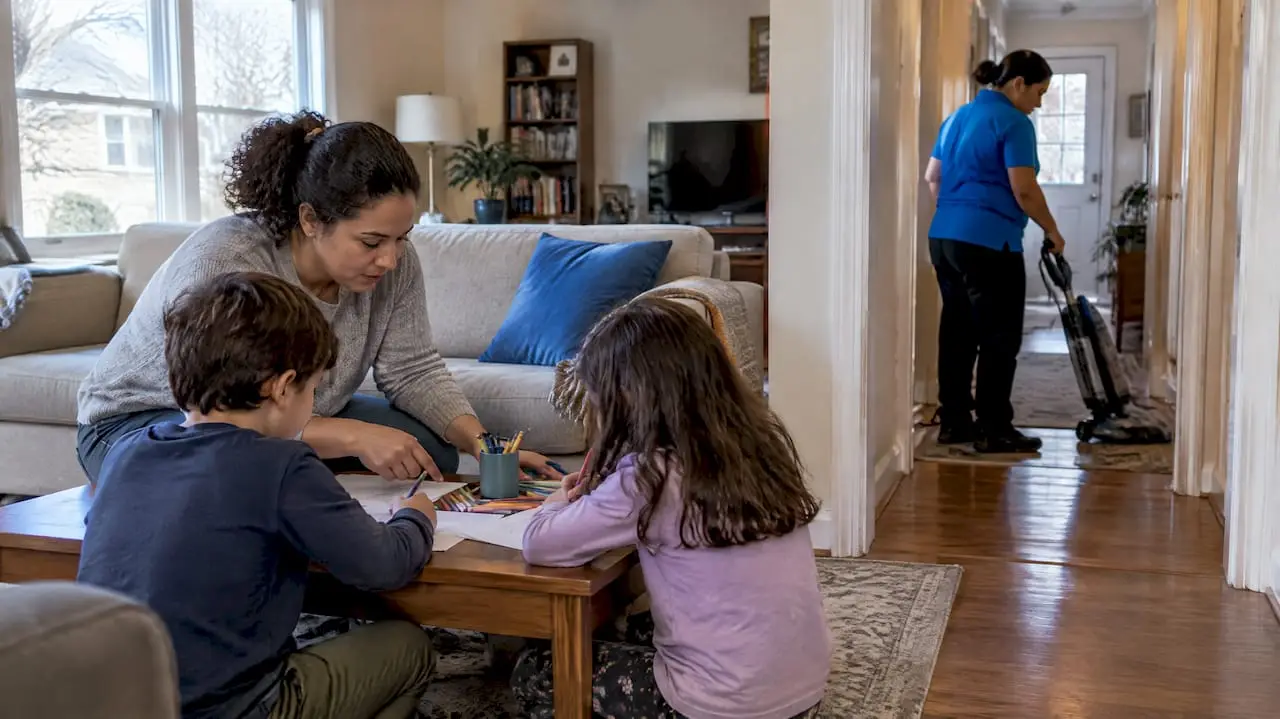
The safer choice is to take your kids out during the visit and keep them away from cleaning products while they are in use. Either way, keep every cleaning product and detergent pod locked up or out of reach, and open windows to ventilate. Below you will find activity ideas, safety steps, a quick prep checklist, and age-specific tips.
TL;DR:
- For children with asthma or severe allergies, schedule visits during school or daycare, especially when deep cleaning may stir up dust.
- Before cleaners arrive, create a closed safe zone, put away medicines, sprays, pods, and small toys, and tell cleaners which rooms are off limits.
- For screen time, choose short content, set a timer, and join your child briefly; use media as a transition tool, not the default activity.
- Toddlers need activities within sight, while children with ADHD benefit from visible timers, simple charts, and tasks broken into specific small steps.
- Older children can sort toys, match socks, or stack books in a safe zone, but must avoid rooms during chemical use or deep cleaning.
Table of Contents
- 1. Activities that keep kids busy while cleaners work
- 2. How to keep kids safe from fumes, products, and dust
- 3. Your 10-20 minute prep checklist
- 4. Age-tailored ideas for toddlers, preschoolers, and school-age kids
- 5. Short chores that turn cleaning day into learning
- 6. A calm cleaning day routine worth copying
- 7. Prefer not to juggle kids and cleaning? We can help
- FAQ
- Sources
1. Activities that keep kids busy while cleaners work
You do not need an elaborate plan. Pick one option that matches your energy and the length of the visit.
- Outdoor quick wins: a park trip, backyard play, or a short nature walk. These burn energy and keep kids far from cleaning products.
- Independent indoor setups: a play tent, a sensory bin, or a puzzle table in one closed room, with a timer so the child knows when the stretch ends.
- Screens with rules: use the 5 C’s of media guidance: choose specific short content, set a timer, and sit with your child for the first few minutes. The AAP says media can be a transition tool but should not be the default answer to boredom.
- Short local outings: the library, a play café, or quick errands timed to the cleaning window.
- A prepacked “cleaning day” bag: snacks, wipes, spare clothes, and one small toy, so you can leave without a scramble.
Pro Tip: Keep the cleaning day bag by the door all week, so a last-minute exit never turns into a scramble.
Child Mind Institute experts suggest treating professional cleaning as a partnership: prepare structured activities or screen-free zones ahead of time rather than trying to manage the cleaning itself.
2. How to keep kids safe from fumes, products, and dust
Cleaning stirs up more than dirt, so a few steps protect small lungs and curious hands; using a low-dust door replacement process can help minimize dust during home projects.
- Ventilate: open windows before, during, and right after cleaning, run exhaust fans, and use a portable fan to push air outside. The EPA says increasing ventilation helps replace indoor air with outdoor air.
- Keep kids away from products in use: the EPA warns that chemical irritants in cleaners may trigger asthma, and advises keeping children away while they are used.
- Check how supplies are handled: concentrated sprays should stay on the cleaner’s person or in a secured cart, never left unattended, even when eco-friendly.
- Lock up pods and detergents: laundry packets are concentrated and dangerous, so keep them in their original containers out of reach.
- Schedule around school: if your child has asthma or severe allergies, book visits while they are at school or daycare. Our guide to cleaning with asthma covers this in more depth.
The CDC recommends adequate ventilation, no mixing of chemical products, and storing chemicals out of reach of children and pets. For dust, HealthyChildren.org advises ventilating before and after cleaning and doing vacuuming and mopping while children are out when possible.
3. Your 10-20 minute prep checklist
Run through these steps before the cleaners arrive. Our room-by-room prep checklist goes deeper.
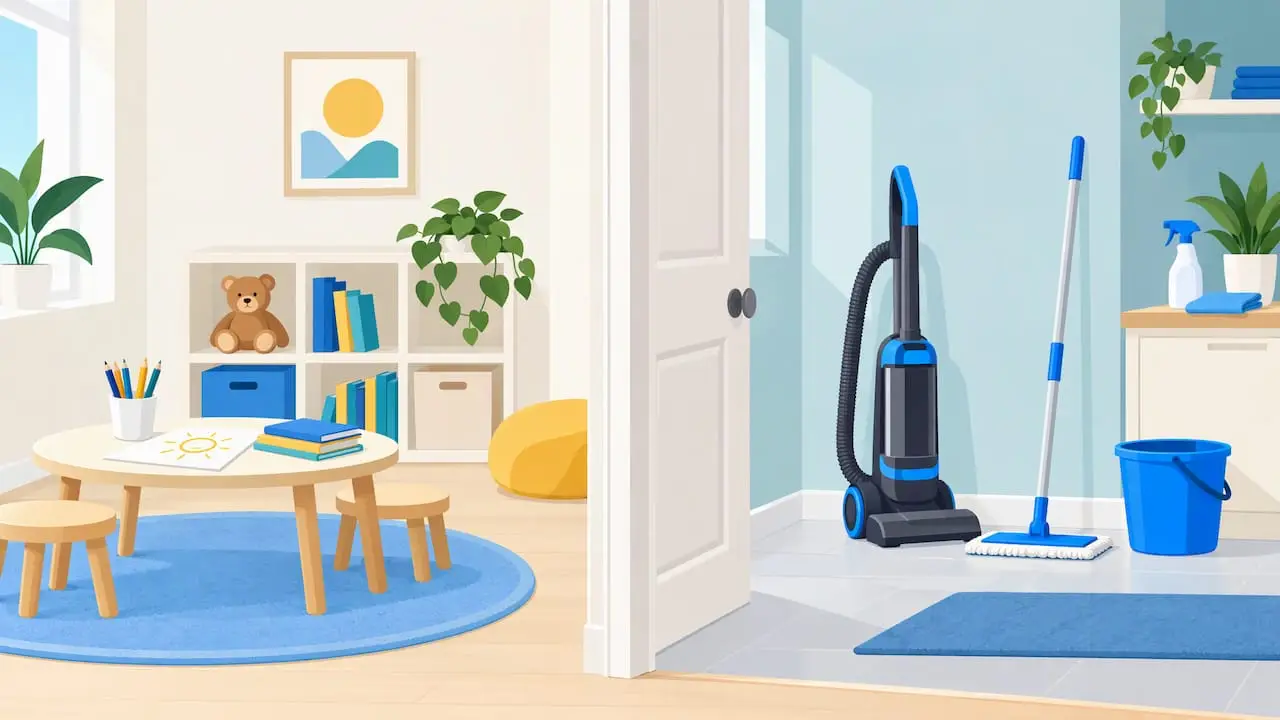
- Pick one safe zone with toys and snacks, and close its door.
- Put away medicines, sprays, detergent pods, and small toys.
- Tell the cleaners which rooms are off limits and share any special instructions in advance.
- Pack an outing bag if you plan to leave with the kids.
- Open a few windows and confirm the exhaust fans work.
Pro Tip: Do the toy sweep with your kids as a two-minute race. They can help tidy, and fewer small items may end up underfoot.
4. Age-tailored ideas for toddlers, preschoolers, and school-age kids
Match the activity to your child’s attention span, and plan activities to suit the length of the visit.
- Toddlers: a supervised sensory bin, a play mat in the safe zone, or a quick stroller outing. Stay within sight at all times.
- Preschoolers: contained crafts, sticker or activity sheets, and a cozy reading nook they can use on their own.
- School-age kids: building kits, puzzles, or a short chore mission with a small reward at the end.
- Kids with ADHD: use micro-steps, a simple chart, and a visible timer. Child Mind Institute recommends breaking a big task into very specific small steps to build success.
- Timing: rotate two or three short activities rather than one long one, so interest does not run out halfway.
5. Short chores that turn cleaning day into learning
Older kids can help, as long as they stay away from active cleaning and any products.
- Pick safe, single-step jobs: sorting toys by bin, matching socks, or stacking books, all in the safe zone.
- Praise right away: a chart sticker or small reward reinforces the habit. Chores build life skills, responsibility, and confidence.
- Shrink big jobs: “clean your room” becomes “put books on the shelf,” then “clothes in the hamper.”
- Know when to skip it: keep kids out of the room during chemical use or deep-clean work.
Pro Tip: Give one job at a time and name the finish line (“when all the blue blocks are in the bin”), so kids know exactly when they are done.
6. A calm cleaning day routine worth copying
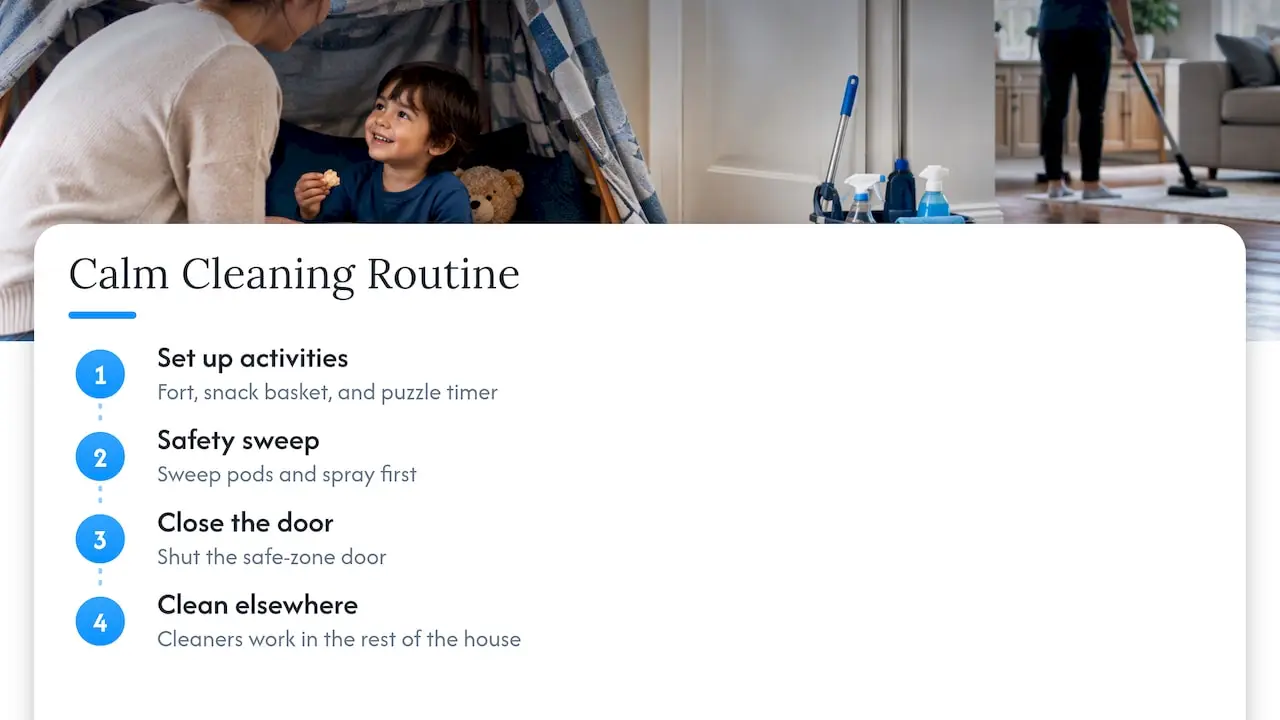
A calm cleaning day starts with a plan before the doorbell rings. A parent sets up a sleeping bag fort in a back bedroom, stocks a snack basket, and starts a puzzle timer. The cleaners work in the rest of the house, and nobody feels shuffled around.
The one step to copy: do the pod and spray sweep first, then close the door on the safe zone. It is a quick way to cover your safety checklist.
— Local
7. Prefer not to juggle kids and cleaning? We can help
If managing little ones on cleaning day sounds exhausting, let us plan around your family’s routine. We can schedule your visit during school or daycare hours, so your kids are out while we work. Our team uses eco-friendly products, and our booking is flexible for recurring or one-time visits. Ask us about kid-safe cleaning practices when you book.
Explore our standard and deep cleaning services, or book a time that fits your child’s schedule.
FAQ
How does a messy house affect a child?
Household chaos, meaning clutter, unpredictable routines, and constant noise, is linked to weaker behavior regulation and thinking skills in children. A meta-analysis found it is significantly associated with child executive functioning. Consistent routines help reduce the effect.
How do you entertain kids while cleaners work?
Keep it simple: head outside, set up one closed play room, or plan a short local outing. Offer a few short activities rather than one long one. Screens can work as a bridge if you set a timer and choose the content.
How can you keep a house clean when you have kids?
Break the work into small, manageable pieces and give kids age-appropriate jobs. Child Mind Institute notes that smaller tasks reduce the burden on parents. Predictable routines help the whole household.
Is it safe for kids to be home during a professional cleaning?
Keep children away from cleaning products while they are in use. If possible, have them out of the home during cleaning, and ventilate the area. When possible, schedule visits while kids are out, especially for deep cleaning that stirs up dust.
Sources
- Pubmed
- Asthma Triggers: Gain Control | US EPA
- Cleaning and Disinfection for Households | CDC
- Healthychildren