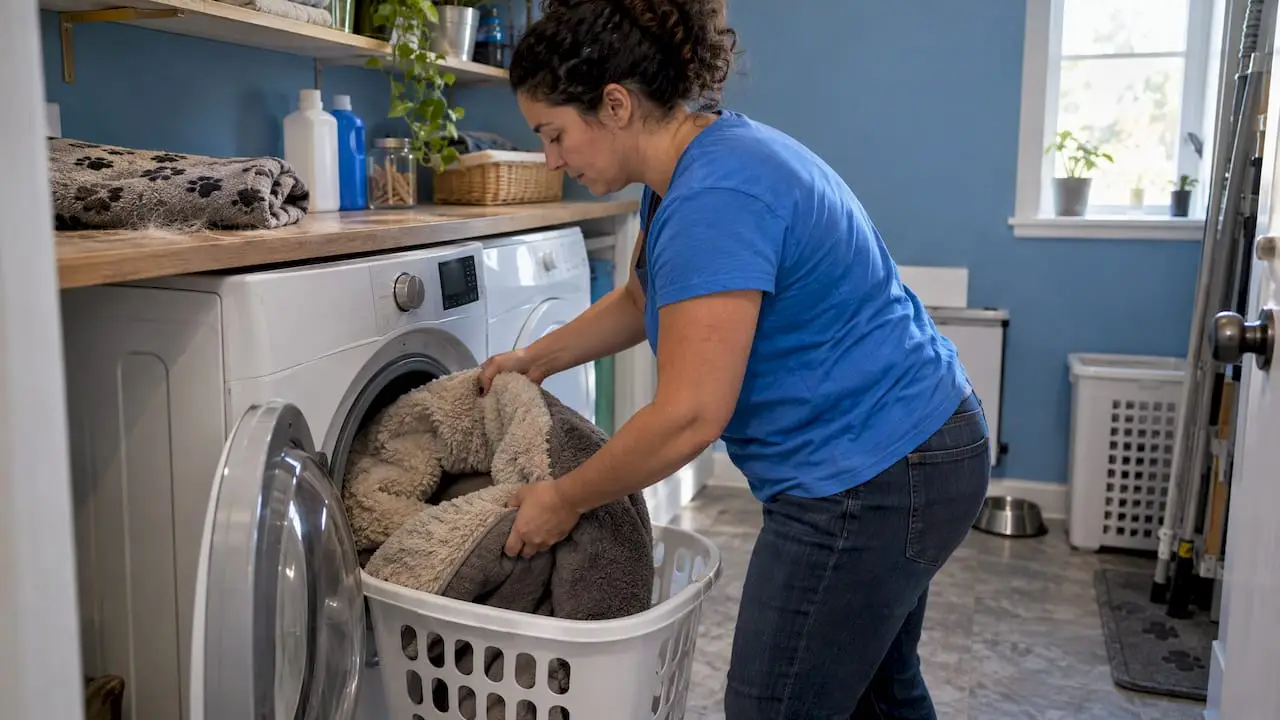
The three moves that cut pet allergens fastest are keeping your bedroom pet-free, running a properly sized HEPA air purifier where you sleep, and deep-cleaning soft surfaces like bedding, rugs, and upholstery. The EPA and allied research point to source control first, filtration second, and cleaning as the ongoing third layer. None of this works overnight: allergens linger in a home for weeks or months, so expect steady improvement, not instant relief.
TL;DR:
- Effective allergen reduction depends on combining pet exclusion, high-quality HEPA filtration, and frequent cleaning rather than relying on a single method.
- A true HEPA filter must be properly sized for the room and run at least four hours daily to achieve significant airborne allergen reduction.
- Carpets and rugs are the worst surfaces for allergen buildup and require vacuuming twice weekly and deep cleaning every few months for best results.
- Professional deep cleaning using pet-safe, eco-friendly products can significantly lower embedded allergens in carpets, upholstery, and vents, especially when residues persist after routine cleaning.
- Managing pet allergies effectively requires patience, consistent routines, and prioritizing the bedroom for source control and filtration efforts.
Table of Contents
- Your daily, weekly, and urgent cleaning checklist
- Room-by-room priorities for cutting pet allergens
- Choosing and running air filtration that actually helps
- How to vacuum and launder without spreading allergens
- Grooming and handling habits that cut dander at the source
- A cleaning schedule you can actually stick to
- What professional cleaning adds to allergy control
- What the research gets right, and where advice oversimplifies
- Book a deep clean built around allergy relief
- FAQ
- Sources
Your daily, weekly, and urgent cleaning checklist
Allergen control works best as a layered habit, not a one-time scrub. Start with these actions, then build the deeper routine around them.
- Daily: run your bedroom HEPA purifier continuously, wipe high-touch surfaces like doorknobs and remotes, and shake washable rugs outdoors.
- Weekly: wash sheets, pillowcases, and pet bedding in hot water, vacuum upholstery and rugs thoroughly, and bathe or wipe down your pet as your veterinarian recommends.
- Urgent, if symptoms are significant: make the bedroom fully pet-free and add mattress and pillow encasements right away.
Our guide to a realistic daily routine with pets breaks this down further for households juggling work and family schedules.
Room-by-room priorities for cutting pet allergens
Not every room needs the same level of effort. Put your energy where allergens concentrate and where you spend the most time.
- Bedroom: add mattress and pillow encasements, wash all bedding weekly, swap wall-to-wall carpet for washable rugs if possible, and run your purifier nightly.
- Living room: choose washable slipcovers over fixed upholstery, steam-clean or launder removable covers monthly, and keep throw pillows and fabric clutter to a minimum.
- Carpets and rugs: vacuum at least twice a week, schedule a deep steam clean every few months, and consider hard flooring in high-traffic pet areas if allergies are severe.
- Curtains and blinds: wash fabric curtains monthly or switch to blinds, which you can wipe down instead of laundering.
- Pet zones: wash pet bedding weekly, store toys in washable bins instead of open baskets, and clear clutter where dander collects.
Carpets hold allergens longer than any other surface in the home, which is why vacuuming frequency and periodic deep cleaning matter more there than almost anywhere else.
Choosing and running air filtration that actually helps
A “true HEPA” filter captures 99.97% of particles down to 0.3 microns, the standard that makes it effective against pet dander, while “HEPA-type” filters are not held to that benchmark and perform noticeably worse, according to American Lung Association guidance.
Most homes see measurable airborne allergen reduction when a properly sized purifier runs several hours a day in occupied rooms, according to CARB. according to CARB
- Size your unit to the room using its CADR rating, and run it at least four hours a day in the bedroom.
- Look for CARB-certified units to avoid ozone-generating models, which can irritate airways instead of helping.
- If your HVAC system allows it, upgrade to a MERV 12 or higher filter and replace it on schedule, or look for filters certified under the Asthma and Allergy Friendly program.
- Treat filtration as one layer among several. It supports source control and ventilation, it does not replace keeping pets out of key rooms.
How to vacuum and launder without spreading allergens
Vacuuming decreases mite and pet allergen levels in house dust over time, but research on high-efficiency vacuums shows it can temporarily stir allergens into the air during the cleaning itself. The fix is straightforward: have the allergic person leave the room while vacuuming and let the air settle for 20 to 30 minutes afterward.
- Use a sealed-system vacuum with a true HEPA filter, since EPA-cited research found that HEPA and micro-filter vacuums reduced overall allergen levels more than standard models after weeks of consistent use.
- Bagged vacuums generally contain dust better at disposal time than bagless models, which release a cloud when emptied.
- Wash bedding, sleepwear, and pet bedding weekly in the hottest water the fabric allows, following the care label.
- Skip one-time chemical carpet treatments like tannic acid sprays. They offer only short-term reductions and don’t substitute for regular vacuuming or periodic steam cleaning.
Pro Tip: Replace or clean your vacuum’s HEPA filter on the manufacturer’s schedule. A clogged filter stops trapping allergens and starts recirculating them.
Our breakdown of HEPA vacuum benefits covers what separates a true HEPA machine from a marketing label.
Grooming and handling habits that cut dander at the source
What you do with your pet directly affects how much dander, saliva, and urine residue ends up on your soft surfaces. Small handling changes add up.
- Bathe or wipe your pet weekly with a vet-approved, pet-safe product. Ask your veterinarian which option suits your pet’s skin and coat.
- Brush your pet outdoors whenever possible, and let a non-allergic household member handle grooming if symptoms are an issue.
- Wash your hands and change clothes after close contact with your pet, and keep pets off the allergic person’s bed entirely.
- Wipe your pet down after outdoor walks to remove pollen and residue before it transfers to furniture and bedding.
See our guide on pet-safe cleaning products for options that won’t irritate your pet’s skin or your own airways.
A cleaning schedule you can actually stick to
Turning all of this into a routine is what makes it sustainable. Spread the work across daily, weekly, and monthly blocks instead of trying to do everything at once.
- Daily: run the purifier, wipe high-touch surfaces, and limit pet access to the bedroom.
- Weekly: wash bedding and pet items, vacuum carpets and upholstery, and bathe or wipe your pet.
- Monthly: replace HVAC filters, deep-clean carpets and rugs, and check your purifier’s filter status.
- When to escalate: if symptoms persist despite a consistent routine, talk to an allergist about testing, or book a professional deep clean to reach embedded allergens.
Our daily routine guide for pet owners lays out a version of this schedule you can adapt to your own week.
What professional cleaning adds to allergy control
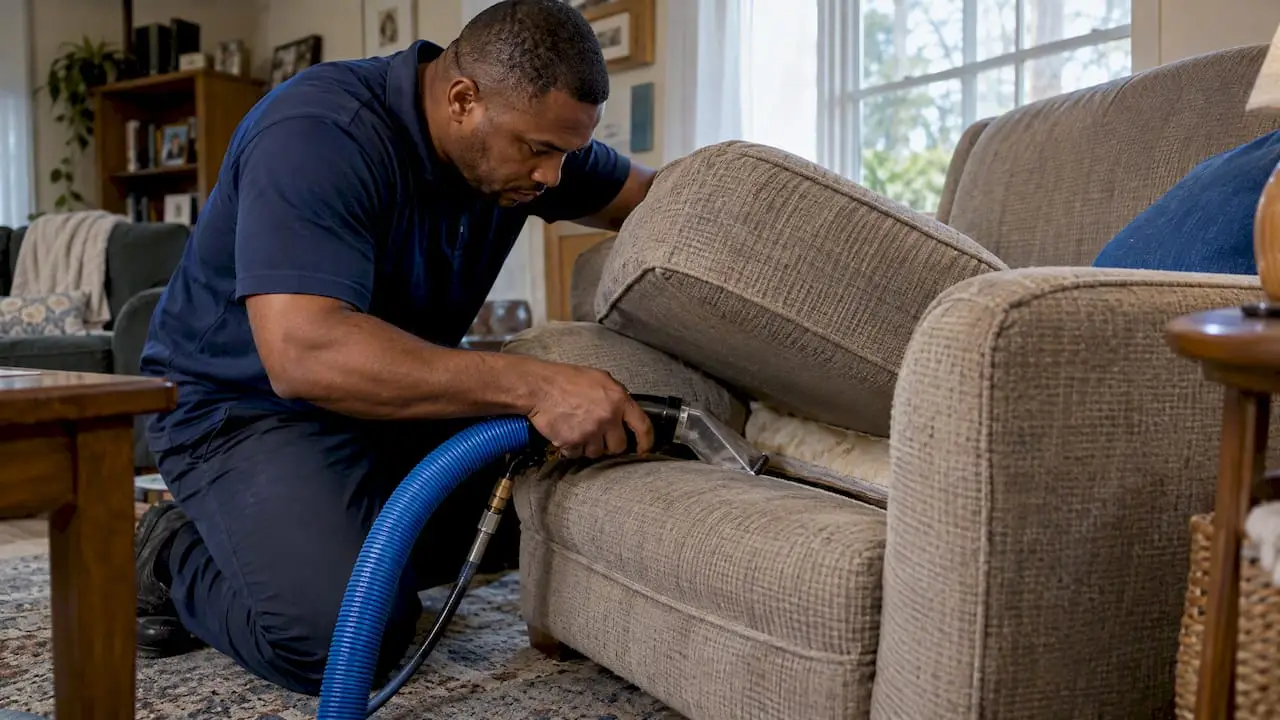
Routine upkeep handles surface-level dander, but embedded allergens in carpet fibers and upholstery padding often need more than a household vacuum. Professional deep cleaning and steam cleaning reach fibers and seams that daily cleaning misses, using pet-safe, eco-friendly products that won’t add new irritants to the air.
What the research gets right, and where advice oversimplifies
The strongest evidence here points in one clear direction: no single action solves pet allergies on its own. Pet exclusion from the bedroom, true HEPA filtration, and frequent washing of soft surfaces work because they attack the problem from three different angles at once, and dropping any one of them weakens the other two.
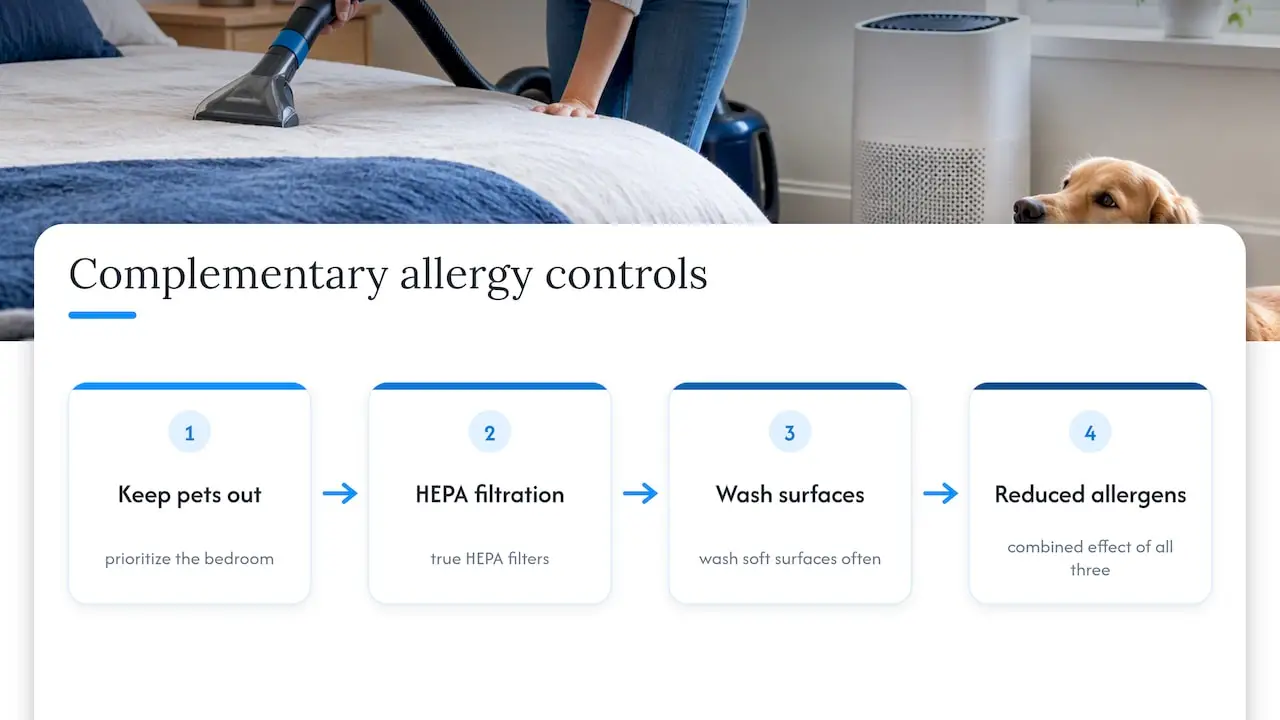
Where a lot of consumer advice falls short is treating air purifiers as a fix rather than a supplement. A purifier running in an empty living room while the pet sleeps on the allergic person’s bed accomplishes very little. Source control has to come first, and most people get this backward because filtration is the easiest purchase to make.
The other overlooked point is patience. Dander does not disappear in a week, and even after a pet leaves a home, residue can persist for months. If you are managing allergies while keeping your pet, prioritize the bedroom above every other room, then build outward with professional pest removal in Colorado Springs services that also help reduce indoor allergens. That single decision does more than any product you could buy.
— Local
Book a deep clean built around allergy relief
For the deep, periodic work that a weekly vacuum can’t fully replace, booking a professional deep cleaning covers the embedded dander in carpets, upholstery, and vents that routine cleaning tends to miss. We use eco-friendly, pet-safe products during appointments to help avoid introducing new irritants while removing old ones.

When you book, ask about:
- Thorough vacuuming of carpets, rugs, and upholstery with HEPA-capable equipment.
- Steam cleaning for fabric surfaces where dander settles deepest.
- Pet-safe, eco-friendly products throughout the home, including high-touch surfaces.
If you’re moving into or out of a home with a prior pet owner’s dander still embedded in the carpets, our move-in and move-out cleaning service is worth considering as a reset point. Not sure which service fits your situation? Our comparison of standard versus deep cleaning can help you decide, and you can check availability and book online whenever you’re ready.
This article is general information, not a substitute for advice from a qualified doctor. Consult a qualified healthcare professional about your own circumstances before acting on anything here.
FAQ
How can you live with a pet and still manage allergies?
Keep the pet out of the bedroom, run a true HEPA purifier where you sleep, and stick to a weekly washing and vacuuming routine for bedding and soft surfaces. Combining these three layers works better than relying on any single step, according to multi-layered allergen control research.
How long does pet dander stay in a home after the pet is gone?
Residual dander can take several months to fully clear from a home without intensive cleaning, according to allergist guidance compiled by AAFA. Professional deep cleaning of carpets and upholstery can speed up that timeline.
Can you get tested to confirm a pet allergy?
Yes, allergists use skin-prick or blood tests to confirm a pet allergy and identify which specific allergen, such as dander, saliva, or urine proteins, is triggering symptoms. Testing also helps rule out other causes like dust mites or seasonal pollen that can produce similar symptoms.
Why do some people react to dog saliva specifically?
Saliva allergies happen when proteins in a dog’s saliva trigger an immune response, often showing up as skin irritation after licking or respiratory symptoms after contact with saliva-coated fur. Washing hands after contact and keeping dogs from licking the face can reduce exposure.
Sources
- Allergy / asthma guidance (PMC5763515)
- California Air Resources Board — Air cleaner information for consumers
- Vacuum cleaning decreases the levels of mite allergens in house dust (EPA/HERO reference)
- High-efficiency vacuum cleaners increase personal cat allergen exposure in homes with cats (PubMed)
- American Lung Association — Air cleaning guidance