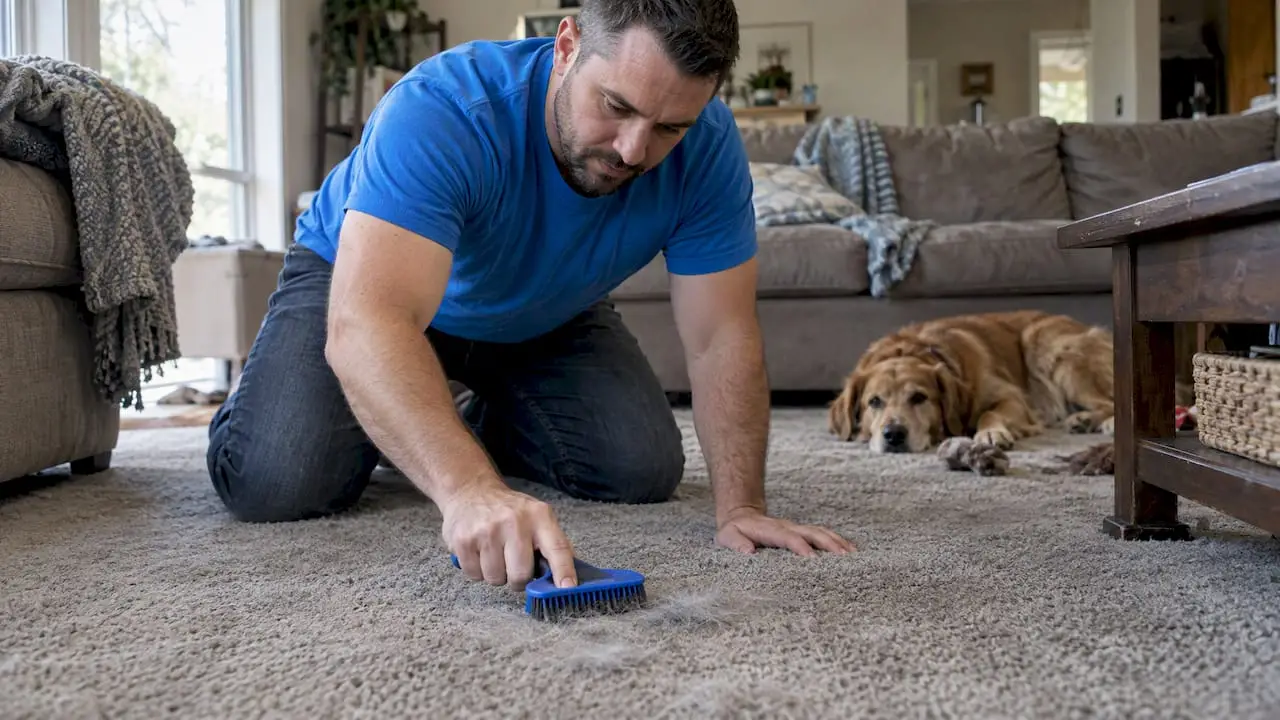
Control pet hair by combining regular grooming, surface-specific tools, and HEPA-grade vacuuming. Grooming guidance from the ASPCA and cleaning guidance from the CDC both point to the same conclusion: this mix removes most loose and embedded hair and cuts allergens. It will not eliminate pet hair completely, but it keeps a home manageable between deep cleans.
TL;DR:
- Regular grooming, especially daily brushing for long-haired pets, significantly reduces the amount of loose hair that reaches furniture and fabrics.
- Using a sequence of loosening with rubber brushes or lifters followed by vacuuming ensures more effective removal of embedded pet hair on upholstery and carpets.
- HEPA-grade vacuum filters and air purifiers are essential for allergy-sensitive homes because they capture airborne dander more effectively than standard filters.
- Deep cleaning of carpets and upholstery should include pre-lifting with rubber tools and careful, slow vacuuming to prevent reembedding hair into fibers.
- Routine laundry with dryer sheets and proper cleaning of pet bedding on hot settings help keep pet hair out of clothing and reduce household dander buildup.
Table of Contents
- Quick toolkit: the right method for each surface
- Upholstery and soft furnishings: safe removal steps
- Carpet and rugs: extracting embedded hair safely
- Clothing and laundry: getting pet hair out of wearables and fabrics
- Grooming and prevention routines that reduce household hair
- Tools and techniques explained: vacuums, rollers, and detailer tricks
- Air, dander, and allergy control: filtration and housewide strategies
- When to hire a pro for embedded pet hair
- What pet owners get wrong about hair removal
- A done-for-you option for pet-hair-heavy homes
- Sources
- FAQ
Quick toolkit: the right method for each surface
Matching the tool to the surface saves time and protects your fabrics. A rubber-toothed carpet tool effective on rugs can snag delicate fabrics such as silk cushions, so it helps to know the pairing before you start.
- Upholstery and pillows: rubber brush or ChomChom-style roller first, then a vacuum with an upholstery attachment.
- Carpet and rugs: rubber lifter or pumice stone to loosen, followed by slow, criss-cross vacuum passes.
- Hard floors: a microfiber dust mop or rubber-bladed squeegee that pulls hair into clumps instead of scattering it.
- Clothing: dryer on low heat with a dryer sheet, or a lint roller for a quick fix before leaving the house.
- Car interiors: a stiff detailing brush to break the static bond before vacuuming.
Grooming and laundry round out the toolkit since they reduce how much hair reaches your furniture in the first place. A standard HEPA vacuum and a reusable lint roller cover most daily needs, while mechanical lifters handle the hair that has worked its way into fibers.
Upholstery and soft furnishings: safe removal steps
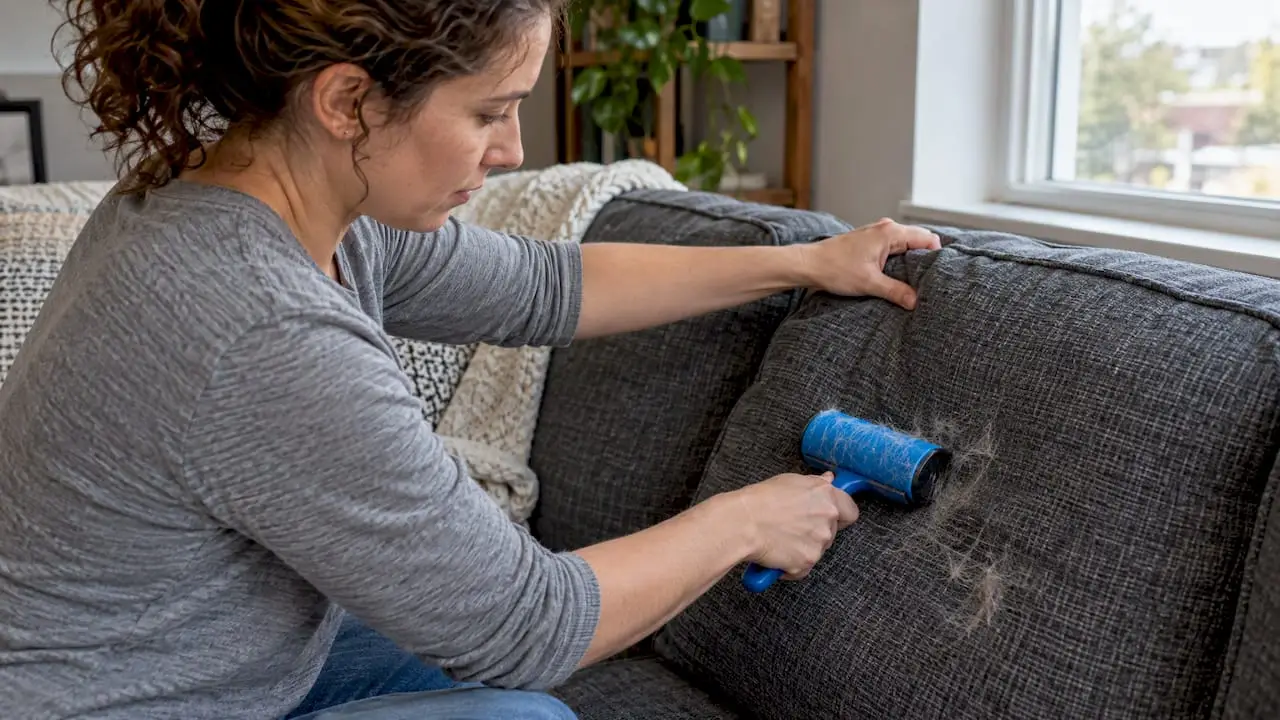
Embedded pet hair on couches, pillows, and curtains needs a sequence, not a single pass. Testing from Consumer Reports found that reusable rubber rollers and specialized brushes consistently outperform disposable lint sheets on larger upholstered surfaces.
- Loosen the hair with a rubber brush or grooming glove, working in one direction to break static bonds.
- Collect the loosened hair with a roller or rubber squeegee, pulling it into a manageable pile.
- Finish with a vacuum upholstery attachment to pull out what the roller missed.
- Remove and launder any covers that allow machine washing, using a dryer sheet in the cycle to help loosen remaining strands.
Test delicate fabrics like silk or linen in a hidden spot before using metal-toothed tools, since Consumer Reports testing shows those tools can snag loosely woven material even as they pull embedded hair from sturdier fabrics.
Pro Tip: Hold the fabric taut with one hand while rolling with the other, and empty reusable rubber collectors after every few passes so they keep picking up hair instead of pushing it back in.
Carpet and rugs: extracting embedded hair safely
Hair that has worked its way into carpet fibers rarely comes out with vacuuming alone. A rubber lifter or pumice stone run across the pile first breaks the static grip, and the loosened hair then lifts far more easily.
- Pre-lift with a rubber or pumice tool before vacuuming, especially in high-traffic spots near pet beds.
- Vacuum in slow, overlapping criss-cross passes rather than quick back-and-forth strokes, since speed reduces how much a vacuum’s suction can grab.
- Use a motorized or beater-bar attachment on thicker pile, and a flat suction tool on flatweave rugs to avoid fraying.
- Take small rugs outside and shake or beat them when weather allows, which clears hair that vacuuming alone leaves behind.
- Call a professional cleaner when hair reappears within days of vacuuming, since that usually means it is bonded deep in the padding rather than sitting on the surface.
Clothing and laundry: getting pet hair out of wearables and fabrics
Laundry handles most clothing and bedding, but the washer and dryer need help to actually remove the hair instead of just redistributing it.
- Run clothes through the dryer on low heat with a dryer sheet before washing, which loosens hair so the lint trap catches it instead of leaving it on the fabric.
- Check and clean the lint trap after every load involving pet hair, since a full trap stops catching what the dryer loosens.
- Wash pet beds and blankets separately on the hottest setting the fabric allows, following CDC guidance that cleaning with soap and water removes hair and dirt, while disinfecting is a separate step reserved for illness situations.
- Keep a lint roller or a damp rubber glove by the door for a fast fix on clothes right before you leave.
Grooming and prevention routines that reduce household hair
The ASPCA notes that regular grooming is the single most effective way to reduce how much hair ends up in your home, and the right frequency depends on coat type.
- Short-haired pets generally do well with regular brushing to catch loose hair before it sheds indoors.
- Long-haired or double-coated pets often need frequent brushing, with daily sessions common during seasonal shedding.
- A quick two-minute brush near the door, rather than a full grooming session, keeps loose hair from spreading through the house.
- Baths and trims can help manage shedding, but never shave a double-coated breed, since that coat regulates temperature and protects skin.
Pro Tip: Keep the brush in a spot you pass daily, like near the leash or food bowl, so grooming becomes a habit instead of a chore you put off.
Tools and techniques explained: vacuums, rollers, and detailer tricks
Suction alone often fails on embedded hair because static holds it against the fiber. Professional detailers rely on mechanical extraction first, using rubber brushes and pumice-style tools to break that bond before any vacuum touches the surface, a workflow described by TheDetailMaestro.
HEPA filtration matters most for allergy-sensitive households. HEPA filters capture particles at a far higher rate than standard vacuum filters, which is why the AAAAI recommends HEPA-grade equipment as one of the better tools for reducing airborne dander. Learn more about HEPA vacuum benefits for allergy-sensitive homes.
- Empty vacuum bins and clean brush rolls after each use so hair does not clog suction over time.
- Replace HEPA filters on the schedule the manufacturer lists, since a clogged filter loses its capture rate.
- Keep a rubber lifter, a reusable roller, and a HEPA vacuum as the core of a balanced kit, adding a squeegee for hard floors.
Air, dander, and allergy control: filtration and housewide strategies
No dog or cat breed is truly hypoallergenic, according to the AAAAI, since all animals produce proteins that can trigger reactions. Environmental controls do more than breed choice ever will.
- Keep pets out of bedrooms, since reducing dander in sleeping areas makes the biggest difference for allergy sufferers.
- Place a portable HEPA air purifier in the rooms where pets spend the most time.
- Replace HVAC filters on a regular schedule and choose a high-efficiency disposable filter rated for allergens, a point echoed in AlphaLux Cleaning’s guide to allergy-friendly cleaning.
- Try vacuuming, air purifiers, and filter changes before considering duct cleaning, which guidance on duct and allergen removal treats as a secondary step rather than a first-line fix.
When to hire a pro for embedded pet hair
DIY methods have limits. When hair keeps reappearing days after vacuuming, when someone in the household has allergy symptoms that persist despite filtration, or when you are preparing a home for move-out inspection, a professional visit saves time and often catches what home tools cannot.
- Professional cleaners use deep extraction equipment and upholstery-specific treatments that go beyond what a home vacuum can pull from padding.
- Pros can sanitize pet beds, crates, and other items following the safe practices the CDC outlines for pet supplies.
- Ask a cleaning company whether its equipment includes HEPA-grade filtration and whether products used are safe around pets before booking.
A professional cleaning service provides residential cleaning with trained, insured staff and eco-friendly products chosen to be safe for families and pets. Its services page outlines routine and deep cleaning options for homes dealing with heavy pet hair.
What pet owners get wrong about hair removal
Most advice on this topic treats pet hair as a single problem with a single gadget solution, usually whatever tool is trending. That framing misses the real pattern: hair behaves differently on upholstery, carpet, and fabric, and a tool built for one surface often disappoints on another. The reader who buys one miracle roller and expects it to fix every room is the reader who gives up on the whole routine within a month.
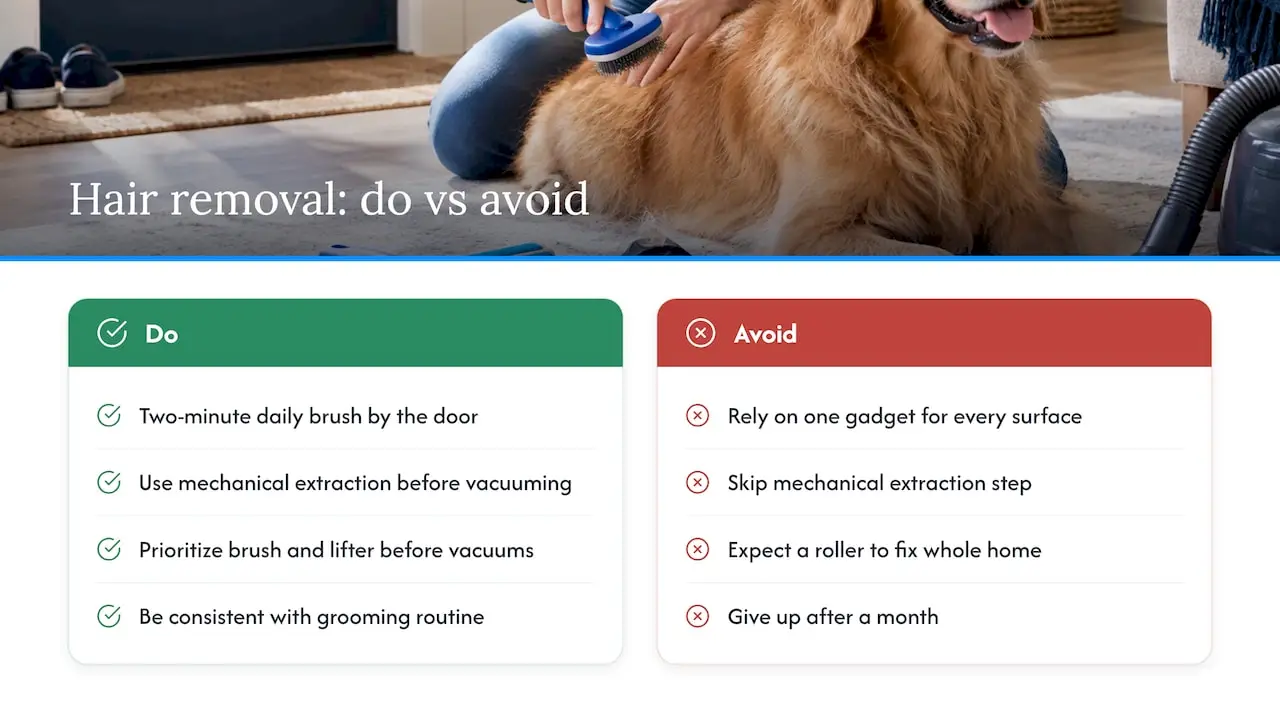
What actually works is less glamorous. Grooming consistency beats any single tool, because the hair you brush off a dog never reaches your couch at all. Mechanical extraction before vacuuming, the step detailers rely on, is the piece most home routines skip entirely, and it is usually the reason hair keeps coming back. Prioritize the brush and the lifter before you shop for a better vacuum.
If there is one habit worth building first, it is the two-minute daily brush near the door. Everything else, from rollers to HEPA filters, works better once that habit is in place.
— Local
A done-for-you option for pet-hair-heavy homes

Not every household has time to run the full sequence every week, and that is where a scheduled cleaning plan earns its keep. Pure Homes Cleaning builds Standard Cleaning and Deep Cleaning visits around real households, including the ones with shedding dogs and cats underfoot, using eco-friendly products that are safe for pets and kids alike.
- A pet-hair-focused visit typically includes upholstery attention, carpet extraction passes, and hard-floor detailing where hair collects most.
- Deep Cleaning works well for homes that have fallen behind on embedded hair, while Move In Clean and Move Out Clean handle turnover cleaning when hair has built up over a tenancy.
- Not sure which service fits? Compare Standard vs Deep Cleaning to see which matches your situation.
Check pricing and availability or book directly through Pure Homes Cleaning’s booking page to get a pet-hair-heavy home back under control.
Sources
Grooming guidance from the ASPCA, cleaning guidance from the CDC, allergy controls from the AAAAI, and product testing from Consumer Reports and Good Housekeeping informed the techniques and tool recommendations above.
- Dog grooming tips | ASPCA
- Pet allergy | AAAAI
- When and how to clean and disinfect | CDC
- Best pet hair remover tools | Consumer Reports
FAQ
What is the best way to remove pet hair from my house?
The most reliable approach combines regular grooming to cut shedding at the source, surface-specific tools like rubber brushes and rollers to loosen and collect hair, and a HEPA vacuum to finish the job. The ASPCA notes that grooming is the most effective single step, since it reduces the hair that reaches your furniture in the first place.
Do pet hair removal rollers actually work?
Yes, lab testing from Consumer Reports and Good Housekeeping found that reusable rubber rollers often outperform disposable lint sheets on upholstery and larger surfaces. They work best as part of a sequence that includes loosening the hair first and vacuuming afterward.
What do professional detailers use to remove pet hair?
Detailers typically use mechanical extraction tools like rubber brushes and pumice-style lifters before vacuuming, since suction alone often fails to pull hair that is bonded to fabric by static, according to TheDetailMaestro. That same sequence works on home upholstery and car interiors alike.
What is the most effective way to remove pet hair from the air?
A portable HEPA air purifier placed where pets spend the most time, combined with regular HVAC filter changes, is the approach the AAAAI recommends for reducing airborne dander. Duct cleaning is rarely the first step worth trying, since filtration and vacuuming address the problem more directly.
How often should I wash pet beds and blankets?
Pet bedding should be washed regularly, with hot water used when the fabric allows, following the laundering practices the CDC outlines for pet supplies. Cleaning with soap and water removes hair and dirt, while disinfecting is a separate step needed only when illness is present in the household.