A cleaning satisfaction guarantee is a written promise that the company will fix a covered problem, almost always by sending someone back to re-clean specific spots, with a refund only in limited cases. It only protects you if the terms spell out what’s covered, how fast you must report an issue, and what remedy you get. Before you book anything, get that scope and deadline in writing.
TL;DR:
- A cleaning guarantee typically covers missed spots or poor work against an explicit scope, with re-cleaning as the default remedy and refunds only in limited cases.
- Before booking, verify in writing the specific scope, notification deadline, remedy conditions, exclusions, cancellation policy, and claims process to ensure enforceability.
- Document issues immediately with photos, notes, and proof of payment, and contact the company within the required timeframe to begin resolution efforts.
- Holding onto all related documents, including emails, receipts, and photos with clear naming conventions, streamlines dispute resolution and potential refunds.
- Trustworthiness depends more on a company’s insurance, staff checks, and detailed operational standards than on vague promises or industry badges.
Table of Contents
- What Does a Cleaning Guarantee Actually Cover?
- What Terms and Deadlines Should You Verify Before Booking?
- How Do You Actually Claim a Cleaning Guarantee?
- What Documentation Should You Save?
- Guarantees, Refunds, and Reviews: What’s the Real Order of Operations?
- Do Certifications and Standards Make a Guarantee More Reliable?
- What Does a Guarantee Claim Actually Cost You (or Save You)?
- How Pure Homes Cleaning Handles Guarantees in Practice
- What to Ask Pure Homes Cleaning Before You Book
- Sources
- FAQ
- A Publisher’s Take on What Guarantees Actually Reward
What Does a Cleaning Guarantee Actually Cover?
Most guarantees cover the stuff a crew missed or did poorly against the agreed checklist: streaked windows, a bathroom that wasn’t actually scrubbed, dust left on baseboards, or a kitchen that skipped the inside of the microwave when that was part of the job. The FTC’s guidance on service contracts treats these promises like any other contract term: read the coverage and limitations before you assume anything is included.
What typically falls outside the guarantee:
- Stains or damage that existed before the cleaning crew arrived
- Specialized restoration work (grout resealing, upholstery deep-extraction, mold remediation)
- Damage caused by the customer’s own furniture, cleaning products, or fixtures
- Cosmetic wear that no amount of cleaning will fix, like worn grout lines or scratched flooring
Re-cleaning is the default remedy almost everywhere. A refund is the exception, usually reserved for cases where a re-clean isn’t practical or the company simply can’t come back in time.
What Terms and Deadlines Should You Verify Before Booking?
Get these six things in writing before you hand over a credit card:
- The exact scope: which rooms, which tasks, which items are excluded
- The notification window: how many hours you have to report a problem (24 to 72 hours is standard)
- The remedy: re-clean, and under what conditions a refund applies instead
- Exclusions: what’s specifically not covered, in plain language
- Cancellation terms: fees, notice period, rescheduling rules
- The claims procedure: who to contact, and what proof they’ll ask for
Watch for red flags. So is language that discourages or penalizes negative reviews. That kind of clause is not just a bad look. The Consumer Review Fairness Act makes it generally unenforceable for a business to bar or punish honest customer reviews through a form contract.
Ask for a certificate of insurance and the insurer’s name before you book, not after something breaks.
Pro Tip: Call the insurer’s number on the certificate, not the number the cleaning company gives you. A quick call confirming the policy is active takes two minutes and rules out a fake or expired document.
How Do You Actually Claim a Cleaning Guarantee?
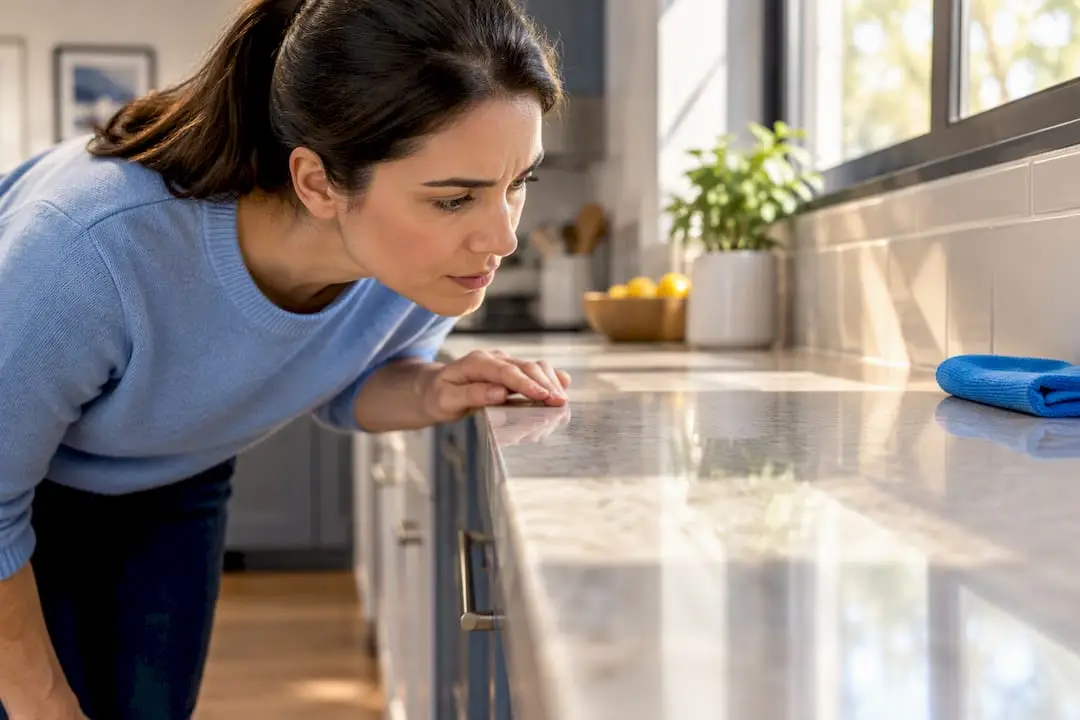
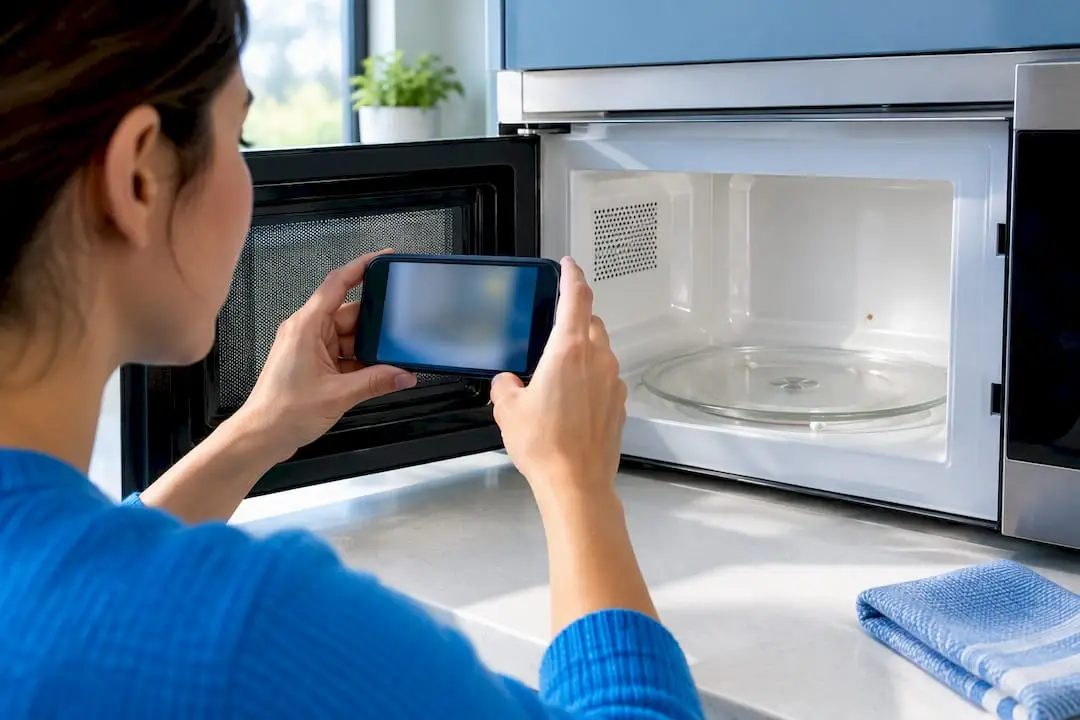
Step 1: Document the problem right away. Take photos of every missed spot the same day, ideally within an hour of the crew leaving. Jot a short note next to each photo describing what should have been done. Have your invoice or booking confirmation number ready.
Step 2: Contact the company through the channel it specified, and do it inside the notification window. Most guarantees require you to report within 24 to 72 hours. State exactly what you want: “Re-clean the kitchen and both bathrooms by [date]” is far more useful to the company than a general complaint.
Step 3: Escalate if nothing happens.
- Ask specifically to speak with a manager or supervisor, not the original booking agent
- File a complaint with your state consumer-protection office if the company stonewalls you
- Consider a credit-card dispute only after you’ve made a documented attempt to resolve it with the seller directly
Skipping straight to a chargeback without contacting the company first can backfire. Card issuers generally expect to see a seller-first attempt before they’ll reverse a charge.
What Documentation Should You Save?
Keep everything in one folder from the moment you book:
- The booking confirmation and the written scope or checklist
- The invoice and proof of payment
- Date-stamped photos taken immediately after the clean, before anyone touches anything
- Every email or text exchange with the company about the issue
Presentation matters almost as much as the evidence itself, and cleaning companies can improve their client trust by optimizing their online presence and communication as shown in cleaning service SEO strategies. A short, numbered list of exactly what was missed, attached to two or three annotated photos, with one clearly stated remedy request, gets resolved faster than a long email describing your frustration. The FTC’s advice on resolving business disputes recommends holding onto receipts, contracts, and correspondence specifically because this paper trail is what refunds, chargebacks, and state complaints all run on.
A simple naming convention helps too: save photos as something like “20260315-kitchen-missed-microwave.jpg” so a booking ID and date are obvious at a glance if you ever need to hand the file to a manager or a consumer office.
Guarantees, Refunds, and Reviews: What’s the Real Order of Operations?
Re-cleaning is the first and most common remedy across the industry. Refunds tend to be conditional, offered only when a re-clean isn’t feasible, so don’t assume cash back is the default outcome of a complaint.
Credit-card disputes run on a different clock than a company’s own guarantee. The CFPB notes that billing-error notices generally need to reach your card issuer within about 60 days of the statement showing the disputed charge, and issuers expect proof you tried resolving it with the merchant first.
Your right to leave an honest review sits separately from all of this. Businesses generally cannot use a contract clause to silence a truthful review, a protection reinforced by the FTC’s reviews and testimonials rule. If a company’s terms try to ban negative reviews, treat that as a red flag about how seriously they take their own guarantee.
Do Certifications and Standards Make a Guarantee More Reliable?
There’s no single government-run certification that stamps a cleaning guarantee as legitimate. What actually signals reliability is a cluster of operational habits, not a badge. Insurance and bonding are the closest thing to an industry standard: a company that can produce a real certificate of insurance, naming an actual insurer you can call, has cleared a bar that plenty of unlicensed operators skip.
Beyond insurance, look for companies that run background checks on staff and can describe their training process in specifics, not vague reassurances. A written, itemized checklist for each service type functions like an informal standard of its own. It gives both sides something concrete to measure the clean against, rather than leaving “satisfaction” to be argued about after the fact.
Trade groups exist in the cleaning industry, but membership varies widely in what it actually verifies. Treat any association badge as a starting point for questions, not proof on its own. Ask what the membership requires: insurance minimums, background checks, dispute resolution standards. A company that can answer specifically is telling you more than the badge itself does.
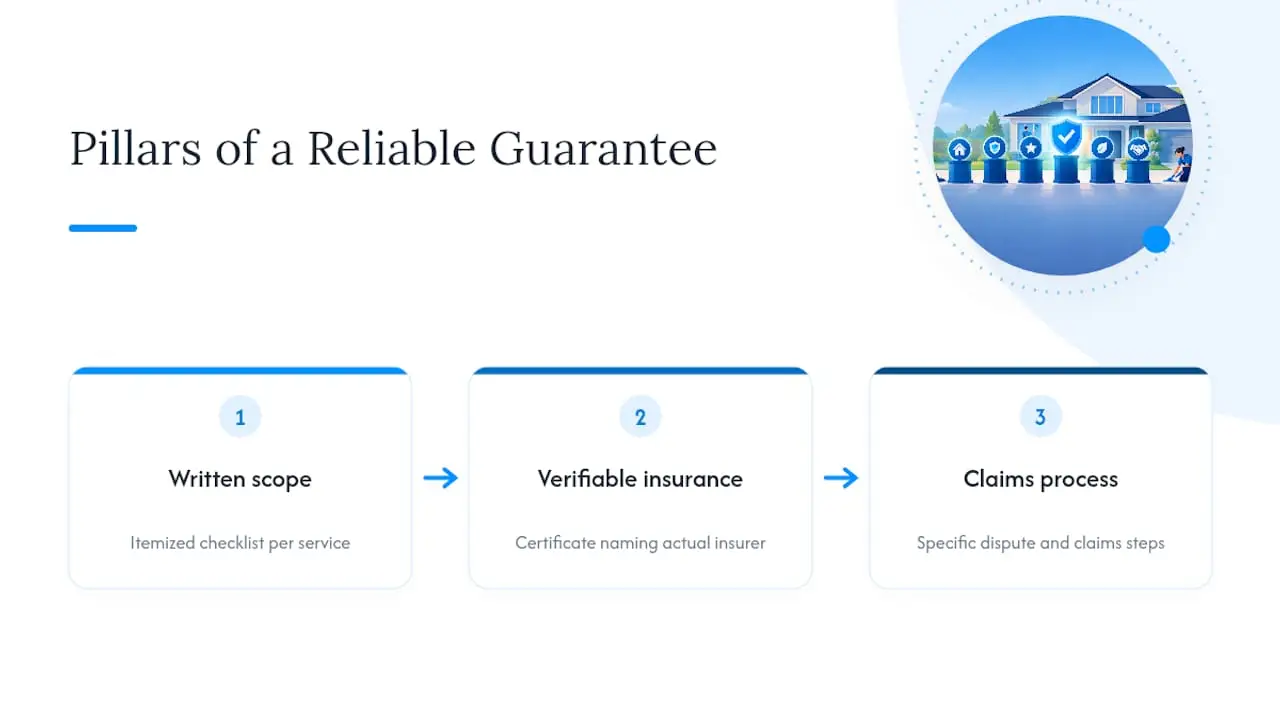
The practical takeaway: a guarantee backed by a written scope, a real insurance certificate, and a specific claims process functions like a private standard even without a formal certification behind it. That combination is what separates an enforceable promise from a slogan.
What Does a Guarantee Claim Actually Cost You (or Save You)?
Filing a legitimate guarantee claim should cost you nothing beyond your own time. A re-clean is free by definition. Where costs creep in is at the edges the guarantee doesn’t cover.
If the issue turns out to be a pre-existing stain or wear the company correctly excluded, you’ll pay full price for any additional service, like specialized carpet treatment or grout restoration, that the original booking didn’t include. Cancellation fees are another hidden cost: some companies charge a fee if you cancel or reschedule inside a short window, often 24 to 48 hours before the appointment, and that fee usually applies whether or not a guarantee dispute is in progress.
The bigger financial risk shows up when there’s no guarantee at all, or when the terms are so vague that a company can deny nearly any claim. In that scenario, your only real recourse becomes a credit-card dispute, which takes weeks to resolve and requires the documentation described earlier. Compare that to a same-week re-clean under a clear guarantee, and the cost difference isn’t really about dollars. It’s about how many hours of your life get eaten by the dispute.
Ask about cancellation fees and remedy costs at the same time you ask about the guarantee itself. A company confident in its process will answer both without hesitation.
How Pure Homes Cleaning Handles Guarantees in Practice
Purehomescleaning builds its guarantee around the same operational pieces this article recommends checking for: a written scope for each service type, whether that’s a Standard Cleaning, Deep Cleaning, or a Move In or Move Out Clean, insured staff, and a straightforward online booking record that doubles as your documentation trail. Bookings typically generate a confirmation that can be referenced if something needs a second look.
Customer reviews available online provide prospective clients insight into how past jobs and any follow-up requests were handled. You can browse the before-and-after results to see the standard crews are expected to hit before you ever book. The details you’d verify with any provider (insurance certificate, checklist, notification window) are the same details worth asking Purehomescleaning about directly.
What to Ask Pure Homes Cleaning Before You Book
Booking through Purehomescleaning takes a few minutes online, but the guarantee only works for you if you ask the right questions first. Before you confirm a Standard or Deep Cleaning, request the written scope checklist for your specific service, ask what the notification window is if something gets missed, and get the insurer’s name so you can verify coverage yourself.
Unlike a guarantee that’s just a headline on a website, the details matter more than the promise itself. That’s the whole point of this checklist: a company willing to hand over its scope, its deadline, and its insurance certificate before you pay is telling you something a slogan can’t. Save your booking confirmation and scope document the moment you receive them. If a question comes up mid-service, you’ll want that paperwork on hand, not buried in an old email. Whether you need a one-time Move In or Move Out Clean or a recurring Standard Cleaning, ask about the guarantee terms before you pay, not after you’re unhappy with the result. Book online and confirm the checklist and remedy details as part of that first conversation.
Sources
- Extended Warranties and Service Contracts | Consumer Advice (FTC)
- How to fix mistakes in your credit card bill | CFPB
- Consumer Review Fairness Act — What businesses need to know | FTC
FAQ
What Is the 5-5-5 Rule for Cleaning?
The “5-5-5 rule” isn’t a formal industry or government standard, and definitions vary depending on where you encounter it. Some cleaners use it informally to mean five minutes on five key areas across five rooms, but treat any version you see as a rule of thumb, not an official benchmark.
What Does a Satisfaction Guarantee Mean in Cleaning Services?
The FTC treats these promises as contract terms, so the guarantee is only as strong as the specific coverage, deadline, and remedy it spells out.
How Much Do You Tip for a $200 Cleaning?
Some people tip a flat amount instead, especially for recurring cleanings, so there’s no fixed rule beyond what feels fair for the work done.
Should Your Cleaner Be Bonded and Insured?
Yes. Insurance protects you financially if something is damaged during the clean, and bonding adds a layer of protection against theft or misconduct by staff. Ask for a certificate of insurance and the insurer’s actual name so you can verify the policy is real and active, rather than accepting the claim at face value.
A Publisher’s Take on What Guarantees Actually Reward
Most homeowners assume a satisfaction guarantee is about generosity: a company being nice enough to fix its mistakes. It isn’t. A good guarantee is really a bet the company is making on its own consistency. If a business can promise a 24-hour notification window and a specific remedy without hedging, that tells you it’s confident its crews rarely need the guarantee invoked in the first place.
Vague promises are cheap. Specific ones cost the company something if they get it wrong, which is exactly why they’re worth more to you.
The most useful thing you can do before booking any cleaning service isn’t reading five-star reviews. It’s asking one company to show you its checklist, its notification window, and its insurance certificate, and watching how quickly and specifically they answer.
— Local