Keep a clean home with pets by combining a short daily routine, targeted grooming, and the right surface tools, then follow CDC guidance for washing pet supplies so bacteria and dander don’t build up between deep cleans. Bowls need washing after every wet-food use, beds and blankets on a weekly basis, and toys on a monthly basis. A HEPA vacuum handles the hair and dander a regular vacuum pushes back into the air.
Three anchors make this manageable:
- A 5 to 15 minute daily reset (wipe bowls, quick brush, spot-vacuum)
- CDC-backed washing frequencies for bowls, beds, and toys
- A pet-aware professional clean, like the plans Purehomescleaning offers, when shedding or allergies outpace what daily upkeep can fix
Right now, grab a lint roller and hit the couch cushions. It takes ninety seconds and buys you a day.
Key Takeaways
Keeping a clean home with pets comes down to a short daily routine, CDC-aligned washing frequencies for pet supplies, and surface-specific tools used consistently rather than occasionally.
| Point | Details |
|---|---|
| Run a daily 5 to 15 minute routine | Wipe bowls, brush your pet, and spot-vacuum high-traffic areas before mess accumulates. |
| Follow CDC washing frequencies | Clean bowls after every wet-food use, wash beds weekly, and clean toys monthly. |
| Use the loosen-collect-finish method | Rake or squeegee hair loose before vacuuming with slow, deliberate HEPA passes. |
| Treat accidents with enzyme cleaners | Blot urine, vomit, or feces stains first, then apply enzymatic treatment rather than soap alone. |
| Call in Purehomescleaning for bigger jobs | Book a customizable, eco-friendly deep clean when shedding, allergies, or move-outs outpace daily upkeep. |
Table of Contents
- Daily Routines for Cleaning With Pets in 5 to 15 Minutes
- Grooming and Habits That Cut Down on Mess
- Surface-by-Surface Tactics for Pet Hair and Dirt
- Cleaning and Disinfecting Pet Supplies the Safe Way
- How Often to Deep Clean and Maintain Your Tools
- Preventing and Managing Pet Dander Accumulation
- Safe Cleaning Products and Ingredients to Avoid Around Pets
- Cleaning Pet Accidents: Urine, Feces, and Vomit
- Storing and Disposing of Pet Waste Indoors
- Managing Pet Hair on Clothing and Furniture
- Preventing Flea and Tick Infestations at Home
- When It’s Time to Call In a Professional
- Purehomescleaning Fits the Households Doing This Every Day
- Sources
- FAQ
Daily Routines for Cleaning With Pets in 5 to 15 Minutes
Most pet mess doesn’t happen all at once. It accumulates in layers, one dropped hair and one muddy paw print at a time, until Saturday’s cleaning session takes three hours instead of thirty minutes. A short daily sequence stops that pileup before it starts.
- Wipe down the feeding area and refill water. Wash the water bowl daily and the food bowl after every wet-food serving.
- Scoop the litter box or check the yard for waste, twice a day if you can manage it.
- Brush your pet for 3 to 5 minutes near the door or on an easy-to-clean mat, not on the good rug.
- Lint-roll the couch, car seat, or anywhere your pet naps during the day.
- Spot-vacuum the entryway and feeding zone with a cordless stick vacuum.
That’s it. Five steps, most of them under a minute each.
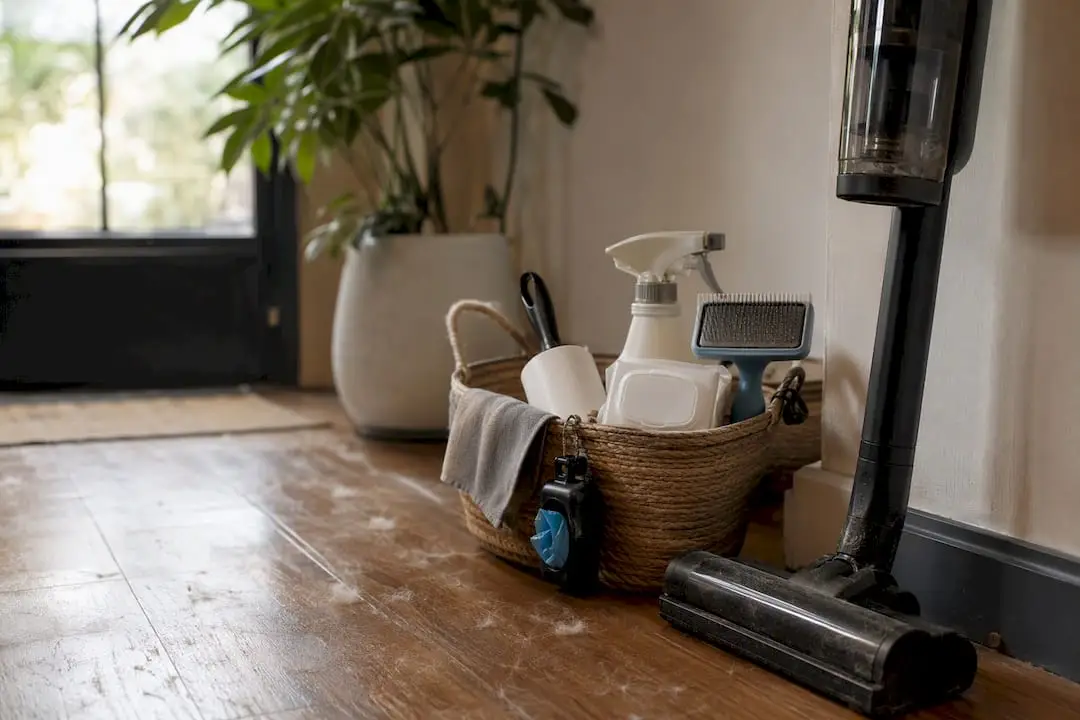
Pro Tip: Stage a small kit by the door: a lint roller, a pack of pet wipes, a slicker brush, and a cordless stick vacuum. When everything lives in one spot, the daily routine takes five minutes instead of fifteen because you’re not hunting for supplies.
Skip this for a week and you’ll notice it. Skip it for a month and you’re looking at a deep clean you didn’t need to schedule.
Grooming and Habits That Cut Down on Mess
The less hair and dirt your pet sheds indoors, the less you clean. That’s the whole logic behind treating grooming as a cleaning strategy, not a separate chore.
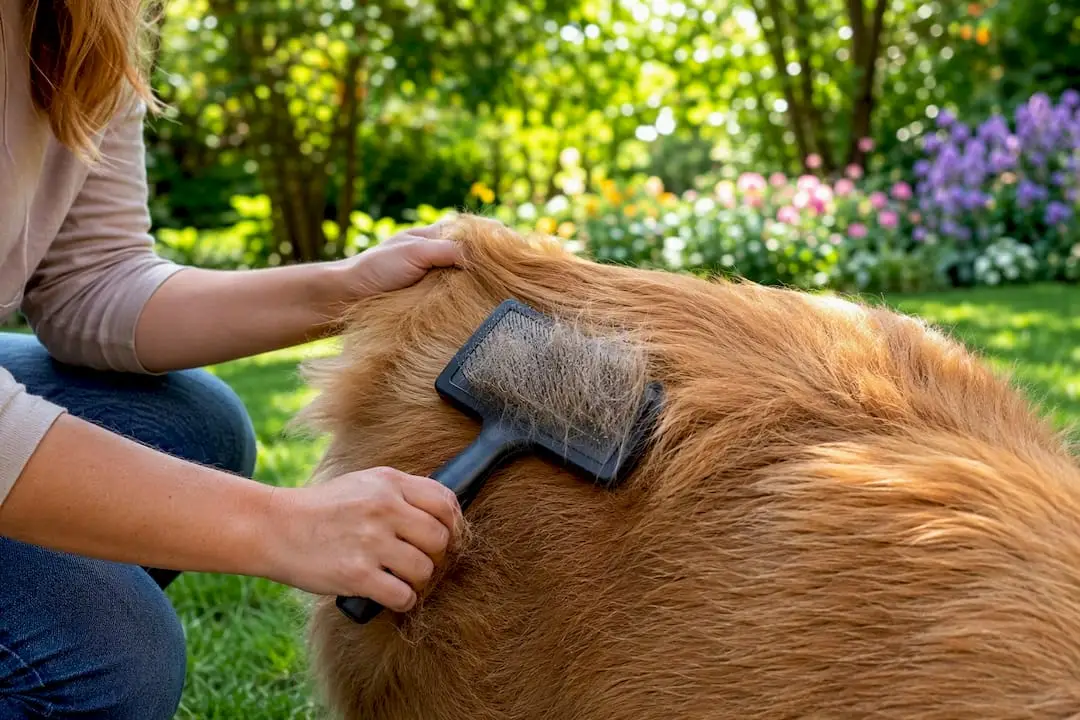
Brushing cadence depends on coat type. Short-haired dogs and cats do fine with a weekly brush using a rubber curry brush. Medium coats need it two to three times a week. Long-haired or double-coated breeds (Huskies, Golden Retrievers, most cats with an undercoat) benefit from daily brushing, especially during seasonal blowouts. If mats or heavy shedding outpace what a slicker brush can handle at home, a professional groomer visit every 6 to 8 weeks resets things.
Bathing helps too, but skip anything with strong fragrance or essential oils. Vets caution against those scents because pets’ noses and skin are far more sensitive than ours, and some oils are outright toxic to cats.
A few habit changes pay off fast:
- Keep a washable mat or towel at every entry point for paw wiping
- Designate one “pet zone” (a bed, blanket, or corner) so hair concentrates in one washable spot instead of spreading across the house
- During shedding season, double your vacuuming frequency and add a protective cover to furniture your pet favors
None of this eliminates shedding. It just keeps it contained.
Surface-by-Surface Tactics for Pet Hair and Dirt
Different surfaces trap pet hair differently, and using the wrong tool on the wrong surface just moves hair around instead of removing it. Cleaning pros describe pet-hair removal as a three-stage workflow: loosen, collect, then finish. Skipping the loosen step is the most common mistake, since hair embedded in fibers won’t come up with a straight vacuum pass.
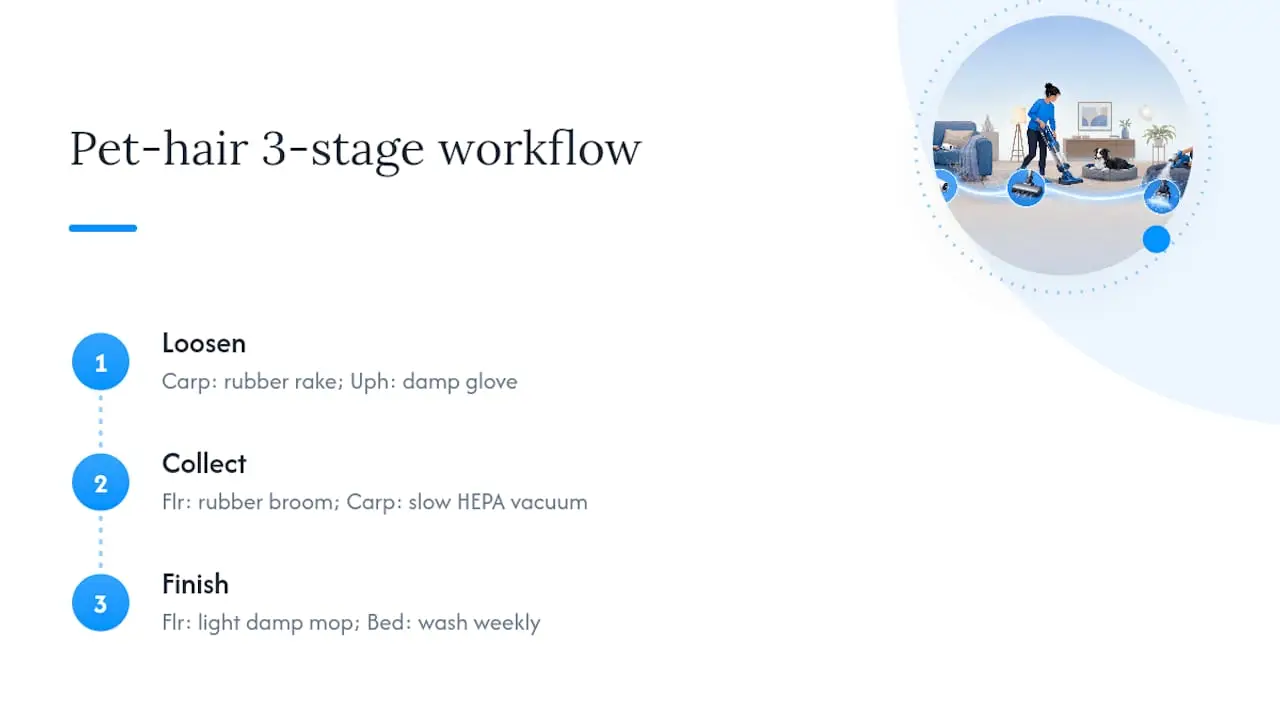
Hard floors: Start dry. A microfiber mop or rubber broom gathers hair static instead of scattering it. Finish with a lightly damp mop, never a soaking one, since standing water warps hardwood and seeps into seams.
Carpets and rugs: Loosen embedded hair first with a rubber rake or a squeegee dragged across the pile, then follow with slow, deliberate HEPA vacuum passes. Fast passes look thorough but leave hair behind; professionals recommend roughly one to two seconds per foot of carpet so the brush roll actually lifts what’s buried. For urine or vomit stains, an enzyme-based spot treatment breaks down the proteins that regular carpet cleaner leaves behind.
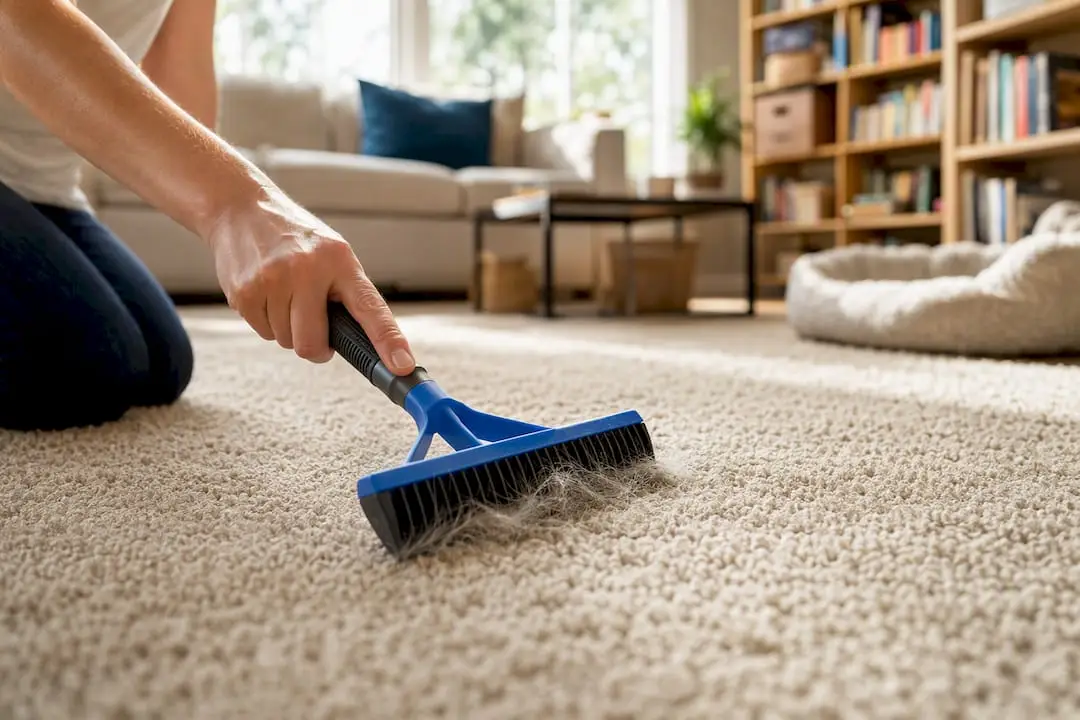
Upholstery: Pre-remove hair with a rubber glove (dampen it slightly and drag it across the fabric) before vacuuming with a crevice or upholstery attachment. Seams and cushion creases hold onto hair longest.
Bedding and toys: Remove loose hair, then wash machine-safe pet beds and blankets weekly, and clean dishwasher-safe toys monthly. That’s the CDC’s standing recommendation for pet supplies, and it applies whether you have one dog or four cats.
If allergies are a factor in your home, a professional carpet cleaning service can pull embedded allergens that home vacuuming, even with HEPA filtration, tends to miss over time.
Cleaning and Disinfecting Pet Supplies the Safe Way
Cleaning and disinfecting aren’t the same task. Cleaning removes dirt and hair with soap or detergent. Disinfecting kills germs, and it matters more when a pet or a household member is sick.
The CDC’s frequency guidance breaks down like this:
- Food and water bowls: after every wet-food use, and at least daily for dry food and water
- Beds and blankets: weekly, using fragrance-free detergent
- Toys: monthly, more often if a pet chews and drools heavily
For most routine cleaning, soap and hot water are enough. Save EPA-registered disinfectants for situations that call for them, such as illness in the household, and always follow the label’s contact time. Popular home remedies like vinegar don’t disinfect reliably, so don’t substitute them when the CDC recommends an actual disinfectant.
Never wash pet bowls or supplies in the kitchen sink used for food prep without a thorough cleaning and disinfection afterward. A dedicated tub, laundry sink, or the bathroom sink keeps cross-contamination away from where you cook.
Keep pets out of the room until surfaces dry completely, skip phenol-based cleaners around cats since their livers process the compound poorly, and never mix cleaning products. If anyone in the house has a weakened immune system, the CDC recommends increasing cleaning frequency and adding gloves as a precaution.
How Often to Deep Clean and Maintain Your Tools
Daily habits handle the surface layer. Deep cleaning handles what settles underneath, and it runs on its own schedule.
- Weekly: Focus on high-traffic zones, the pet’s bed area, and any furniture they favor. Vacuum thoroughly, not just a quick pass.
- Monthly: Wash toys, rotate and wash slipcovers or throws, and check under furniture where hair collects in drifts.
- Seasonally or annually: Schedule a full deep clean, including upholstery extraction and carpet shampooing, especially after shedding season or if allergy symptoms are creeping up.
Your tools only work if you maintain them. Clean the vacuum’s HEPA filter and brush roll regularly since a clogged filter loses suction fast, and hair-wrapped brush rolls stop spinning altogether. HEPA filtration captures the microscopic dander particles that trigger allergy symptoms, but only if the filter itself isn’t packed with debris. Check your dryer’s lint trap after every load of pet bedding, since pet hair clogs dryer vents faster than regular laundry lint. If your HVAC system has a washable or replaceable filter, swap it more often in a pet household than the standard three-month cycle.
Preventing and Managing Pet Dander Accumulation
Dander is the real allergy trigger, more than hair itself. It’s microscopic skin flakes that shed constantly, ride on air currents, and settle into fabric, bedding, and air ducts long after you’ve vacuumed up the visible hair.
Grooming cuts dander at the source. Regular brushing outside, or over an easy-to-clean surface, removes loose skin cells before they scatter across your living room. Bathing helps too, though over-bathing dries out skin and actually increases flaking, so stick to what’s appropriate for your pet’s coat rather than washing more than necessary.
Inside the house, airflow matters as much as vacuuming. A true HEPA air purifier running in the rooms your pet uses most pulls dander out of circulation instead of letting it resettle on furniture. Washable slipcovers on couches and chairs make a real difference too, since fabric traps dander far more than hard surfaces do. Wash them on the same weekly cycle you use for pet bedding.
Bedrooms deserve extra attention if anyone in the house has allergies. Keeping pets off the bed, or at least off the pillows, reduces the dander load in the one room where you spend eight hours breathing the same air. Combine that with a HEPA vacuum pass over the mattress and box spring every couple of weeks, since dander settles into fabric layers that a quick surface vacuum won’t reach. None of this requires giving up time with your pet. It just means directing the cleaning effort toward where dander actually accumulates instead of where it’s most visible.
Safe Cleaning Products and Ingredients to Avoid Around Pets
Not every cleaning product safe for your kitchen counter is safe for a room your pet spends time in. Pets absorb chemicals differently than people do, through their paws, their fur, and by licking surfaces you’ve just wiped down.
Essential oils top the list of things to avoid, particularly around cats. Tea tree oil, citrus oils, and eucalyptus can cause serious reactions in cats because their livers lack the enzymes to break these compounds down efficiently. Phenol-based disinfectants carry the same risk. Read labels before buying a “natural” cleaner, since plenty of them lean on essential oils as their active fragrance ingredient.
Bleach deserves a specific caution, too. It’s an effective disinfectant when properly diluted and rinsed, but concentrated bleach fumes irritate a pet’s respiratory system faster than a person’s, given how close their noses sit to the floor. If you use it, ventilate the room and keep pets out until it’s fully dry and rinsed.
Fragrance-free and hypoallergenic detergents are the safer default for washing pet bedding and blankets, since heavy fragrance can trigger skin irritation on a pet that sleeps directly on the fabric. The same logic applies to carpet powders and upholstery sprays. Anything with a strong, lingering scent is worth skipping in favor of something plain.
When in doubt, the safest approach is soap, water, and a product specifically labeled as pet-safe, saving stronger disinfectants for situations that genuinely call for them.
Cleaning Pet Accidents: Urine, Feces, and Vomit
Speed matters more than product strength when it comes to pet accidents. The longer urine sits, the deeper it soaks into padding or subfloor, and the harder it becomes to fully remove the odor that draws pets back to the same spot.
For urine on carpet or upholstery, blot first with paper towels or a clean cloth, pressing rather than rubbing, to pull up as much liquid as possible before applying anything. Then use an enzyme-based cleaner, not a general all-purpose spray. Enzymatic cleaners break down the uric acid crystals that regular soap can’t touch, which is why a room can look clean but still smell faintly of urine weeks later. Regular soap masks the smell temporarily; enzymes actually dismantle it.
Feces cleanup on hard floors is straightforward: remove solid waste, then wash the area with soap and water. On carpet, lift what you can with a plastic bag or scraper before treating the residual stain the same way you would urine, with an enzyme cleaner following the manufacturer’s contact time.
Vomit reacts to stomach acid content, so treat it like a mild acid spill. Blot up the excess, then rinse with cool water before applying an enzyme treatment if any staining remains. Hot water can set certain stains, so cool is the safer default across all three accident types.
Wash your hands after cleanup regardless of which type of accident you’re dealing with. It’s a basic step, but handwashing after contact with pet waste meaningfully cuts the risk of picking up something you didn’t intend to.
Storing and Disposing of Pet Waste Indoors
Where waste sits before it leaves your house matters more than most people realize. A litter box tucked in a closet with no ventilation traps odor in fabric and carpet throughout the house, even with regular scooping.
Litter boxes need daily scooping at minimum, with a full litter change and box wash weekly using mild soap. A covered box with a carbon filter helps contain odor between cleanings, but it’s not a substitute for scooping. If you’re storing scooped waste before disposal, use a sealed, odor-lock container rather than a standard trash bag, since standard bags let odor escape into whatever room the bin sits in.
For dogs, indoor waste storage usually means a sealed bag in a lidded outdoor bin rather than the kitchen trash. If you must hold a bag inside temporarily, a small lidded pail with a liner keeps smell contained until you can get it outside. Diaper-genie-style twist bins, originally designed for infant waste, work surprisingly well for this since they seal each deposit individually.
Ventilation matters as much as containment. A room with a litter box or waste storage area benefits from an exhaust fan or a cracked window, since odor compounds build up in still air far faster than most people expect. Washable liners under litter boxes catch spillover litter and make cleanup a wipe instead of a vacuum session.
Managing Pet Hair on Clothing and Furniture
Pet hair on clothes is often the last thing people tackle and the first thing visitors notice. A lint roller by the door catches most of it before you leave the house, but for deeper removal, a slightly dampened rubber glove dragged across fabric gathers hair into a static clump you can peel off in one motion.
For furniture, the loosen-collect-finish approach that works on carpet applies here too. Rub a rubber squeegee or dry dish glove across cushions to loosen embedded hair, then vacuum with an upholstery attachment. A dryer sheet run across fabric afterward reduces the static that pulls remaining hair back onto the surface.
Laundry deserves its own step. Pre-clean hair off clothes and blankets with a lint roller or a five-minute no-heat dryer cycle before they go into the wash, since hair-covered fabric going straight into the washer often clogs the machine’s drain filter over time. This is the same principle behind washing pet laundry properly: remove hair first, then wash with fragrance-free detergent to protect both the fabric and your pet’s skin if they’re sleeping on it again soon.
Closets and car interiors get overlooked, but hair accumulates there just as fast. A car with a dedicated pet blanket on the seat, swapped and shaken out weekly, saves you from full upholstery vacuuming every time your dog rides along.
Preventing Flea and Tick Infestations at Home
Fleas and ticks don’t just bother your pet. Once fleas establish indoors, they lay eggs in carpet fibers and furniture cracks, turning a pet problem into a whole-house infestation that takes weeks to fully clear.
Year-round preventive treatment, whether topical, oral, or a collar, is the single most reliable defense, since it stops fleas and ticks before they ever get established rather than reacting after you spot the first bite. Vacuuming carpets and upholstery weekly disrupts the flea life cycle by removing eggs and larvae before they mature, which matters because adult fleas represent only a small fraction of an actual infestation at any given time.
Wash pet bedding on hot water weekly if fleas have been a recent issue, since heat kills eggs that regular washing might not dislodge. Outdoors, keeping grass trimmed and removing leaf litter near the house reduces the habitat ticks and flea-carrying wildlife use to get close to your pet in the first place.
If you check your pet after walks, especially around the ears, neck, and paws where ticks tend to attach, you catch problems before they come inside. Combine that habit with the vacuuming routine already built into your weekly schedule, and prevention becomes something you’re doing anyway rather than an extra chore.
When It’s Time to Call In a Professional
Daily routines and grooming handle most of it, but some situations call for more than a stick vacuum and a lint roller. Heavy seasonal shedding, a household member with pet allergies, sanitizing after a pet’s illness, or a move-out clean where the next tenant needs a completely reset space. These are all moments where a pet-aware professional clean earns its cost back in time and results you can’t quite match alone.
Purehomescleaning builds cleaning plans around exactly this kind of household, using eco-friendly products and customizable routines through simple online booking. When you’re evaluating any cleaning service for a pet household, ask three things: do they follow pet-aware protocols, what’s on their cleaning product list, and can they show insurance and real reviews. Those answers tell you whether they’ve actually thought about pets, not just square footage.
— Local
Purehomescleaning Fits the Households Doing This Every Day
If you’ve read this far, you already know the daily grind: brush, wipe, vacuum, repeat, and it still doesn’t stop hair from finding its way into every corner by Friday. Purehomescleaning was built for exactly that gap between what a daily routine handles and what actually needs a deeper reset.

Its customizable cleaning plans let you set a recurring schedule around your pet’s shedding season instead of guessing when the next deep clean is due, and the eco-friendly products used mean you’re not introducing another harsh chemical into a space your dog naps in daily. For households in Washington, DC, Virginia, and Maryland juggling work, kids, and a shedding retriever, that’s the practical difference: less time spent negotiating your own cleaning schedule around everyone else’s.
Ready to hand off the parts of the routine that eat your weekend? Book a cleaning online and pick a plan that matches how much your household actually sheds.
Sources
- About Cleaning and Disinfecting Pet Supplies | Healthy Pets, Healthy People | CDC
- How to do your pet’s laundry | The Seattle Times
FAQ
How Do I Disinfect My House With Pets?
Clean pet bowls, beds, and toys following CDC frequency guidance, using soap and water for routine cleaning and an EPA-registered disinfectant only when illness in the household calls for it.
How Do I Keep My House Smelling Clean With Pets?
Wash pet bedding weekly, scoop litter boxes daily, store waste in sealed containers, and run a HEPA air purifier in high-traffic rooms to pull odor-causing particles out of circulation.
How Do You Deep Clean a House That Had Pets?
Start by loosening embedded hair with a rubber rake, follow with slow HEPA vacuum passes on carpet and upholstery, wash all machine-safe bedding, and treat any lingering stains with an enzyme-based cleaner before finishing with a damp mop on hard floors.
How Often Should I Clean My House With Pets?
Do a quick daily reset for bowls, litter, and high-traffic surfaces, a weekly deep pass on bedding and furniture, and a full seasonal deep clean, or book a professional visit through Purehomescleaning if shedding or allergies outpace your routine.