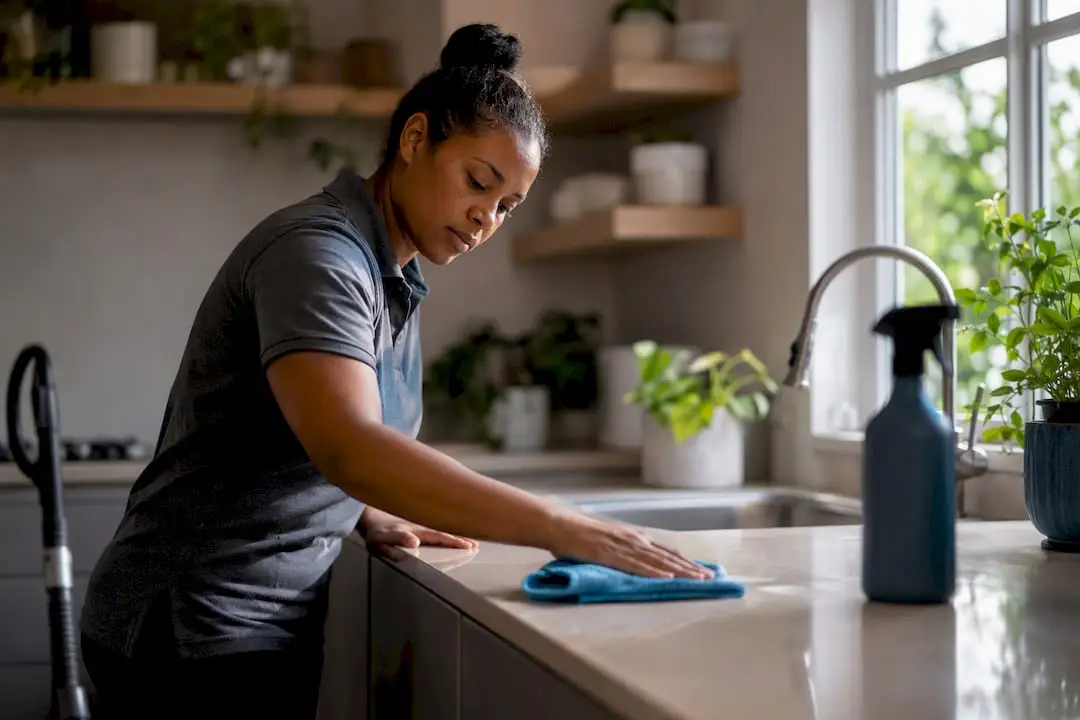
Most professional cleaning companies bring their own supplies and equipment, including all-purpose cleaner, microfiber cloths, and a vacuum. Independent, freelance cleaners are far more likely to ask you to provide products, and even company crews sometimes need exceptions.
Here’s what usually changes the answer:
- Move-in/move-out and deep specialty jobs almost always come with a full provider-supplied kit, since these jobs need commercial-grade degreasers and equipment most homes don’t own.
- Allergies or brand preferences can shift the arrangement. If you need fragrance-free products or want your own stone sealer used on marble counters, most companies will accommodate you if you ask ahead.
- Independent cleaners vary the most. Some bring a full kit, others expect you to stock basics like paper towels and a vacuum.
Check the prep checklist and booking questions below before your first appointment.
Key Takeaways
Most professional cleaning companies supply their own products and equipment, but confirming the arrangement in writing before booking prevents nearly every supply-related surprise.
| Point | Details |
|---|---|
| Default expectation | Company crews typically bring full kits; independent cleaners vary and may expect you to supply basics. |
| Ask before booking | Confirm supplies, chemical types, and whether they’ll use your products in writing, not verbally. |
| Health and surface needs | Request fragrance-free products or owner-approved items for allergies or delicate surfaces, with SDS attached. |
| Prep saves time | Decluttering and clear pet or access notes let cleaners focus on cleaning instead of logistics. |
| Purehomescleaning’s approach | Supplies eco-friendly, professional-grade products by default and accommodates allergy or brand requests with advance notice. |
Table of Contents
- Do Cleaners Bring Supplies? Understanding the Three Service Models
- What Professional Cleaners Usually Bring
- When You Should Provide Your Own Cleaning Products
- Who Pays for Supplies, and When Do Rates Change?
- Questions to Ask Before Booking a Cleaner
- Get Your Home Ready Before the Cleaner Arrives
- Why Provider-Supplied Products Are Usually the Safer Bet
- Book a Cleaning That Includes the Supplies You Need
- A Quick Word on Getting This Right
- Sources
- FAQ
Do Cleaners Bring Supplies? Understanding the Three Service Models
Cleaning businesses generally run on one of three supply models, and knowing which one you’re booking changes what you need to do before the visit.
- Service-supplied. The company provides everything: cleaners, chemicals, vacuums, mops, rags. This is the standard for most established residential cleaning companies, since it lets them control product quality and training and keep results consistent from house to house.
- Customer-supplied. You provide the products and tools; the cleaner brings only labor. This model shows up most with independent or freelance cleaners who want to travel light, and it’s common in some hourly arrangements.
- Hybrid. The company brings its standard kit but will use specific owner-supplied items on request, like a fragrance-free spray for a nursery or a particular wood polish for antique furniture.
The model matters because it determines who’s liable if a product damages a surface, who trains the person using the chemicals, and how a quote is priced. If convenience and consistency matter most to you, service-supplied is the safer bet. If you have very specific product requirements, a hybrid arrangement usually works better than trying to fully self-supply.
What Professional Cleaners Usually Bring
A typical service-supplied crew arrives with a fairly predictable set of consumables and equipment. Knowing the list helps you spot when a company is cutting corners versus when something is genuinely optional.
Consumables most companies bring:
- All-purpose cleaner and glass cleaner
- Disinfectant for kitchens and bathrooms
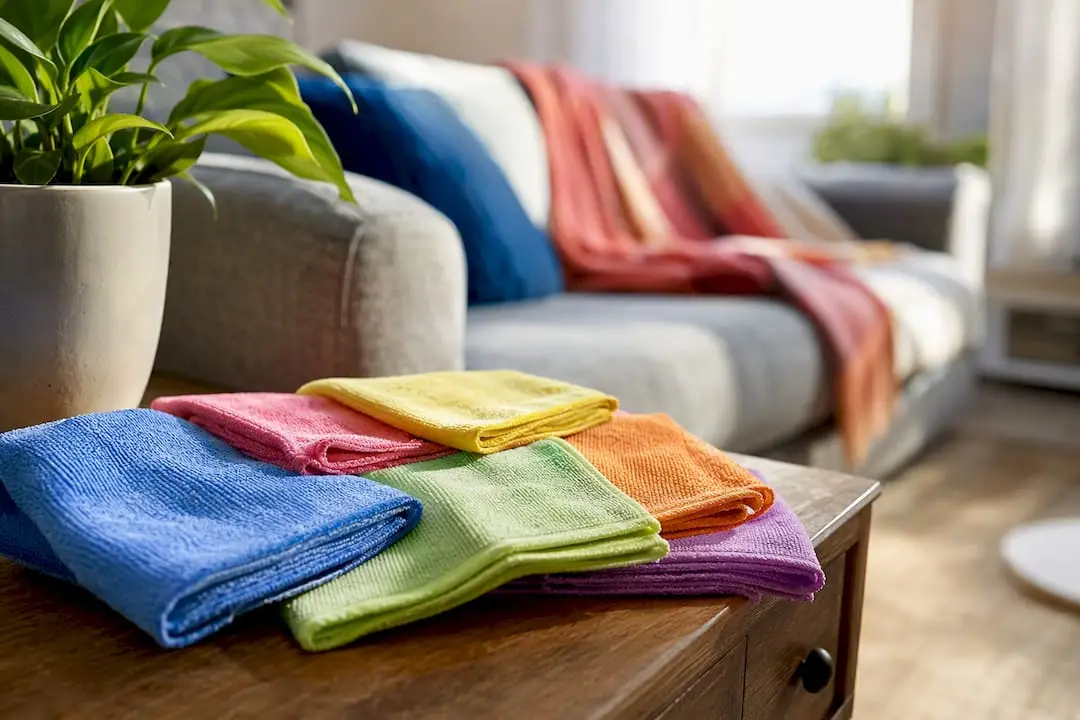
- Microfiber cloths (often color-coded by room to prevent cross-contamination)
- Paper towels and trash bags
- Concentrated solutions that get diluted on-site
Equipment most companies bring:
- A commercial-grade vacuum
- A mop system, usually microfiber with a wringing bucket
- Scrub brushes and a telescoping duster for high, hard-to-reach spots
Usually extra or on-request only: carpet extractors, steam cleaners, and heavy-duty stain removers for things like pet accidents or wine on upholstery. These require specialized equipment that isn’t part of a standard visit, so ask about them separately if you need them.
Pro Tip: Ask whether your cleaner’s cloths are color-coded by room. It’s a small detail, but it’s a strong sign a company trains staff seriously on cross-contamination control between bathrooms and kitchens.
When You Should Provide Your Own Cleaning Products
There are legitimate reasons to supply your own products even when a company offers full service. The most common is health. Cleaning products can trigger reactions in people with asthma or chemical sensitivities, and the American Academy of Allergy, Asthma & Immunology recommends fragrance-free or allergen-safe alternatives for sensitive households.
Delicate surfaces are the other big one. Natural stone counters, antique wood furniture, and certain finished floors can be damaged by generic all-purpose cleaners, so owner-approved sealers or specialty polishes are often worth requesting.
If you’re supplying anything, do it right:
- Label every product clearly, including dilution instructions if applicable.
- Include the Safety Data Sheet (SDS) or manufacturer guidance, especially for anything beyond basic soap and water.
- Get the arrangement confirmed in writing or through booking notes before the visit, not verbally on the day.
Household spending on housekeeping supplies is a real recurring cost, and Statista’s expenditure data shows why letting a service absorb that cost through its rate can add up to meaningful savings over a year of recurring visits.
Who Pays for Supplies, and When Do Rates Change?
Pricing usually falls into one of two structures. Most flat-rate quotes already bundle in the cost of supplies, so the number you’re quoted is the number you pay regardless of what gets used. Some companies offer a slightly lower hourly rate if you supply your own products, since it shifts a real cost off their books.
Line-item supply charges are less common but do exist, especially for specialty jobs. A move-out cleaning that needs oven degreaser and a carpet extractor might list those separately rather than folding them into the base price.
A few practical notes:
- Some companies add a small surcharge if you request premium or specialty products they don’t normally stock.
- Others will refuse to use owner-supplied equipment entirely without a signed liability waiver or an SDS on file, particularly for chemicals.
- Always ask for the full breakdown in writing before the appointment, not just a verbal quote over the phone.
Questions to Ask Before Booking a Cleaner
A five-minute conversation before booking eliminates almost every supply-related misunderstanding. Ask these directly:
- “Do you bring your own supplies and equipment, or should I provide them?”
- “Do you use bleach or enzymatic cleaners, and can you avoid them if I need you to?”
- “Can you use products I provide instead of your own?”
Your booking notes should also cover anything the cleaner won’t discover until they’re already inside: pets in the home, delicate surfaces like marble or hardwood, specific allergy or brand requests, and an SDS if you’re supplying any chemical product yourself.
If you ask a cleaner to use your own vacuum or mop, expect two things: it can add time if the equipment is unfamiliar or in poor condition, and some companies will decline outright over liability if your gear looks unsafe, like a vacuum with a frayed cord.
Pro Tip: Put your answers to these three questions directly in the special instructions field when you book online. Cleaners read those notes before they knock, and it saves the awkward doorstep negotiation.
Get Your Home Ready Before the Cleaner Arrives
A little prep goes a long way toward getting a thorough clean instead of one spent moving your stuff around. Clear countertops and floors of loose items, set out any owner-supplied products with their SDS attached, and secure valuables or fragile items you’d rather a stranger not handle.
Leave clear notes about pets, parking, and building entry so the cleaner isn’t guessing when they arrive. Cleveland Clinic research even ties decluttering to lower stress, so tidying up before the visit benefits more than just your invoice.
- Declutter surfaces and floors first
- Set out any owner-supplied products with SDS
- Confirm any specialty task, like inside-oven cleaning, needs extra products in advance
Why Provider-Supplied Products Are Usually the Safer Bet
Professional-grade cleaners are typically sold as concentrates that get diluted on-site, and that dilution process requires training most homeowners never think about. Get the ratio wrong and you either waste product or damage a surface. Suppliers of commercial cleaning chemicals routinely provide Safety Data Sheets and dilution training precisely because incorrect handling causes both safety issues and rework.
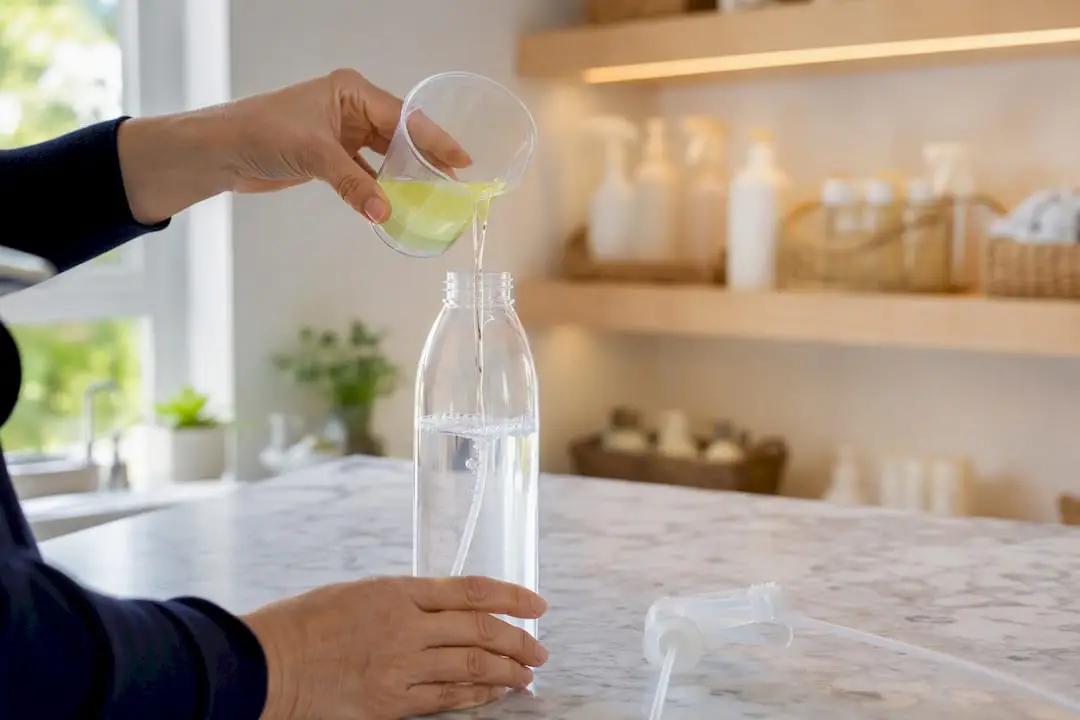
This is a big part of why professional-grade concentrates outperform consumer products on both efficiency and result quality. It also explains a policy homeowners rarely think to ask about until something goes wrong: who’s actually trained on the chemical being used in their home.
Purehomescleaning supplies professional-grade, eco-friendly products as standard across its Washington, DC, Virginia, and Maryland service area, with customizable cleaning plans for routine, deep, and move-in/move-out jobs. Clients with allergy concerns or a preferred product can note it at booking, and Purehomescleaning will work with that request rather than defaulting to a one-size-fits-all kit.
| Factor | Why it matters |
|---|---|
| SDS on file | Confirms the company trains staff on chemical safety, not just cleaning technique. |
| Dilution control | Concentrated products used correctly reduce surface damage and repeat visits. |
| Custom plans | Lets you request fragrance-free or specific products without losing full service. |
Book a Cleaning That Includes the Supplies You Need
Purehomescleaning is the alternative to guessing which products a cleaner will show up with. Every appointment comes stocked with professional-grade, eco-friendly supplies as standard, and if you need fragrance-free products or want a specific item used on a delicate surface, you just note it when you book.
Plans cover routine, deep, and move-in/move-out cleaning across Washington, DC, Virginia, and Maryland, with online booking that includes occasional promotional discounts for new clients. If you’re ready to stop wondering what’s showing up in the cleaner’s bag, book your appointment online and specify any product preferences in the notes field.
A Quick Word on Getting This Right
The safest default is letting a trained crew bring its own supplies. They know the dilution ratios, they carry the SDS, and they’re not experimenting on your countertops with a product they’ve never used. Where I’d push back on convention is the assumption that owner-supplied products are always a hassle for the cleaner. They aren’t, as long as you document them properly and give notice. Skip the vague verbal request and write the SDS and your expectations into the booking notes. That single habit prevents more first-visit friction than anything else on this list.
Sources
- Statista — U.S. expenditure on housekeeping supplies
- American Academy of Allergy, Asthma & Immunology — cleaning product allergy guidance
- Cleveland Clinic — decluttering and mental health
FAQ
Do cleaners usually bring their own supplies?
Yes, most professional cleaning companies bring their own supplies and equipment as standard. Independent or freelance cleaners are more likely to expect the homeowner to provide products, so it’s worth confirming before booking.
Is $20 an hour good for house cleaning?
Rates vary widely by region and whether supplies are included, so there’s no single fair number. A rate that includes the cleaner’s own products and equipment is generally worth more than the same hourly rate without them.
What is the 20 minute rule in cleaning?
This isn’t a standardized industry rule, and definitions vary depending on who’s using the term. If you’ve seen it referenced elsewhere, ask the specific company what they mean by it rather than assuming a universal standard.
Do cleaning services pick up clutter?
Most standard cleaning visits focus on cleaning surfaces rather than organizing or picking up personal items, since that time is better spent cleaning than sorting your belongings. Decluttering before the cleaner arrives, as Cleveland Clinic notes in its research on tidying and stress, helps the crew work faster and more thoroughly.
Will Purehomescleaning use my own cleaning products if I ask?
Yes, Purehomescleaning can accommodate owner-supplied products for allergy or preference reasons when you note the request at booking, alongside its standard eco-friendly supply kit.