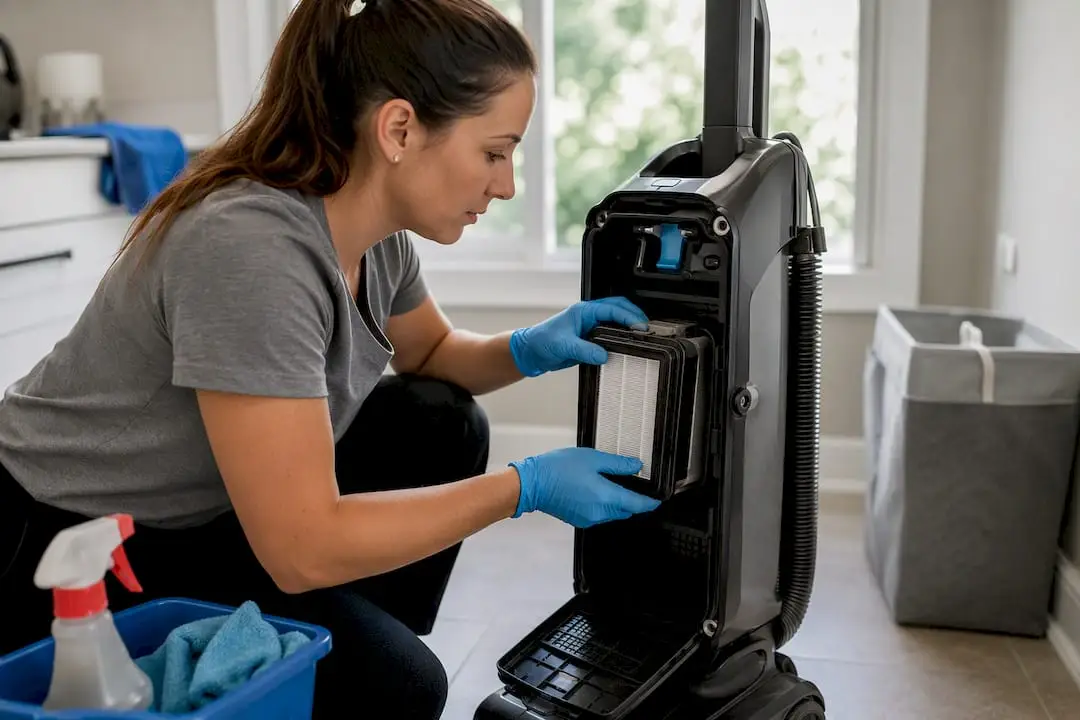
HEPA vacuums meaningfully reduce airborne particles and allergen loads when used correctly, and the research backing that claim is solid but not unlimited. A few caveats matter before you buy one. The unit needs a true, sealed HEPA system, not just a filter bolted onto a leaky machine. It works best paired with other allergen-control steps, not as a solo fix. And it’s not a treatment for asthma or a substitute for medical care.
Quick facts: True HEPA filters capture 99.97% of particles down to 0.3 microns, the hardest size for any filter to catch. The EPA and American Lung Association both frame filtration as a supplement to source control, not a replacement for it.
- Reduces airborne dust, pollen, and pet dander when the system is sealed
- Works best combined with mattress covers, pest control, or carpet removal
- Does not cure asthma or eliminate the need for medical management
Key Takeaways
A true, sealed HEPA vacuum reduces airborne particles and allergen loads, but works best as part of a broader allergen-control plan rather than a standalone fix.
| Point | Details |
|---|---|
| True HEPA standard | Look for filters certified to capture 99.97% of particles at 0.3 microns, not “HEPA-type” labels. |
| Sealed system is essential | All intake air must pass through the HEPA filter with no leaks, or effectiveness drops sharply. |
| Evidence favors combined strategies | Multicomponent approaches, including HEPA vacuuming plus pest control or mattress covers, show stronger results than vacuuming alone. |
| Maintenance protects performance | Replace filters every 6 to 12 months and check seals regularly to keep the system working as designed. |
| Professional cleaning fills the gaps | Purehomescleaning uses sealed-system HEPA equipment and eco-friendly products for deep, whole-home allergen reduction. |
Table of Contents
- What Does “HEPA” Actually Mean?
- How Does a HEPA Vacuum Actually Remove Particles?
- Do HEPA Vacuums Really Improve Indoor Air Quality?
- What Won’t a HEPA Vacuum Fix?
- Who Actually Benefits Most From a HEPA Vacuum?
- What Features Actually Matter When Buying One?
- Maintaining a HEPA Vacuum So It Keeps Working
- The Bottom Line on HEPA Vacuum Benefits
- A Cleaning Professional’s Take on HEPA Equipment
- Let Professional Cleaning Pick Up Where Your Vacuum Leaves Off
- Sources
- FAQ
What Does “HEPA” Actually Mean?
“HEPA” is a performance standard, not a marketing adjective. To earn the name legitimately, a filter has to capture at least 99.97% of particles measuring 0.3 microns, a size scientists call the most penetrating particle size, or MPPS. Particles bigger or smaller than 0.3 microns actually get trapped more easily, which is why manufacturers test at that specific size. It’s the worst-case benchmark.
Here’s where things get murky for shoppers. Terms like “HEPA-type,” “HEPA-style,” and “HEPA-like” show up constantly on vacuum boxes, and none of them meet the actual 99.97% standard or guarantee a sealed system. They’re designed to look like the real thing at a glance.
What to check before buying:
- Look for the words “true HEPA” or “absolute HEPA” specifically
- Ask for system-level filtration test data, not just filter specs
- Check whether the manufacturer references ASTM F1977 testing, an industry standard for vacuum filtration efficiency
How Does a HEPA Vacuum Actually Remove Particles?
Air moves through several stages before it exits the machine. The brush or beater bar agitates carpet fibers to lift trapped debris. Suction pulls that debris and surrounding air into the machine. A pre-filter or dust cup catches larger particles first, and then the air passes through the HEPA media, which strips out the fine stuff, before finally exhausting back into your room.
The word “sealed” is doing a lot of work in that sentence. A genuinely sealed HEPA vacuum forces every bit of intake air through the HEPA filter with none leaking around it. Retrofit a HEPA filter into a machine that wasn’t built for one, and air often finds a path around the filter entirely, undermining the whole point.
- Brush agitation → inlet collection → pre-filter → HEPA stage → exhaust
- A leak anywhere in that chain lets unfiltered air (and motor emissions) back into the room
Pro Tip: Before buying, search the model number plus “sealed system” or check the manual’s filtration diagram. If a company can’t confirm sealed construction, assume it isn’t.
Do HEPA Vacuums Really Improve Indoor Air Quality?
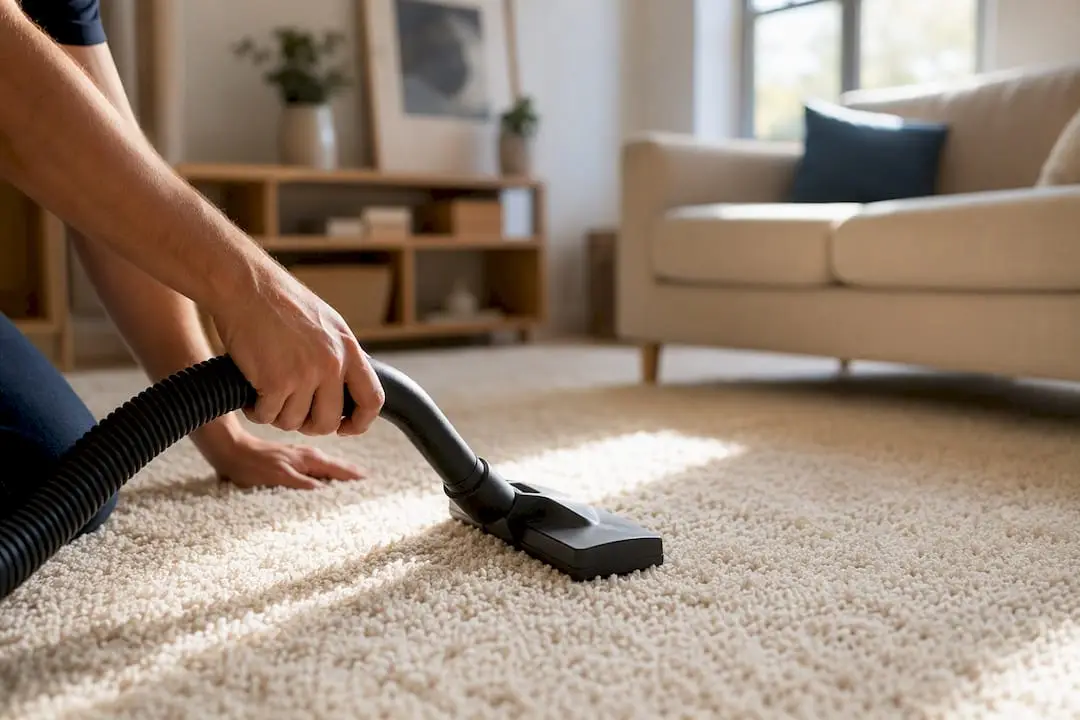
The evidence is real, but it comes with nuance most product pages skip. A systematic review of asthma-management interventions found that multicomponent strategies, meaning HEPA vacuuming combined with other allergen-control steps showed evidence for reducing exacerbations and improving quality of life in some populations. Single-intervention studies, where HEPA vacuuming was tested alone, were often inconclusive.
That distinction matters for expectations. HEPA vacuuming measurably lowers airborne particles and can reduce dust-mite and pet-dander allergen loads on sampled surfaces. But asking one vacuum to fix asthma symptoms by itself asks more of the evidence than it can deliver.
“Effectiveness of indoor allergen reduction in management of asthma” reports that combinations including HEPA vacuums and pest control reduced allergen loads and sometimes improved outcomes, while noting the evidence base for single interventions stays heterogeneous and limited.
There’s also a separate, more mechanical benefit worth knowing. A study on vacuum-related particle resuspension found that non-HEPA vacuums raised ultrafine particle concentrations significantly during operation, while properly sealed HEPA units did not show that spike. That’s a benefit standard vacuums simply can’t offer, regardless of what else they clean up.
What Won’t a HEPA Vacuum Fix?
A few myths keep circulating, and they set homeowners up for disappointment. HEPA vacuums don’t cure asthma. “HEPA-type” doesn’t equal true HEPA. Vacuuming doesn’t eliminate dust mites completely, since mites burrow deep into upholstery and mattress fibers that a nozzle can’t fully reach. And a bagless system isn’t automatically fine for allergy control if opening the dust cup dumps allergens back into the air.
Practical limits go further than labeling. Settled allergens on hard surfaces resettle within minutes of disturbance. A leaking system can resuspend more than it removes. And HEPA filtration only traps particulate matter and does not remove gases or VOCs, not odor molecules or chemical vapors.
- HEPA vacuums treat particulates, not gases, mold spores in the air, or chemical odors
- A leaky machine can make air quality temporarily worse, not better
Pro Tip: If you’re dealing with visible mold growth, structural moisture, or a heavy pest infestation, call a remediation specialist first. A vacuum, HEPA or not, isn’t the right tool for that job.
Who Actually Benefits Most From a HEPA Vacuum?
Some households will notice a real difference; others won’t get much return on the investment. Allergy and asthma-prone families, pet owners, homes recovering from a renovation, and high-traffic households with heavy carpeting all sit at the top of the list, since these are the situations where allergen reservoirs build up fastest.
Frequency matters as much as ownership:
- Pet-owning households: vacuum frequently for best results
- Allergy-sensitive households: vacuum regularly with focus on bedrooms and upholstery
- Post-renovation cleanup: vacuum intensively after renovation initially, then reduce frequency
For homes with severe dust-mite issues, mattress encasements and reduced carpeting often move the needle more than any vacuum upgrade alone.
What Features Actually Matter When Buying One?
Skip the marketing copy and check these details instead. Bagged containment or a sealed dust canister keeps allergens from escaping during disposal, and independent testing references, like ASTM F1977 system-level efficiency data, tell you more than a spec sheet ever will.
Beyond the essentials, a few features separate a good vacuum from a great one for allergy households: motor emissions control, a strong beater bar for carpets, dedicated attachments for upholstery and mattresses, and filters that are actually easy and affordable to replace.
Before you buy, run through this:
- Ask the retailer or manufacturer directly whether the system is sealed and tested
- Look up the replacement filter’s part number and price before committing
- Check the manufacturer’s stated filter lifespan against your household’s vacuuming frequency
- Must-have: true HEPA rating, sealed system to prevent leaks, and contained dust disposal
- Nice-to-have: motor emissions shielding, dirt sensors, mattress attachments
Maintaining a HEPA Vacuum So It Keeps Working
A HEPA vacuum only performs as advertised if you maintain it. Skip the maintenance and even a genuinely sealed system starts leaking or losing suction.
- Empty bags or canisters weekly in heavy-use or pet-owning homes
- Clean or replace pre-filters per the manufacturer’s schedule
- Check seals and gaskets for wear every few months
- Replace HEPA cartridges roughly every 6 to 12 months depending on use
- Inspect the brush roll and hose for clogs regularly
Replacement filters typically run a modest recurring cost, and factoring that into total ownership cost avoids sticker shock down the line.
The Bottom Line on HEPA Vacuum Benefits
A true, sealed HEPA vacuum measurably improves indoor air when it fits your household’s needs, especially paired with other allergen-reduction steps. Buy the right unit, maintain it on schedule, and treat it as one part of a broader plan.
A Cleaning Professional’s Take on HEPA Equipment
The biggest mistake we see in homes isn’t the vacuum choice. It’s inconsistency. Homeowners buy a great HEPA machine, then skip filter replacement or let a full canister sit for weeks, which quietly defeats the purpose. Professional teams rotate sealed HEPA equipment on strict maintenance schedules and follow protocols for upholstery, vents, and high-traffic zones that most households don’t have time for.
If you’re facing post-renovation dust, a heavy allergen buildup, or just don’t have the hours to vacuum properly every week, that’s when bringing in a professional service makes sense.
Let Professional Cleaning Pick Up Where Your Vacuum Leaves Off
Purehomescleaning gives you what a home vacuum can’t: a trained team running sealed-system HEPA equipment across your entire home, not just the rooms you get to on a Sunday. That’s the real gap between DIY vacuuming and a full deep clean, especially for allergy-prone households juggling work, kids, and everything else.

Our teams use eco-friendly products and customizable plans, whether you need routine upkeep, a deep clean, or move-in/move-out service across Washington, DC, Virginia, and Maryland. If dust and allergens have built up faster than your vacuum can keep up with, book a cleaning online and get your home back to a baseline you can actually breathe easy in.
Sources
- What is a HEPA filter? | US EPA
- Effectiveness of indoor allergen reduction in asthma management: A systematic review
- Effectiveness of indoor allergen reduction in management of asthma – NCBI Bookshelf
This article is general information, not a substitute for advice from a qualified doctor. Consult a qualified healthcare professional about your own circumstances before acting on anything here.
FAQ
Do HEPA vacuums make a difference?
Yes, when the system is truly sealed and rated to the 99.97% at 0.3-micron standard. Studies show they reduce airborne particles and, combined with other allergen-control steps, can improve quality of life for some allergy sufferers.
What are the disadvantages of HEPA filters?
They require regular, sometimes costly filter replacement to stay effective, and a poorly sealed or “HEPA-type” unit can perform no better than a standard vacuum while still leaking allergens back into the room.
Does a HEPA vacuum remove mold?
A HEPA vacuum can pick up settled mold spores from hard surfaces, but it isn’t a mold remediation tool and won’t address moisture problems or active growth. Structural mold issues need a professional remediation specialist.
Is a HEPA filter on a vacuum worth it?
For allergy sufferers, pet owners, and post-renovation cleanup, yes, provided it’s a genuine sealed system rather than a “HEPA-style” label. For low-allergen households without pets, the upgrade matters less.