
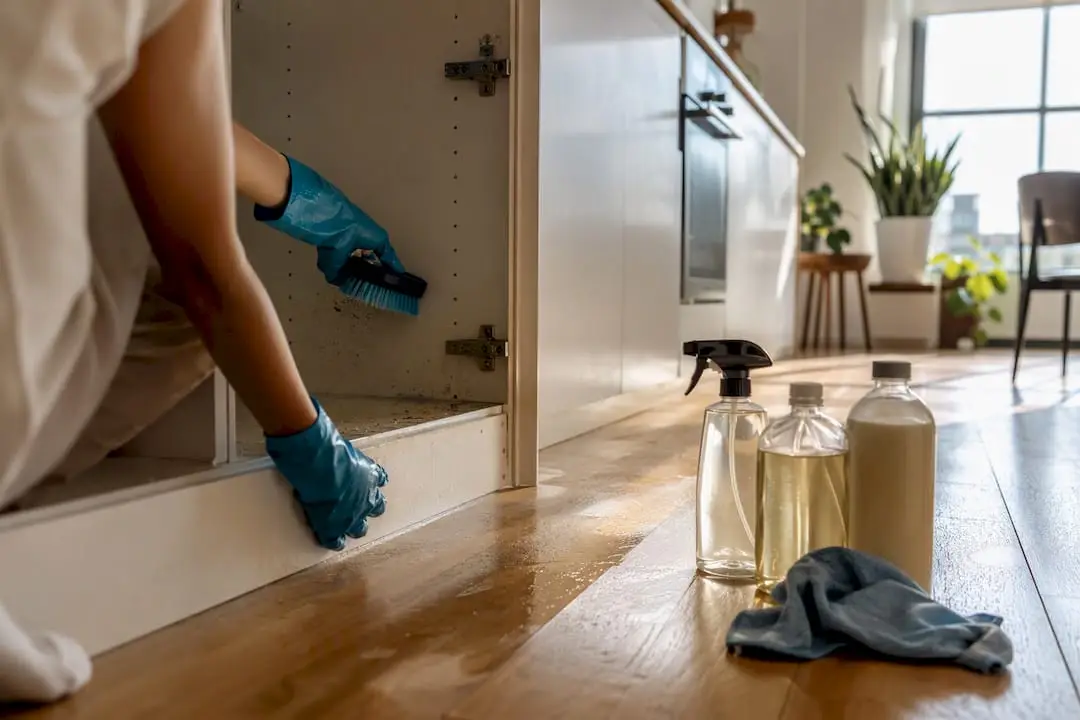
Finish every item on a room-by-room move-out cleaning checklist, from oven interiors to window tracks, at least a day before your final walkthrough, and you dramatically improve your odds of a full security deposit refund. Most deposit disputes trace back to three things: grease inside the oven, grout stains in the shower, and dust on baseboards landlords check first. Professional move-out cleaning runs roughly $280 to $1,100 depending on home size, so even hiring help is worth pricing out before you start.
Here’s the one-page version to print and tape to your fridge:
- Kitchen: oven interior, fridge/freezer (defrosted), inside all cabinets, stovetop and hood filter, sink and faucet
- Bathroom: toilet base and behind it, shower grout and caulk, mirror, exhaust fan, medicine cabinet
- Bedrooms/closets: shelves, tracks, nail holes patched, baseboards
- Living areas: blinds, vents, light switches, floors under furniture
- All rooms: window tracks, wall spots, light fixtures
Do these after all items and before the final walkthrough.
Key Takeaways
Getting your full security deposit back depends on cleaning past normal wear-and-tear, in the specific spots landlords check, and documenting it with photos and receipts.
| Point | Details |
|---|---|
| Clean beyond wear-and-tear | Landlords can only deduct for damage or dirt beyond normal use, not faded paint or minor scuffs. |
| Target high-scrutiny spots | Focus on oven interiors, grout lines, baseboards, and window tracks first. |
| Finish a day early | Complete cleaning at least one day before your final walkthrough to fix missed spots. |
| Document everything | Keep move-in photos, take timestamped after-photos, and save every cleaning receipt. |
| Consider a professional clean | Pure Homes Cleaning’s move-out service covers the full checklist and provides an itemized receipt for your landlord. |
Table of Contents
- What Does a Move-Out Cleaning Checklist Actually Cover?
- Quick Pre-Clean Steps Before You Start Scrubbing
- Kitchen Move-Out Checklist: The Tasks Landlords Notice First
- Bathroom Move-Out Checklist: Grout, Caulk, and Hard Water
- Bedroom Move-Out Checklist: The Details Tenants Skip
- Living Areas and Common Spaces Checklist
- Handling Different Surfaces: Floors, Windows, and Appliances
- Essential Cleaning Tools and Supplies
- Hiring a Professional Move-Out Cleaner: What to Expect and What It Costs
- Final Walkthrough: Documentation and Handing Over the Keys
- How We Think About Move-Out Cleaning
- Book a Move-Out Clean That Comes With Proof
- Sources
- FAQ
What Does a Move-Out Cleaning Checklist Actually Cover?
Move-out cleaning is not the same job as your weekly tidy-up. It reaches into places a regular clean skips: inside the oven, behind the fridge, inside every cabinet and closet, along baseboards, in window tracks, and in shower grout. Those are exactly the spots property managers check most closely during final inspections, because they’re the areas that accumulate grime a tenant’s day-to-day cleaning never touches.
Here’s the legal line that matters: a landlord can only deduct cleaning costs to restore the unit to its move-in condition, beyond ordinary wear and tear. Faded paint, small scuffs, and minor carpet flattening from foot traffic don’t count. Grease-caked stovetops and mildewed shower grout do. State laws often require landlords to itemize deductions and, in many cases, provide receipts for anything they withhold, and failing to do so within the statutory deadline can forfeit their right to keep your money at all.
Keep your move-in photos, any inspection report you signed, and every cleaning receipt you generate. If your landlord has a move-out checklist of their own, ask for it.
Pro Tip: Request an informal pre-move-out walkthrough if your landlord offers one. It lets you fix small issues yourself before they become deductions.
Quick Pre-Clean Steps Before You Start Scrubbing
Cleaning around boxes and furniture wastes time and misses spots. Clear everything out first, then tackle repairs: spackle nail holes, tighten loose cabinet screws, swap dead light bulbs. These fixes usually cost a few dollars and take minutes, while skipping them can cost you far more in deductions.
Schedule your deep clean after the unit is empty, ideally a full day before your final walkthrough. That buffer gives you time to fix anything you missed.
A simple timeline:
- Two weeks out: book professional cleaners if you’re hiring, order supplies
- Three days out: finish packing, start repairs
- Day before: deep clean every room, top to bottom
- Day of: final walkthrough, photos, hand over keys
Kitchen Move-Out Checklist: The Tasks Landlords Notice First
Kitchens generate more deposit disputes than any other room, mostly because grease hides in plain sight.
- Scrub the oven interior, including racks, until baked-on residue is gone
- Empty and defrost the fridge/freezer, then wipe shelving and dry the door seals
- Empty every cabinet and drawer, wipe interiors, and leave shelf liners unless your lease says otherwise
- Degrease the stovetop, range hood filter, and microwave interior
- Clean the dishwasher filter and run an empty cycle if it’s been a while
- Descale the faucet and clean around the sink drain
Pro Tip: Soak oven racks in hot water with dish soap for 30 minutes before scrubbing. It cuts the elbow grease in half.
Bathroom Move-Out Checklist: Grout, Caulk, and Hard Water
Bathrooms fail inspections over three things: grout, caulk, and mineral buildup.
- Scrub the toilet bowl, seat, base, and the floor behind and around it
- Treat shower and tub grout lines for soap scum, and check caulk for mold or gaps
- Wipe the vanity, clean inside the medicine cabinet, and polish the mirror
- Clean the exhaust fan cover and vent grille
- Replace a moldy shower curtain or liner rather than trying to save it
Pro Tip: A paste of baking soda and water left on grout for 15 minutes before scrubbing lifts stains that spray cleaners can’t touch.
Bedroom Move-Out Checklist: The Details Tenants Skip
Closets and walls hold more evidence of tenancy than most renters realize.
- Wipe closet shelves, vacuum or sweep the floor, and clean tracks and doors
- Spot-clean scuffs on walls and trim; patch nail holes with spackle rather than repainting
- Wipe ceiling fan blades, light fixtures, and outlet covers
- Vacuum carpets thoroughly or mop hard floors, and check your lease for a professional carpet cleaning clause
Living Areas and Common Spaces Checklist
Shared spaces get a lighter touch but still show up in inspections.
- Wipe baseboards, door frames, and window sills throughout
- Dust blinds or wipe shutters, then vacuum or mop floors, including under furniture
- Clean light switches, outlet covers, and air vents
- Remove any adhesive residue from walls where posters or hooks hung
- Wipe down fireplace surrounds or built-in shelving if your unit has them
Handling Different Surfaces: Floors, Windows, and Appliances
Not every surface responds to the same cleaner, and using the wrong one can cost you more than the stain would have.
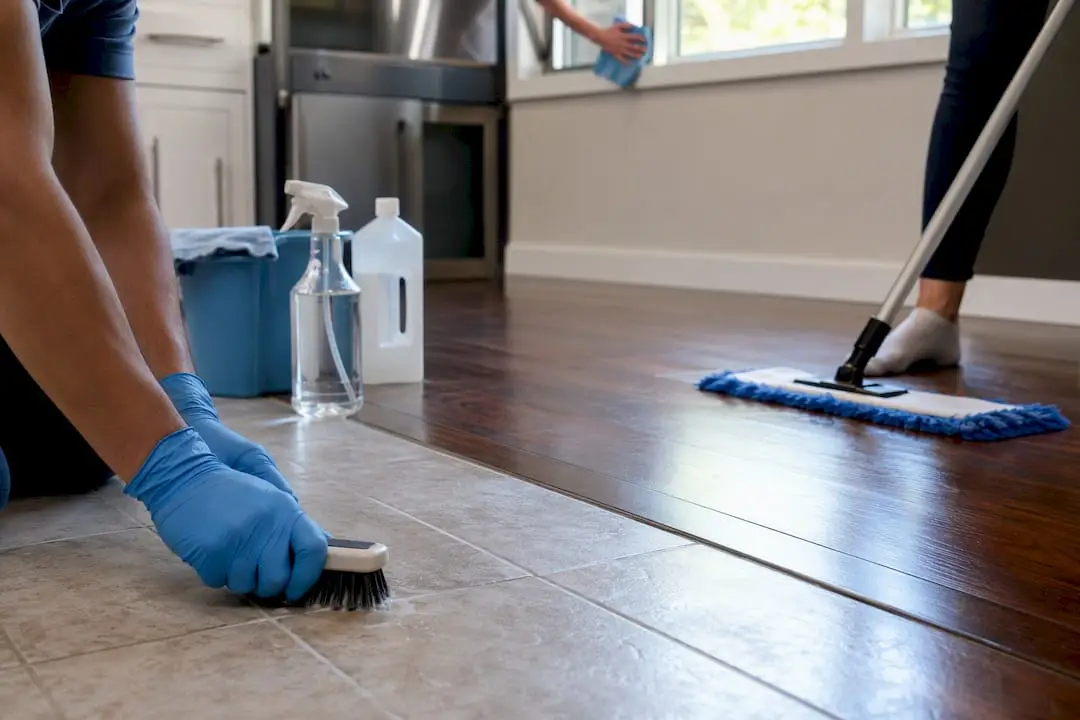
Hardwood floors need a damp mop, never a soaked one. Standing water swells and warps boards, which is a repair cost you’ll be paying for, not the landlord. Tile grout responds better to a stiff brush and dedicated grout cleaner than to a general all-purpose spray. For window tracks, vacuum out debris first, then wipe with a damp cloth. Clean the glass inside and, where accessible, outside too.
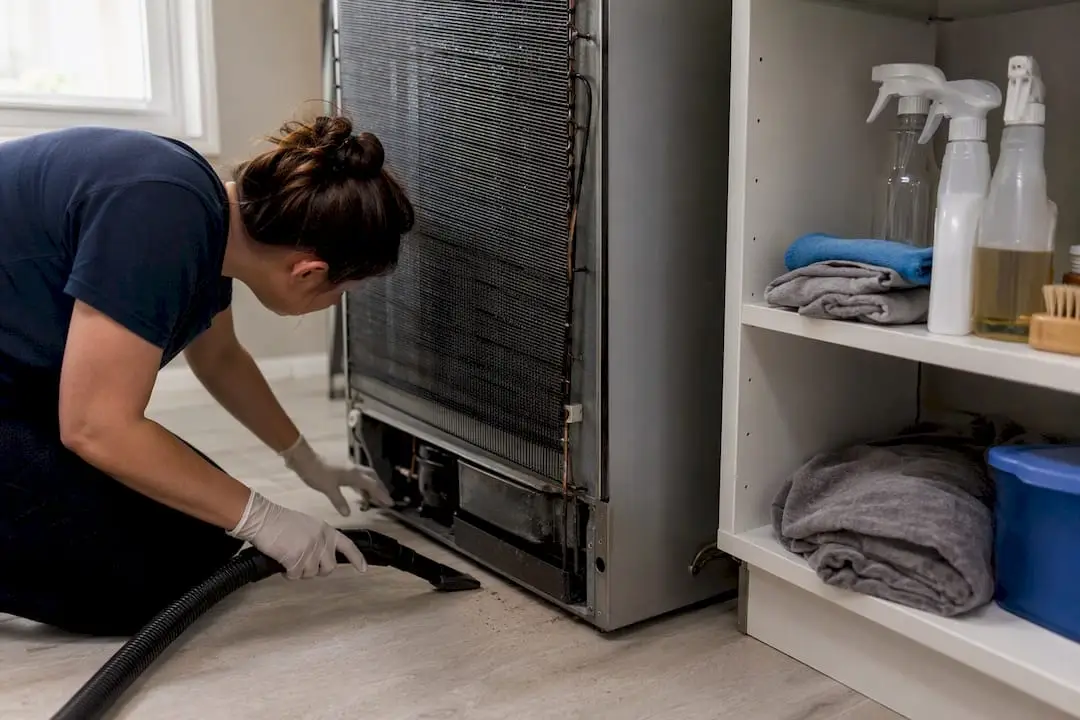
Pull appliances that move, like the fridge, away from the wall if you can, vacuum the coils and floor behind them, and photograph the result. That photo is your proof if a landlord later claims otherwise.
If your lease requires professional carpet cleaning at move-out, book a licensed company and keep the receipt as proof of compliance. Landlords typically expect that specific documentation, not just your word that it happened.
Pro Tip: Photograph every appliance, floor, and window right after cleaning, with a timestamp visible if your phone supports it. That’s your evidence if a dispute comes up later.
Essential Cleaning Tools and Supplies
A basic kit handles most of this list: microfiber cloths, a vacuum with a hose attachment, a mop and bucket, rubber gloves, a putty knife and spackle, multi-surface cleaner, dedicated grout cleaner, and a degreaser for the kitchen.
- Skip harsh abrasives on finished surfaces like countertops or hardwood
- Test any new cleaner on a hidden spot before using it on visible areas
- Rent a carpet extractor for light stains, but hire a professional if your lease requires documented carpet cleaning
A weekly 30-minute cleaning habit keeps buildup manageable during your tenancy, but it won’t substitute for this targeted move-out pass. Inside the oven and behind the fridge just don’t get touched in a quick weekly wipe-down.
Hiring a Professional Move-Out Cleaner: What to Expect and What It Costs
Professional move-out cleaning covers everything a regular deep clean skips: appliance interiors, cabinet and closet interiors, baseboards, grout lines, and window tracks. Pricing runs $280 to $550 for a one-bedroom, $450 to $850 for a two-bedroom, and up to $650 to $1,100 for a four-bedroom home, with carpet cleaning usually billed separately at $50 to $150 or more per room.
Before you book, ask what’s included:
- A written checklist of completed tasks
- A time and date receipt
- Before-and-after photos, if the company offers them
Pro Tip: Bundle carpet cleaning with your move-out service in one booking. It saves you a second scheduling headache and gives you one combined receipt landlords accept without question.
Pure Homes Cleaning’s move-out cleaning service is built around exactly this kind of documentation, since landlords in Washington, DC, Virginia, and Maryland routinely ask for proof, not just a clean apartment.
Final Walkthrough: Documentation and Handing Over the Keys
Run your own walkthrough using the printable checklist above, and photograph each finished area with a timestamp if possible. Compare those photos against your move-in pictures, since that comparison is your strongest evidence if a dispute happens.
- Give your landlord a written forwarding address, since this often starts their legal deadline to return your deposit
- Hand over cleaning receipts, especially for carpet cleaning if your lease required it
- Ask for written confirmation of acceptance, or at minimum request a pre-move-out walkthrough beforehand to catch issues while you can still fix them
How We Think About Move-Out Cleaning
Pure Homes Cleaning treats every move-out job the same way a strict landlord inspection would: oven racks out, cabinet interiors wiped, grout scrubbed, baseboards dust-free. Our teams use eco-friendly products throughout, and we send an itemized service record so you have proof of exactly what was cleaned and when, which matters far more at deposit time than a vague “we cleaned it” text.
Book a Move-Out Clean That Comes With Proof
Pure Homes Cleaning is the option for renters who’d rather hand a landlord a receipt than spend a Saturday scrubbing grout with a toothbrush. Our move-out cleaning package covers the full checklist above, oven interior, cabinet interiors, baseboards, grout, and window tracks, using eco-friendly products safe for pets and kids still underfoot during a move.

Every job comes with an itemized receipt you can hand straight to your landlord as proof of service, which is exactly the kind of documentation state deposit laws often expect. If you’re in Washington, DC, Virginia, or Maryland and your move-out date is set, book your cleaning online now and lock in a time slot before your final walkthrough. Ask us for the itemized version of your receipt when you check out, since that’s the one landlords tend to accept without a second question.
Sources
- What Can a Landlord Deduct From a Security Deposit? All 50 States (2026) | RenterCalc
- Can Cleaning Fees Be Deducted From a Security Deposit? – LegalClarity
This article is general information, not a substitute for advice from a qualified lawyer. Consult a qualified legal professional about your own circumstances before acting on anything here.
FAQ
What Is Included in Move-Out Cleaning?
Move-out cleaning covers appliance interiors, cabinet and closet interiors, baseboards, window tracks, and grout lines, areas a regular clean typically skips.
What Is the 30-Minute Cleaning Rule?
It’s a maintenance habit of spending 30 focused minutes cleaning each week to prevent buildup, but it doesn’t replace a targeted move-out clean since it skips spots like oven interiors and behind appliances.
How Clean Does Your House Need to Be When You Move Out?
Clean enough to match its move-in condition beyond normal wear-and-tear, meaning grease, grime, and stains you caused should be gone, but minor scuffs and faded paint from normal use are not your responsibility.
How Much Cleaning Should You Do Before Moving Out?
Cover every room on a full checklist, oven, fridge, cabinets, grout, baseboards, and window tracks, rather than a quick surface wipe, since landlords inspect those specific spots most closely.