A one-time professional deep clean in the U.S. typically runs $180 to $500, with most homeowners landing around $260 for a standard-size home. Expect a crew to spend 3 to 6 hours on a 2,000-square-foot house, depending on clutter and how long it’s been since the last real scrub-down. If you take one thing from this article, make it this: ask for a flat-rate quote that spells out exactly what’s included before you book, not an hourly estimate with vague exclusions.
That range holds up across most national pricing data. Angi puts the average deep-clean cost near $260, with a typical spread of $180 to $375, while Care once you factor in regional labor differences and larger homes. The gap between those numbers isn’t a contradiction. It’s what happens when you compare a tidy two-bedroom condo to a five-bedroom house that hasn’t seen a deep clean in two years.
Quick math for budgeting: if a company quotes you $45 an hour per cleaner and sends a two-person crew for four hours, that’s $360 before add-ons. Compare that to a flat-rate quote of $280 for the same scope, and you’ll immediately see why flat pricing tends to protect your wallet better than an open-ended hourly clock.
Key Takeaways
A one-time deep clean in the U.S. typically costs $180 to $500 depending on home size and condition, and requesting a flat-rate written quote is the single best way to avoid surprise charges.
| Point | Details |
|---|---|
| National price range | Budget $180–$500 for a one-time deep clean, with $260 as a common national average. |
| Size drives the number | A 2BR runs $180–$300 while a 4BR+ home often lands near $260 to $500. |
| Labor is the main cost | Hours × cleaners × hourly rate explains most of the price, not supplies or equipment. |
| Flat-rate beats hourly for predictability | A defined scope at a fixed price protects you from surprise overtime charges. |
| Get quotes locally | Pure Homes Cleaning prices deep cleans for DC, Maryland, and Virginia homes through an online booking form that factors in size, pets, and add-ons. |
Table of Contents
- Deep Cleaning Cost by Home Size
- What’s Included in a Deep Clean (and What Costs Extra)
- What Drives the Final Price Up or Down
- Hourly, Flat-Rate, or Per-Square-Foot: Which Pricing Model Wins?
- How to Get a Quote You Can Actually Trust
- How Pure Homes Cleaning Prices a Deep Clean in the DC Area
- How Often You Actually Need a Deep Clean
- Ways to Cut the Cost Without Cutting Corners
- Where I’d Spend First When the Budget Is Tight
- Book a Deep Clean With Pure Homes Cleaning
- Sources
- FAQ
Deep Cleaning Cost by Home Size
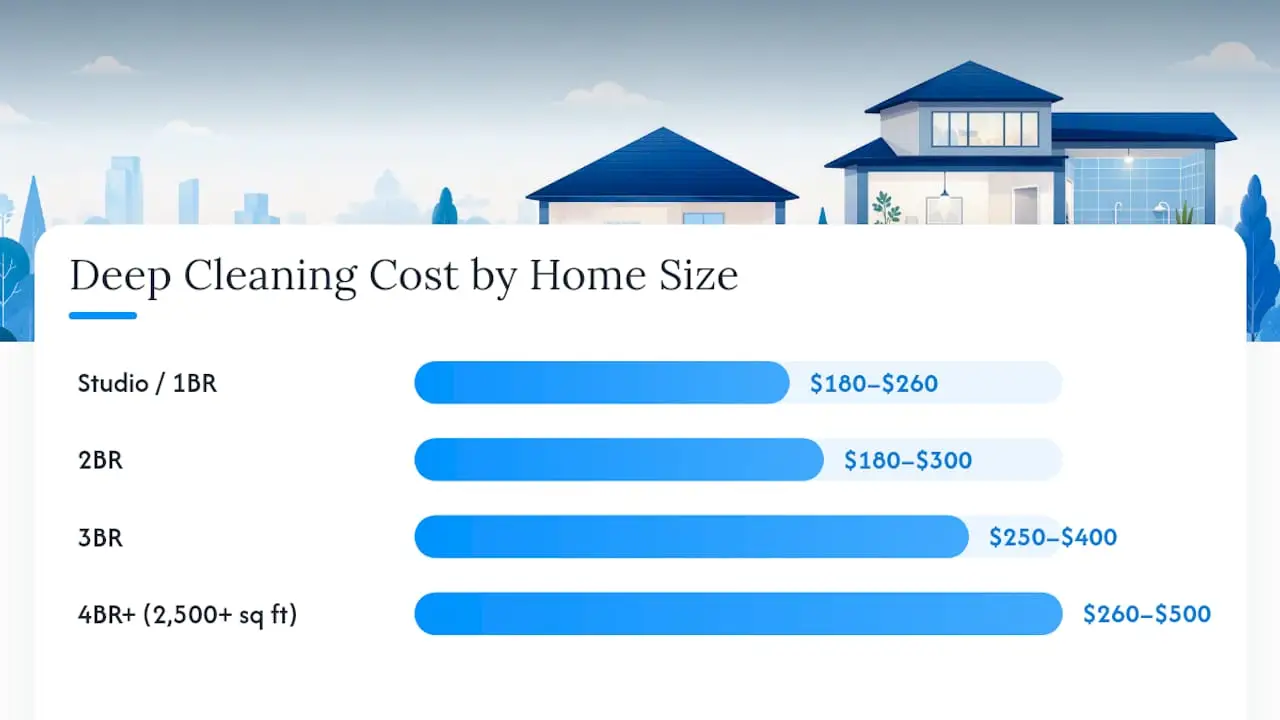
Square footage and bedroom count are the two biggest levers on price, but they don’t move in a straight line. A studio takes a fraction of the time a four-bedroom house does, and the cost curve reflects that.
| Home Size | Estimated Time | Number of Cleaners | Typical Cost Range |
|---|---|---|---|
| Studio / 1BR | 2–3 hours | 1 | $180–$260 |
| 2BR | 3–4 hours | 1–2 | $180–$300 |
| 3BR | 4–6 hours | 2 | $250–$400 |
| 4BR+ (2,500+ sq ft) | 5–6 hours | 2–3 | $260–$500 |
Pros commonly use two reference figures to sanity-check a quote: a per-square-foot rate of about $0.10 to $0.30, and a per-hour, per-cleaner rate of $25 to $70, according to Angi’s pricing data. Multiply either one out and you should land somewhere near the ranges in the table above. If a quote comes in far outside that band without a clear reason, ask why.
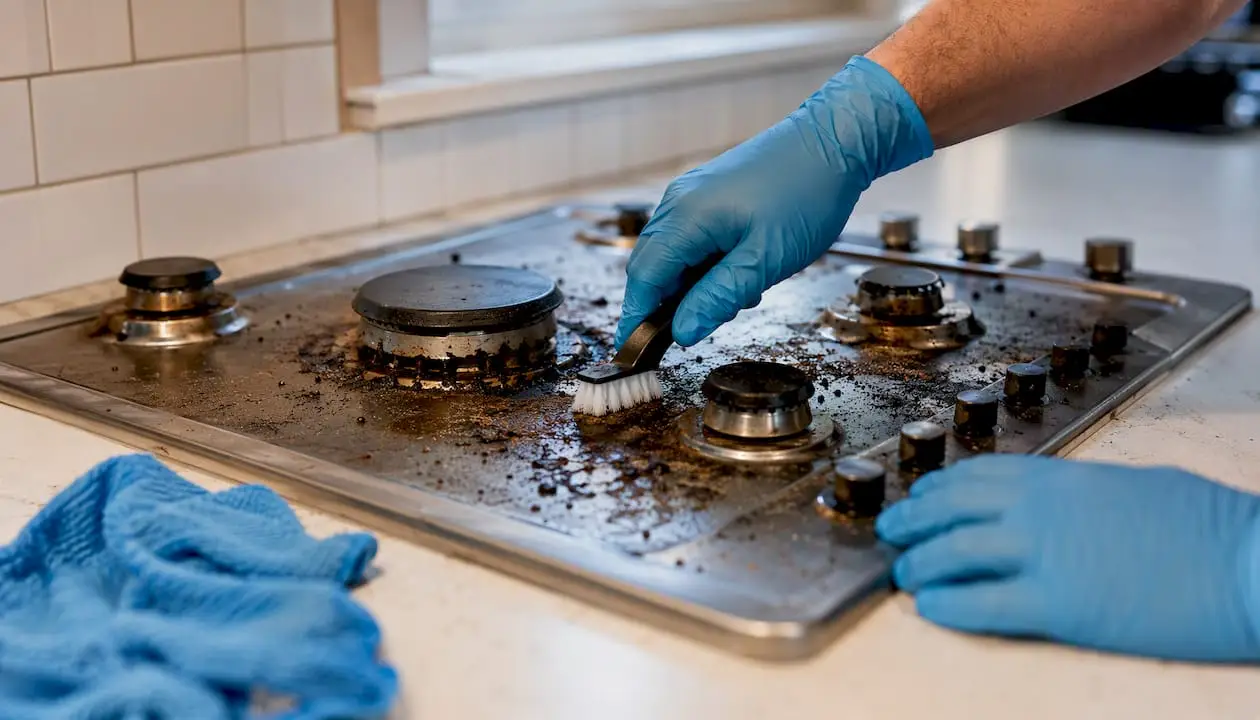
Condition matters as much as square footage. A 3-bedroom home in reasonably kept condition typically takes 4 to 7 hours for a deep clean, but homes with heavy grease buildup in the kitchen, pet hair throughout, or months of skipped maintenance push toward the top of every range in the table, sometimes past it. Crews spend extra time scrubbing baked-on stovetop grime or scraping soap scum that’s calcified in the shower, and that time gets billed one way or another.
What’s Included in a Deep Clean (and What Costs Extra)
A deep clean is not just a longer version of your regular tidy-up. It targets the spots a standard cleaning skips because they take real time: behind furniture, inside cabinets, and the grime that builds up in corners nobody thinks about until guests are coming over.
Here’s what a standard deep-clean package typically covers:
- Baseboards, door frames, and window sills wiped down throughout the home
- Inside-and-out cleaning of kitchen cabinets and drawers
- Detailed grout and tile scrubbing in bathrooms and kitchens
- Ceiling fans, light fixtures, and vents dusted or wiped
- Behind and under furniture and large appliances (where accessible)
- Baseboard and wall spot-cleaning for scuffs and marks
Most base packages stop there. The following are typically sold as add-ons because they require special equipment, extra time, or stronger cleaning agents:
- Interior oven cleaning
- Interior refrigerator cleaning
- Carpet shampooing or steam cleaning
- Interior window washing
- Upholstery and mattress treatment
Care.com’s cost breakdown notes that move-in and move-out cleans usually cost more than a standard one-time deep clean, since empty homes reveal every scuff, cobweb, and stain that furniture used to hide, and post-construction cleans add dust removal from surfaces you wouldn’t normally touch. If you’re budgeting for either of those situations, plan for the higher end of your home-size range, not the middle.
What Drives the Final Price Up or Down
Labor is the single biggest cost component in any deep clean. It’s not close. HomeAdvisor’s cost breakdown confirms that labor hours dominate the bill, with cleaning supplies and equipment making up a small fraction of what you pay. That means every factor below really just comes down to one question: how many labor hours does your home require?
Region matters more than most people expect. Hourly rates in dense metro areas run higher than in suburban or rural markets, largely because labor costs and demand both climb. Care.com’s data shows hourly rates can swing by nearly $9 between cities, and Thumbtack’s market data puts typical metro rates around $40 to $55 per hour in several major U.S. cities, sometimes higher in coastal markets. A quote from a cleaner in a small Midwestern town and one from someone working in a major East Coast metro can differ substantially for the exact same job.
Beyond region, a few other variables push price up:
- Pets in the home. Extra pet hair, dander, and odor control add cleaning time.
- Stairs and multi-level homes. More square footage spread vertically means more time moving equipment and covering ground.
- Specialty surfaces. Natural stone counters, delicate hardwood, or intricate tile work often need gentler (slower) techniques.
- First-time deep clean. If it’s been over a year since the last real deep clean, expect the first visit to run longer and cost more than any recurring service after it.
Pro Tip: Before you accept a quote, ask specifically what the base package excludes. Many companies quote a lean base price, then add fees for stairs, travel distance, or a “first deep clean” surcharge that isn’t mentioned until the invoice. Getting that list upfront saves you from an awkward conversation on cleaning day.
Hourly, Flat-Rate, or Per-Square-Foot: Which Pricing Model Wins?
Cleaning companies price deep cleans three different ways, and each one shifts the risk between you and the provider.
Hourly pricing charges you for actual time worked, usually per cleaner. It works in your favor if your home is already fairly tidy and the crew finishes faster than estimated. It works against you if the home turns out to need more time than anyone anticipated. A hidden mess behind the refrigerator or a bathroom with years of grout buildup can turn a two-hour estimate into a four-hour bill.
Flat-rate pricing sets one price for a defined scope, regardless of how long the job actually takes. Angi’s guidance recommends flat-rate quotes specifically because they make the final price predictable before the crew ever walks in the door. You know your number going in, and the company absorbs the risk if the job runs long. This is the model most experienced homeowners prefer for deep cleans, since the scope of work is bigger and harder to estimate on the fly than a routine tidy-up.
Per-room or per-square-foot pricing shows up mostly in flat-rate quote calculators, where a company converts your home’s size into a baseline number before adjusting for condition and add-ons. Fieldcamp’s 2026 pricing data pegs deep cleaning at roughly 1.5 to 2.5 times the cost of a standard cleaning, which gives you a quick way to sanity-check a quote if you already know what a standard clean costs in your area.
Here’s how the same 2,000-square-foot home might price out under each model:
- Hourly: 2 cleaners × 5 hours × $45/hour = $450
- Flat-rate: $320 flat for the full scope, add-ons priced separately
- Per-square-foot: 2,000 sq ft × $0.15/sq ft = $300
Notice the spread. The hourly estimate assumes a slower job; the flat rate assumes the company has priced in its own risk buffer; the per-square-foot number is a rough baseline before condition adjustments. None of these are wrong, but they answer different questions, which is exactly why comparing three quotes from three companies using three different models can feel confusing unless you know what you’re looking at.
How to Get a Quote You Can Actually Trust
Getting an accurate deep-cleaning quote comes down to giving the company enough detail that they can’t hide behind vague pricing later. Have this ready before you call or fill out an online booking form:
- Total square footage of the home, or a close estimate.
- Number of bedrooms and bathrooms.
- Whether you have pets and how many.
- Number of stories or stairs in the home.
- Specific problem areas (a greasy stove, moldy grout, a garage that hasn’t been touched in years).
- Which appliance interiors you want cleaned, if any.
- Whether it’s a one-time clean, a move-out clean, or a recurring service you’re setting up.
Once you’ve got quotes back, watch for these red flags:
- A price with no breakdown of what’s included versus what costs extra.
- An hourly rate that seems unusually low with no explanation of exclusions.
- No mention of insurance, bonding, or background-checked staff.
- Reluctance to put the scope of work in writing.
A trustworthy quote reads something like this: base deep clean covering kitchen, bathrooms, living areas, and bedrooms at $280, oven interior add-on at $35, refrigerator interior add-on at $30, estimated time 4 to 5 hours with two cleaners. That’s a quote you can compare apples-to-apples against a competitor’s number. A one-line “$250 for deep cleaning” with nothing else attached is not.
How Pure Homes Cleaning Prices a Deep Clean in the DC Area
Pure Homes Cleaning structures its deep-clean pricing around clear, customizable plans rather than a single fixed number for every home, which matters because a rowhouse in Capitol Hill and a suburban colonial in Northern Virginia don’t take the same amount of labor to reset. The full lineup of cleaning services breaks routine cleaning apart from deep cleaning and move-in/move-out service, so you’re not stuck guessing which tier actually matches what you need.
Booking happens online, and the intake process mirrors the checklist above: home size, number of bedrooms and bathrooms, pets, and any specific trouble spots get factored into your quote before a crew shows up. For a typical 2,000-square-foot home in the Washington, DC area, that scope generally lands within the national ranges covered earlier in this guide, with add-ons like oven or refrigerator interiors priced separately so the base quote stays transparent.
Pure Homes Cleaning serves homes throughout Washington, DC, including neighborhoods like The Wharf, Columbia Heights and Petworth, and extends into nearby Virginia communities such as Alexandria. Before your service day, confirm in writing what’s included in your base price, whether the crew brings its own eco-friendly supplies, and what time window to expect the team. After booking, you’ll get a confirmation with scheduling details so there’s no ambiguity about when to expect the crew.
How Often You Actually Need a Deep Clean
Most households don’t need a deep clean every month. A realistic cadence for a well-maintained home with regular light cleaning in between is every 3 to 6 months. A deep clean functions as a reset rather than routine maintenance, targeting the buildup that accumulates slowly enough that you stop noticing it day to day, until a guest points out the grout lines.
Outside of that regular schedule, certain life events call for a one-off deep clean regardless of when your last one happened: moving in or out of a home, wrapping up a renovation or construction project, or preparing for a big event like hosting holiday guests or a family gathering.
Is it worth the cost? For a lot of households, yes, and the math is straightforward once you count your own time. A thorough DIY deep clean of a 2,500 to 3,000-square-foot home can easily eat an entire weekend, six to ten hours of scrubbing, moving furniture, and reaching spots you’d normally ignore. A two-person professional crew covers that same ground in roughly half the time because they’re not stopping to figure out what to do next. If your weekend is worth more to you than the $300 to $500 you’d spend on the service, the math tips in favor of hiring it out.
Ways to Cut the Cost Without Cutting Corners
You don’t need to sacrifice quality to bring the price down. A few practical moves make a real difference:
- Declutter before the crew arrives. Cleaners charge for time, and time spent moving your stuff off counters and floors is time not spent actually cleaning.
- Schedule during off-peak periods. Weekday mornings often have more availability than weekend slots, and some companies offer better pricing when demand is lower.
- Bundle a deep clean with a recurring service. Many companies discount the first deep clean when you sign up for ongoing biweekly or monthly cleaning afterward.
- Skip add-ons you don’t need this round. Carpet shampooing and window washing can wait for a separate visit if your budget is tight this month.
- Ask for a flat-rate quote with a defined scope, rather than accepting an open hourly estimate.
Recurring-service discounts and first-time customer promotions are both reasonable things to ask about directly. Most companies would rather offer a modest discount to lock in repeat business than lose you to a one-time job entirely.
Pro Tip: When negotiating a flat rate, don’t just ask for a lower number. Ask the company to hold the price steady while confirming exactly which rooms and tasks are covered. A cheaper flat rate that quietly drops the inside of your oven from the scope isn’t actually a better deal.
Where I’d Spend First When the Budget Is Tight
If money’s genuinely limited, prioritize the kitchen and bathrooms and let the rest slide to a DIY pass. Those two spaces carry the most bacteria, the most buildup, and the most visible grime, and they’re also the areas a homeowner is least equipped to deep clean thoroughly without professional-grade tools and time.
A partial deep clean, kitchen and bathrooms only, paired with your own weekend effort on bedrooms and living areas, stretches a limited budget further than trying to cover the whole house at a discount rate. You’ll get the areas that matter most done right, and you can always circle back to the rest during a future visit or handle it yourself with a good all-purpose cleaner and a free Saturday.
The instinct to chase the cheapest possible whole-home quote often backfires. A rock-bottom price usually means either rushed work or a scope so thin it barely qualifies as a deep clean. Better to pay full price for half the house than half price for a job that skips the grout, the baseboards, and the inside of the fridge.
Book a Deep Clean With Pure Homes Cleaning
Instead of juggling multiple phone calls and waiting on callback quotes, Pure Homes Cleaning lets you book online and get your home size, bedroom count, and specific needs factored into a quote before you ever pick up the phone. That’s the real advantage here: a faster path from “I need this done” to a scheduled crew, without the back-and-forth that a lot of local cleaning companies still require.
The online booking page walks you through square footage, bedrooms and bathrooms, pets, and any add-ons you want, like oven or refrigerator interiors, so your quote reflects your actual home rather than a generic estimate. Pure Homes Cleaning serves Washington, DC, Virginia, and Maryland, using eco-friendly products across routine, deep clean, and move-in/move-out plans. Before you confirm payment, double-check the scope listed on your booking confirmation matches what you discussed, and ask about any current promotions for first-time or recurring customers. If you’re ready to see what a real quote looks like for your home, start your booking and get a scope you can actually plan around.
Sources
- How Much Does It Cost to Deep Clean a House? 2026 Data | Angi
- Care
- House Cleaning Prices 2026: Cost by Size, Type & Region
- Homeadvisor
FAQ
How much should I expect to pay for a deep clean?
Most homeowners pay between $180 and $500 for a one-time professional deep clean, with a national average near $260 depending on home size and condition.
Is deep cleaning worth the cost?
For most households, yes. A professional crew typically finishes in half the time a thorough DIY deep clean takes, and it catches buildup in spots, like inside appliances and grout lines, that regular cleaning misses.
How much does it cost to have a 2,000-square-foot house cleaned?
A 2,000-square-foot home typically falls in the $250 to $400 range for a deep clean, taking roughly 4 to 6 hours with a two-person crew, though heavy buildup or add-ons can push it higher.
Is $50 an hour for cleaning good?
$50 an hour per cleaner sits within the typical U.S. range of $25 to $70, so it’s a reasonable rate in most markets, though hourly rates can run higher in expensive metro areas.
What’s the difference between a deep clean and a standard cleaning?
A deep clean covers detailed work a standard cleaning skips, like inside cabinets, baseboards, grout, and behind furniture, while a standard cleaning focuses on surface-level upkeep like dusting and vacuuming.