A standard cleaning is a maintenance visit that keeps visible surfaces tidy: countertops wiped, floors vacuumed, bathrooms freshened, trash emptied. A deep cleaning is a restorative, top-to-bottom service that strips away built-up grime and reaches the spots a regular visit skips entirely, inside the oven, behind the fridge, along baseboards, deep in grout lines.
If your home hasn’t had a professional cleaning in the last three months, or you’re prepping for a move, book a deep clean first. Everyone else maintaining a recently reset home should stick with standard cleaning on a recurring schedule.
The practical differences come down to three things:
- Scope: standard cleaning hits the surfaces you touch every day; deep cleaning hits the surfaces you forget exist.
- Time: a deep clean typically runs 1.5 to 2 times longer than a standard clean of the same square footage.
- Cost: that extra labor means deep cleaning usually costs more per visit, though it pays off by resetting the baseline so standard cleans stay quick and cheap afterward.
Key Takeaways
Standard cleaning maintains a home that’s already in good shape, while deep cleaning restores one that has months of buildup, and most households get the best results by booking one deep clean first and maintaining with standard cleans afterward.
| Point | Details |
|---|---|
| Core difference | Standard cleaning maintains surfaces you use daily; deep cleaning restores hidden areas like ovens, grout, and baseboards. |
| Diagnostic rule | If more than half of a room’s deep-clean items apply, book a deep clean before switching to maintenance. |
| Recommended cadence | Deep clean every three to six months, with standard cleans weekly, biweekly, or monthly in between. |
| Time and cost | Deep cleans typically run 1.5 to 2 times longer and cost more per visit than a standard clean of the same home. |
| Where Pure Homes Cleaning fits | Offers customizable standard, deep, and move-in/move-out plans across DC, Virginia, and Maryland with eco-friendly products and online booking. |
Table of Contents
- What Does a Standard Cleaning Include?
- What’s Included in a Deep Cleaning?
- Standard vs Deep Cleaning by Room: What’s Actually Different?
- When Should You Book a Deep Clean Instead of a Standard Clean?
- How Often Should You Schedule Each Type of Cleaning?
- What’s the Difference Between Cleaning, Sanitizing, and Disinfecting?
- How Does a Professional Cleaning Crew Handle Standard vs Deep Cleaning?
- When We Recommend Each Option
- How Pure Homes Cleaning Fits Into Your Cleaning Plan
- Frequently Asked Questions
- Sources
What Does a Standard Cleaning Include?
A standard cleaning, sometimes called a routine or maintenance clean, covers the tasks that keep a home looking presentable week to week. It’s the visit you book when your house is already in decent shape and just needs a refresh, not a rescue.
In the kitchen, that means wiping counters, the stovetop exterior, and the outside of appliances, along with a quick sweep and mop of the floor. Bathrooms get a surface wipe-down: sinks, toilets, mirrors, and a general once-over of the shower or tub exterior. Bedrooms and living areas get dusting on reachable surfaces, vacuuming carpets and rugs, and emptying trash bins throughout the house.
Here’s what a standard cleaning checklist typically covers:
- Wiping down kitchen counters, stovetop, and sink
- Cleaning the outside of major appliances
- Vacuuming carpets and rugs, sweeping and mopping hard floors
- Dusting furniture, shelves, and reachable surfaces
- Wiping bathroom sinks, toilets, mirrors, and countertops
- Emptying trash and replacing liners
- Making beds and straightening common areas
What it explicitly leaves out matters just as much as what it includes. Standard cleaning does not touch the inside of your oven or refrigerator, doesn’t scrub grout lines, skips baseboards and window tracks, and won’t go inside cabinets or behind furniture. If your service has been doing exactly this list on a regular basis, your home is probably a good candidate for staying on standard cleaning. If it’s been longer than a season since anyone touched those deeper areas, that’s a signal worth paying attention to.
What’s Included in a Deep Cleaning?
Deep cleaning is where the real labor happens. This is the service that resets a home to a genuine baseline, and it involves tasks most people wouldn’t attempt on a random Saturday.
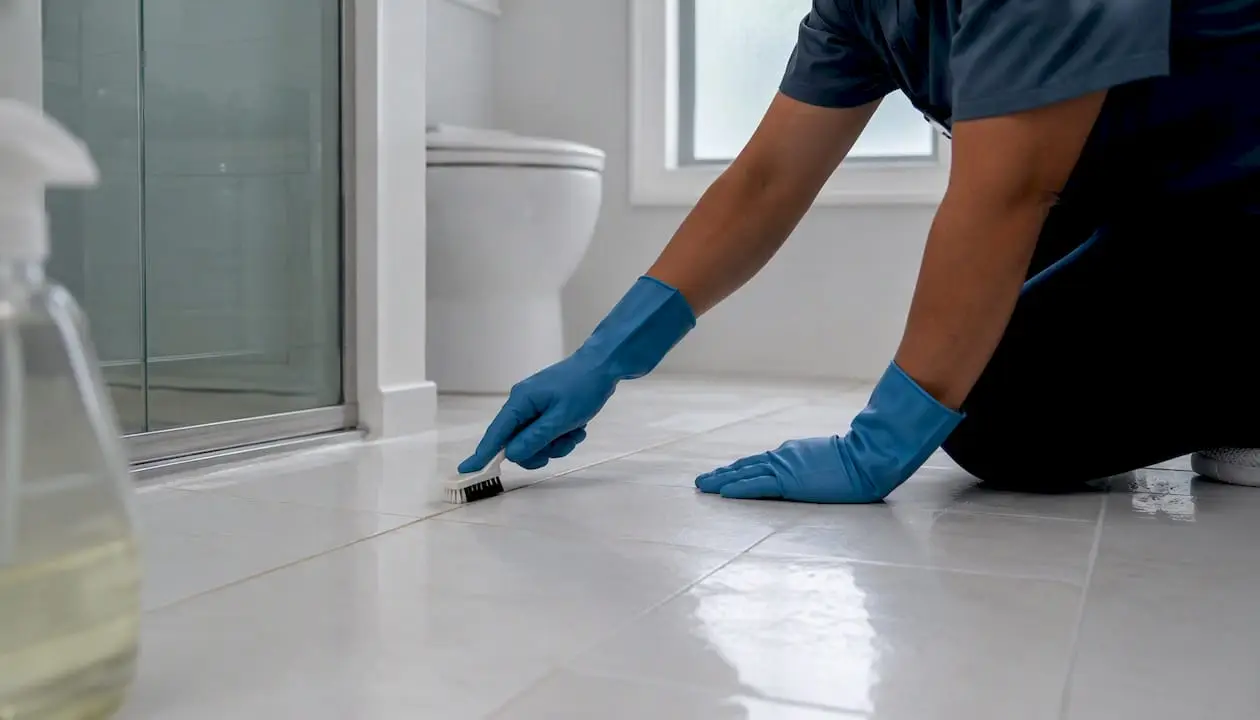
A thorough deep clean typically includes the inside of your oven and refrigerator, baseboards wiped by hand along every wall, window tracks scraped clean of dust and grit, grout scrubbed tile by tile, and vents dusted or vacuumed. Cleaners also move appliances where possible to reach behind and underneath them, wipe down ceiling fan blades, and give bathtubs and shower doors the kind of detailed scrubbing a quick wipe-down never touches.
- Inside oven, refrigerator, and microwave
- Baseboards, door frames, and window tracks
- Grout lines and tile grout scrubbing
- Behind and underneath large appliances
- Ceiling fans, vents, and light fixtures
- Inside cabinets and drawers (on request)
- Detailed tub, shower door, and fixture descaling
The tools shift too. Standard cleaning relies on all-purpose sprays and microfiber cloths. Deep cleaning calls for heavier-duty degreasers to cut through baked-on kitchen grime, stiff grout brushes for tile lines, and sometimes steam for surfaces that resist chemical cleaners alone. These products work harder, which means they need to be handled with more care.
Pro Tip: If a cleaner is using a strong degreaser or descaling product, ask about contact time and ventilation. Some products need several minutes sitting on a surface to actually break down grime, and closed-window bathrooms need airflow during and after use. Homeowners attempting a DIY deep clean should be especially cautious with oven cleaners and mold-targeting products, since these often require gloves, eye protection, and open windows that a quick weekend project can easily skip.
Standard vs Deep Cleaning by Room: What’s Actually Different?
The clearest way to see the difference between cleaning types is room by room. Here’s how the same space gets treated differently depending on which service you book.
| Room | Standard Cleaning Covers | Deep Cleaning Adds |
|---|---|---|
| Kitchen | Counters, stovetop exterior, sink, floor | Inside oven, inside fridge, inside cabinets, backsplash grout |
| Bathrooms | Sink, toilet, mirror, tub exterior | Grout scrubbing, shower door tracks, exhaust fan, fixture descaling |
| Living rooms/bedrooms | Dusting, vacuuming, straightening | Baseboards, vents, under furniture, light fixtures |
| Floors/entryways | Sweeping, mopping | Grout scrubbing, deep stain treatment, edge detailing |
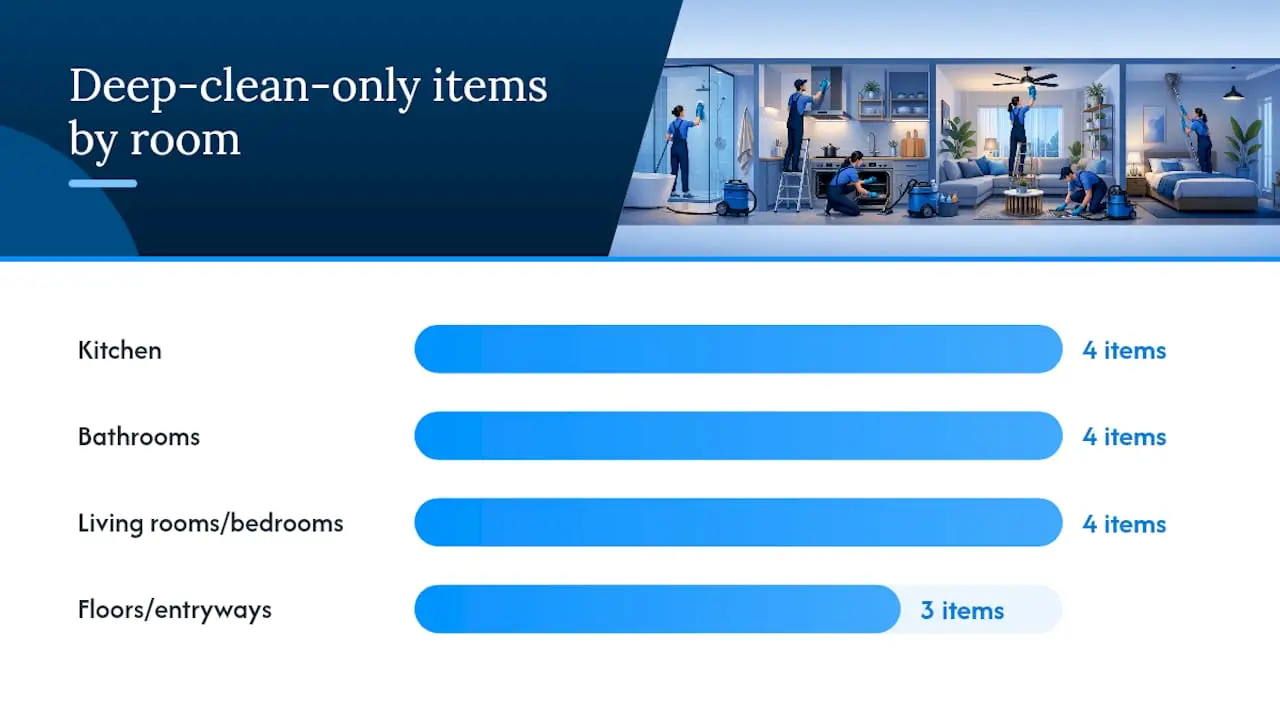
Use this as a quick self-test. Walk through each room and count how many deep-clean-only items apply to your home right now. If more than half the list in any given room needs attention, that room, and probably your whole house, is overdue for a deep clean rather than another round of maintenance.
Kitchens usually show the gap fastest. Grease builds up on cabinet fronts and inside the oven long before it’s visible on the counters your standard cleaner already wipes weekly. Bathrooms are the second biggest tell: grout darkens gradually, and most people don’t notice until a deep clean brings it back to its original color.
When Should You Book a Deep Clean Instead of a Standard Clean?
Certain situations call for a deep clean without much debate. If this is your first time hiring a professional cleaning service, starting with a deep clean is almost always the smarter move, since a standard clean on a home with months of buildup will leave you disappointed no matter how good the cleaner is.
Other clear triggers for a deep clean:
- Moving into or out of a home (landlords and buyers both expect this level of detail)
- After a renovation, when dust and debris have settled into every surface
- Heavy pet shedding or allergen buildup that’s beyond a quick vacuum
- Preparing to list your home for sale
- A seasonal reset, typically once or twice a year, even for well-maintained homes
Standard cleaning is the right call when your home has already been deep cleaned recently and just needs upkeep, when you’re on a recurring schedule and nothing unusual has happened since the last visit, or when you’re doing a light refresh before guests arrive and the house is already in reasonable shape.
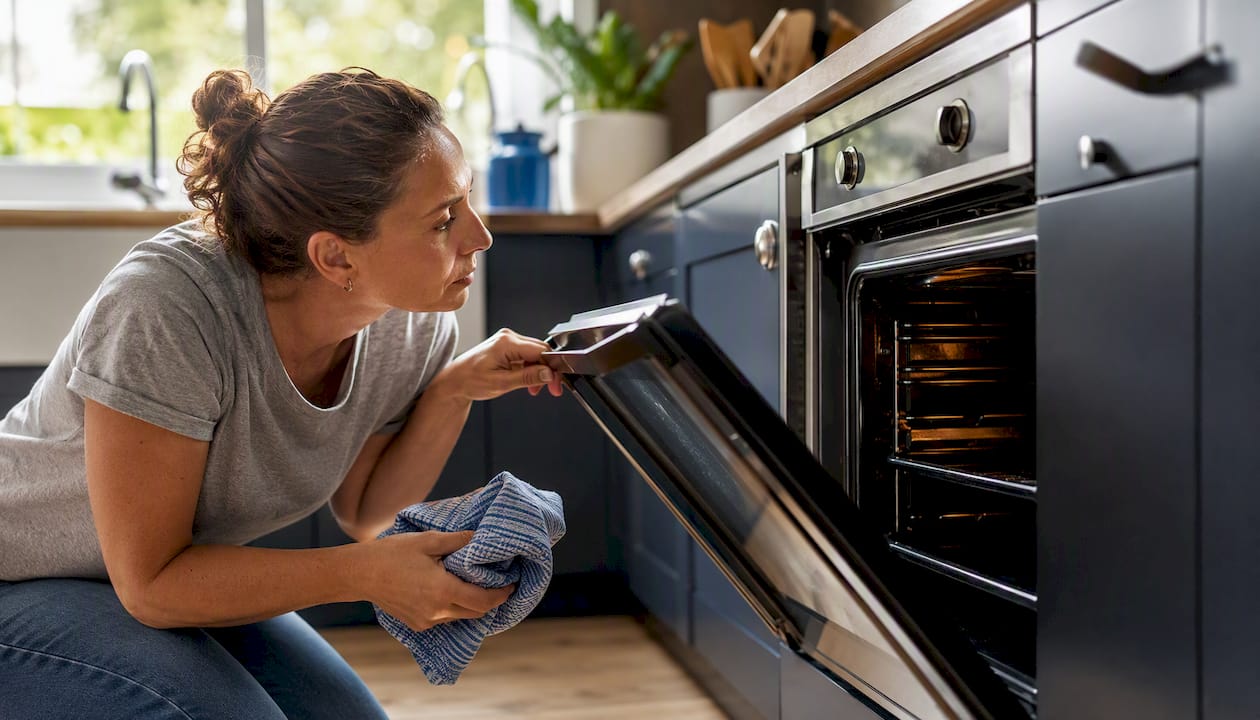
Ask yourself two questions before booking. First, when was the last time someone cleaned inside your oven, behind your fridge, or scrubbed your grout? If the honest answer is “I don’t remember,” book a deep clean. Second, has anything changed recently, a move, a renovation, a new pet, a long stretch without cleaning service? If yes, deep clean. If no to both, standard cleaning will serve you fine.
How Often Should You Schedule Each Type of Cleaning?
Standard cleaning works best on a recurring rhythm: weekly for busy households with kids or pets, biweekly for most working professionals, or monthly for smaller households or single occupants who keep things tidy between visits.
Deep cleaning doesn’t need to happen nearly as often. Most households do well with a deep clean every three to six months, depending on household size, pets, and how much foot traffic the home sees. A single professional working from home might stretch that to twice a year, while a family with two dogs and three kids might need it closer to every three months.
Several factors drive both price and time on any given visit. Home size and the number of bathrooms and kitchens matter most, since those are the labor-heavy rooms. The current condition of the home matters too. A deep clean on a home that’s been neglected for a year takes noticeably longer than one that just needs a seasonal reset. Access constraints, like a fifth-floor walk-up with no elevator, add time. And whether the home is furnished versus a bare move-out unit changes the workload significantly, since furniture means more surfaces to work around but also more surfaces that trap dust.
On timing: a standard clean for an average two-to-three bedroom home usually wraps in one to two hours. A deep clean on that same home can run 1.5 to 2 times longer, sometimes more if the home hasn’t been professionally cleaned in a while.
Pro Tip: Always ask for a written checklist and a time estimate before the crew arrives. If a quoted deep-clean duration seems unrealistically short for your home’s size and condition, ask what’s actually included. A real deep clean takes real hours; a suspiciously fast quote usually means a shortened task list, not a faster crew.
What’s the Difference Between Cleaning, Sanitizing, and Disinfecting?
These three words get used interchangeably, but they describe different levels of work, and knowing the difference matters more than most homeowners realize.
Cleaning removes dirt, dust, and some germs from a surface using soap or detergent and water. It doesn’t kill pathogens, it physically lifts them away. Sanitizing reduces germ counts to a level public health standards consider safe. Disinfecting goes further still: it uses EPA-registered products designed to kill a broad range of pathogens, and it should always happen after cleaning, not instead of it.
The American Cleaning Institute puts it plainly: cleaning removes visible soil, while disinfectants need to sit on a surface for a specific contact time listed on the product label to actually work. Skip that wait time and you’ve wiped the surface, not disinfected it.
The practical rule for your home: clean first, always. Dirt and grease block disinfectants from reaching the surface underneath, so a disinfecting wipe run over a greasy countertop is mostly wasted effort. Save disinfecting for high-touch spots, doorknobs, light switches, faucet handles, and toilet handles, rather than trying to disinfect every surface in the house.
- Read the product label before using any disinfectant and follow the stated contact time
- Ventilate the room, especially in bathrooms and kitchens with closed windows
- Never mix cleaning chemicals, particularly bleach and ammonia-based products
- Clean visible grime first, then disinfect if the surface calls for it
Deep cleaning, by nature, does more of the cleaning half of this equation. It removes months of buildup that a standard clean’s quick wipe never reaches, which sets up disinfecting products to actually work once you get to high-touch areas.
How Does a Professional Cleaning Crew Handle Standard vs Deep Cleaning?
A professional cleaning company doesn’t guess at scope. On a first visit, a good crew walks the home, notes its condition, and builds a checklist specific to that property rather than applying a generic template. This is where customizable cleaning plans matter: a two-bedroom condo with no pets needs a different task list than a four-bedroom house with two dogs and a home office.
On a standard-clean day, expect one or two cleaners in and out within an hour or two, working from the maintenance checklist and generally supplying their own basic products. On a deep-clean day, expect a longer visit, sometimes with an extra cleaner added to the team, and more back-and-forth about access: can they move your bookshelf, do you want the inside of the fridge done, are there fragile items that need to be set aside first.
Preparing your home helps the crew work faster and more thoroughly. Clear countertops of small items before they arrive. If you’ve requested an inside-fridge or inside-oven clean, do a quick pass to remove old food or loose items first. Put away anything fragile or sentimental that you’d rather handle yourself. A little prep on your end translates directly into more time the crew can spend actually cleaning instead of organizing around your stuff.
- Ask for a written scope of work before the appointment
- Clear counters and tabletops of clutter
- Empty the fridge partially if requesting an inside clean
- Set aside fragile or valuable items
- Confirm whether supplies are provided or expected from you
Pro Tip: Take a few photos of problem areas, grout, baseboards, appliance interiors, before your first deep clean. It’s a simple way to see the actual transformation and confirm the scope matched what was promised.
When We Recommend Each Option
Our default advice is simple: start with a deep clean, then maintain with standard cleans on a recurring schedule. That one rule solves most of the confusion homeowners bring to this decision, because the real problem usually isn’t effort or a bad cleaner, it’s booking the wrong scope for where your home actually stands.
There are exceptions worth flagging. Homes with multiple pets or someone managing allergies often need deep cleans more frequently than the typical three-to-six-month range, since dander and dust accumulate faster than in a pet-free household. Anyone doing an immediate move-out clean should skip standard cleaning entirely and go straight to deep, since landlords and new tenants judge move-out condition by deep-clean standards, not maintenance standards.
The math behind this recommendation is straightforward. One deep clean resets your baseline, which means every standard clean afterward stays fast and affordable because the crew isn’t fighting months of buildup each visit. Skip the deep clean and book standard cleaning on a neglected home, and you end up paying for repeat visits that never quite get the job done, which costs more over a year than doing it right the first time.
How Pure Homes Cleaning Fits Into Your Cleaning Plan
Pure Homes Cleaning handles both sides of this decision for homeowners and renters across Washington DC, Virginia, and Maryland, so you don’t have to guess whether your home needs a maintenance visit or a full reset.
Three things make the process easier than piecing it together yourself: eco-friendly products safe for kids and pets, customizable plans that adjust to your home’s actual condition instead of a one-size checklist, and online booking that lets you schedule in minutes rather than waiting on a callback.
If you’re not sure which service fits, that’s a normal starting point, not a problem. Book an initial deep clean to establish a clean baseline, then set up recurring standard visits to keep it that way. Get a quote or book online and expect a clear breakdown of what’s included before anyone sets foot in your home.
Frequently Asked Questions
What is the main difference between standard and deep cleaning?
Standard cleaning maintains surfaces you touch daily, counters, floors, sinks, while deep cleaning restores hidden areas like inside appliances, baseboards, and grout that build up grime over months.
How do I know if I need a deep cleaning or a standard cleaning?
Check whether your home has had a professional deep clean in the last three to six months. If not, or if you’re moving, renovating, or dealing with heavy pet shedding, start with a deep clean.
How often should I schedule a deep cleaning?
Most households do well with a deep clean every three to six months, depending on household size, pets, and foot traffic, with standard cleans filling the gaps in between.
Does deep cleaning cost more than standard cleaning?
Yes. A deep clean typically costs more because it takes 1.5 to 2 times longer and involves detailed manual work like grout scrubbing and appliance interiors that standard cleaning skips.
Is disinfecting the same as deep cleaning?
No. Deep cleaning removes built-up dirt and grime from hidden areas, while disinfecting uses EPA-registered products to kill pathogens on surfaces, and should always happen after cleaning, not as a substitute for it.
Sources
- Difference Between Cleaning, Sanitizing, and Disinfecting (CDC)
- Ask ACI: What’s the difference between cleaning, disinfecting and sanitizing? | American Cleaning Institute
- Deep Cleaning vs Regular Cleaning: What’s the Difference? | TIDY Blog
- Deep Cleaning vs Standard Cleaning 2026: What’s the Difference? | Maidless
- Deep Cleaning vs. Standard Cleaning: What’s the Difference? – Jeannie’s Cleaning Company